Low Humidity on Pilea Peperomioides: Causes, Checks & Fixes
Quick answer
Low humidity rarely stops healthy Pilea Peperomioides, but winter heat and mites can brown leaf edges. First step: Move off radiators and rinse coin leaves monthly.
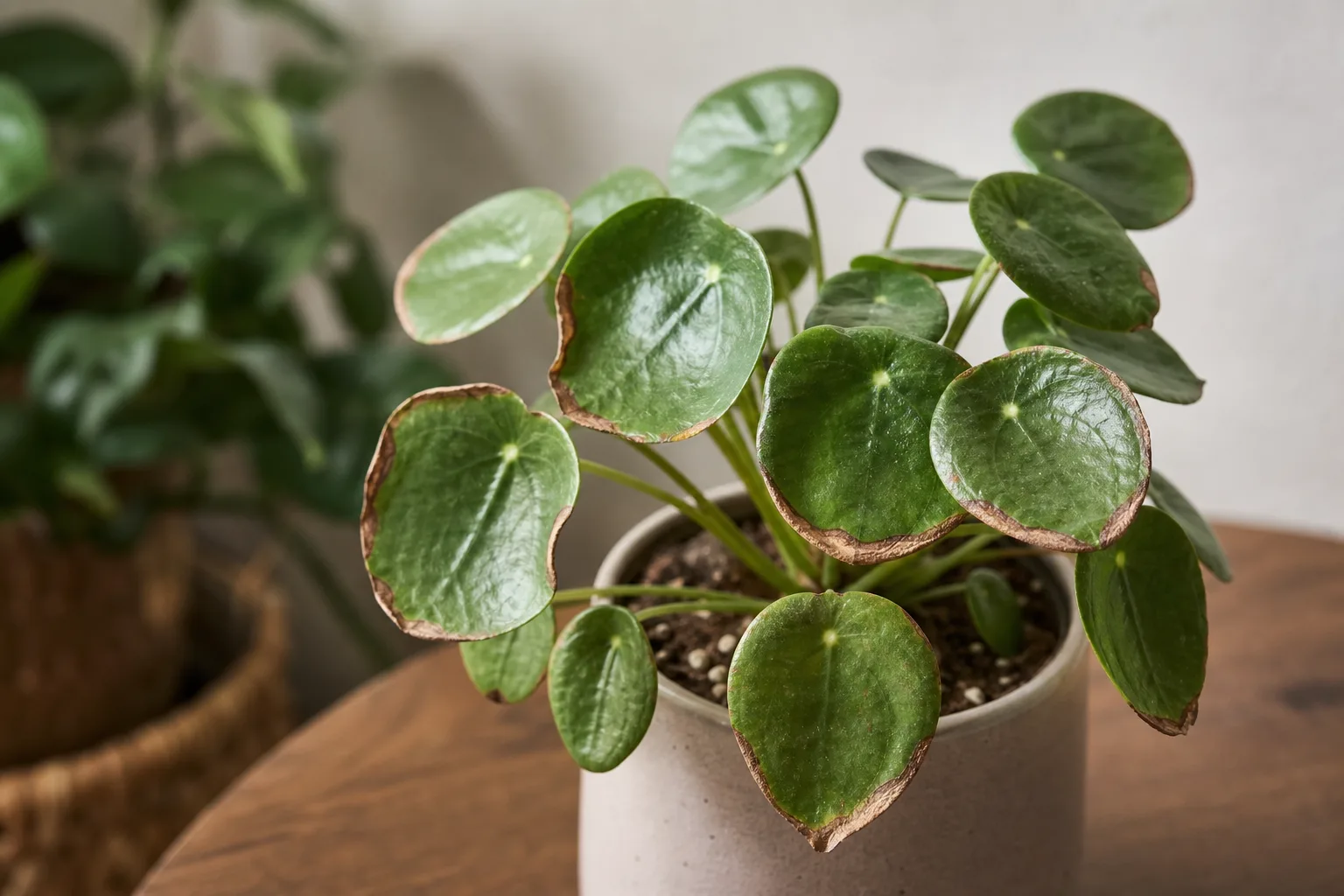
Low Humidity on Pilea Peperomioides: Causes, Checks & Fixes
This guide covers low humidity on Pilea Peperomioides. See also the general Low Humidity guide, watering, and light pages for this plant.
Low Humidity on Pilea Peperomioides: Causes, Checks & Fixes
Quick answer
Low humidity rarely stops healthy Pilea peperomioides, but winter heat and spider mites can brown coin-leaf edges before the rest of the plant looks stressed. Chinese money plant has substantial disc foliage-unlike trailing pileas with tiny leaves, it grows well in the relatively dry air found in most homes. Edge browning usually tracks dry heat near radiators, vents, or sunny winter glass more than a room-wide humidity meter reading.
First step: move the pot off radiators and rinse coin leaves monthly. That single change removes the microclimate that dries margins fastest and lets you inspect disc undersides for early mite stippling.
Scope note: This page is the dry-air and winter-heat hub for Pilea Peperomioides. For margin burn from salt buildup, watering swings, or hard tap water-even when humidity is fine-see brown tips. For whole-disc wilt on dry mix, see underwatering. For yellow leaves on wet soil, see overwatering.
Why Pilea shows dry-air damage on coin-leaf edges
Winter heating drops relative humidity near vents and sunny sills. Heated indoor air can fall below 30% relative humidity while furnaces run-far drier than the moderate to high humidity Pilea peperomioides prefers, though the species is tolerant of average home humidity levels. Forced air blows across coin leaves and dries margins faster than roots replace water through the long petiole.
The leaf shape makes margins vulnerable. Pilea’s glossy, circular, peltate leaves attach at the center of each disc-a lily-pad form with a thin outer rim relative to the broad surface. Water moves through the petiole and evaporates fastest at the edge, so dry microclimates show up as crisp brown rims while the coin center stays green.
That tolerance has limits. While most pileas grow well in relatively dry home air, species with smaller, thinner leaves such as Pilea glaucophylla and P. involucrata prefer slightly more humidity-often terrarium culture. P. peperomioides sits between those extremes: average room humidity is fine, but a pot on a radiator shelf above a heat vent is not.
Dry air also stacks with other stressors. Low humidity levels favor spider mites that stipple pilea discs-NC State Extension advises growers to monitor for spider mites on pilea. Underwatering plus dry air doubles edge burn. Bright indirect light from the light guide increases transpiration, so the same radiator placement browns edges faster than in a dim corner.
What low humidity looks like on Pilea Peperomioides
Typical dry-air damage:
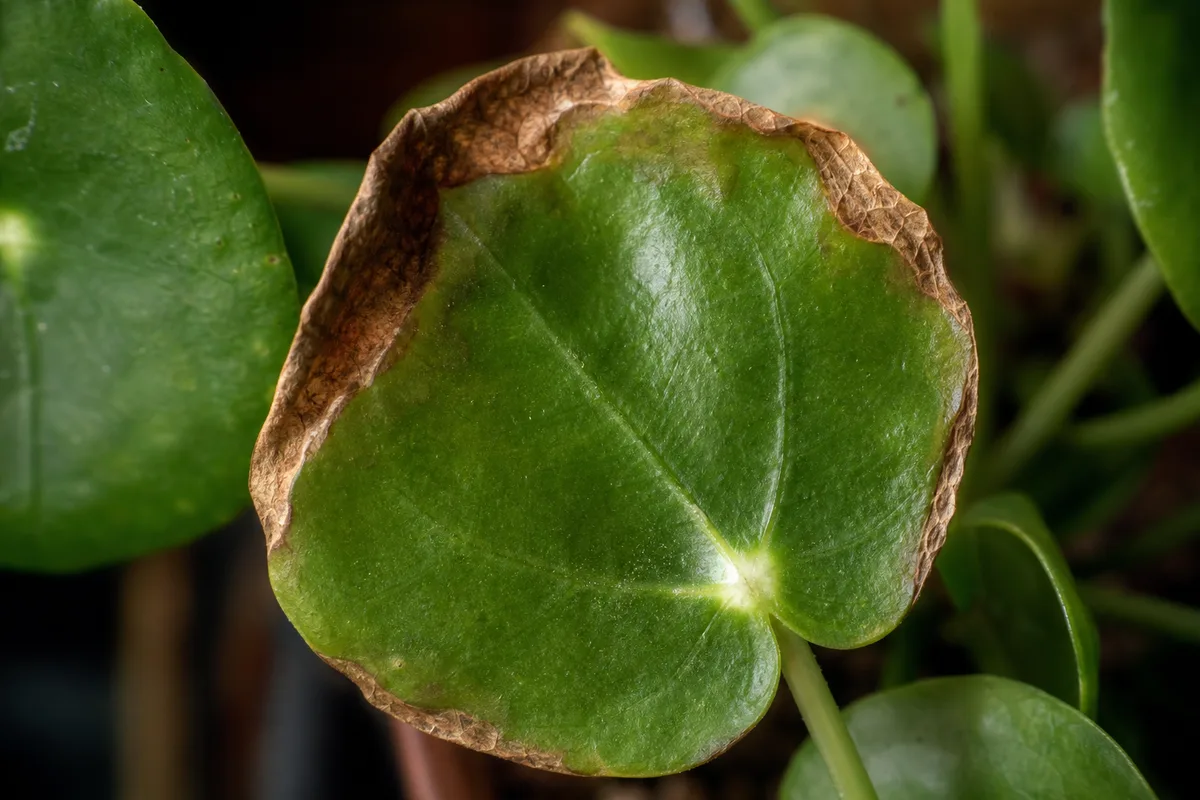
Low Humidity symptoms on Pilea Peperomioides - compare with healthy tissue on the same plant.
- Crisp tan or brown leaf edges while coin centres stay green and firm
- Tips on window-facing pancakes near cold glass in winter
- Dusty, dull coin surfaces-not usually widespread yellowing unless mites follow
- Damage concentrated on one side of the plant facing a vent, radiator, or AC blower
- Faster soil surface drying near hot glass, even when watering rhythm has not changed
- New pancakes emerging smaller or slower during long dry spells near heat sources
Signs dry air is not the only problem:
- Uniform wilting with bone-dry soil through the whole pot points to underwatering, not humidity alone
- Yellow lower leaves with wet, heavy soil suggests overwatering-humidity fixes will not help
- Fine pale stippling on disc undersides plus webbing at petiole joints means spider mites have moved in
- Brown tips after recent feeding with otherwise balanced moisture may be salt buildup-see brown tips before chasing humidity
Unlike thin-leaved pilea species, whole-plant collapse from humidity alone is uncommon on Chinese money plant. Cosmetic edge burn on a few old pancakes is less worrying than widespread crisping on new growth or mite stippling spreading stem to stem.
| Reading at leaf height | Symptom pattern | Likely cause |
|---|---|---|
| Below 35% in winter | Crisp edges on heat-facing side; soil balanced | Dry-air stress near radiator or vent |
| 40–50% (typical home) | Crisp edges only on one windowsill pancake | Local microclimate, not whole-room humidity |
| Above 45% | Brown margins after recent feeding | Salt buildup-check brown tips |
| Any level | Stippling + webbing on disc undersides | Spider mites-treat pests directly |
| Any level | Whole coin wilt; mix dry throughout | Underwatering |
How to confirm the cause
Work through these checks before you buy a humidifier or change your whole watering routine:
- Measure humidity near the plant - Hold a hygrometer at coin-leaf height, not across the room. Readings below 35% during heating season strongly support dry air as a contributor. Above 45% with crisp edges on balanced soil suggests salts, light stress, or pests instead.
- Soil moisture at top inch (2.5 cm) - Stick a finger or skewer into the mix per the watering guide. Low humidity with appropriately drying soil confirms an air problem. Crisp edges plus waterlogged soil means look at drainage and watering first.
- Placement audit - Note distance to heating vents, radiators, fireplace drafts, and AC blowers. Pilea on a winter windowsill above a radiator is a classic low-humidity setup. NC State Extension notes cold drafts and sources of heat need to be avoided.
- Pattern on the plant - Edge burn on outer pancakes while inner new growth looks fine fits dry microclimate. Even damage across the whole plant after a move may be relocation shock layered on dry air.
- Pest screen on coin undersides - Tap a suspect leaf over white paper and inspect disc undersides with light magnification. Stippled appearance and webbing mean mites-not humidity alone.
- Response test - Move off heat, rinse leaves once, and group with other plants on a pebble tray. If edge worsening stops within seven to ten days while watering stays steady, dry air was a major driver.
Confirmed low humidity means the environment-not a disease-is pulling moisture from leaf margins faster than roots can replace it.
First fix for Pilea Peperomioides
Move the pot away from heat sources and rinse or wipe coin leaves monthly.
This single step addresses the most common indoor gap: dry microclimate at the leaf margin. Relocate at least 60 cm (2 ft) from radiators, forced-air vents, and hot window glass. Rinse dust from discs with lukewarm water so you can inspect undersides for early mite stippling-UMN Extension recommends washing foliage as part of spider mite prevention in dry homes.
After relocating:
- Set the pot on a wide saucer of moist pebbles with water below pot level-evaporative moisture rises toward the leafy area without soaking roots.
- Group with other houseplants so combined transpiration raises local humidity modestly.
- Keep your existing watering rhythm: water when the top inch dries. Humidity helps leaves; it does not replace proper root-zone moisture-and avoid overwatering while chasing humidity.
Do not mist heavily into crowded coin clusters on day one. Water sitting on cold foliage overnight can invite fungal issues. Pebble trays and grouping raise local moisture more reliably than occasional misting, which may not meaningfully change ambient humidity.
Step-by-step recovery
Once the first fix is in place, escalate only as needed:
- Run a small humidifier near the shelf if readings stay below 35% at leaf height after three to five days. Target 40–50% for pilea-not constant fog that soaks walls. Most homes already meet that range once heat drafts are removed.
- Relocate within the home if one room stays persistently dry. A bright kitchen counter often holds more moisture than a forced-air bedroom-provided light meets the light guide minimum.
- Trim dead margin tissue with clean scissors once conditions stabilize. Remove only the crispy edge, not the whole pancake, when most of the disc is still green.
- Treat spider mites if confirmed - Follow the full spider mites guide when stippling and webbing appear. Dry-air recovery and mite control go together; raising humidity alone will not clear an active infestation.
- Hold fertilizer and repotting until new pancakes look healthy for two to three weeks. Stressed pilea does not need extra inputs while it acclimates to better air.
Recovery vignette (editorial observation, January 2026): A pilea on a west-facing windowsill above a bedroom radiator showed hygrometer readings of 28% at leaf height and crisp brown rims on three outer pancakes while soil moisture matched the normal seven-to-ten-day dry-down. After moving the pot to a grouped shelf 90 cm from the vent and rinsing discs monthly, new fully green pancakes appeared within eighteen days. Old brown edges remained cosmetic.
Recovery timeline
Brown edges are permanent on affected leaves-dead margin tissue does not re-green. Expect stabilization within one week once local humidity rises and heat drafts are reduced. New flat coin leaves with clean rims usually appear within two to three weeks during active growth.
If edges keep worsening despite relocation, a pebble tray, and verified 40%+ humidity at leaf height, revisit watering consistency per the watering guide, salt buildup on brown tips, and mite inspection before assuming the plant is unsaveable.
Lookalike symptoms
Underwatering - Whole-coin wilt and dry soil through the pot. Humidity fixes without watering leave pancakes limp. See underwatering.
Overwatering - Yellow lower leaves, soggy mix, and sometimes fungus gnats. More humidity makes this worse, not better. See overwatering.
Brown tips from salt buildup - Follows feeding or hard tap water while humidity is otherwise fine. Flush the pot and pause fertilizer-see brown tips.
Spider mites - Fine stippling on disc undersides, webbing between petioles, and spreading pale dots. Dry air invited them; treat pests directly on the spider mites page.
Too much direct sun - Scorched patches on leaves facing the window, not just margins. Sheer the light or pull the pot back per the light guide.
Draft stress - Cold winter glass or hot AC blasts can crisp edges similarly. Feel the air near the damaged side.
Not enough light - Leggy stems with small pale pancakes may look drought-stressed but need brighter placement. See not enough light.
What not to do
- Do not mist heavily every hour-wet foliage on cold nights can invite fungal issues; misting does not sustain higher ambient humidity anyway.
- Do not assume pilea needs terrarium humidity like smaller, thinner-leaved pileas-over-humidifying a healthy coin plant adds risk without benefit.
- Do not water more because leaf edges look dry-crisp margins from dry air do not always mean dry roots. Check soil before every extra drink.
- Do not place pilea on the sunniest winter sill above a heat source-maximum light with minimum humidity is the worst combination for margin burn near glass.
- Do not group with a mite-infested plant-shared shelves spread pests. Quarantine newcomers two weeks before mixing.
How to prevent low humidity issues on Pilea Peperomioides
- Keep average household conditions-40–50% relative humidity is fine for Chinese money plant in most homes.
- Rinse dust from coins monthly so leaves transpire efficiently and you catch early mite stippling.
- Monitor winter windowsills for warm, dry environments that favor pests.
- Position the pot in bright indirect light away from hot glass and vent blasts per the light guide.
- Match watering to top-inch dryness from the watering guide-steady moisture without chronic sogginess.
- Keep a hygrometer on the plant shelf November through March when heating runs hardest.
When to worry
Low humidity alone rarely kills pilea quickly, but combined stress can stall growth. Escalate if new pancakes stop entirely for more than a month, webbing covers multiple petioles, stems soften at the soil line while the mix stays wet, or more than half the plant crisps despite corrected humidity and watering. Those patterns point to pests, root problems, or stacked care errors-not dry air alone.
Treat as urgent when edge browning accelerates with stippling and webbing-follow the spider mites guide immediately, not only humidity tweaks.
Practical checks
Urgency check
Edge browning plus stippling and webbing needs mite treatment from the spider mites guide, not only humidity tweaks. Wet soil with yellow lower leaves and limp stems needs overwatering care instead.
Best inspection order
- Heat source distance - radiators, vents, fireplace, sunny glass
- Leaf edge texture - papery crisp rim vs. wet mushy tissue
- Mite check - stippling and webbing on disc undersides
- Soil moisture balance - top inch dry-down per watering guide
- Humidity at leaf height - hygrometer reading before buying equipment
Conclusion
Chinese money plant tolerates average indoor air better than many tropical houseplants, but winter heat creates a dry microclimate that crisps coin-leaf margins fast. Move the pot off radiators, rinse discs monthly, and confirm mites and watering are not stacking on top. Crisp old edges can be trimmed; clean new pancakes tell you the fix is working. When margin burn comes with salt crust, watering swings, or sour wet soil, route to the brown tips or overwatering guides instead.
Related Pilea Peperomioides guides
- Overview - species basics and care hub
- Watering - top-inch dry rule and seasonal rhythm
- Light - bright indirect placement and transpiration
- Brown tips - multi-cause margin burn (salts, water, sun)
- Spider mites - stippling and webbing treatment
- Overwatering - wet-soil yellowing when humidity is not the issue
- Underwatering - whole-disc wilt on dry mix
- Not enough light - leggy growth mistaken for drought stress