Yellow Leaves on Phalaenopsis Orchid: Causes, Checks & Fixes
Quick answer
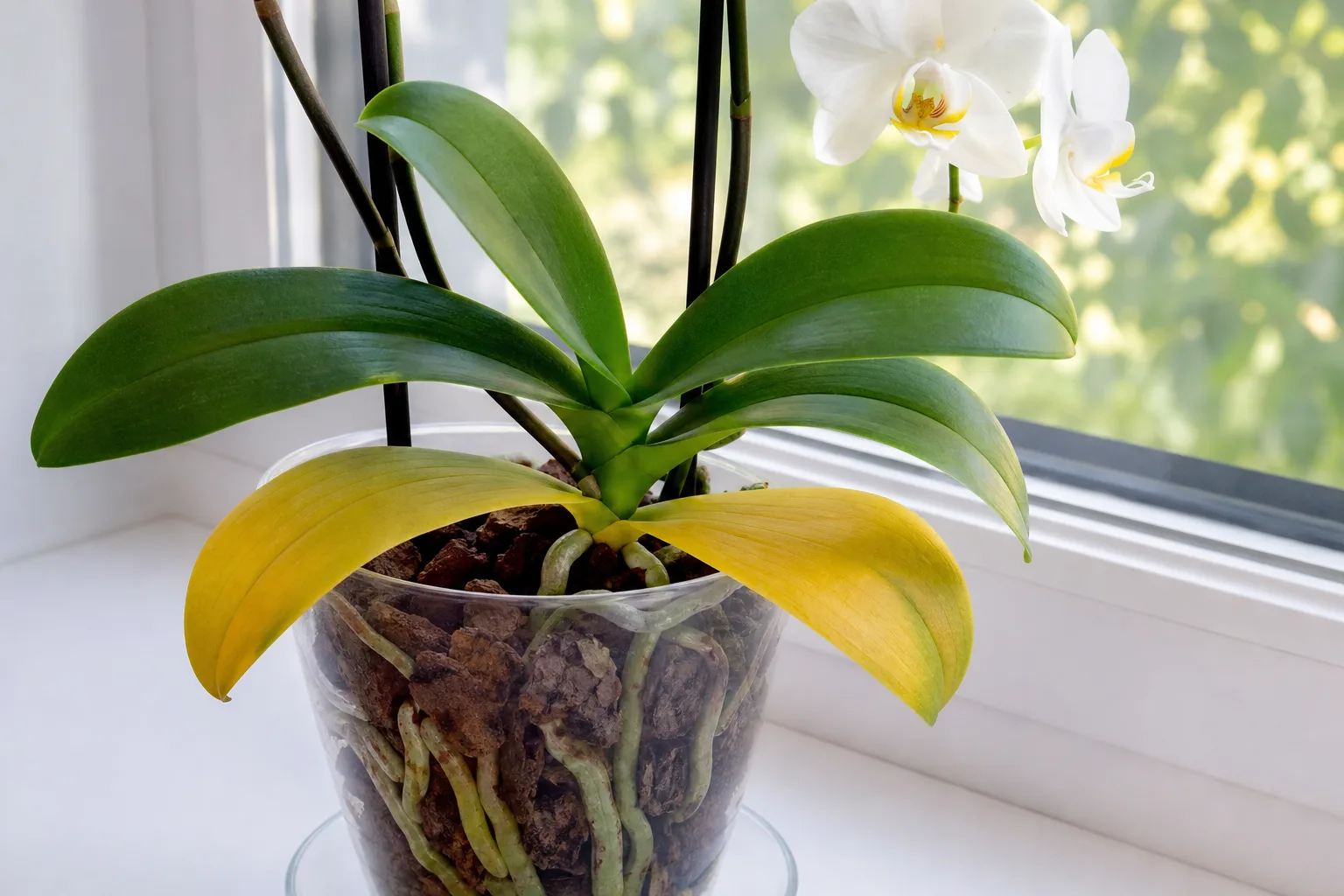
On Phalaenopsis, one slowly yellowing bottom leaf is often normal aging. Multiple yellow leaves usually mean wet bark, too much direct sun, or roots that can no longer supply water. First step: look at root color through a clear pot-silver-grey means dry; bright green means wait before watering.
Yellow Leaves on Phalaenopsis Orchid: Causes, Checks & Fixes
This guide covers yellow leaves on Phalaenopsis Orchid. See also the general Yellow Leaves guide, watering, and light pages for this plant.
Yellow Leaves on Phalaenopsis Orchid: Causes, Checks & Fixes
Quick answer
Yellow leaves on a moth orchid (Phalaenopsis) are a pattern problem, not one diagnosis. Unlike many houseplants, Phalaenopsis has no pseudobulb or other major water-storage organ-only leaves and velamen-coated roots-so when roots fail, yellowing can spread faster than on a succulent or Chinese evergreen.
First step: read root color through a clear pot before you change watering, light, or fertilizer. Aerial roots turn from dull silver or white to pale green when adequately watered. Silver-grey velamen means the plant has dried down; bright green means moisture is still present. That single cue separates the most common care mistakes from normal leaf turnover.
Work through these three checks in order:
- Root color and bark moisture - Silver-grey roots with lightweight bark suggest dryness; roots that stay bright green for days with heavy, wet bark suggest overwatering.
- Which leaves are affected - One lowest leaf fading slowly while upper leaves stay firm often means natural aging. Multiple leaves yellowing together points to root stress or light damage.
- Light exposure - Yellow or bleached patches on the window-facing side of leaves suggest direct sun; uniform yellowing with wet bark points to roots first.
For year-round culture, see the Phalaenopsis overview and watering guide.
What yellow leaves look like on Phalaenopsis Orchid
Moth orchids carry thick, leathery leaves on a short stem with aerial roots that sprawl outside the pot-that is normal, not a sign of distress. Yellowing shows up in distinct patterns:
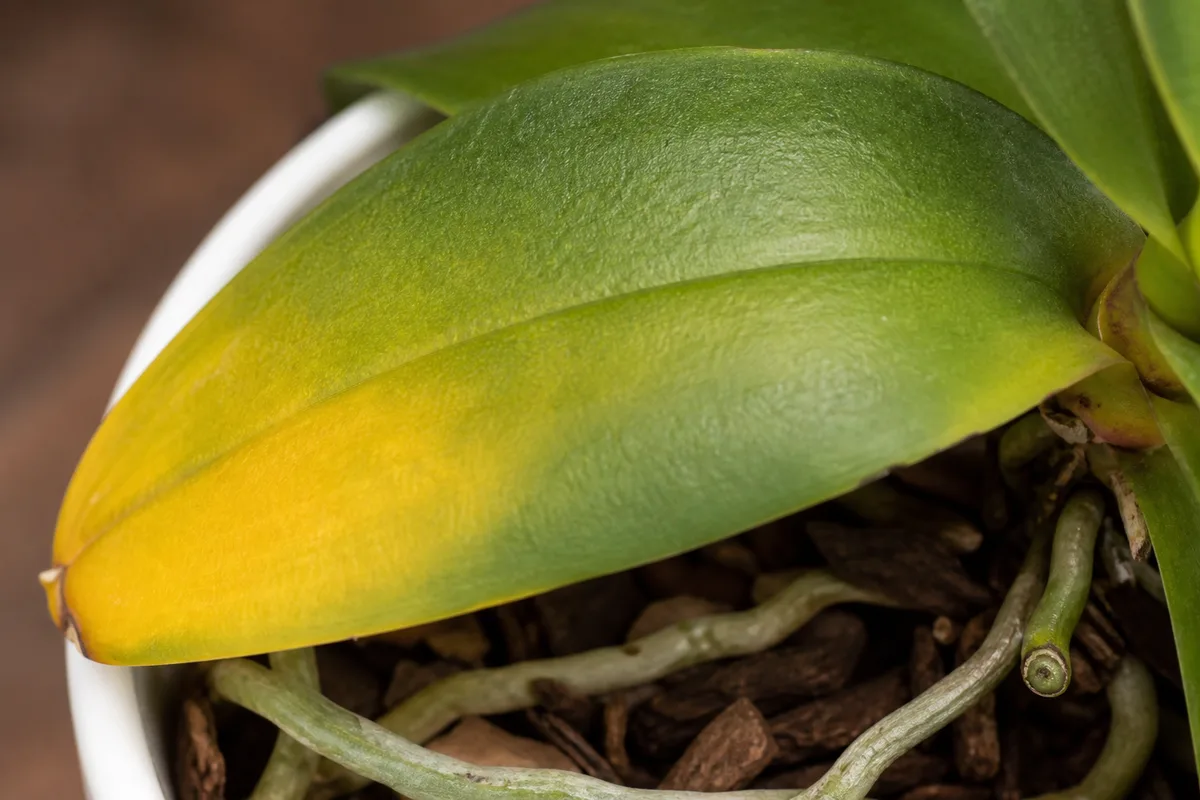
Yellow Leaves symptoms on Phalaenopsis Orchid - compare with healthy tissue on the same plant.
- Normal aging - The oldest bottom leaf fades from green to yellow over weeks or months while new leaves at the crown stay firm. Cut off any old yellowed leaves at the base of the plant once they loosen; do not force them off early.
- Overwatering and root stress - Several leaves turn yellow or pale at once, often feeling limp even though bark feels wet-the confusing wilt paradox when damaged roots cannot move water. Roots visible through the pot may stay bright green continuously instead of cycling to silver-grey.
- Degraded bark - Bark that has broken down into fines holds water like mulch. Owners water on the same calendar, but the mix never dries-roots suffocate and leaves yellow even when watering frequency did not change. Clues include sour smell, water channeling through the pot without wetting roots, and repotting needed every 1–2 years before media breaks down.
- Too much direct sun - Under very high light, leaves develop pink or reddish margins and appear yellow-green or almost yellow. Sun-facing patches may look bleached or papery while the shaded side stays darker green.
- Underwatering and dead root mass - Less common, but chronic dryness or prior rot leaves shriveled silver roots and slightly limp upper leaves. Bark feels dusty-light and the pot weighs almost nothing-opposite of the wet-bark pattern. See underwatering if roots are silver-grey but leaves still wilt.
- Low humidity stress - Low humidity and too little water result in wrinkled leaves-often a puckered texture rather than uniform yellow, but chronic drought can precede yellowing. Compare with low humidity if leaves wrinkle without wet bark.
Phalaenopsis rarely yellows from nitrogen deficiency alone the way leafy houseplants do. Yellow leaves with wet bark almost always mean water and root-zone oxygen-not a missing fertilizer dose.
Why Phalaenopsis Orchid gets yellow leaves
Natural aging of the lowest leaf
Moth orchids grow new leaves from the crown and eventually shed the oldest leaf at the base. It is normal for the oldest leaves of moth orchids to turn yellow and dry up as they age. On a healthy plant, this happens gradually-one leaf at a time-with firm new growth above and roots that still cycle between silver-grey and green after watering.
Overwatering in broken-down bark
Phalaenopsis roots need air between soaks. When bark stays saturated, root rot occurs if plants are left in a soggy medium-especially in dense standard potting soil, which moth orchids should never use. Because they have no major water-storage organs other than their leaves, they must never completely dry out, yet should not be watered again until nearly dry. The failure mode is wet roots that cannot breathe, not occasional dryness.
Ice cubes, saucers of standing water, and cachepots without drainage keep velamen wet and cold-common gift-shop habits that accelerate yellowing. Calendar watering without checking root color is the other classic mistake.
Too much direct sun
Phalaenopsis evolved on shaded tree trunks. An east window is ideal in the home; shaded south or west windows are acceptable. Moving a plant closer to unfiltered south or west glass-especially in late spring-can bleach or yellow sun-facing leaf tissue within days. This is placement stress, not root failure; bark may dry on a normal schedule while only the exposed leaf side changes color.
Underwatering and dead root mass
When roots have already died from past overwatering or old bark, remaining roots cannot supply water even if you soak on schedule. Leaves go limp and yellow while owners assume they are underwatering and add more water-deepening rot. The tell is mushy brown roots in sour bark versus firm silver roots in bark that has simply dried out. Full triage lives on wilting and drooping leaves when limp foliage is the main symptom.
Rare: fertilizer burn, cold damage, and crown rot
Heavy feeding on stressed plants, cold window glass in winter, or water sitting in the leaf crown can yellow or damage tissue without the classic wet-bark pattern. Water only in the morning so leaves dry and do not let water collect in the crown to prevent crown rot. Soft crown tissue with rapid multi-leaf yellowing is a different urgency than one aging bottom leaf-see root rot immediately.
Lookalike symptoms to rule out
Before repotting or fertilizing, rule out these common misreads:
- Brown tips only - Often salt buildup, low humidity, or fluoride-not full-leaf yellowing. See brown tips if margins crisp while the blade stays mostly green.
- Dark green stiff leaves - Usually not enough light, not overwatering. Dark leaves plus chronically wet bark in a dim corner stack two stressors.
- Bud blast - Unopened buds yellow and drop while leaves look fine-follow bud drop, not this yellow-leaf guide.
- Root rot - Advanced overwatering with mushy crown, sour bark, and collapsing leaves. Yellow leaves are often an early sign; soft crown tissue means escalate the same week.
If wet bark and multiple yellow leaves appear together, treat the root zone first-not fertilizer or more light.
How to confirm the cause
Work through this inspection in order:
- Root color through the pot - Silver-grey velamen means dry; bright green means moist. Roots that never silver between your usual watering days confirm frequency is too high or bark is too water-retentive.
- Pot weight and bark feel - Lift before and after watering. A heavy pot days later with surface bark still damp confirms slow dry-down. Push a skewer to mid-depth-sour smell or dark wet fines mean degraded bark.
- Which leaves are affected - Bottom only, slowly, with firm crown = aging likely. Multiple leaves quickly + wet bark = overwatering or rot likely. Window-facing bleached patches = sun stress. All leaves limp + silver roots + light pot = underwatering or dead root mass.
- Crown firmness - Press gently at the base where leaves join. Firm crown supports a dry-down or light move; soft, wet crown is urgent-see root rot.
- Light placement - Compare to the light guide. Direct midday beams on leaves? Very dark corner with wet bark? Each has a distinct fix.
- Bark age - Has the mix been refreshed in the last two years? Mulch-like bark that drains poorly mimics overwatering even when you water less.
Confirmed overwatering shows at least two signs: wet bark at mid-depth, yellowing on more than one leaf, and roots that stay bright green without silvering between cycles.
First fix for Phalaenopsis Orchid
Stop watering until roots turn silver-grey-then soak once and drain fully.
That single pause breaks the wet cycle behind most Phalaenopsis yellow leaves. Do not compensate with fertilizer, heavy misting, or an immediate repot unless roots are already mushy or bark smells sour.
After roots silver and you have soaked and drained:
- Move to bright indirect light-an east window or filtered south/west exposure per the light guide-if sun bleaching caused the yellowing.
- Improve airflow around the pot; never let the container stand in runoff water.
- If bark has broken down into fines or roots are brown and soft, unpot, trim dead roots, and repot into fresh orchid bark-timing details on the repotting guide.
For normal aging on one bottom leaf, no watering or light change is needed. Let the leaf yellow and drop.
For sun stress, pull back from direct glass before the next watering adjustment.
Make one correction first. Wait two weeks before stacking repotting, feeding, or pest treatments unless the crown is soft.
If roots are mushy
When inspection finds brown, hollow roots and sour bark, escalate to root-rot recovery: unpot, trim all mushy tissue, let cut surfaces air-dry briefly, repot into fresh bark sized to the trimmed root mass, and hold water until new root tips appear. That path is for confirmed rot-not for a single aging bottom leaf.
Step-by-step recovery
Match follow-up to what you confirmed:
Overwatering (wet bark, firm crown):
- Water only when roots silver-grey; discard calendar schedules.
- Refresh bark if mix is more than two years old or smells musty-even if the pot size is fine.
- Watch for new crown leaves staying firm and green for two consecutive weeks.
Sun bleaching:
- Move to bright indirect light-never unfiltered midday sun on moth orchid leaves.
- Leave partially green leaves in place; fully bleached tissue will not recover but new leaves should emerge greener in correct light.
Normal aging:
- Allow the lowest leaf to finish yellowing and separate.
- No change needed if roots cycle normally and the crown stays dry and firm.
Underwatering (silver roots, light pot, firm crown):
- Soak thoroughly until velamen greens, then drain completely.
- Resume silver-grey rhythm from the watering guide-do not keep bark constantly wet to “fix” limp leaves.
Recovery timeline
Fully yellow leaves do not turn green again. Phalaenopsis cannot regenerate chlorophyll on a blade that has already senesced-the leaf drops or can be removed once loose. Judge recovery by healthy new leaves, not old leaf color.
- Normal aging - The bottom leaf drops within a few weeks; a new leaf may emerge from the crown over the next growing season.
- Mild overwatering - Yellowing often stabilizes within one to two weeks once bark dries and roots breathe. New root tips may appear in two to four weeks after a spring repot into fresh mix.
- Sun stress - Existing bleached patches are permanent; new leaves should show healthier color within four to six weeks in indirect light.
- Advanced root rot - Recovery takes months and may be partial. If the crown softens or new leaves keep yellowing after dry-down and root trim, the plant may not be saveable.
Signs of improvement: roots cycle silver to green on a predictable rhythm, new crown leaves hold their color, yellowing does not climb toward the center. Signs of worsening: sour smell, soft crown, yellowing on the newest leaf, or bark that never dries.
What not to do
Do not water more because leaves look limp when bark is already wet-that deepens root stress and mimics drought while causing rot.
Do not fertilize a yellowing plant in soggy bark. Phalaenopsis benefit from light fertilization, but overfeeding produces lush growth at the expense of flowers-and salts on stressed roots worsen leaf damage.
Do not repot on day one unless roots are mushy, bark has clearly failed, or drainage is blocked. Repotting a waterlogged plant into a larger pot often slows drying further.
Do not use ice cubes or standard potting soil-both keep roots cold and wet longer than epiphytic velamen tolerates.
Do not pull yellow leaves before they loosen; tearing base tissue opens entry points for infection.
Phalaenopsis is non-toxic to cats and dogs, but avoid over-handling a stressed plant or leaving chewed leaf tissue piled on wet bark.
When to worry
Treat yellow leaves as urgent when:
- Several leaves yellow within a week, not one bottom leaf over months.
- The crown feels soft or wet at the base where leaves join.
- Bark smells sour or roots are black and mushy when you unpot.
- Newest crown leaves yellow while older leaves also decline.
- Limp yellow foliage persists with wet bark for more than seven to ten days after you stopped watering.
A single yellow bottom leaf on an otherwise stable moth orchid with normal root color cycling is routine. Widespread yellowing with wet bark is not-inspect roots the same week and read root rot if the crown is compromised.
How to prevent yellow leaves next time
Prevention on Phalaenopsis is about matching water to how fast bark actually dries in your home:
- Water on root color, not calendar - Soak when velamen is silver-grey; wait while it is bright green. Details on the watering guide.
- Refresh bark every 1–2 years - Before fines hold moisture like soil. See repotting.
- Keep bright indirect light - East window or filtered south/west; read the light guide before chasing more intensity.
- Morning watering only - So leaves and crown dry by night; never pool water in the crown.
- Drain fully - Never stand the pot in a saucer of water or use ice cubes.
- Accept one aging bottom leaf - Steady turnover is healthy growth, not failure.
Phalaenopsis yellow-leaf cross-check
If yellow leaves keep returning after you adjust watering, compare your routine to what moth orchids actually need:
| Checkpoint | Healthy target | Yellow-leaf risk when wrong |
|---|---|---|
| Root color cycle | Silver-grey dry → green after soak → silver again before next drink | Roots stay bright green for days; never silver between waterings |
| Bark condition | Chunky orchid bark, refreshed every 1–2 years | Mulch-like fines, sour smell, water runs through without wetting roots |
| Light | Bright indirect; east or filtered south/west | Direct midday sun bleaching, or dark corner + wet bark |
| Crown | Dry and firm at the leaf base | Water sitting in crown; soft tissue |
| Watering method | Full soak, full drain, morning only | Ice cubes, misting instead of soaking, saucer standing water |
| Leaf pattern | One bottom leaf fades slowly | Multiple leaves yellow quickly |
Fix the row that fails before adding fertilizer, upsizing the pot, or treating for pests you have not confirmed.
Symptom lookalike table
| What you see | Most likely cause | First direction |
|---|---|---|
| One bottom leaf yellowing slowly; firm upper leaves; roots cycle normally | Natural aging | No change; let leaf drop |
| Several leaves yellow; wet bark; roots stay green; limp texture | Overwatering or degraded bark | Stop watering until silver-grey; refresh bark if old |
| Yellow or bleached patches on window-facing leaf side only | Too much direct sun | Move to bright indirect light |
| Limp leaves; silver-grey roots; light dry pot | Underwatering or dead roots from prior rot | Soak and drain; inspect roots-see underwatering |
| Wrinkled leaves, not fully yellow; dry bark | Low humidity or drought stress | Soak; compare low humidity |
| Rapid multi-leaf yellow; soft crown; sour bark | Crown or root rot | Urgent-see root rot |
Related tool
Use the Yellow Leaves Diagnosis Tool to narrow causes for yellow leaves on this plant before changing multiple variables at once.
Related guides
- Phalaenopsis overview - species hub and year-round culture
- Watering guide - silver-grey root cycle and soak method
- Light requirements - placement without scorching leaves
- Overwatering - wet bark and bright green roots
- Underwatering - silver roots with limp leaves
- Root rot - mushy crown and sour bark
- Wilting - limp leaves when yellowing is not the main symptom
- Not enough light - dark green leaves and slow dry-down
- Repotting - when degraded bark triggers hidden overwatering
When to use this page vs other Phalaenopsis Orchid guides
- Phalaenopsis Orchid watering guide - Use for routine moisture checks before assuming yellow leaves is the main issue.
- Phalaenopsis Orchid problems hub - Browse all 20 common issues on this species.
- Overwatering on Phalaenopsis Orchid - Different entry point when symptoms overlap with yellow leaves.
- Underwatering on Phalaenopsis Orchid - Different entry point when symptoms overlap with yellow leaves.
- Not Enough Light on Phalaenopsis Orchid - Different entry point when symptoms overlap with yellow leaves.