Low Humidity on Phalaenopsis Orchid: Causes, Checks & Fixes
Quick answer
Low humidity on Phalaenopsis Orchid shows as crispy leaf edges, wrinkled leaves, or shriveled aerial roots-often after winter heating starts. First move the plant away from vents and radiators, then raise local humidity with a pebble tray or room humidifier while keeping the bark wet-dry cycle correct.
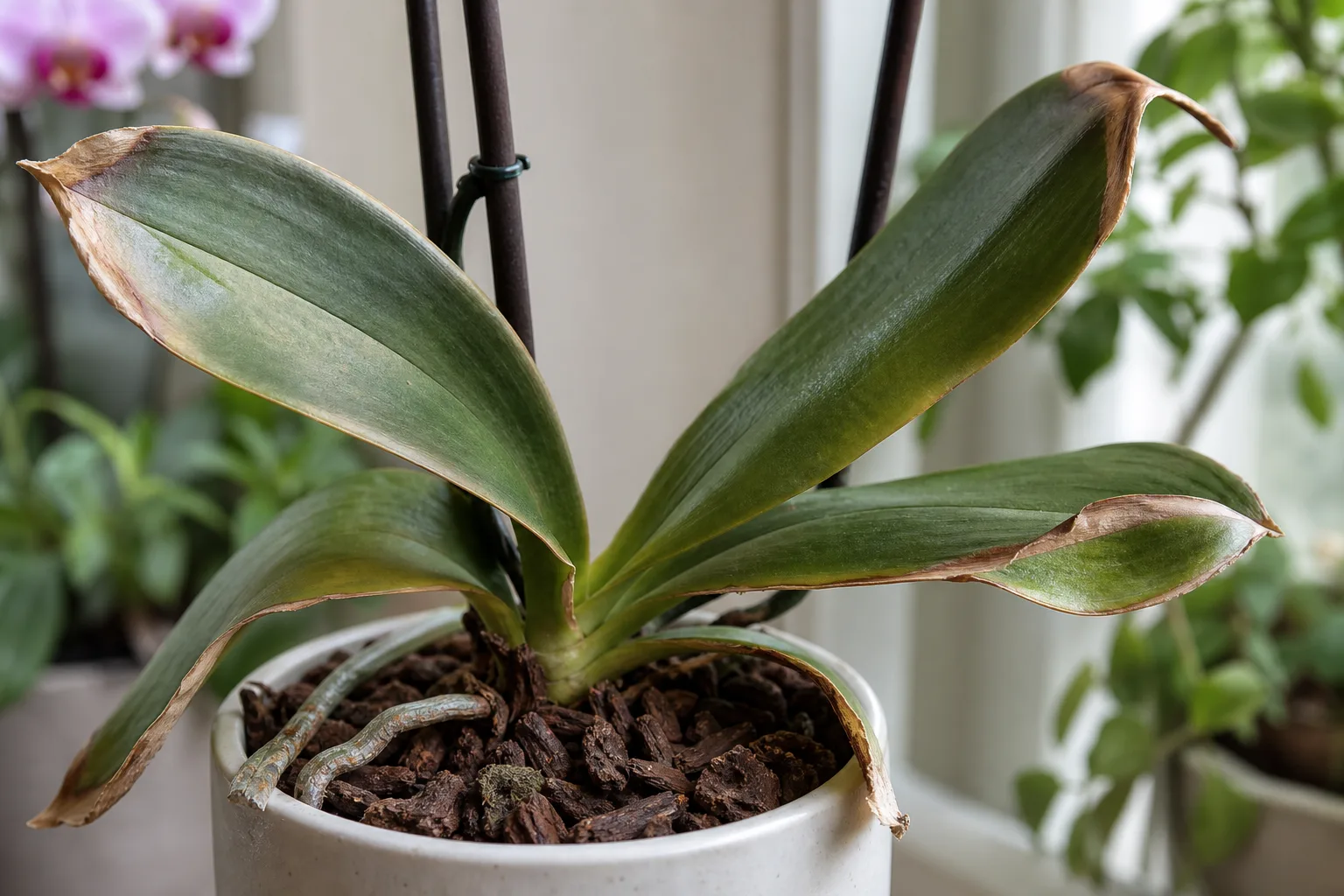
Low Humidity on Phalaenopsis Orchid: Causes, Checks & Fixes
This guide covers low humidity on Phalaenopsis Orchid. See also the general Low Humidity guide, watering, and light pages for this plant.
Low Humidity on Phalaenopsis Orchid: Causes, Checks & Fixes
Quick answer
Phalaenopsis Orchid-commonly called moth orchid-prefers moderate humidity, roughly 50–70% in most homes, though it can adapt when bark, light, and watering are correct. Winter heating, air conditioning, and placement near vents or radiators drop local humidity sharply. The plant responds with crispy leaf margins, lengthwise leaf wrinkles, or aerial roots that look more shriveled than usual.
Unlike many orchids, Phalaenopsis has no water-storage pseudobulbs. Its leaves and roots must stay hydrated through your Phalaenopsis Orchid watering guide and the moisture in surrounding air. Dry air alone rarely kills a healthy moth orchid, but it makes every other stress-irregular watering, weak light, or a failing bark mix-show up faster.
First step: move the orchid away from the heating vent, radiator, or drafty winter window that is drying the air around it. Once placement is stable, add a pebble tray or room humidifier. Do not compensate by keeping bark constantly wet-that causes root rot on Phalaenopsis Orchid, which mimics low-humidity wilting.
What low humidity looks like on Phalaenopsis Orchid
Low humidity damage on moth orchids is usually cosmetic at first, then progresses if dry air persists through a bloom cycle or winter.
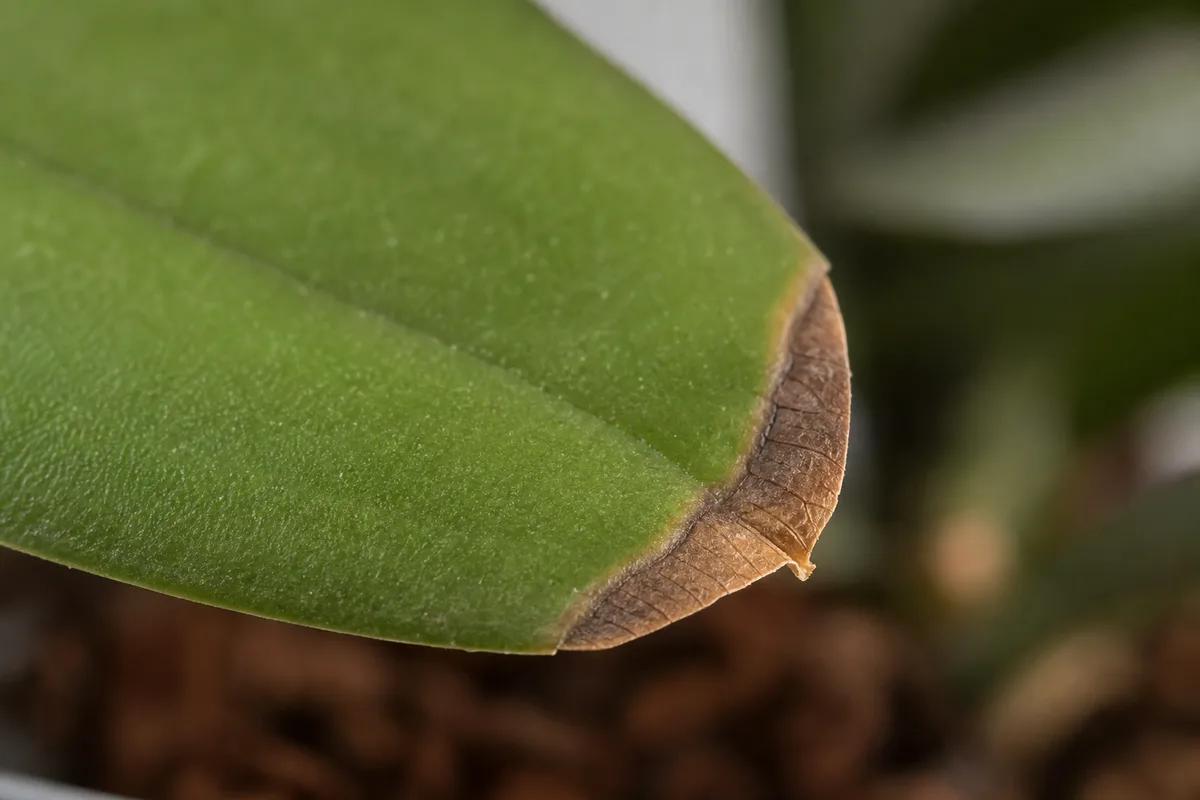
Low Humidity symptoms on Phalaenopsis Orchid - compare with healthy tissue on the same plant.
Typical signs:
- Dry, tan or brown crisp edges on otherwise firm leaves
- Lengthwise wrinkles or pleats on leaves, especially upper leaves closest to a heat source
- Aerial roots that look more shrunken or grey when the plant is actually watered on schedule
- Faster bud loss on an active spike when dry air combines with temperature swings near vents
- Symptoms that appear within days of turning on central heat or moving the pot to a new windowsill
What low humidity usually does not look like:
- Soft, mushy roots or a foul smell from bark-that is overwatering on Phalaenopsis Orchid or rot
- Uniform yellowing of lower leaves with wet bark-often excess water or poor light
- Black spreading patches on leaves-likely sunburn or infection, not dry air alone
- Sticky residue or webbing-pests, not humidity
Aerial roots sprawling outside the pot are normal on Phalaenopsis. Silver-grey or white roots when dry and pale green after watering are healthy. Do not trim aerial roots just because they look dry when silver-grey-that color shift is the plant’s normal dry signal, not proof of humidity failure.
Why Phalaenopsis Orchid is sensitive to dry air
Moth orchids evolved as tropical epiphytes on tree bark in warm, humid forests. Indoors they live in coarse bark or sphagnum with much less ambient moisture than their native canopy. They compensate well when you water thoroughly on a wet-dry cycle and give Phalaenopsis Orchid light guide-but they cannot store water in pseudobulbs the way Cattleya or Dendrobium can.
That physiology matters for diagnosis. When air is very dry, transpiration pulls water from leaves faster than roots replace it, even if you watered recently. The leaf edges desiccate first because they lose moisture at the highest rate. In extreme dry heat near a radiator, whole leaves can pleat lengthwise while roots still look acceptable.
Phalaenopsis also keeps blooming on long spikes for weeks. During spike development, environmental stability matters. Very dry air combined with cold drafts or hot vent blasts can stress buds-an overlap with bud-drop problems, but the placement fix is similar: stable air, no direct heat blast.
Winter is the peak season for this issue in most homes. Forced-air heating can drop relative humidity into the 20–30% range while the plant sits on a windowsill above a radiator. Summer air conditioning creates a similar dry zone near cold vents.
How to confirm low humidity vs other causes
Work through these checks before treating humidity alone:
- Timing and placement - Did crisp edges or wrinkles appear after heat season started, a room change, or placing the pot near a vent? Localized damage on the side facing the heat source strongly points to dry air.
- Root and bark check - Lift the pot or peek through a clear plastic sleeve. Bright green roots with soggy bark mean overwatering, not low humidity. Silver-grey roots with wrinkled leaves after a proper soak suggest dry air, underwatering on Phalaenopsis Orchid, or both.
- Watering history - Phalaenopsis should be watered thoroughly when bark is nearly dry, then allowed to dry again-not kept constantly moist. Long gaps between thorough waterings cause wrinkles that mimic humidity stress.
- Light check - Dark stiff leaves mean too little light; red-tinged margins mean too much direct sun. Sunburned patches are flat brown, not just crisp edges from dry air.
- Spike status - If buds shrivel on a new spike, check for drafts and fruit bowls nearby as well as humidity. Pure dry air rarely aborts every bud without another stressor.
- Compare plants - Only the orchid on the radiator ledge shows damage while others look fine? That pattern confirms a microclimate problem.
If bark cycles correctly, roots are firm, and damage still concentrates near a heat source, low humidity is confirmed. If roots are soft or bark never dries, fix watering and media before adding humidity tools.
First fix for Phalaenopsis Orchid
Move the orchid away from heating vents, radiators, hot window glass, and strong air-conditioning drafts.
This single placement change removes the worst localized dry-air source without risking root rot. Choose a stable spot with bright indirect light-an east window or shaded west window works well. Let the plant sit there at least one week before judging improvement.
Do not jump to Phalaenopsis Orchid repotting guide, heavy fertilizer, or daily crown misting on day one. Do not move the pot repeatedly hunting for perfection; each move adds stress.
Step-by-step recovery
After relocation:
- Add a pebble tray - Set the pot on a shallow tray of pebbles with water below the pot bottom. Evaporation raises humidity near the plant without soaking roots. Never let the pot sit in standing water.
- Run a room humidifier if air stays very dry - Target roughly 40–60% relative humidity in the room or orchid grouping. A cool-mist unit near-but not blasting-the plant is more reliable than occasional misting.
- Group orchids together - Several plants share transpired moisture and buffer dry spells better than a lone pot on a bare shelf.
- Maintain the silver-grey root watering rhythm - Water thoroughly when roots turn dull silver or white; wait when they are bright green. Dry air is not fixed by keeping bark wet between cycles.
- Hold fertilizer until leaves firm up - Resume light orchid fertilizer only after new growth looks turgid and you are back on a normal schedule.
- Trim only fully dead tissue - Snip crispy tips if they bother you aesthetically, but partial edge browning can wait until new leaves emerge clean.
Avoid misting the crown heavily. Water sitting in leaf joints invites crown rot, especially when humidity is already high from a tray or humidifier.
Recovery timeline
Placement away from heat sources often stops new crisping within one to two weeks. Existing brown edges and wrinkles do not heal backward-watch the next emerging leaf or root tip instead. With a pebble tray or humidifier added, expect firmer leaves within two to four weeks if watering stays consistent.
An active flower spike may not recover aborted buds; the plant can bloom again on the same or a new spike once conditions stabilize. Root tips should stay firm and white or green, not brown and hollow.
Lookalike symptoms
Underwatering - Low humidity and too little water will result in wrinkled leaves. Leaves wrinkle lengthwise and roots stay silver-grey or white and shriveled even after you think you watered. Fix with thorough sink soaks on a proper schedule, not just humidity.
Overwatering and root rot - Leaves go limp and pleated while bark stays wet and roots turn brown or mushy. Lower humidity will not help; repot in fresh bark and correct the wet-dry cycle.
Salt burn from fertilizer - Tip and edge browning after heavy feeding without flushing bark. Flush with plain water at the next watering and reduce fertilizer strength.
Too much direct sun - Flat brown patches on leaves facing the window, sometimes with reddish leaf margins. Filter light with a sheer curtain; do not raise humidity as the main fix.
Bud blast - Buds yellow and drop before opening, often with drafts, ethylene from ripening fruit, or temperature swings-not humidity alone. Stabilize the whole environment.
Mistakes to avoid
- Misting leaves once daily instead of raising ambient humidity-surface moisture evaporates in minutes and can rot the crown if water pools. Misting usually does not provide enough moisture under indoor home conditions.
- Keeping bark constantly wet to “help” wrinkled leaves-that promotes root rot on Phalaenopsis, which has no pseudobulbs to survive soggy media.
- Using ice cubes for watering-cold shock damages roots and does not fix dry air.
- Trimming all aerial roots because they look grey when dry-those roots are normal and useful.
- Repotting into standard potting soil while chasing humidity-moth orchids need coarse bark or orchid mix with fast drainage.
- Running a humidifier while the pot still sits directly over a radiator-the hot dry plume overwhelms local moisture.
How to prevent low humidity problems
Keep Phalaenopsis on a stable windowsill away from vents year-round, not only in winter. Run a humidifier from late fall through early spring if your home drops below 40% relative humidity. Group plants to share moisture. Maintain bright indirect light so the plant uses water predictably.
Repot in fresh coarse bark every one to two years before media breaks down and holds water unevenly. Water in the morning so leaves dry before night. During active spike development, avoid moving the plant or repotting unless bark is clearly failing.
Phalaenopsis is generally non-toxic to cats and dogs, so humidity trays and grouped displays are safe around pets-just keep pots out of reach so animals do not knock them into standing water.
When to worry
Low humidity alone is rarely fatal. Worry when wrinkled or crisp leaves come with soft brown roots, crown mush, or bark that never dries between waterings-that is rot or chronic overwatering, not a humidity tray problem. Worry if every new leaf emerges smaller and more wrinkled despite good placement and a humidifier-inspect roots and light before assuming the air is still too dry.
If the plant has only cosmetic edge crisping, firm leaves, healthy roots, and a stable spot away from heat, it should survive and bloom again once humidity and watering align.
Conclusion
Dry indoor air stresses Phalaenopsis Orchid because it relies on leaves and roots for hydration without pseudobulbs. Crispy edges and wrinkled leaves near vents or winter heat are common and usually fixable. Confirm watering and root health first, move the plant away from dry-air sources, then raise local humidity with a pebble tray or humidifier. Damaged leaf tissue will not revert, but new growth tells you whether your fix worked-firm leaves, green or silver-grey roots, and steady spikes are the signs to trust.
When to use this page vs other Phalaenopsis Orchid guides
- Phalaenopsis Orchid watering guide - Use for routine moisture checks before assuming low humidity is the main issue.
- Phalaenopsis Orchid problems hub - Browse all 20 common issues on this species.
- Brown Tips on Phalaenopsis Orchid - Different entry point when symptoms overlap with low humidity.