Root Rot on Phalaenopsis Orchid: Causes, Checks & Fixes
Quick answer
Root rot on Phalaenopsis Orchid means roots have decayed-usually from degraded bark or chronic wetness-not just a heavy watering. Stop watering, unpot, trim mushy tissue, air-dry cuts, and repot into fresh orchid bark. If the crown is firm, recovery is possible; a black mushy crown usually means discard.
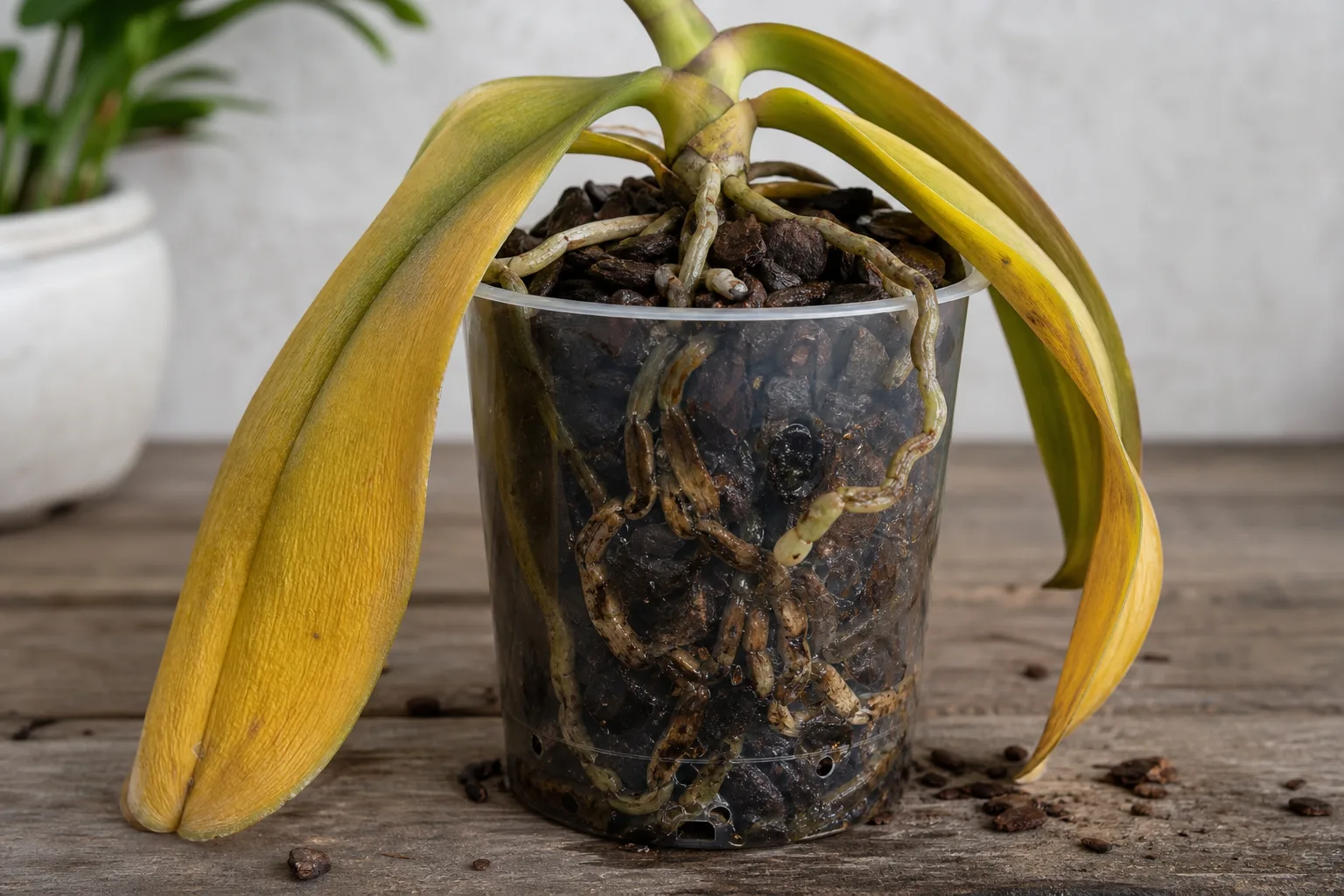
Root Rot on Phalaenopsis Orchid: Causes, Checks & Fixes
This guide covers root rot on Phalaenopsis Orchid. See also the general Root Rot guide, watering, and light pages for this plant.
Root Rot on Phalaenopsis Orchid: Causes, Checks & Fixes
Quick answer
Root rot on a moth orchid means velamen and root tissue have decayed-almost always from bark that stayed wet too long, broke down into water-retentive fines, or was never appropriate orchid bark to begin with. This is confirmed decay rescue: mushy roots, sour bark, or the wilt paradox (limp leaves on wet media). If roots are still firm and you are unsure whether bark is too wet, start with overwatering triage instead.
First fix: stop all watering, unpot, and inspect roots before doing anything else. Phalaenopsis needs coarse bark that drains fast and dries between soaks-not standard potting soil. Trim mushy tissue with clean scissors, let cuts air-dry, repot into fresh bark sized to the remaining root mass, and wait until roots turn silver-grey before the first light watering. For soak rhythm after rescue, see the watering guide and repotting guide.
When to use this page vs other guides
| Your situation | Start here | Related guide |
|---|---|---|
| Wet bark, bright green roots, no mush yet | Early triage | Overwatering |
| Mushy brown roots, sour smell, confirmed decay | This root rot page | - |
| Silver-grey roots, dry bark, wrinkled leaves | Not rot | Underwatering |
| Limp leaves, unclear wet vs dry | Symptom hub | Wilting or drooping leaves |
| Post-trim bark placement and timing | After rescue | Repotting |
| Year-round culture | Background | Overview |
Why Phalaenopsis gets root rot
Epiphyte bark culture and degraded mix
Phalaenopsis evolved as an epiphyte on tree branches with roots exposed to air between rains. In pots, sharp drainage and a bark-based medium are essential. When fir bark decomposes into fines, the mix holds water like sponge and suffocates roots. The American Orchid Society notes that when potting mix begins to rot, roots likewise begin to rot-sometimes with white snow mold that repels water and mimics drought.
Monopodial architecture speeds decline
Unlike Cattleya or Dendrobium, Phalaenopsis is monopodial and lacks water-storage pseudobulbs. It has no major water-storage organs other than its leaves. Once roots fail, the plant cannot buffer a dry day from stored moisture-decline moves faster than on sympodial orchids. When rot reaches the crown, there is no backup growing point hidden in pseudobulbs; crown softness is the salvage cutoff.
Calendar watering, ice cubes, and standing water
Watering on a schedule instead of reading root colour keeps velamen wet. Ice cubes are not recommended for moth orchids-cold stress plus incomplete saturation. Standing the pot in a saucer of water or trapping runoff in a sealed decorative sleeve keeps roots anaerobic. Standard potting soil suffocates orchid roots within weeks.
What root rot looks like on Phalaenopsis Orchid
Early wilt paradox on wet bark
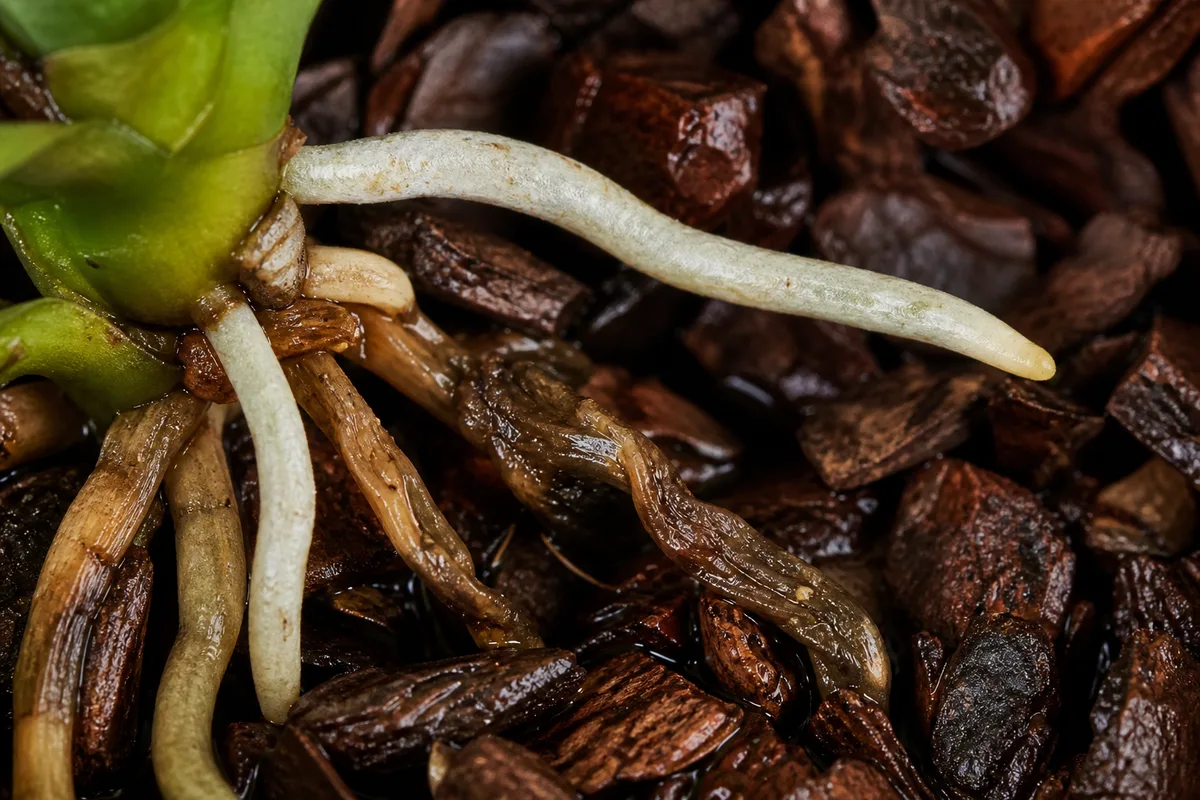
Root Rot symptoms on Phalaenopsis Orchid - compare with healthy tissue on the same plant.
Early signs mimic thirst: leaves go limp or yellow even though bark feels wet, because damaged roots cannot move water. Wilted foliage with wet growing medium often points to rotting roots-the classic paradox that sends owners to water again and deepens damage.
Root colour and smell signals
Through a clear pot, healthy roots are firm and silvery-white when dry, bright green when freshly watered. Rotted roots turn brown, translucent, or mushy and slip off when touched. A sour or rotten smell from the bark confirms the mix has been anaerobic too long.
Aerial roots vs. pot roots
Aerial roots outside the pot are normal on Phalaenopsis-do not assume they compensate for a rotting root ball. Inspect roots inside the pot and at the drainage hole. Dark green aerial roots that stay swollen and soft mirror the same wet-bark problem.
How to confirm the cause
Work through this checklist in order:
- Root colour - Mushy brown or hollow roots with wet bark confirm rot. Silver-grey firm roots with dusty dry bark suggest underwatering instead.
- Bark moisture - Heavy pot weight many days after watering means slow dry-down; sour smell at the drain hole confirms decay.
- Mix type - Standard soil, peat-heavy mix, or mushy sphagnum plug makes rot likely regardless of current moisture reading.
- Crown firmness - Press gently where leaves meet. Firm tissue allows salvage; soft black tissue means rot may have reached the growing point.
- Opaque-pot workaround - If you cannot see through cachepot walls, lift the inner pot, smell the drainage hole, compare weight, and slide the plant partly out to squeeze a root through the bottom opening.
- Recent history - Ice cubes, watering inside a sealed sleeve, or bark older than two years narrows cause quickly.
Lookalike comparison table
| Signal | Root rot | Overwatering (early) | Underwatering | Repot stress |
|---|---|---|---|---|
| Root texture | Mushy, brown, hollow | Firm but may stay bright green | Silver-grey, slightly shriveled | Firm if inspected |
| Bark smell | Sour or musty | May smell off if prolonged | Neutral | Neutral |
| Leaf pattern | Limp on wet bark | Limp or yellow lower leaves | Wrinkled, pleated | Limp 3–7 days post-repot |
| Crown | Soft = urgent | Usually firm | Firm | Firm |
| First action | Stop water, trim, repot | Stop water, dry-down | Soak when silver | Wait, stable light |
If bark is dusty dry and roots are silver-grey with only slight leaf limpness, you are not on this page-see underwatering. If limp leaves followed a bark change within the last week, see repotting for stress overlap.
First fix for Phalaenopsis Orchid
Stop all watering and unpot the plant to inspect roots-do not soak limp leaves when bark is already wet.
That single pause prevents the most common escalation. Once you see mushy tissue, proceed by severity:
Mild (less than one-third mushy, firm crown)
Trim soft roots back to firm white or green tissue. Shake off old bark, let cuts air-dry several hours, repot into fresh orchid bark in the same or slightly smaller pot. Wait three to five days before the first light watering when roots silver.
Moderate (one-third to two-thirds mushy, firm crown)
Sterilize scissors between cuts. Remove all mushy, hollow, and brown roots. Rinse remaining roots gently with lukewarm water to see healthy tissue. Air-dry trimmed roots for up to 24 hours. Repot into fresh bark sized to the remaining root mass-see repotting for depth and crown placement. Withhold water until outer velamen turns silver-grey.
Severe (most roots mushy or crown softening)
Aggressive trim to only firm tissue. If the crown is black and collapsing, salvage is unlikely-discard rather than invest in more supplies. If the crown is still firm but root mass is small, repot tightly in fresh bark with excellent airflow and expect a slow multi-week rebuild. Route chronic wilt questions to the wilting hub.
When salvage is unlikely
A black mushy crown usually means the plant cannot produce new leaves. Water pooling in the crown can trigger crown rot that advances faster than root-level decay alone on monopodial Phalaenopsis. Lower yellow leaves during root failure are common; crown firmness matters more than leaf count.
Step-by-step recovery
- Unpot and rinse roots gently to separate firm from mushy tissue.
- Trim all soft roots back to healthy white or green velamen with sterilized scissors.
- Let cut surfaces air-dry for several hours to a day-fresh bark and dry-down matter more than powders or rinses.
- Repot into fresh coarse orchid bark with drainage holes; aerial roots may stay outside the pot.
- Place in bright indirect light with gentle airflow. The RHS recommends never letting moth orchids sit in water.
- Resume watering only when roots turn silver-grey; bright green means wait.
Recovery timeline
| Phase | What to expect | Success signal |
|---|---|---|
| Days 1–5 | No watering; bark dries; trimmed cuts callous | Pot lightens; sour smell fades; crown stays firm |
| Days 5–10 | First cautious soak once roots silver | Velamen greens briefly then silvers again within a week |
| Weeks 2–4 | Possible new root tips at stem base | Small green or white root bud on firm velamen |
| Weeks 4–8 | Old limp leaves may stay wrinkled | New leaf start or stable spike without further collapse |
| Months 2–3 | Full canopy rebuild on severe trims | Multiple new roots and firmer leaf turgor |
The AOS documents recovery photos showing the same plant three months after repotting into fresh mix following root loss-timeline varies with crown health, warmth, and remaining root mass. Judge progress by new root tips and crown firmness, not by old yellow foliage alone.
What not to do
Do not keep watering because leaves look wilted when bark is already wet. Do not repot into peat-heavy potting soil. Do not use ice cubes or leave the pot sitting in water. Do not fertilize a rotting plant. Do not return a dripping inner pot to a sealed decorative sleeve.
Phalaenopsis is listed as non-toxic to cats and dogs, but handle trimmed rot tissue with clean tools and wash hands after-contact your veterinarian if a pet ingests decaying plant material or potting mix.
How to prevent root rot next time
Repot before bark fails, not after roots collapse. Refresh bark every one to two years or sooner when the mix smells sour at the drain hole, feels spongy at mid-depth, or your watering interval suddenly shrinks without a seasonal explanation. That smell test is root-rot-specific prevention-degraded fines retain moisture like soil long before every root turns mushy.
Water by root colour: silver-grey means dry enough to soak; bright green means wait. Run water through bark until it drains, then let bark dry almost completely. Grow in bright indirect light at an east window. Never stand in standing water. For the full wet-dry rhythm, use the watering guide.
When to worry
Treat root rot as urgent when the crown softens, leaves collapse rapidly despite wet bark, or more than a third of roots are mushy on inspection. Mild trimming on a firm crown has a fair chance; moderate loss with firm crown warrants aggressive trim and patience; severe crown involvement usually means discard.
Related Phalaenopsis guides
| Your situation | Start here |
|---|---|
| Wet bark, roots still firm-unsure if too wet | Overwatering |
| Chronic limp leaves, unclear cause | Wilting |
| Dry silver roots, wrinkled leaves | Underwatering |
| Post-trim bark and pot sizing | Repotting |
| Lower leaf yellow during root failure | Yellow leaves |
| Year-round culture and bloom cycle | Overview |
Conclusion
Root rot on a moth orchid is a bark-and-rescue problem: mushy velamen, sour media, and limp leaves on wet bark mean stop watering, trim decay, repot into fresh coarse bark, and wait for silver roots before the next soak. Use severity branches to match effort to crown firmness, route early wet-bark cases to overwatering triage, and rebuild long-term rhythm with the watering guide so degraded fines never trap roots in stale moisture again.