Drooping Leaves on Phalaenopsis Orchid: Causes, Checks &
Quick answer
Drooping leaves on Phalaenopsis Orchid mean the plant cannot hold leaf turgor-almost always because roots are too dry or too damaged to move water. Before you water, check root color through the pot: silver-grey dry roots need water; bright green wet roots with limp leaves mean stop watering and inspect for rot.
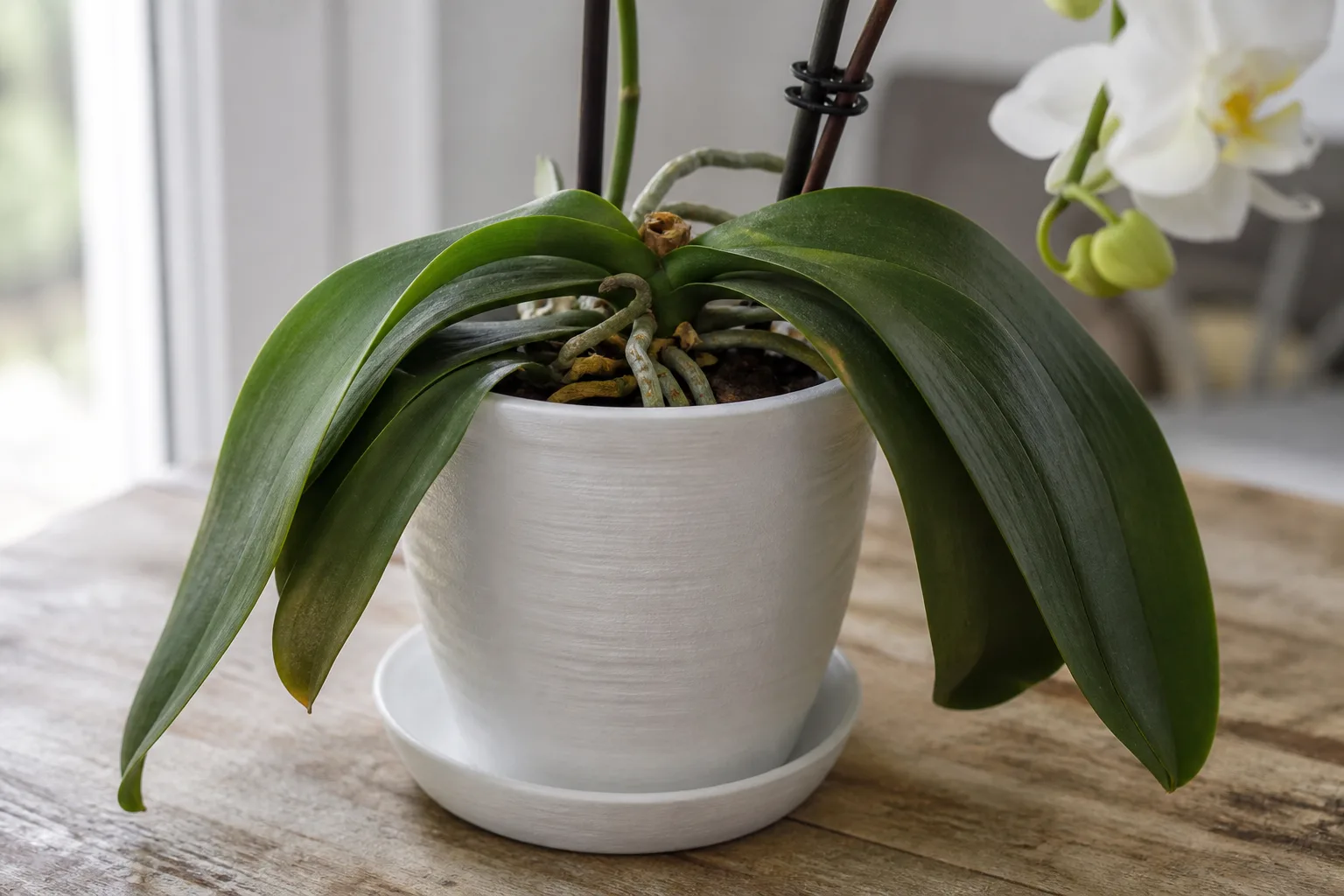
Drooping Leaves on Phalaenopsis Orchid: Causes, Checks & Fixes
This guide covers drooping leaves on Phalaenopsis Orchid. See also the general Drooping Leaves guide, watering, and light pages for this plant.
Drooping Leaves on Phalaenopsis Orchid: Causes, Checks & Fixes
Quick answer
Drooping leaves on Phalaenopsis Orchid (moth orchid) mean the plant has lost leaf turgor-the internal water pressure that keeps foliage firm. Unlike orchids with pseudobulbs, Phalaenopsis stores little backup water and depends entirely on healthy roots, so limp leaves appear quickly when roots fail.
The symptom looks identical for opposite problems. Low humidity and too little water produce wrinkled, drooping leaves, while wilted foliage with wet bark means rotting roots cannot take up water-even though the mix feels moist.
First step: look at root color through the pot before you change anything. Silver-grey dry roots with a firm crown call for a thorough soak. Bright green or mushy roots with soggy bark call for stopping water and inspecting for rot.
What drooping leaves look like on Phalaenopsis Orchid
Healthy Phalaenopsis leaves are thick, leathery, and hold a slight arch above the pot. When turgor drops, the entire leaf hangs floppily rather than curving gracefully. Lower leaves may touch the rim or cascade over the side.
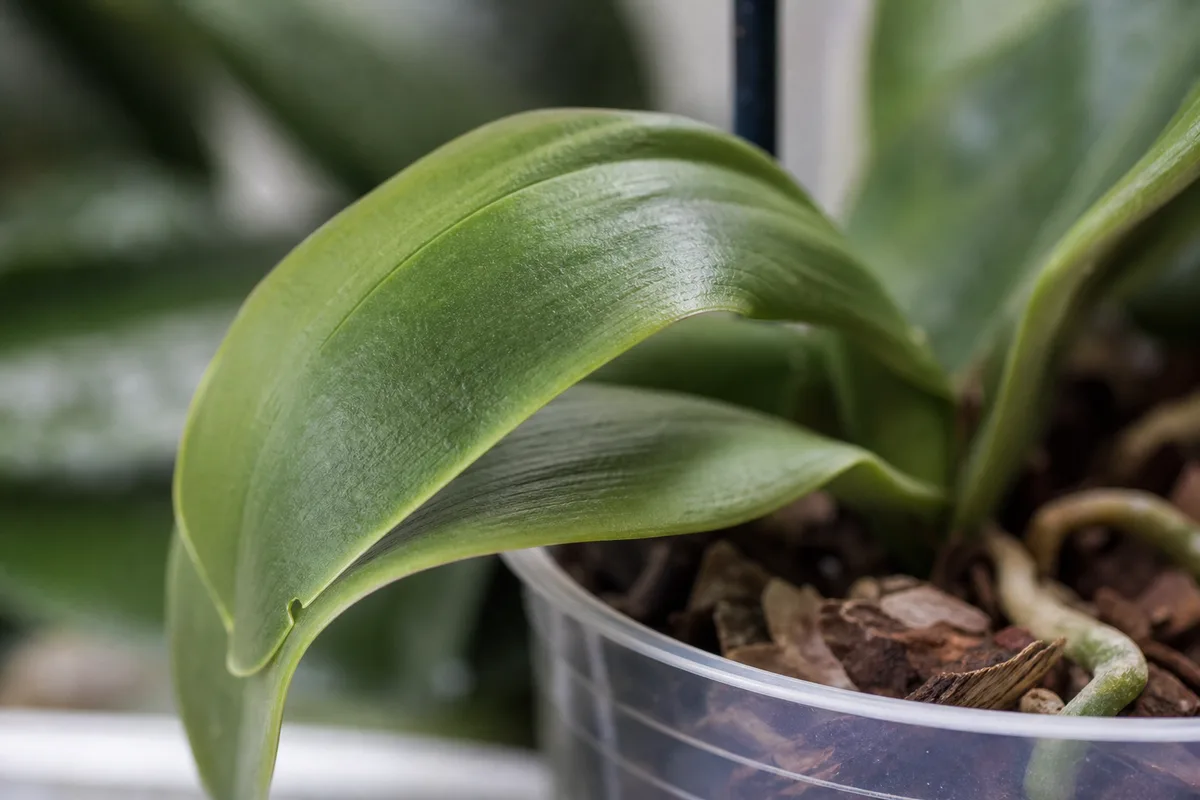
Drooping Leaves symptoms on Phalaenopsis Orchid - compare with healthy tissue on the same plant.
underwatering on Phalaenopsis Orchid droop:
- Leaves feel thin and limp, sometimes with accordion-like pleats or wrinkles along the length
- Aerial roots turn dull silver-white and look shriveled
- Bark feels dusty dry; the pot is light when lifted
- Crown tissue at the base of leaves stays firm, not mushy
- Leaves often perk within hours after a proper soak
overwatering on Phalaenopsis Orchid or root-rot droop:
- Leaves hang limp even though bark inside the pot feels wet
- Roots visible through clear plastic stay bright green for days or turn brown and translucent
- A sour or earthy smell may come from decomposed bark
- Crown may stay firm early on, then soften if rot spreads upward
- No improvement after watering-sometimes leaves droop more
Temporary environmental droop:
- Follows Phalaenopsis Orchid repotting guide, a move to a hotter window, or a cold draft
- Crown remains firm; root color follows normal silver-green cycle
- Resolves within several days once conditions stabilize
Phalaenopsis normally keeps two to six leaves on a single stem. Drooping that affects every leaf at once almost always traces to the root zone, not individual leaf disease.
Why Phalaenopsis Orchid leaves droop
Moth orchids evolved as epiphytes on tree branches with roots exposed to air. In home pots they rely on a coarse bark-based mix that drains fast and dries between waterings. When that rhythm breaks, leaves droop because water cannot reach leaf cells-not because the leaves themselves are diseased.
Underwatering is the straightforward case. Bark dries completely, velamen on the roots collapses, and roots stop absorbing. Without pseudobulbs to draw on, Phalaenopsis leaves wrinkle and droop when moisture runs short. Vacation neglect, watering by calendar instead of root color, or bark that has become hydrophobic can all trigger this.
Overwatering and root rot on Phalaenopsis Orchid produce the confusing mirror image. Saturated, broken-down bark suffocates roots. Decayed roots cannot transport water, so leaves droop despite wet mix-the same visual result as thirst. Root rot occurs when plants sit in soggy, decomposed medium. Ice-cube watering, saucers left full of water, and standard potting soil accelerate this on Phalaenopsis.
Degraded bark causes droop even when you water correctly. After one to two years indoors, bark fines hold moisture like garden soil. UMD Extension recommends replacing potting media every one to two years before it breaks down. Old mix that drains poorly keeps roots oxygen-starved and leads to slow decline with persistent limp leaves.
Repotting stress can droop leaves for a week or two while roots settle into fresh bark. Disturbed roots absorb less water temporarily. If the crown stays firm and you are not overwatering during recovery, this usually passes.
Heat and light shock increase transpiration faster than damaged or dry roots can replace water. Moving a moth orchid suddenly to a hot west window or placing it above a radiator can droop leaves within a day. Root color still tells you whether the plant is thirsty or waterlogged underneath.
How to confirm the cause
Work through these checks before you treat:
- Root color through the pot - Aerial roots turn from dull silver or white to pale green when adequately watered. Silver-grey everywhere means dry. Bright green for many days with limp leaves suggests oversaturation or failing roots.
- Crown firmness - Press gently at the base where leaves join the stem. Firm is reassuring. Soft or blackening tissue is crown rot and urgent.
- Bark moisture and smell - Stick a finger into the bark at the pot edge. Dusty dry confirms drought. Wet, compacted, or sour-smelling bark points to overwatering or decomposed mix.
- Leaf texture - Wrinkled or pleated leaves with a firm crown favor underwatering. Smooth but floppy leaves with wet bark favor root failure from rot.
- Recent care changes - Repotting within two weeks, a location move, or a skipped watering cycle narrows the likely cause.
- Response test (dry case only) - If roots are silver-grey and the crown is firm, one thorough soak-and-drain is a valid confirmation. If leaves do not firm up within 24 hours, roots may be damaged and need inspection-not more water.
Do not fertilize, repot, or prune heavily until you know which side of the water equation you are on.
First fix for Phalaenopsis Orchid
If roots are silver-grey and the crown is firm: run room-temperature water through the bark in three or four slow drenches over about ten minutes, let the pot drain completely, and discard saucer water.
This matches UMD Extension’s recommended sink-soak method for moth orchids. Avoid splashing water into the crown where leaves emerge-standing moisture there invites crown rot. Aerial roots should green up after soaking; leaves typically regain turgor within hours to a day.
If roots are bright green or mushy with wet bark: stop all watering. Do not soak a drooping plant whose roots are already saturated. Unpot, trim rotted tissue, and repot into fresh bark-the same path as active root rot. Watering again will deepen the droop.
That single decision-soak versus stop-prevents the most common Phalaenopsis mistake: treating rot-related droop as thirst.
Step-by-step recovery
For underwatering
- Soak as described above; confirm water runs freely from drainage holes.
- Place the plant in Phalaenopsis Orchid light guide-not direct hot sun while leaves are limp.
- Resume the normal cycle: water only when roots turn silver-grey again, typically about once a week under normal room temperatures.
- If bark repels water, the mix may be hydrophobic or too broken down-plan a repot into fresh bark once leaves firm up.
For overwatering or root rot
- Stop watering immediately.
- Knock the plant out of the pot and shake off old bark.
- Trim mushy brown roots with clean, sterilized scissors; keep firm white or green roots.
- Let cut surfaces air-dry for several hours, then repot into fresh orchid bark in a pot sized to the root mass.
- Wait several days before the first light watering once roots show silver-grey again.
For repotting stress or environmental droop
- Keep care stable-bright indirect light, no fertilizer, and careful watering on the silver-grey cycle only.
- Avoid moving the plant again until leaves firm up.
- If droop persists beyond two weeks with firm crown and healthy root color, unpot and check for hidden rot or compacted new bark.
Recovery timeline
Simple dehydration often shows visible firming within six to twenty-four hours after a proper soak. Moderate underwatering with wrinkled leaves may leave creases in the leaf surface even after turgor returns-those wrinkles are cosmetic and do not mean ongoing failure.
Root-rot recovery takes weeks to months depending on how many healthy roots remain. Judge progress by new root tips appearing green or silver after repotting, not by old leaves returning to perfect arch. A severely trimmed plant may keep slightly droopy lower leaves while it rebuilds its root system.
Environmental droop from repotting or a location change usually resolves within three to ten days if watering stays conservative and the crown stays firm.
Lookalike symptoms to rule out
Natural lower-leaf yellowing happens as Phalaenopsis sheds its oldest leaf occasionally. A yellowing base with firm attachment is aging, not droop from water stress-unless the whole plant is limp.
Bud drop from cold drafts or ethylene exposure causes flowers to abort, not necessarily leaf droop. If only buds fall and leaves stay firm, look at temperature and fruit bowls nearby rather than roots.
Sunburn bleaches or reddens leaf margins under too much direct light. Scorched tissue stays damaged; it does not floppy-droop from turgor loss unless heat also dehydrated roots the same day.
Crown rot starts as a dark wet spot where new leaves emerge. Leaves may droop as the crown collapses-this is more urgent than ordinary root-related droop and spreads fast on monopodial Phalaenopsis.
Mistakes to avoid
Do not water on a calendar. Phalaenopsis needs water when roots indicate dryness, not on a fixed weekly schedule in every season.
Do not use ice cubes. Cold water shocks tropical roots and does not mimic natural rain; it also encourages uneven moisture through bark.
Do not assume drooping always means thirst. Adding water to rotting roots worsens droop and can trigger crown failure.
Do not repot into standard potting soil. Orchid bark mix with excellent drainage is required-soil suffocates epiphytic roots within weeks.
Do not mist leaves hoping to fix droop. Surface moisture does not restore root-zone water balance and can promote fungal issues on limp foliage.
Do not fertilize a drooping plant. Feed only after leaves firm up and new growth is active.
How to prevent drooping leaves next time
Water by root color: silver-grey or white means dry; pale green means recently watered. Run water through bark until it drains, then let the mix dry almost completely before the next soak.
Repot every one to two years into fresh bark before the medium decomposes into a water-retentive sludge. Choose a pot with drainage holes sized to the root ball, not the leaf span.
Grow in bright indirect light-an east window is ideal indoors. Too little light produces dark stiff leaves; excessive direct sun stresses roots through heat and transpiration.
Never stand the pot in a saucer of water. Empty saucers after each watering so roots breathe.
Skip pebble trays that keep the pot base constantly wet; UMD Extension warns that flooded trays keep roots overly wet and may rot.
When to worry
Treat drooping as urgent when the crown softens, bark smells sour, leaves collapse rapidly despite wet mix, or most roots are mushy on inspection. Phalaenopsis has no backup storage organ-extensive root loss can kill the plant within days to weeks if watering continues on the wrong side of the diagnosis.
Mild droop with silver-grey roots and a firm crown is low urgency and usually fixes with one proper soak. Persistent droop beyond forty-eight hours after correct watering-or any worsening with wet bark-requires unpotting and root inspection.
A plant with a black mushy crown and no firm roots rarely recovers. Focus effort on plants with firm crown tissue and at least some healthy roots remaining.
Conclusion
Drooping Phalaenopsis leaves are a root-zone message, not a leaf disease. Read root color before you water, soak dry silver roots thoroughly, and stop watering when roots are already green and wet. Fresh bark on a wet-dry cycle and bright indirect light prevent most repeat episodes. That single diagnostic habit-roots first, water second-separates a quick recovery from weeks of worsening limp leaves.
When to use this page vs other Phalaenopsis Orchid guides
- Phalaenopsis Orchid watering guide - Use for routine moisture checks before assuming drooping leaves is the main issue.
- Phalaenopsis Orchid problems hub - Browse all 20 common issues on this species.
- Underwatering on Phalaenopsis Orchid - Different entry point when symptoms overlap with drooping leaves.
- Overwatering on Phalaenopsis Orchid - Different entry point when symptoms overlap with drooping leaves.
- Root Rot on Phalaenopsis Orchid - Different entry point when symptoms overlap with drooping leaves.