Underwatering on Phalaenopsis Orchid: Silver Roots & Limp
Quick answer
Moth orchids tell you they are dry through root color, not soil-silver-grey velamen means soak now. Limp or wrinkled leaves with dusty dry bark and a firm crown point to underwatering. Run room-temperature water through bark until it drains, then check leaf firmness in 24 hours. If bark is wet and roots stay bright green, stop watering and read overwatering instead.
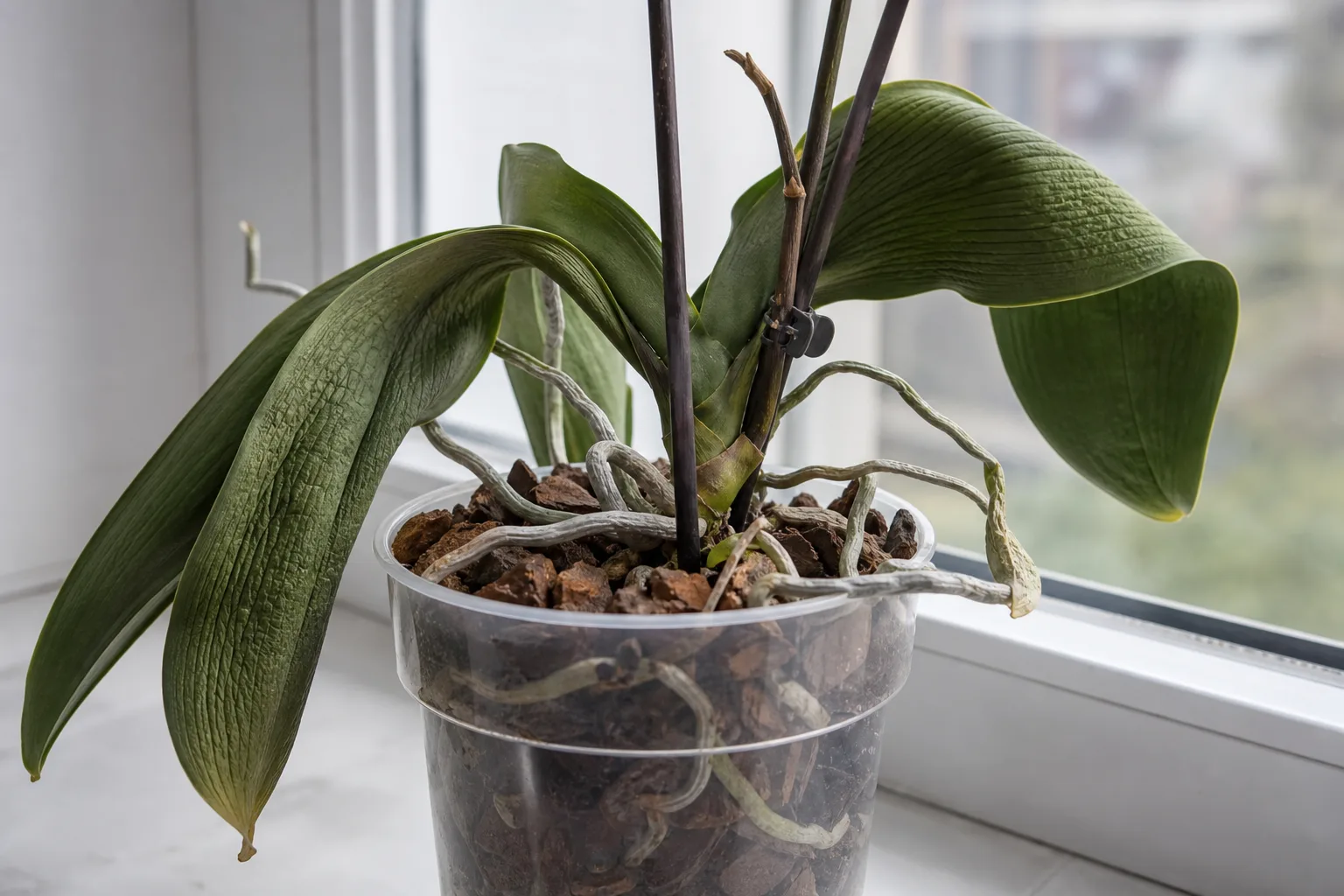
Underwatering on Phalaenopsis Orchid: Causes, Checks & Fixes
This guide covers underwatering on Phalaenopsis Orchid. See also the general Underwatering guide, watering, and light pages for this plant.
Underwatering on Phalaenopsis Orchid: Causes, Checks & Fixes
Quick answer
Use this page when roots look silver-grey, bark feels dusty dry, and leaves are limp or slightly wrinkled-but the crown stays firm and there is no sour smell from the mix. If every symptom is limp leaves with wet bark, start with drooping leaves or wilting for the wet-vs-dry fork instead.
Moth orchids evolved on tree bark with roots exposed to air. In a home pot they depend on a coarse bark mix that drains fast and dries between drinks-and on you reading root color through the plastic, not guessing from leaf droop alone. Aerial roots turn from dull silver or white to pale green when you have applied enough water.
First fix: run room-temperature water through bark in three or four slow drenches over about ten minutes, let the pot drain completely, and discard saucer water. If roots were silver-grey and the crown is firm, leaves should firm within hours to a day. If bark is already wet and roots stay bright green, do not soak-follow overwatering or root rot instead.
For the year-round silver-grey watering rhythm, see the watering guide and Phalaenopsis overview.
Why moth orchids get underwatered
Phalaenopsis tolerates brief dryness better than constant soggy bark, but they must never completely dry out for long stretches because they have no major water-storage organs other than their leaves. Without pseudobulbs to draw on, leaves lose turgor quickly when velamen collapses on dry roots.
Common triggers indoors:
- Forgotten watering during travel or a busy week-especially in summer when a small clear pot at an east window can dry in five to seven days
- Fear of overwatering after a past rot scare, leading to shallow splashes or skipped cycles
- Hydrophobic or aged bark that repels water when it has gone bone dry, so surface moisture never reaches roots
- Decorative cache pots with no drainage-outer sleeves hide dry bark and trap no airflow at the root zone
- Winter heated rooms with dry air that speeds transpiration while you water on a summer calendar
- Ice-cube habits that deliver cold, uneven moisture instead of a full soak
Underwatering is less immediately dangerous than rot on moth orchids, but repeated extreme dryness during spike development can stress buds. Chronic silver roots for weeks can desiccate fine root tips beyond a single soak’s repair.
What underwatering looks like
Healthy moth orchid leaves are thick, leathery, and arch slightly above the pot. Underwatering changes texture before color:
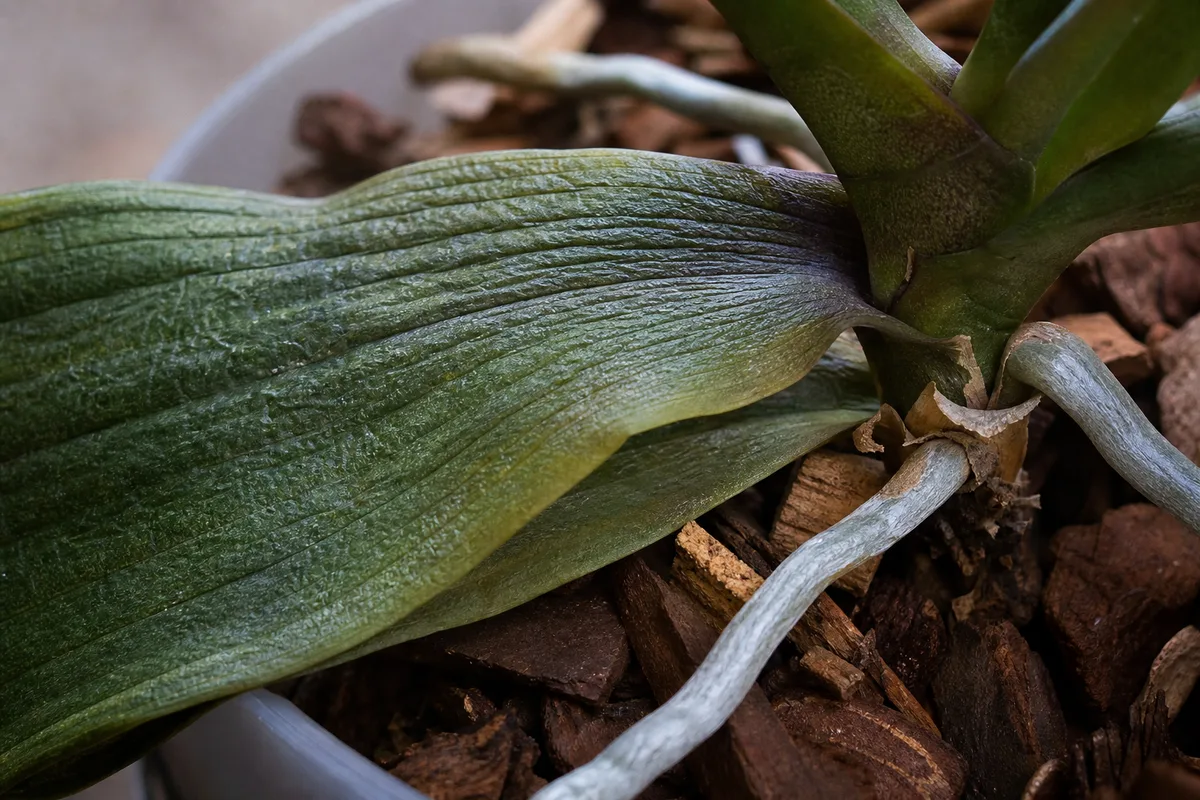
Underwatering symptoms on Phalaenopsis Orchid - compare with healthy tissue on the same plant.
Roots and bark
- Velamen turns silver-grey or dull white and may look slightly shriveled on aerial roots
- Bark feels dusty and lightweight; lifting the pot feels noticeably light
- No sour smell-dry bark smells neutral or slightly woody
- After a proper soak, roots should shift toward pale green within hours
Leaves
- Upper leaves go limp or thin-feeling, sometimes with accordion-like pleats or wrinkles from too little water along the length
- Lower leaves may droop over the pot rim
- Leaf color stays green-yellowing with wet bark points elsewhere (see yellow leaves)
- Crown tissue where leaves join the stem stays firm, not mushy
What is not underwatering
- Limp leaves with bark that stays wet inside the pot for days
- Bright green roots that never silver between waterings
- Soft blackening at the crown base
- Sudden collapse after the plant sat in a full saucer
Those patterns belong on the overwatering or root rot pages even though the leaves look equally floppy.
Underwatering vs overwatering vs root rot
| Sign | Underwatering | Overwatering | Root rot |
|---|---|---|---|
| Root color (clear pot) | Silver-grey, shriveled | Bright green for many days | Brown, mushy, translucent |
| Bark feel | Dusty dry, light pot | Wet, compacted | Wet, sour smell |
| Crown | Firm | Often firm early | May soften as rot spreads |
| Leaf texture | Wrinkled or pleated with dry bark | Smooth flop with wet bark | Limp; may yellow |
| First action | Soak and drain | Stop watering; inspect roots | Unpot, trim rot, fresh bark |
| 24-hour perk test | Leaves firm up | No improvement or worse | No improvement |
Leaves alone cannot separate thirst from rot-orchid leaves wrinkle and go flaccid in both cases because damaged roots cannot move enough water. Root color and bark moisture are the decision tools.
How to confirm underwatering
Work through this checklist before you treat:
- Root color through the pot - Silver-grey or white velamen everywhere means dry. Pale green means recently watered; do not add more.
- Crown firmness - Press gently at the leaf base. Firm supports a soak. Soft or wet tissue is urgent rot, not drought.
- Bark moisture and smell - Dry, dusty bark at the pot edge confirms drought. Wet, compacted, or sour bark rules underwatering out.
- Leaf texture - Accordion pleats with a firm crown favor dehydration. Smooth limp leaves with wet bark favor root failure.
- Pot weight and cache pot - Lift the inner pot; lightness plus silver roots confirms dry. Slide store-bought orchids out of decorative sleeves to see real bark moisture.
- Response test (dry case only) - If steps 1–4 point to dry and the crown is firm, one thorough soak-and-drain is a valid confirmation. Perked leaves within 24 hours confirm underwatering. No improvement means inspect roots for prior rot damage-not another soak.
Do not fertilize, repot, or prune heavily until you know which side of the water equation you are on.
First fix: soak and drain
If roots are silver-grey and the crown is firm: place the plant in a sink, run room-temperature water through bark in three or four slow drenches over about ten minutes, and let the pot drain completely before returning it to a saucer.
This matches UMD Extension’s recommended sink method for moth orchids. Avoid splashing water into the crown where leaves emerge-standing moisture there invites crown rot. Discard saucer water immediately; never let the pot sit in runoff.
Hydrophobic bark
When bark has gone completely dry for weeks, it may repel the first pass of water. Run a second slow drench in the same session, or set the pot in lukewarm water just deep enough to wet the bark for ten to fifteen minutes, then drain fully. Aerial roots should green up; if water runs straight through without weight gain, plan a repot into fresh bark once leaves firm up.
When roots stay shriveled after a soak
If velamen remains grey and papery after a proper soak, fine roots may be dead from chronic drought or from past rot that left little living tissue. Knock the plant out gently:
- Firm white or green roots after soaking - resume the silver-grey cycle; the plant should rebuild
- Hollow, dry, or brittle roots - trim dead tissue with sterilized scissors, let cuts air-dry several hours, repot into fresh orchid bark sized to the remaining root mass (see repotting)
- Mushy brown roots mixed with dry grey - that is rot plus drought history; follow root rot triage instead of repeated soaks
Recovery timeline
Acute underwatering (one missed cycle, silver roots, firm crown): visible leaf firming often starts within six to twenty-four hours after a proper soak. Aerial roots green up the same day.
Moderate dehydration (wrinkled or pleated leaves, several days dry): turgor usually returns within a day, but accordion creases may stay in the leaf surface permanently-cosmetic damage, not ongoing failure. Wrinkled leaves will not become fully unwrinkled, but new leaves should look normal.
Chronic underwatering (weeks of silver roots, shriveled aerial roots): expect multiple soak cycles over two to four weeks before new root tips appear. Judge progress by fresh green or silver root growth, not by old leaves returning to perfect arch. Severely trimmed plants may keep slightly limp lower leaves while rebuilding.
Bud loss from drought during spike development does not reverse on the current spike-stabilize watering and see bud drop for what to expect next.
What not to do
Do not use ice cubes-use room-temperature water in slow drenches. Cold shocks tropical roots and does not evenly hydrate bark.
Do not switch to daily shallow splashes. Moth orchids need thorough drinks after a dry period, then time for bark to dry again.
Do not repot into standard potting soil to “hold moisture.” Orchid bark mix with excellent drainage is required-soil suffocates epiphytic roots within weeks.
Do not soak a plant whose roots are already bright green and wet because leaves look limp-that deepens rot-related droop.
Do not mist leaves hoping to fix underwatering. Surface moisture does not restore root-zone water balance.
Do not fertilize a stressed, limp plant. Feed only after leaves firm and new growth is active.
How to prevent underwatering
Water by root color, not habit. Silver-grey or white means dry; pale green means recently watered. Run water through bark until it drains, then wait for silver again-frequency shifts with season, pot size, and light (details on the watering guide).
Check roots weekly through a clear pot or by sliding the plant out of cache sleeves. Summer sun at an east window with bright indirect light dries small pots faster than winter heat with shorter days.
Refresh bark every one to two years before the media begins to break down before fines hold moisture unevenly or repel water when dry. See repotting for timing.
Never stand the pot in a saucer of water. Empty saucers after each watering so roots breathe.
Skip pebble trays that keep the pot base constantly wet if you are already prone to skipping soak cycles-flooded trays keep roots overly wet and may rot when you finally water heavily.
When to worry
Mild limp leaves with silver-grey roots and a firm crown are low urgency-one proper soak usually fixes them.
Treat as urgent when:
- The crown softens or blackens at the leaf base
- Bark smells sour despite your belief the plant is dry
- Leaves stay limp more than forty-eight hours after a confirmed dry soak
- Most roots are mushy on inspection-rot, not simple thirst
A plant with extensive dead velamen and no firm roots after trimming rarely recovers quickly. Focus effort on specimens with firm crown tissue and at least some healthy roots remaining.
Related Phalaenopsis guides
| Your situation | Start here |
|---|---|
| Limp leaves-unsure if bark is wet or dry | Drooping leaves |
| General wilt after environmental shock | Wilting |
| Wet bark, green roots, fear you watered too much | Overwatering |
| Mushy roots, sour bark, soft crown | Root rot |
| Year-round watering rhythm | Watering guide |
| Culture basics and bloom cycle | Overview |
Conclusion
Underwatering on a moth orchid is a root-color problem before it is a leaf problem. Silver-grey velamen with dry bark and a firm crown calls for one thorough soak-and-drain-not ice cubes, not daily splashes, and not more water when bark is already wet. Confirm with the 24-hour perk test, expect creased leaves to possibly stay marked, and route wet-bark limp foliage to rot guides instead. That single habit-roots first, water second-prevents both chronic drought and the overwatering rebound that often follows a rot scare.