Bud Drop on Phalaenopsis Orchid: Causes, Checks & Fixes
Quick answer
Bud drop on Phalaenopsis Orchid-bud blast-means formed buds shrivel and fall before opening, usually after ethylene from ripening fruit, cold drafts, or a sudden care change. Move the plant away from vents and fruit bowls first; dropped buds will not reopen, but a new spike can form once conditions stay stable.
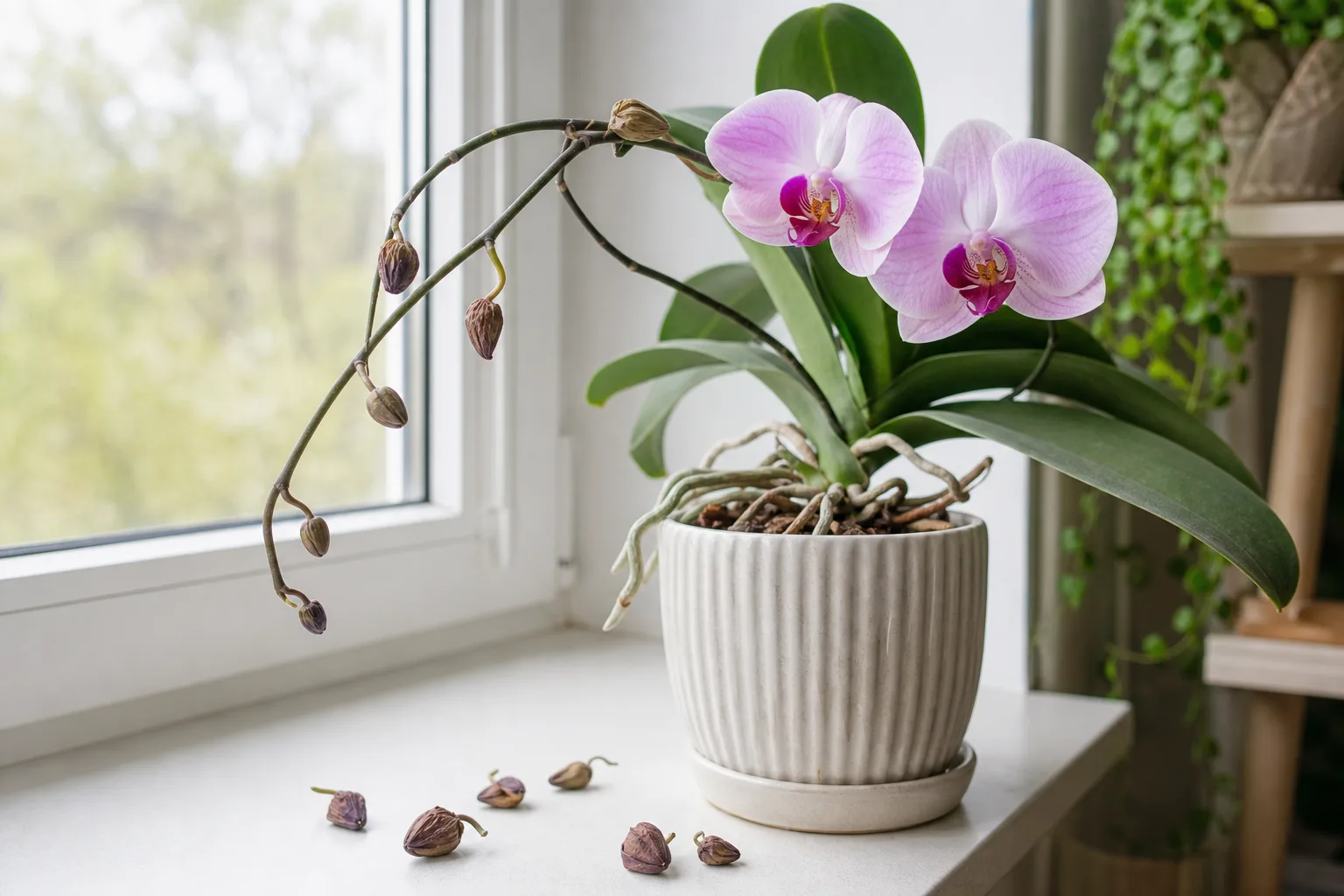
Bud Drop on Phalaenopsis Orchid: Causes, Checks & Fixes
This guide covers bud drop on Phalaenopsis Orchid. See also the general Bud Drop guide, watering, and light pages for this plant.
Bud Drop on Phalaenopsis Orchid: Causes, Checks & Fixes
Quick answer
Bud drop-also called bud blast-on a moth orchid means developing buds yellow, wrinkle, and fall before they open. Faded flowers means open blooms lose color or wilt; that is a different problem on the faded flowers guide. No flowers means no spike formed at all-see the no flowers guide if buds never appeared.
The most common preventable triggers are ethylene gas from ripening fruit on the same kitchen counter, cold drafts from AC vents or doors, repotting or moving the plant while a spike is developing, and letting bark go completely dry during bud formation. Phalaenopsis is among the orchid genera most sensitive to these shocks during spike development.
First step: move the plant away from ripening fruit and HVAC drafts. Keep room conditions steady and do not repot until the spike situation is clear. Dropped buds on the current spike will not reopen-only a new spike can carry fresh buds. For year-round culture basics, see the Phalaenopsis overview and watering guide.
What bud drop looks like on Phalaenopsis Orchid
Healthy green buds along an arching spike turn yellow or tan, shrink, and detach-often working from the tip downward or across several buds at once. The spike itself may stay green while only buds fail, which is the classic environmental bud-blast picture. Leaves usually remain firm and leathery when the cause is ethylene or a draft rather than root failure.
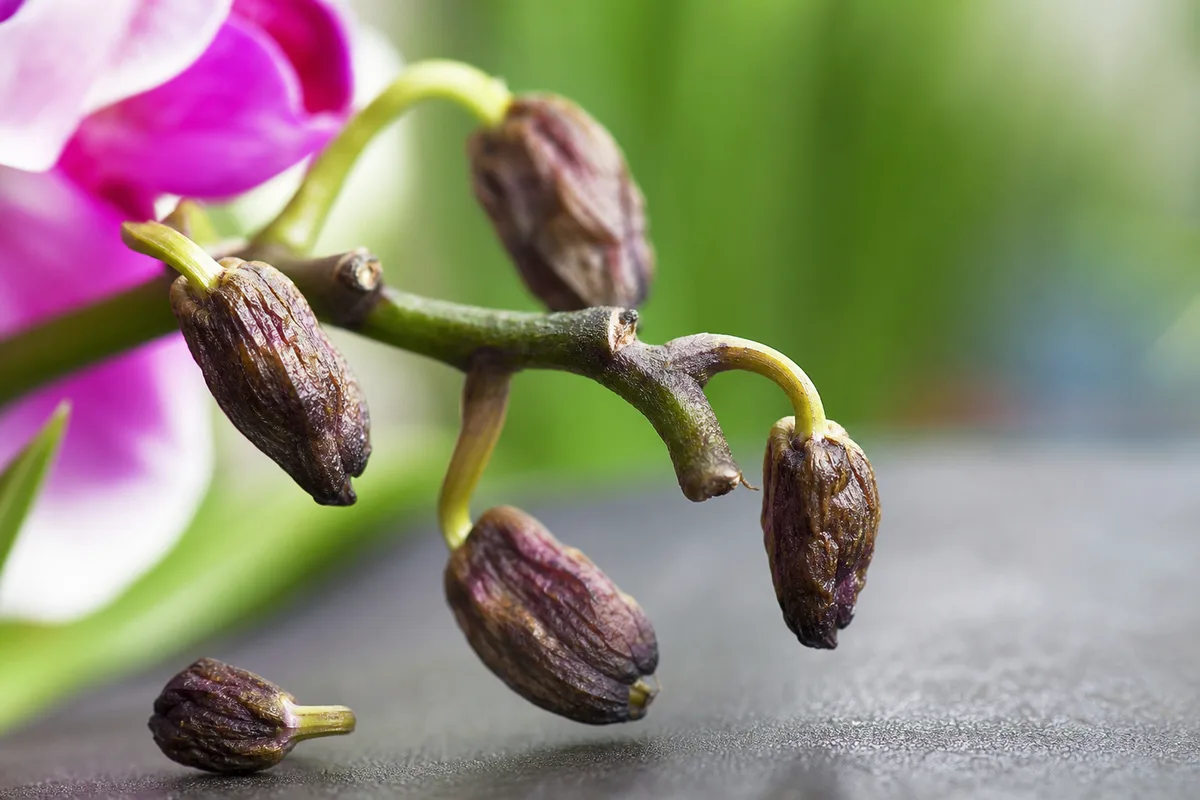
Bud Drop symptoms on Phalaenopsis Orchid - compare with healthy tissue on the same plant.
Compare timing carefully. Buds that abort within one to three days of placing the orchid near a fruit bowl, opening a cold window, or repotting mid-spike strongly suggest bud blast. Bud loss paired with limp leaves, yellowing lower foliage, and bark that stays wet for weeks points toward root stress-follow the root rot guide instead of treating the problem as environment alone.
A green spike with every bud gone but firm leaves is disappointing but not fatal. A yellowing spike tip after a severe cold snap may mean the entire inflorescence is finished for this cycle even if lower nodes could still branch later.
Why Phalaenopsis Orchid drops buds
Ethylene from ripening fruit and indoor fumes
Orchid buds are highly sensitive to ethylene-a colorless gas released by ripening apples, bananas, tomatoes, and other fruit, as well as cigarette smoke, gas leaks, and exhaust from poorly vented heaters. Phalaenopsis, Cattleya, and Dendrobium are particularly susceptible. A fruit bowl within a few feet of a blooming moth orchid on a kitchen counter is one of the most common home setups that triggers total bud loss within days.
Cold drafts and temperature swings
Sudden chills from air-conditioning vents, frequently opened doors, or moving a plant from a warm room to a cold window shock buds that were developing in stable warmth. Moth orchids prefer daytime temperatures around 70–80°F and nighttime temperatures around 60–70°F indoors; exposure below about 55°F can damage tissue. Rapid swings matter as much as absolute cold-buds are the first part of the plant sacrificed when conditions change quickly.
Repotting, moving, and spike-stage stress
Repotting, rotating the pot repeatedly, or relocating to a new room while buds are forming disrupts the steady environment Phalaenopsis needs during inflorescence development. Bark that decomposes and stays soggy can also cause the plant to withdraw water from buds when roots fail-even though the trigger is underwatering at the bud, not overwatering alone. Wait to repot until after the bloom cycle when possible; see the repotting guide for timing.
Severe underwatering during bud formation
Phalaenopsis has no pseudobulbs to store water. If bark goes bone dry for too long while a spike is active, the plant may withdraw moisture from buds as a survival mechanism. This is less common than ethylene or drafts but shows up when owners underwater to avoid rot. Check velamen color through a clear pot rather than guessing from a calendar.
Bud blast vs other bloom problems on Phalaenopsis Orchid
| What you see | Likely issue | Where to go next |
|---|---|---|
| Unopened buds yellow, wrinkle, and drop before opening | Bud blast from ethylene, drafts, repot stress, or temperature swing | Stay on this page-stabilize environment first |
| Open blooms fade or collapse; buds may still look fine | Normal aging or ethylene fade on open flowers | Faded flowers |
| No spike for 12–18+ months after last bloom ended | Chronic non-blooming-light, cool nights, or roots | No flowers |
| Bud drop plus mushy roots and wet bark for weeks | Root rot shortening bloom potential | Root rot |
| Blooms noticeably smaller than last cycle on same plant | Culture during spike formation, not bud blast | Small flowers |
How to confirm the cause
Work through this checklist in order before changing multiple variables at once:
- Fruit and fumes - Was the plant within a few feet of ripening fruit, a gas stove, or cigarette smoke in the past week? Ethylene damage often appears within one to three days of exposure.
- Drafts and temperature - Note AC vents, frequently opened exterior doors, and night temperatures below about 60°F near the pot. Did the plant move to a new window or room while buds were swelling?
- Recent repot or bark failure - Was bark refreshed mid-spike, or is the mix sour, compacted, and staying wet for two weeks? Repot stress and failing medium both abort buds.
- Watering pattern - Lift the pot. Very light weight plus silver-grey shriveled roots for many days suggests drought stress during spike development. Heavy pot plus limp leaves suggests root trouble-see root rot.
- Leaf and crown check - Firm crown and firm leaves with only bud loss support an environmental diagnosis. Soft crown tissue or rapid lower-leaf yellowing needs root-zone treatment first.
- Spike color - Green spike with aborted buds only at the tip may still branch from lower nodes. A spike yellowing from the tip down after a cold snap may be finished for this cycle.
First fix for Phalaenopsis Orchid
Move the plant away from ripening fruit, drafts, and direct hot sun on buds. Place it in bright indirect light at an east window or filtered south/west exposure-details on the light guide if placement is uncertain. Hold steady indoor temperatures in the moth-orchid comfort range without swinging between hot afternoons and cold nights.
Do not repot during an active spike unless bark is clearly failing and roots are rotting. Resume watering on the silver-grey root cycle: soak and drain when aerial roots turn dull silver-white, not on a rigid calendar. Do not fertilize heavily trying to force new buds-the plant needs stability, not a nutrient push while recovering from blast.
Recovery timeline
Dropped buds on the current spike will not reopen. Recovery means keeping the plant healthy until it can initiate a new spike.
Once ethylene and drafts are removed, give the plant two to four weeks of unchanged, stable care while it rebuilds energy. Most grocery-store Phalaenopsis hybrids need a cool-night period in autumn or early winter-several weeks with nighttime temperatures near 55–60°F to trigger spike initiation after the last bloom cycle ends. You should see a small green bump at the crown within a few weeks after that cool exposure; from visible spike to open flowers typically takes two to six months on well-grown plants with adequate light.
If only the tip buds blasted but the spike stays green, lower nodes may still branch or produce a smaller secondary flush once conditions stabilize-leave the green stem in place and watch for side shoots rather than cutting immediately. If every bud aborted and the spike yellows from the tip, trim only after the tissue dries or follow the spike guidance on the pruning guide.
Plants with firm leaves, healthy roots, and corrected placement often rebloom within one growing season. Chronic bud blast every cycle despite stable fruit-free placement warrants a pest check and a full culture review on the overview.
What not to do
Do not fertilize heavily immediately after bud loss-stressed moth orchids need stable light and water first. Do not move the pot repeatedly hunting for a perfect spot; each relocation can abort the next attempt. Do not place the plant in direct midday sun to “help” buds-bright indirect light is correct, and hot sun on buds worsens blast. Never stand the pot in standing water. Do not assume dropped buds will reopen on the same spike-they will not.
How to prevent bud drop next time
Keep ripening fruit in a separate room from display orchids. Avoid repotting while spikes carry developing buds when possible-refresh bark between bloom cycles per the repotting guide. Maintain steady humidity around 50–60 percent and bright indirect light without HVAC drafts striking open buds or developing spikes. Water when roots turn silver-grey, not when a calendar says so. For low-humidity winter rooms, see the low humidity guide.
When to worry
Bud drop alone rarely kills Phalaenopsis. Escalate when bud loss pairs with crown rot, black mushy roots, bark wet for weeks with a sour smell, or rapid leaf collapse-that pattern needs root-zone treatment on the root rot guide, not only environmental adjustment. Recurrent bud blast every cycle on a fruit-free, draft-free plant may signal hidden ethylene sources, chronic underwatering, or pests-inspect roots and spike tissue before assuming the plant is hopeless.
Related Phalaenopsis guides
- Phalaenopsis overview - species hub and year-round care baseline
- Watering guide - silver-grey root cycle and soak method
- Light requirements - placement without scorching buds
- Repotting guide - when to refresh bark between cycles
- Root rot - when bud drop pairs with wet bark and limp leaves
- Faded flowers - open blooms fading, not unopened buds dropping
- No flowers - no spike formed after months without bloom