Faded Flowers on Phalaenopsis Orchid: Causes, Checks & Fixes
Quick answer
Faded flowers on Phalaenopsis Orchid are often normal aging over a two-to-six-month bloom cycle, but sudden collapse across open blooms usually follows ethylene from ripening fruit, hot dry air, or direct sun on petals. Move blooms away from fruit and heat first.
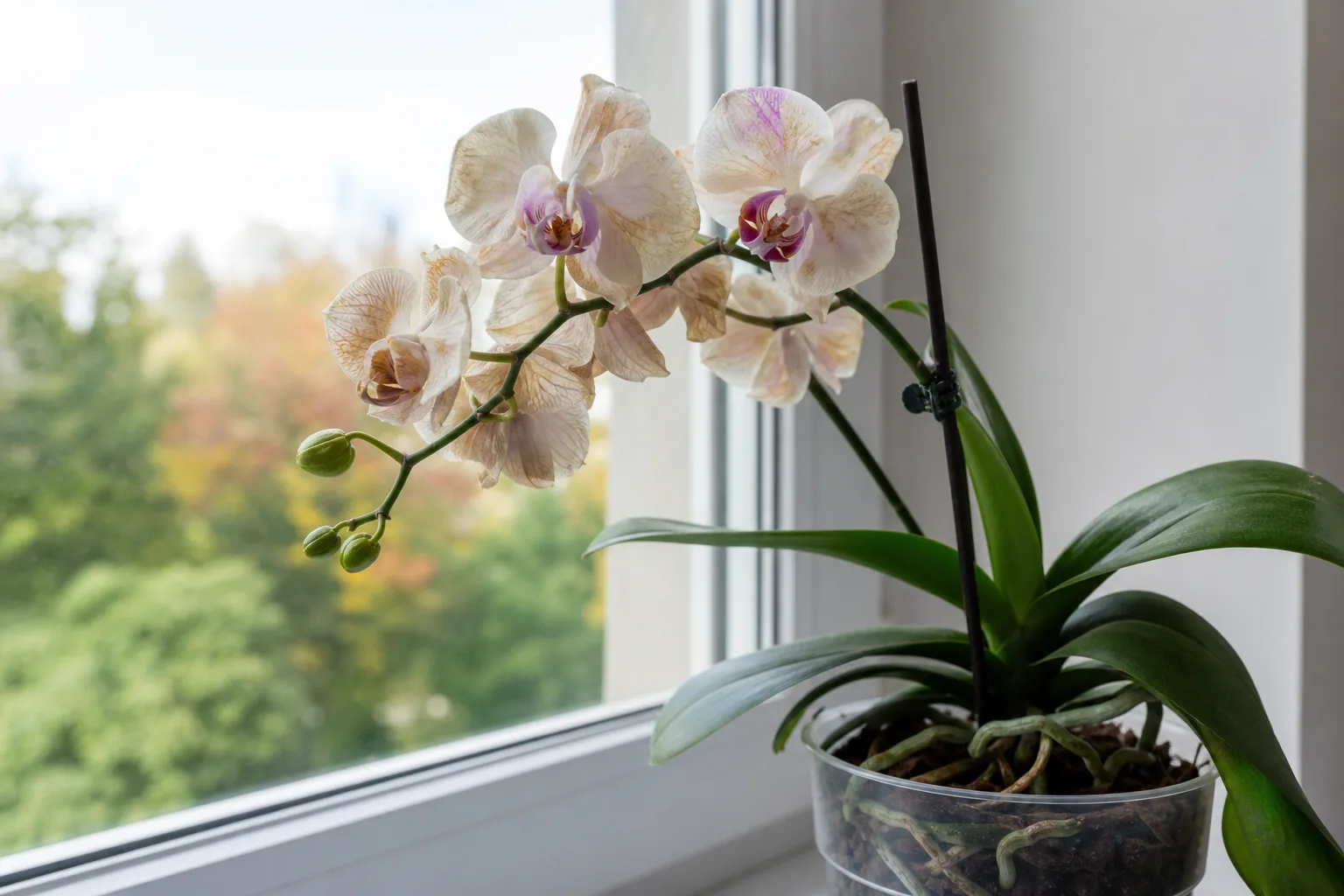
Faded Flowers on Phalaenopsis Orchid: Causes, Checks & Fixes
This guide covers faded flowers on Phalaenopsis Orchid. See also the general Faded Flowers guide, watering, and light pages for this plant.
Faded Flowers on Phalaenopsis Orchid: Causes, Checks & Fixes
Quick answer
Faded flowers on a moth orchid means open blooms losing saturation, firmness, or shape. Bud blast means unopened buds yellow, wrinkle, and drop before they ever open-that is a different problem on the bud drop guide. Most Phalaenopsis spikes display for weeks to months; blooms on well-grown plants can last two to six months from late winter into spring on many hybrids, with oldest flowers near the spike base fading first while younger blooms above stay fresh.
Sudden collapse across several open flowers within a few days is not normal aging. Treat that as environmental stress-especially ethylene gas from ripening apples, bananas, or tomatoes on the same kitchen counter, direct hot sun striking open petals, or heat and dry drafts outside the 65–85°F daytime comfort range moth orchids prefer indoors.
First step: remove ripening fruit from the room and move open flowers out of direct sun. That single change fixes the most common preventable cause of premature fade on gift-shop Phalaenopsis sitting on kitchen counters or bright window sills. For baseline culture, see the Phalaenopsis overview and watering guide.
What faded flowers look like on Phalaenopsis Orchid
Normal oldest-first senescence
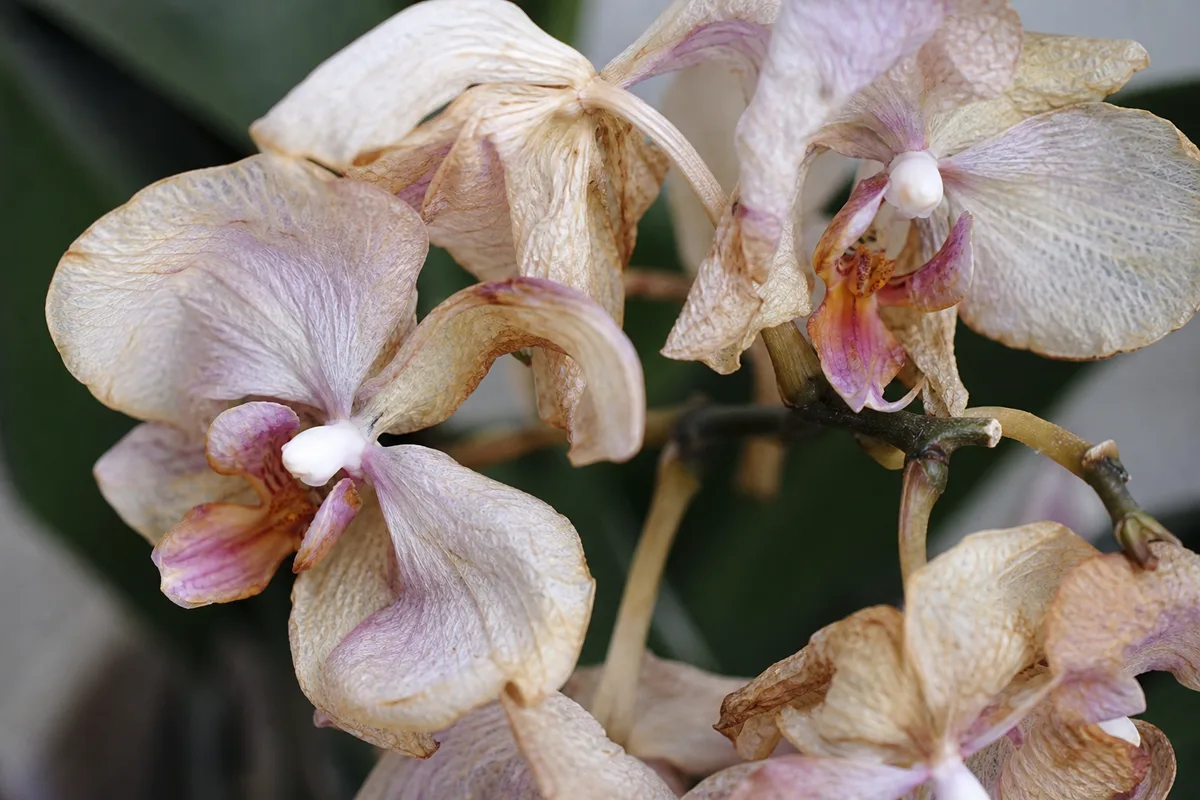
Faded Flowers symptoms on Phalaenopsis Orchid - compare with healthy tissue on the same plant.
On a healthy spike, petals slowly lose saturation, then turn papery or slightly translucent before wilting. The oldest flowers at the spike base go first; buds and open blooms farther up the stem can still look normal for weeks. This oldest-outward pattern is the signature of routine bloom aging-not disease. Mini and multiflora hybrids may show a shorter total display than large-flowered grandiflora types, but the fade direction stays the same.
Premature ethylene collapse
Several already-open flowers can wilt, bleach, or collapse within two to five days after placing the plant near a fruit bowl, enclosed produce drawer, or ripening tomatoes on the same counter. Upper buds on the same spike may yellow and abort too-that overlap is why ethylene triage matters on both fade and bud drop pages. Leaves often stay firm while only flowers fail, which separates ethylene fade from root rot.
Heat- and sun-bleached petals
Direct midday sun through glass can scorch or bleach thin flower tissue even when leaves look fine. Hot, dry airflow from heating vents or appliances accelerates the same look: petals go pale, crisp at the edges, or collapse faster than the gradual base-up pattern of normal aging. Moth orchids tolerate bright indirect light but rapid temperature swings and drafts cause bud drop-open blooms suffer first when heat spikes above the recommended maximum near 90–95°F without added humidity and air movement.
Green spike with spent blooms at the base
A common end-of-cycle picture: lower flowers faded and papery while the spike remains green and upper blooms still hold color. That is normal progression. Do not cut a green spike just because the first flowers finished-a green stem may branch or rebloom from a lower node after the display ends.
Why Phalaenopsis Orchid flowers fade
Normal bloom senescence
Phalaenopsis is among the longest-blooming orchid genera. Each flower has a finite display life; as the spike ages, basal blooms senesce while distal buds continue opening. Grocery-store moth orchids often arrive already weeks into that cycle-fade starting soon after purchase can be normal timing, not a care failure.
Ethylene from ripening fruit and enclosed kitchens
Ethylene is a natural ripening gas. Moth orchids are sensitive during bloom: exposure near ripening fruit accelerates flower aging and can trigger bud blast on the same spike. Kitchen counters with fruit bowls are the classic indoor trap for post-purchase fade complaints.
Heat, drafts, and direct sun on open petals
Phalaenopsis prefers night temperatures above 60°F and daytime readings between 75 and 85°F in most homes. Higher heat forces faster growth but demands more humidity and airflow; without that balance, open flowers age faster. Drafty AC vents and sudden temperature drops stress spikes carrying buds and open blooms alike.
Underwatering while supporting many open flowers
Moth orchids store little water except in their leaves-they must not completely dry out. Roots that stay silver-grey too long while many flowers are open can shorten bloom life. This is less common than ethylene or sun but shows up when owners underwater to avoid rot. Check velamen color through a clear pot rather than guessing from a calendar-details on the watering guide.
How to confirm the cause
Work through this numbered checklist before repotting, fertilizing, or cutting spikes:
- Timeline and fade direction - Gradual oldest-to-newest fading over weeks on a spike that has been open for a month or more fits normal senescence. Sudden multi-bloom collapse within days fits environmental stress.
- Fruit and kitchen placement - Scan within six feet for ripening apples, bananas, avocados, tomatoes, or melons. Remove them and watch remaining blooms for 48 hours; firm upper flowers that hold color confirm ethylene was the trigger.
- Sun and heat exposure - Note whether open petals receive direct midday beams. Check for hot drafts from vents, radiators, or appliance exhaust. Compare room placement to the light guide if leaves are dark green and stiff.
- Recent moves or care changes - Repotting, relocation, or a hard watering miss during peak bloom can shorten display life. Pair timing with symptom pattern before blaming disease.
- Root check through the pot - Aerial roots turn from dull silver or white to pale green when adequately watered. Firm roots support longer flowering; mushy, brown roots in sour bark suggest deeper stress-see root rot if bark stays wet for weeks.
- Spike color and bud status - Green spike with only basal flowers spent is normal. Yellowing unopened buds on the same spike point to bud blast, not fade alone.
- Cultivar expectations - Mini and multiflora lines often carry more flowers for a somewhat shorter total window than large standard hybrids. Compare to this plant’s last cycle, not an idealized catalog photo.
First fix for Phalaenopsis Orchid
Remove ripening fruit from the room and shield open flowers from direct sun-then change nothing else for 48 hours.
That addresses the two most common preventable triggers on indoor moth orchids. After fruit is gone and the pot sits in bright indirect light (not hot direct beams on petals), stabilize in this order:
- Move away from heating and cooling drafts while keeping daytime temperatures in the 75–85°F range when possible.
- Water when roots look silver-grey and bark feels nearly dry-flood, drain fully, and never let the pot stand in water.
- Avoid repotting mid-bloom unless roots are clearly failing.
- Leave a green spike in place; remove only fully brown, dried stems.
Individual faded petals will not regain color. Success means preserving remaining fresh blooms and setting up the next cycle-not “saving” tissue that already senesced.
What not to do
Do not stack five fixes on the same day. If you repot, relocate, fertilize, and prune simultaneously, you cannot tell what helped or hurt.
- Do not use ice cubes for routine watering-cold shock damages tropical epiphyte roots and does not deliver adequate moisture.
- Do not mist open flowers heavily; wet petals spot and age faster.
- Do not apply heavy fertilizer to “save” fading blooms-nutrients cannot reverse senescence.
- Do not cut a green spike because the lowest flowers finished.
- Do not place the plant in unfiltered south sun to “strengthen” remaining flowers-petals bleach before leaves show stress.
How to prevent premature fading
- Keep moth orchids away from fruit bowls and enclosed kitchen counters where ethylene accumulates.
- Default to bright indirect light-east window or filtered south/west exposure-and read the light guide before chasing more intensity during open bloom.
- Hold steady temperatures without abrupt draft exposure; plan autumn cool nights for the next spike, not as a shock treatment on fading flowers.
- Water on the silver-grey root cycle and refresh bark every one to two years between bloom cycles so roots stay porous-repot timing is on the repotting guide.
- Track bloom start date on the pot label; knowing your spike is in week eight of a typical two-to-six-month window prevents panic over normal basal fade.
When to worry
Faded open flowers alone are usually routine. Act quickly when fade pairs with decline signals:
- Unopened buds yellowing and dropping on the same spike - environmental stress or ethylene; follow bud drop triage, not only fade advice.
- Leaves turning soft or yellow at the base while flowers collapse fast - often root-zone trouble; inspect bark and roots before the next spike.
- Crown tissue darkening or staying wet - crown rot risk; stop overhead watering and wick moisture from the leaf base.
- Roots collapsing in sour-smelling media - treat root rot before expecting another display.
- No new leaf for 12+ months after bloom ends with chronic flower failure - culture may be blocking rebloom; see no flowers.
A healthy moth orchid with firm roots, olive-toned leaves, and gradual base-up fade is completing a normal cycle. Sudden multi-symptom collapse needs broader diagnosis-not more bloom fertilizer.
Fade vs bud blast vs no flowers
| What you see | Most likely cause | First action |
|---|---|---|
| Open blooms losing color oldest-first over weeks; spike may still be green | Normal bloom senescence or late-cycle aging | Enjoy remaining flowers; leave green spike; plan post-bloom care |
| Several open flowers collapse within days after fruit nearby or a hot window move | Ethylene and/or heat stress on open blooms | Remove fruit; move out of direct sun and drafts; monitor 48 hours |
| Unopened buds yellow, wrinkle, and drop before opening | Bud blast from drafts, ethylene, repot stress, or temperature swing | Stabilize environment; see bud drop |
| Healthy leaves, no spike for 12–18+ months after last bloom | Chronic non-blooming-light, cool nights, or roots | See no flowers |
| Fade plus mushy roots and wet bark for weeks | Root rot shortening bloom life | Fix watering and medium before next spike; see root rot |
| Blooms noticeably smaller than last cycle on same hybrid | Culture during spike formation, not fade | See small flowers for next-spike prep |
Related Phalaenopsis Orchid guides
- Phalaenopsis overview - species hub and year-round care baseline
- Watering guide - silver-grey root cycle and soak method
- Light requirements - placement without scorching open petals
- Bud drop - buds abort before opening (different from faded open blooms)
- No flowers - chronic rebloom failure after blooms finish
- Small flowers - genetic minis vs culture-stressed small blooms
- Root rot - mushy roots when fade pairs with wet bark
Conclusion
Faded flowers on Phalaenopsis Orchid are usually normal when the oldest blooms near the spike base lose color over weeks while upper flowers stay fresh on a two-to-six-month display. Sudden collapse across open blooms after fruit exposure, direct sun, or heat drafts is preventable environmental stress-remove fruit and stabilize light first. Individual petals do not rebrighten; preserve remaining blooms, leave green spikes in place, and use the checklist above to decide whether you are watching senescence or a signal to read the bud-drop or root-rot guides before the next cycle.