No Flowers on Phalaenopsis Orchid: Causes, Checks & Fixes
Quick answer
No flowers on Phalaenopsis Orchid usually means insufficient bright indirect light, missing cool-night trigger, or a plant still on stored grower energy-not a disease. Move to an east window and provide cooler nights after steady growth.
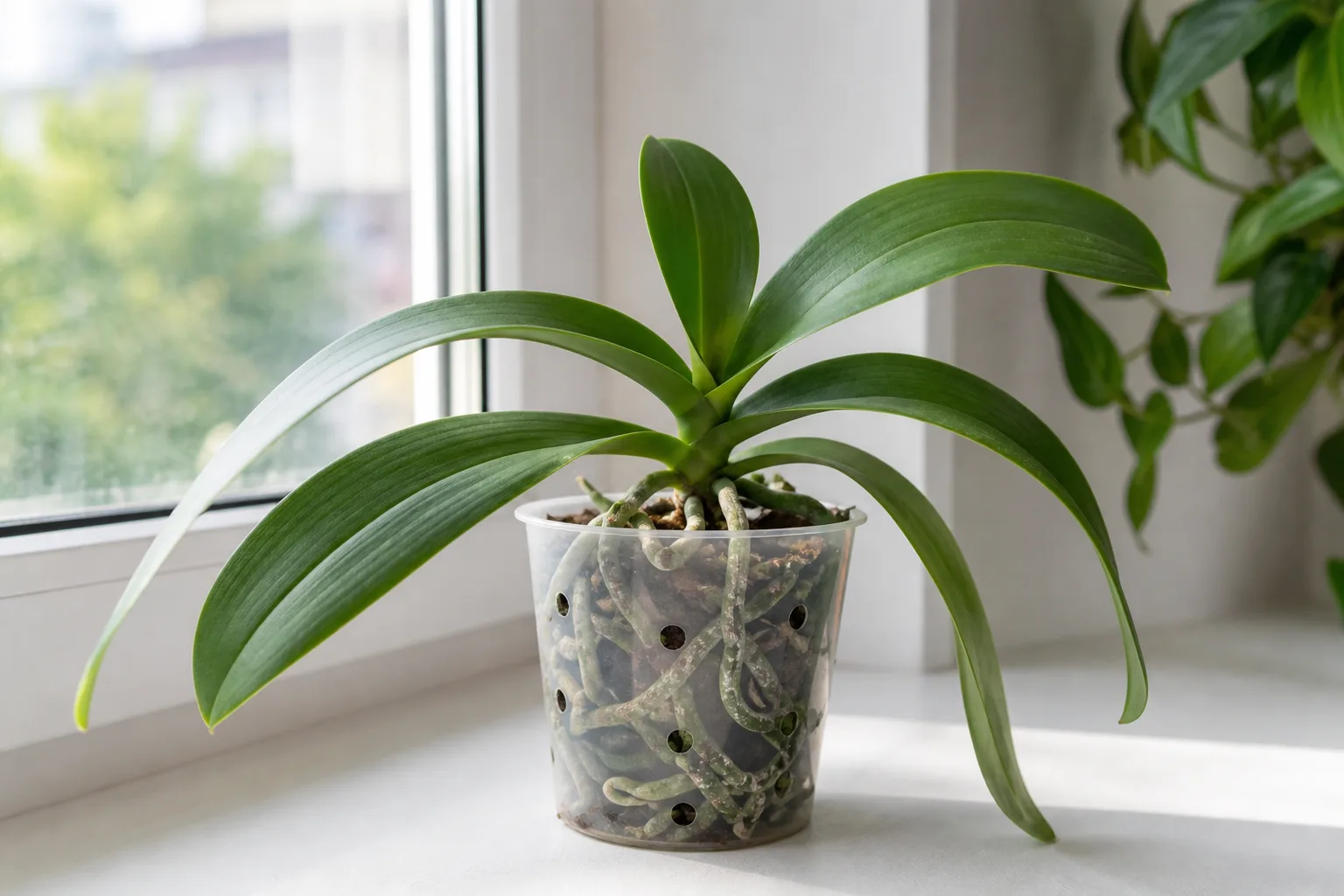
No Flowers on Phalaenopsis Orchid: Causes, Checks & Fixes
This guide covers no flowers on Phalaenopsis Orchid. See also the general No Flowers guide, watering, and light pages for this plant.
No Flowers on Phalaenopsis Orchid: Causes, Checks & Fixes
Quick answer
Phalaenopsis Orchid reblooms when light, temperature, and root health align-not on demand. The usual reasons for no flowers are insufficient bright indirect light, missing cooler night temperatures to initiate spikes, or a plant still recovering from its last bloom cycle. Grocery-store moth orchids often bloom once on stored nursery energy; rebloom failure at home is the more reliable signal that culture-not genetics-is the blocker.
First step: move the plant to bright indirect light at an east window (or the brightest filtered spot available) and leave watering, fertilizer, and repotting unchanged for two weeks. Light is the single unlock; cool nights and spike timing come after placement is corrected. If leaves are very dark green and stiff, also read the not enough light guide-this page covers the full rebloom-failure workflow, not only shade.
This guide focuses on chronic non-blooming: no spike for 12–18+ months after the last flowers faded. For proactive window placement and foot-candle targets, see the Phalaenopsis light guide. For buds that form then abort, see bud drop.
Why Phalaenopsis Orchid stops flowering
Moth orchids are monopodial epiphytes: they grow vertically from a single crown, producing one or two new leaves per year while older basal leaves gradually senesce. After bloom, most hybrids follow a predictable cycle-grow a new leaf, then initiate a flower spike from the crown once environmental cues align. When any cue is missing, the cycle stalls and you get healthy-looking foliage with no inflorescence for months or years.
Three culture factors block rebloom more often than disease:
Insufficient light. Phalaenopsis tolerates lower light than Cattleya orchids, but rebloom still requires bright indirect exposure-roughly 1,000 to 1,500 foot-candles in greenhouse terms, or an east window indoors. Dark green, stiff leaves mean the plant is compensating for scarce light and will prioritize survival over flowering.
Missing cool-night trigger. Large-flowered hybrids are temperature-dependent for spike initiation. Nights near 55–60°F for several weeks in autumn or early winter-while days stay warm-mimic the species’ natural dry-season cue. Constant warm nights above the mid-70s°F year-round, common near heating vents or in centrally heated apartments, prevent spikes even when leaves look fine.
Root-zone stress. Overwatered bark, standard potting soil instead of orchid bark, or repotting shock diverts energy from flowering. Mushy roots cannot support a spike; fix the root system before expecting blooms. See root rot if bark stays wet and roots soften.
Other common blockers include recent repotting into wrong medium, ethylene exposure during spike development (ripening fruit nearby), and simply being too young-seedlings may take years before a first bloom.
What no flowers looks like on Phalaenopsis Orchid
Typical chronic non-blooming pattern:
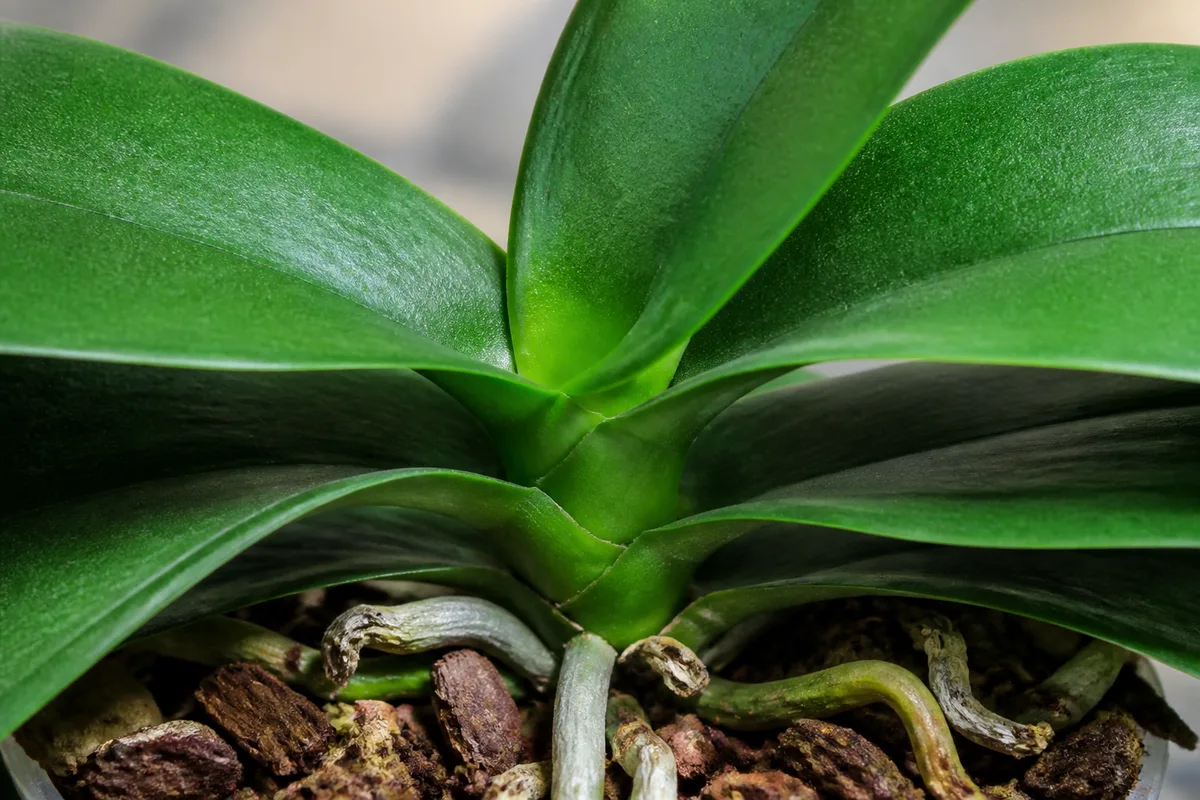
No Flowers symptoms on Phalaenopsis Orchid - compare with healthy tissue on the same plant.
- Healthy green leaves but no flower spike for 12–18 months or longer after the last bloom finished
- Possible slow leaf production-one new crown leaf may take a full year in marginal conditions
- Dark green, rubbery foliage with a slight lean toward the brightest window
- An old brown, dried spike still attached from the previous bloom, or a green spike that never produced buds
- Plant otherwise stable: firm leaves, no crown collapse, roots silver-grey between waterings
The grocery-store bloom trap: A moth orchid purchased in full flower on a dim interior shelf often looked perfect for eight to twelve weeks, then never rebloomed. That first bloom used stored energy and controlled greenhouse conditions-not your hallway light. Rebloom failure after a single home bloom cycle is normal when light and cool nights are absent; it does not mean the plant is dead.
What is not “no flowers”:
- Buds forming then shriveling-that is bud drop, an environmental spike-stall problem, not chronic non-initiation
- A spike growing slowly with tight green buds-patience; moth orchid spikes take weeks to lengthen and months to open
- A few weeks of rest immediately after flowers fade-normal pause before the next leaf cycle
Young seedlings under three years old may show no spike simply because they are immature. That is expected biology, not a care error.
How to confirm the cause
Work through this six-step checklist before buying bloom booster fertilizer or cutting spikes:
-
Leaf color and light test - Compare foliage to olive or yellow-green benchmarks. Very dark forest-green leaves strongly suggest insufficient light. Hold your open hand one foot above the leaves at midday: you should see a faint shadow with soft, blurred edges. No shadow means the spot is too dim for reliable rebloom. Detailed light diagnosis lives on the not enough light page.
-
Cool-night history - Review the last autumn and winter. Did nights stay above the mid-70s°F near heating vents, or did the plant experience several weeks near 55–60°F? Warm nights through the cool season are the second-most-common rebloom blocker after light.
-
Growth-cycle check - Has the plant produced at least one new crown leaf since the last bloom finished? Most hybrids need that leaf to mature before spike initiation. No new leaf for 12+ months while light is dim confirms stalled growth, not impatience.
-
Root inspection - Slide the clear inner pot out and look at velamen. Firm silver-grey or bright green roots after watering support blooming. Mushy, brown, hollow roots mean fix watering and medium before expecting flowers. Confirm bark-not standard potting soil.
-
Spike status - Is an old spike still green? It may branch from a lower node. A brown dried spike can be removed near the base. No spike at all after passing steps 1–4 points to light and temperature, not pruning.
-
Ethylene and draft screen - If a spike started then stalled, check for ripening fruit within a few feet, cold AC drafts, or a recent repot mid-cycle. Those cause bud blast, not the same fix as chronic non-initiation.
First fix for Phalaenopsis Orchid
Move the plant to bright indirect light at an east-facing window-and change nothing else for two weeks.
An east exposure delivers gentle morning sun without scorch risk. If east is unavailable, use a filtered south or west window with a sheer curtain, or a spot three to four feet inside a bright south window. Coming from a very dim bathroom or interior shelf, acclimate gradually over five to seven days-about six inches closer to the glass every two days-to avoid sun scorch on shade-adapted leaves.
Do not repot, fertilize, or change watering rhythm on the same day as the move. Brighter light usually speeds water use; check bark and aerial roots instead of following a calendar. Silver-grey roots mean dry; bright green means moist.
After two weeks in better light, plan the cool-night protocol for the next autumn-or simulate it by moving the pot to a cooler room (55–60°F nights) for three to four weeks while days stay warm. Spike initiation often appears as a small bump at the crown within two to four weeks of cool exposure; open flowers follow months later.
Step-by-step rebloom encouragement
Once light is corrected and roots are firm, follow this sequence through the next growth cycle:
Weeks 1–2: Stabilize placement
Keep the pot orientation steady when no spike is present-rotation is fine for even leaf growth. Watch leaf color shift from very dark green toward olive or yellow-green. Adjust watering to match faster drying in brighter light.
Weeks 3–8: Support active growth
Rotate a quarter turn weekly. If the window still fails the hand-shadow test, add a full-spectrum LED grow light 12–18 inches above the leaves for 12–14 hours daily during short winter days-see the light guide for setup detail.
Feed lightly every two to four weeks during active growth only, using a urea-free orchid formula at quarter to half strength. Skip feed on a stressed, dark-green, stalled plant. Full timing is on the fertilizer guide.
Autumn onward: Cool-night trigger
When a new crown leaf has hardened, expose the plant to cooler nights near 55–60°F for three to four weeks while daytime temperatures stay in the 70s°F. A drafty window sill or a cooler spare room works. Avoid sudden drops below 50°F.
Watch the crown for a small green bump-the start of a spike. Stake gently as it lengthens; do not rotate the pot once the spike is actively growing or it will twist toward light.
Green spike decisions
Leave a healthy green spike in place-it may branch and rebloom. If you cut above the second node on a green spike, a secondary bloom is possible within 8–12 weeks but stresses the plant. Most home growers prefer one strong annual cycle over forced secondary flushes.
Recovery timeline
| Stage | What to expect |
|---|---|
| 2–4 weeks after light fix | Leaf color begins lightening; lean toward window may reduce |
| 1–3 months | New root tips active; possible new crown leaf |
| 3–6 months | One mature leaf completes; plant ready for cool-night cue |
| 6–12 months | Spike initiation possible after autumn cool period if light is adequate |
| 12–18 months with no spike | Reassess light intensity-spot may still be too dim; add grow lights |
| 2+ years, no leaf or spike growth | Verify roots and crown; plant may need repot or has declined |
Rebloom is not instant after a dim-shelf past. Judge progress by new leaves and root activity first, then spike initiation-not by calendar weeks alone.
Lookalike symptoms to rule out
| Symptom pattern | Likely cause | First action |
|---|---|---|
| Dark green leaves, no spike 12+ months, lean toward window | Insufficient light | Move to east window; see not enough light |
| Buds formed then yellowed and dropped | Bud blast from drafts, ethylene, or repot stress | Stabilize environment; see bud drop |
| Limp leaves, mushy roots, wet bark for weeks | Root rot / overwatering | Fix drainage and watering before expecting blooms; see root rot |
| Few weeks after last flower, no new growth yet | Normal post-bloom rest | Wait; confirm light is adequate for when growth resumes |
| Small plant under 3 years, healthy but never bloomed | Immature seedling | Continue good culture; first bloom may take years |
| Bloomed once on dim shelf, never again | Grocery-store stored-energy bloom | Fix light and cool nights; first home rebloom is the real test |
What not to do
Do not keep the plant on a bathroom shelf hoping humidity alone will trigger blooms-high humidity without bright light produces dark green, non-flowering plants. Do not use ice cubes; soak-and-drain on the silver-grey root cycle is correct. Do not repot into standard potting soil. Do not place near ripening fruit during spike development. Do not jump from deep shade to unfiltered south sun in one day-scorch appears within hours. Do not apply heavy bloom-booster fertilizer on a stalled, dark-green plant; nutrients cannot replace photons.
How to prevent chronic non-blooming
Default placement: east window with sky view, or filtered south/west exposure year-round. Plan an autumn cool-night period every year-even a few weeks makes a difference for temperature-sensitive hybrids. Refresh bark every one to two years in orchid bark medium, never standard soil. Track rebloom dates; missing two consecutive cycles means reassess light before changing anything else. Retest the hand-shadow test each November and add supplemental light if winter daylight drops.
When to worry
Chronic non-blooming alone rarely kills Phalaenopsis. Worry when bloom failure pairs with decline:
- Bark wet for two weeks or more with dark, soft roots-rot risk needs immediate watering correction
- Crown collapse or blackening at the leaf base-usually overwatering in dim conditions
- More than two years without any new leaf or root tip despite bright placement-verify light with a meter or grow lights before assuming the plant is spent
- Sudden leaf yellowing across multiple leaves while expecting a spike-check roots, not fertilizer
A healthy moth orchid with firm roots and olive-toned new growth is recoverable. Fix culture, adjust watering to match growth rate, and allow one full leaf cycle plus a cool season before concluding the plant will never rebloom.
Related Phalaenopsis Orchid guides
- Phalaenopsis overview - species hub and year-round care baseline
- Light requirements - proactive placement, leaf-color gauge, grow lights
- Not enough light - dark green leaves and failed rebloom from shade (overlapping but light-first diagnosis)
- Bud drop - buds form then abort (different from never initiating a spike)
- Watering guide - silver-grey root cycle and soak method
- Fertilizer guide - weak feeding during active growth only
- Root rot - mushy roots before expecting blooms
Conclusion
No flowers on Phalaenopsis Orchid is almost always a culture problem-light, autumn cool nights, and a completed leaf cycle-not a missing bloom secret. Confirm with the six-step checklist, move to bright indirect light as the first fix, then plan cool-night exposure after the next crown leaf matures. Grocery-store first blooms on stored energy mislead owners into thinking dim shelves are enough; home rebloom is the real test. Give the plant one full growth season in better conditions before concluding it will never flower again.