Not Enough Light on Phalaenopsis Orchid: Causes, Checks &
Quick answer
Phalaenopsis Orchid needs bright indirect light-not a dim interior shelf. Dark green stiff leaves, slow growth, and no rebloom for over a year usually mean too little light. First step: move the plant to an east window or equivalent bright indirect spot.
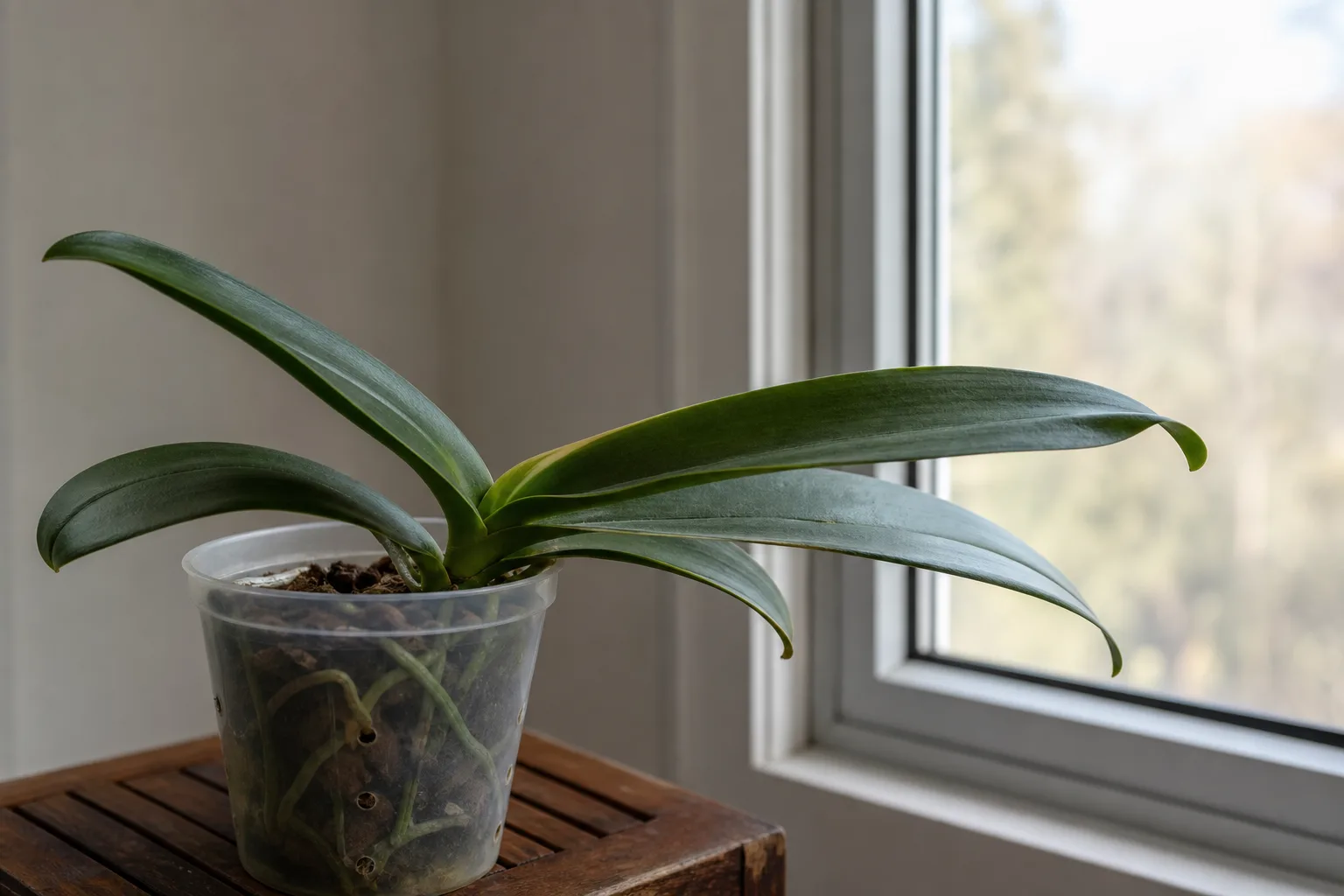
Not Enough Light on Phalaenopsis Orchid: Causes, Checks & Fixes
This guide covers not enough light on Phalaenopsis Orchid. See also the general Not Enough Light guide, watering, and light pages for this plant.
Not Enough Light on Phalaenopsis Orchid: Causes, Checks & Fixes
Quick answer
Phalaenopsis Orchid is often sold as an easy low-light plant, but low light among orchids still means bright indirect exposure-not a hallway shelf or a desk far from any window. Without enough light, the plant cannot build the energy it needs for new leaves or flower spikes.
First step: move the plant to the brightest indirect spot you can provide, ideally an east-facing window. Do not repot, fertilize, or change watering on the same day. Better light is the single change that unlocks everything else.
What not enough light looks like on Phalaenopsis Orchid
Moth orchids tell you about light through leaf color, shape, and growth speed more reliably than through wilting.
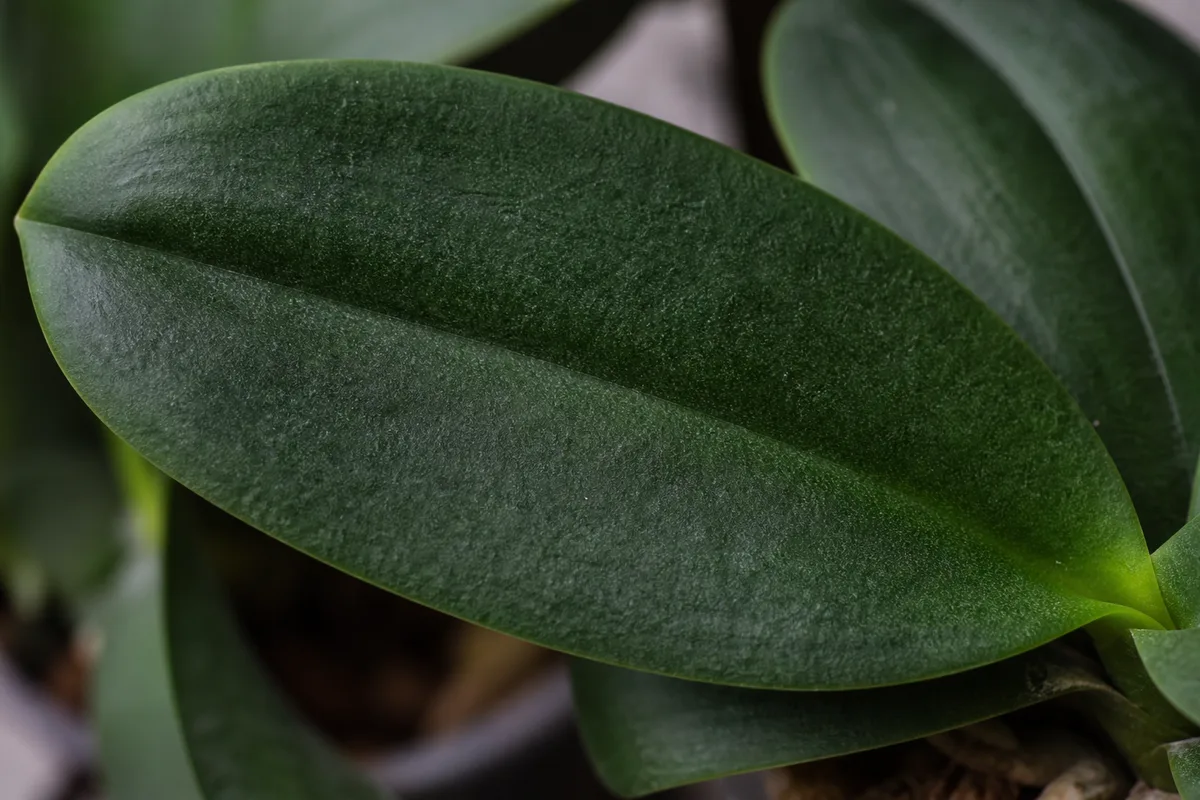
Not Enough Light symptoms on Phalaenopsis Orchid - compare with healthy tissue on the same plant.
Typical low-light signs:
- Very dark green, almost forest-green leaves that feel stiff or rubbery-the plant produces extra chlorophyll trying to capture scarce light
- Long, thin, droopy leaves that reach toward the glass instead of holding a broad arch
- Slow or absent leaf growth between bloom cycles; no new leaf from the crown for many months
- No flower spike for a year or more despite otherwise stable care-low light is the most common cause of failure to rebloom
- Plant leaning sharply toward the brightest side of the room
- Bark that stays wet too long because the plant is not actively using water
What proper light looks like for comparison:
- Olive, yellow-green, or medium green leaves with a slight gloss
- Leaves that arch naturally without extreme stretching
- Steady leaf production from the crown between blooms
- A flower spike initiated after cooler autumn nights once light is adequate
Dark green foliage is the classic Phalaenopsis low-light signal. Red or pink tinge along leaf edges means the opposite problem-too much direct sun.
Why Phalaenopsis Orchid gets not enough light
Phalaenopsis evolved as an epiphyte under tree canopies in tropical Asia. In nature it receives filtered, bright light-not deep shade. Hybrids sold as houseplants inherit that need: they tolerate lower light than Cattleya or Dendrobium orchids, but they still require more energy than most interior rooms provide.
Several home situations push moth orchids into chronic under-lighting:
Placement too far from windows. Light intensity drops sharply with distance. A spot that looks “bright” to your eyes six feet from a north window may be too dim for reblooming.
North-facing windows in northern climates. Winter sun at high latitudes may not deliver enough daily exposure without supplementation.
Obstructed glass. Sheer curtains, tinted film, overhangs, neighboring buildings, and dirty panes all cut usable light more than owners expect.
Post-bloom neglect. After flowers fade, many moth orchids get moved from a display table back to a dim shelf-and never return to adequate light.
Seasonal daylight loss. Shorter winter days reduce exposure even when the pot never moved. Growth that was marginal in summer can stall completely by February.
Low light also slows water uptake. A Phalaenopsis in a dim corner may keep bark moist for two weeks or more, which compounds stress: weak growth plus wet roots invites rot even though the original trigger was light, not overwatering on Phalaenopsis Orchid.
How to confirm insufficient light
Work through these checks before assuming fertilizer, Phalaenopsis Orchid repotting guide, or pest treatment is needed:
-
Leaf color test - Compare your plant to the olive-green benchmark. Very dark green leaves strongly suggest low light. Yellow-green with red margins suggests too much direct sun instead.
-
Hand-shadow test - Hold your open hand one foot above the foliage at midday. You should see a faint shadow with soft, blurred edges. No visible shadow means the location is too dark for reliable rebloom.
-
Growth history - Count months since the last new leaf or flower spike. More than twelve months without either, while the plant is otherwise alive, points to light as the limiting factor.
-
Lean direction - A plant that consistently tilts toward one window is actively seeking more light.
-
Water-use check - Press a finger into the bark. If it stays damp for ten days or more in normal room temperatures and the plant is not growing, low light may be slowing metabolism. Confirm roots are still firm and silver-grey between waterings-not a rot issue masked as thirst.
-
Rule out lookalikes - Yellow lower leaves with firm dark-green upper leaves and wet bark suggest overwatering, not light. Bud drop on an otherwise well-lit plant points to drafts or ethylene, not shade. Only when dark green foliage, slow growth, and failed rebloom cluster together should you confirm low light.
First fix for Phalaenopsis Orchid
Move the plant to an east-facing window-or the brightest filtered indirect spot available-and leave everything else alone for two weeks.
An east exposure delivers gentle morning sun without the scorch risk of unfiltered south or west midday rays. If east is unavailable, a shaded south or west window with a sheer curtain, or a spot three to four feet inside a bright south window, often works.
Move the pot in one step if coming from moderate shade. If the plant lived in a very dim interior room for months, slide it closer to the window over five to seven days-about six inches every two days-to avoid sun scorch on leaves that have not seen strong light.
After moving:
- Do not fertilize until you see new root tip activity or a fresh leaf
- Do not repot unless bark is clearly broken down
- Recheck bark moisture every few days; brighter light usually means faster drying
This single placement change addresses the root cause. Cooler night temperatures for rebloom, grow lights, and watering adjustments come after light is corrected.
Step-by-step recovery
Once the plant is in brighter indirect light, follow this sequence:
Week 1–2: Acclimate and observe
Watch leaf color shift from very dark green toward olive or yellow-green on new and existing foliage. Some older leaves may show slight yellowing as the plant reallocates energy-this is normal if roots are healthy.
Adjust watering: check bark and aerial roots instead of following a calendar. Silver-grey roots mean dry; bright green means moist.
Week 3–8: Support steady growth
Rotate the pot a quarter turn weekly so leaves grow evenly instead of leaning hard to one side.
If the window spot still fails the hand-shadow test, add a full-spectrum LED grow light twelve to eighteen inches above the leaves for twelve to fourteen hours daily during short winter days.
Month 3 onward: Reblooming conditions
Phalaenopsis typically needs both adequate light and a period of cooler nights to initiate a flower spike. Autumn nights near a drafty window or a cooler room often trigger spikes once light is no longer limiting.
Do not expect a spike immediately after moving from deep shade. The plant may need one full growth cycle-often six to twelve months-to rebuild energy reserves.
Recovery timeline
| Stage | What to expect |
|---|---|
| 2–4 weeks | Leaf color begins lightening from very dark green; lean may reduce slightly |
| 1–3 months | New root tips turn bright green after watering; possible new leaf from crown |
| 3–6 months | Compact new leaf growth; more predictable wet/dry bark cycle |
| 6–12 months | Flower spike initiation possible after cooler nights, if light is now adequate |
| 12+ months with no spike | Reassess light intensity-spot may still be too dim; consider grow lights |
Stretched older leaves will not shrink back. Judge recovery by new leaves, root activity, and eventually a spike-not by fixing the shape of old foliage.
Lookalike symptoms
Overwatering - Yellowing lower leaves, soft or mushy roots, sour-smelling bark. Leaf color may stay dark green, but roots fail the silver-grey dry test. Fix watering and drainage, not just light.
underwatering on Phalaenopsis Orchid - Wrinkled, pleated leaves and silver-grey roots that stay dry for weeks. Leaf color may be pale rather than dark green. Increase watering frequency after confirming bark truly dries between sessions.
Too much direct sun - Yellow-green or bleached leaves with red or pink margins, or tan scorch patches facing the window. Move back from direct rays or add a sheer curtain-opposite fix from low light.
Bud drop - Flower buds abort while leaves look healthy and well-lit. Usually drafts or sudden temperature swings-not insufficient light.
Normal post-bloom rest - A moth orchid may pause leaf growth for several weeks after flowering without being in crisis. Low light is confirmed only when dark green foliage, lean, and months without growth or rebloom persist together.
Mistakes to avoid
- Jumping from deep shade to unfiltered south sun in one day - Scorch appears as yellow or tan patches within hours. Acclimate gradually.
- Fertilizing a dark-green, stalled plant - Extra nutrients cannot replace light. Fertilizer on a stressed, slow-growing orchid can salt-burn roots.
- Repotting to “fix” slow growth on Phalaenopsis Orchid - Fresh bark does not substitute for photons. Repot only on the normal one-to-two-year schedule or when mix breaks down.
- Assuming a blooming plant has enough light - Grocery-store Phalaenopsis often bloom on stored energy from the grower. Rebloom failure at home is the more reliable light signal.
- Keeping the plant on a bathroom shelf “for humidity” - High humidity without bright light still produces dark green, non-blooming plants.
- Ignoring seasonal change - A window that worked in June may be too dim by December without grow-light help.
How to prevent low light next time
- Default placement: East window with direct view of the sky, or filtered south/west exposure
- Seasonal check: Retest the hand-shadow test in late November and add supplemental light if needed
- Clean windows at least twice a year
- Rotate weekly during active growth for even exposure
- Track rebloom dates - Missing two consecutive bloom cycles means reassess light before changing anything else
- Use grow lights in offices or interior rooms where no window spot passes the shadow test
Phalaenopsis is one of the most forgiving orchids for beginners precisely because it adapts to home conditions-but “forgiving” is not the same as “shade tolerant.” Phalaenopsis Orchid light guide year-round is the baseline that keeps leaves healthy and rebloom realistic.
When to worry
Low light alone is rarely fatal. Worry when low light pairs with other stress:
- Bark wet for two weeks or more with dark, soft roots-rot risk needs immediate watering correction and possible repot
- Crown collapse or blackening at the leaf base-usually overwatering in dim conditions, not light alone
- More than two years without any new leaf or root tip despite bright placement-verify the spot with a light meter or try grow lights before assuming the plant is spent
A healthy moth orchid with dark green leaves and firm roots is recoverable. Move it to better light, adjust watering to match the new growth rate, and give it time.
When to use this page vs other Phalaenopsis Orchid guides
- Phalaenopsis Orchid watering guide - Use for routine moisture checks before assuming not enough light is the main issue.
- Phalaenopsis Orchid problems hub - Browse all 20 common issues on this species.
- Leggy Growth on Phalaenopsis Orchid - Different entry point when symptoms overlap with not enough light.
- Slow Growth on Phalaenopsis Orchid - Different entry point when symptoms overlap with not enough light.
- Yellow Leaves on Phalaenopsis Orchid - Different entry point when symptoms overlap with not enough light.