Slow Growth on Phalaenopsis Orchid: Causes, Checks & Fixes
Quick answer
Phalaenopsis Orchid often pauses leaf growth for several weeks after blooming-that rest is normal. If no new crown leaf appears through a full warm season, insufficient bright indirect light or failing bark is usually the cause. First step: confirm whether the plant recently finished flowering, then check light at the leaves and root color in bark.
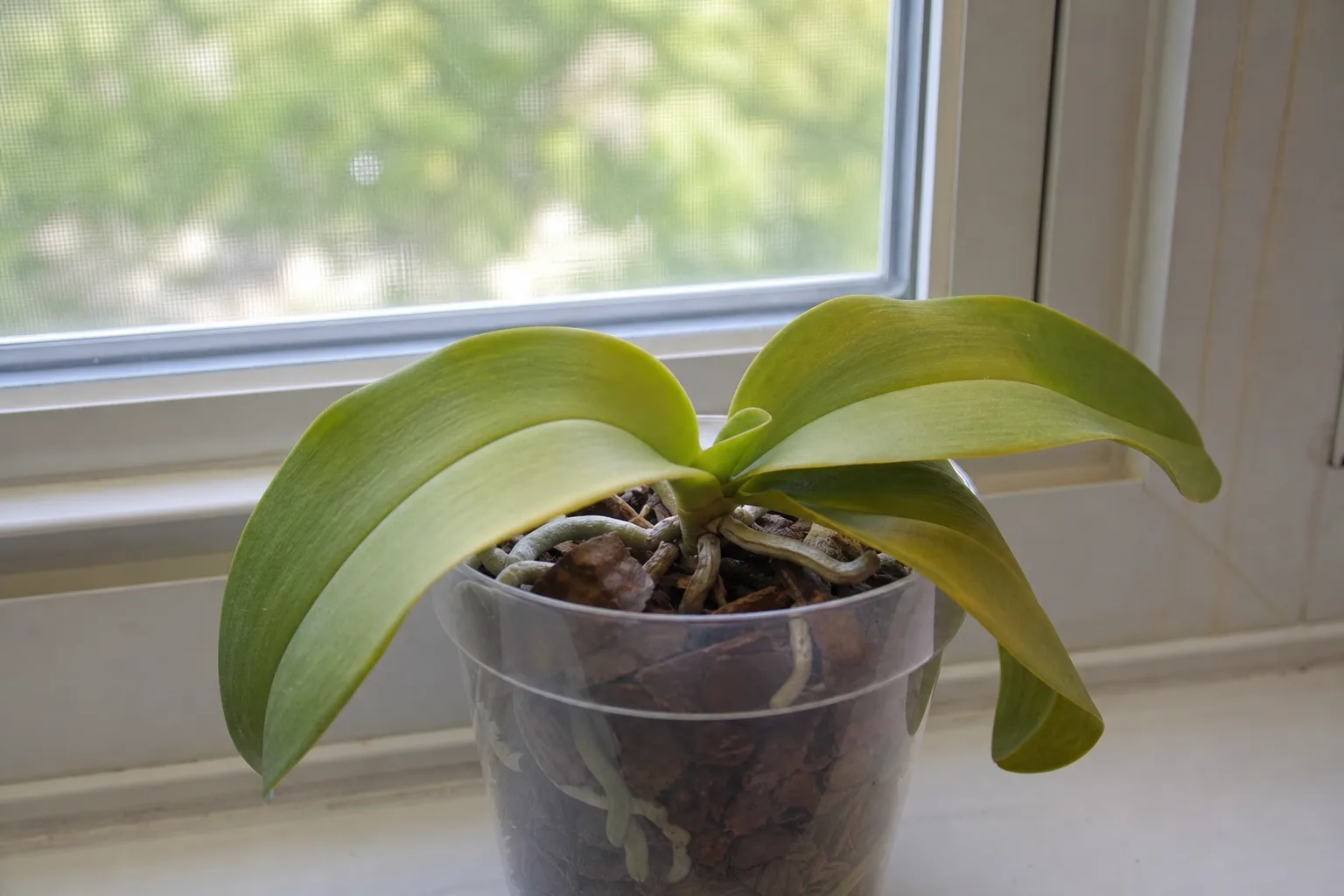
Slow Growth on Phalaenopsis Orchid: Causes, Checks & Fixes
This guide covers slow growth on Phalaenopsis Orchid. See also the general Slow Growth guide, watering, and light pages for this plant.
Slow Growth on Phalaenopsis Orchid: Causes, Checks & Fixes
Quick answer
Phalaenopsis Orchid grows steadily but not quickly-especially while reallocating energy after a bloom cycle. First step: confirm whether your plant recently finished flowering. A quiet crown for four to eight weeks post-bloom is normal rest, not a crisis.
If no new leaf appears through an entire warm growing season, the usual limiter is insufficient bright indirect light combined with bark that no longer drains well-not disease. Move the plant to the brightest filtered spot available (an east window is ideal), read root color before watering (silver-grey means dry; bright green means moist), and compare progress against our light and watering guides rather than guessing on a calendar.
How slow growth differs from low light and root rot on Phalaenopsis Orchid
This page covers stalled overall growth-months without a new crown leaf, sluggish root tips, or a plant that feels stuck after bloom. It is not the same URL as our not enough light guide, which goes deep on leaf color, rebloom failure, and grow-light specs when shade is the primary problem.
Use this slow-growth page when you are unsure whether the plant is simply resting, when growth stalled despite what looks like adequate care, or when you need a full diagnostic path across rest, light, bark age, and root health. Jump to the root rot guide if bark stays wet for weeks, roots are mushy, or the crown feels soft-rot can mimic slow growth but needs a different first response.
| Pattern | Most likely cause | Where to go next |
|---|---|---|
| Quiet crown 4–8 weeks after bloom, firm leaves, healthy roots | Normal post-bloom rest | Stay on this page; keep light steady |
| Very dark green leaves, lean toward window, no leaf for 12+ months | Low light limiting energy | Not enough light |
| Bark wet 10+ days, brown mushy roots, sour smell | Root rot / overwatering on Phalaenopsis Orchid | Root rot |
| Soft crown, black base of leaves | Crown decline | Root rot + stop watering |
Why Phalaenopsis Orchid grows slowly
Moth orchids are not pothos-they will never push a new leaf every two weeks even in perfect care. Understanding why growth pauses helps you avoid panicking during normal rest or missing a real bottleneck.
Post-bloom energy allocation and normal rest
After flowering, Phalaenopsis redirects carbohydrates to new roots and the next leaf, not constant visible growth. The American Orchid Society notes that a moth orchid must build sufficient vegetative mass before it can bloom again-that rebuilding phase often looks like “nothing is happening” at the crown.
Expect roughly four to eight weeks of quiet after the last flower drops before a new leaf tip appears. Mini cultivars and plants in short winter days may take longer. This rest is not dormancy-the roots should still cycle color and firm new root tips may appear at the pot edge while the crown waits.
Insufficient bright indirect light
Weak light is the most common reason rest turns into a months-long stall. Phalaenopsis needs bright indirect exposure, not dim interior shelves. In low light the plant survives on stored energy from the grower but cannot fuel steady leaf production at home.
Slow metabolism in shade also means bark stays wet longer, which compounds the problem: the plant uses little water while mix remains damp-a pairing that invites hidden root stress even when you water conservatively.
Broken-down bark and hidden root stress
Commercial moth orchids grow in porous bark-based medium that should be refreshed every one to two years. As fir bark decomposes into fine particles, pore spaces collapse, oxygen drops, and roots work harder for the same water.
Stalled growth with sour-smelling mix, water that channels down the pot sides without wetting the core, or roots that stay dark green for weeks often trace to old bark-not lack of fertilizer. Standard potting soil suffocates epiphytic roots and slows everything; never repot a moth orchid into houseplant mix.
Overwatering and crown decline
Chronic wet bark in a dim corner is the urgent pairing on Phalaenopsis. Growth stalls because roots cannot breathe; crown tissue at the leaf base may soften if water sits in the meristem. That pattern is not fixable with more light alone-you must correct watering and inspect roots first.
Cool temperatures and short winter days
Phalaenopsis prefers average home temperatures-roughly 65–75°F days with slightly cooler nights. Growth naturally slows when daylight hours shrink and rooms stay below about 65°F. Seasonal quiet from November through February is normal if leaves stay firm and roots remain healthy between waterings.
What slow growth looks like on Phalaenopsis Orchid
Compare your plant to these patterns rather than to fast-growing houseplants.
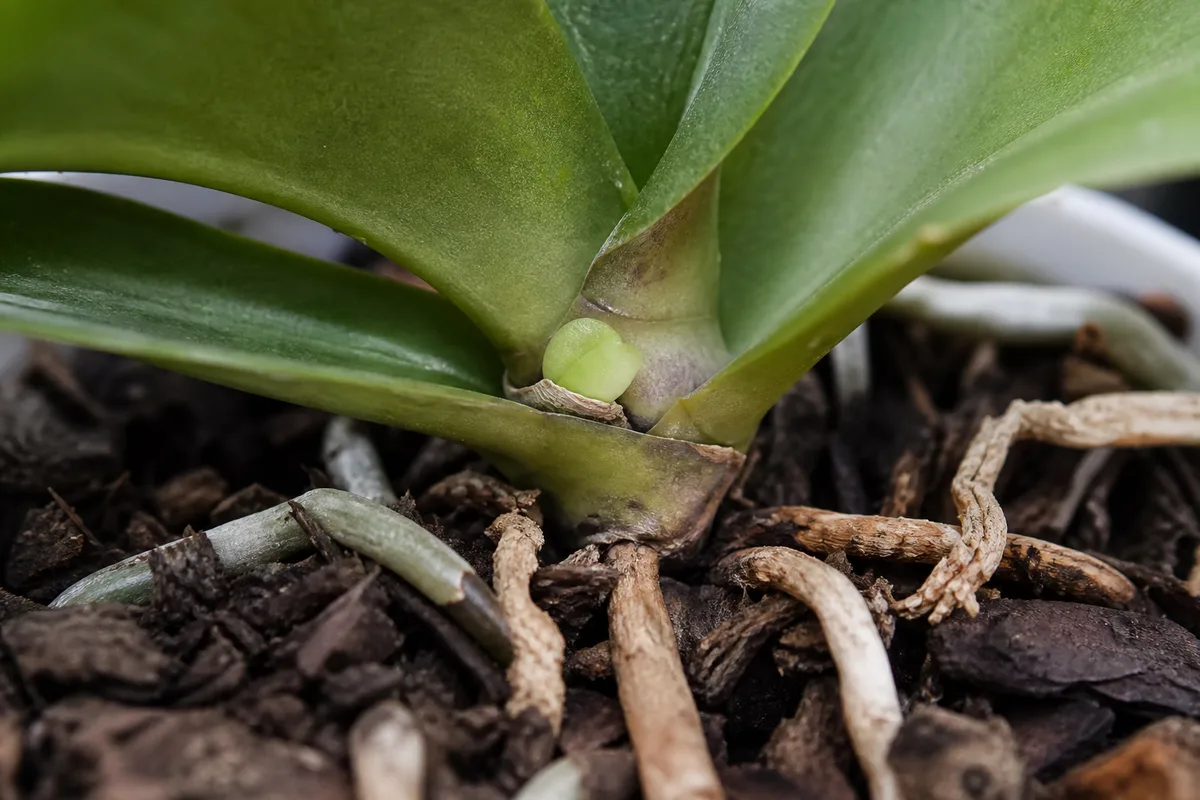
Slow Growth symptoms on Phalaenopsis Orchid - compare with healthy tissue on the same plant.
Normal slow growth:
- One new crown leaf every two to four months in good light during active season
- Four to eight weeks of crown quiet immediately after bloom ends
- Firm, medium-green leaves with healthy arch-not limp or yellowing
- Aerial roots that turn silver-grey between waterings and bright green after a soak
- Steady but unhurried root tips at the pot edge
Problem slow growth:
- No new crown leaf through an entire spring and summer despite warm room temperatures
- Very dark green, stiff leaves that lean sharply toward the brightest window
- Pale, limp foliage with wrinkled leaves and roots that stay silver-grey for weeks (underwatering on Phalaenopsis Orchid) or dark green constantly (overwatering)
- Bark that smells sour or stays wet ten days or more in normal indoor heat
- Brown, mushy roots when you slide the plant from the pot
Mini and variegated cultivars often grow more slowly than standard hybrids even under good care-compare against your plant’s own history year over year, not a grocery-store Phalaenopsis on a different schedule.
How to confirm the cause
Work through this checklist in order before repotting, fertilizing heavily, or assuming the plant is dying:
-
Bloom timeline - When did the last flower fade? If within eight weeks, rest may still be normal. If bloom ended months ago in warm weather, treat stall as a care limiter.
-
Hand-shadow test - Hold your open hand one foot above the foliage at midday. You should see a faint shadow with soft, blurred edges. No visible shadow means the spot is too dim for reliable growth-see our not enough light guide for placement detail.
-
Leaf color and firmness - Olive or yellow-green firm leaves suggest adequate light. Very dark green with months of no growth points to shade. Soft, yellowing lower leaves on wet bark suggest watering stress instead.
-
Root color rhythm - In a clear pot or after gently brushing bark from a few aerial roots, confirm the silver-grey dry / bright green moist cycle. Roots that stay dark and mushy fail this test-inspect for rot before increasing light.
-
Bark age and smell - Has the mix been unchanged for more than two years? Does it smell sour or look like fine mud? Schedule repot per our repotting guide if breakdown is advanced.
-
Crown firmness - Press gently at the base of the top leaves. The crown should feel solid. Soft, blackening tissue is an emergency-not slow growth.
-
Season check - Is it mid-winter with short days? Delay judgment until March unless rot signs are present.
If rest timing checks out, light passes the shadow test, and roots cycle normally, wait another two weeks before escalating. If bloom ended long ago, light fails the test, or bark is failing, move to the first fix.
First fix for Phalaenopsis Orchid
Move the plant to the brightest filtered indirect spot you can provide-ideally an east-facing window-and change nothing else for two weeks.
An east exposure delivers gentle morning sun without the scorch risk of unfiltered south or west midday rays. If the plant lived in a very dim interior room, slide it closer over five to seven days-about six inches every two days-to avoid sun scorch on leaves adapted to shade.
After moving:
- Do not fertilize until you see new root tip activity or a fresh leaf emerging
- Do not repot unless bark is clearly broken down or sour
- Recheck bark moisture every few days; brighter light usually means faster drying-adjust per our watering guide
- Never use ice cubes or leave the pot standing in water
This single placement change addresses the most common stall. Bark refresh, fertilizer, and cool-night rebloom conditioning come after light and watering rhythm are correct.
Step-by-step recovery
Once the plant is in brighter indirect light and you have ruled out urgent rot, follow this sequence:
Week 1–2: Acclimate and observe
Watch for the crown to firm up and root tips to brighten green after watering. Some older leaves may stay dark green-that is fine. Judge new growth, not old foliage shape.
Water only when aerial roots show silver-grey. In brighter light, that may mean shorter intervals than the dim-corner schedule you used before.
Week 3–8: Support steady growth
Rotate the pot a quarter turn weekly so leaves do not lean hard to one side.
If the window spot still fails the hand-shadow test, add a full-spectrum LED grow light twelve to eighteen inches above the leaves for twelve to fourteen hours daily during short winter days.
Apply diluted orchid fertilizer every two to four weeks only while a new leaf is actively expanding-not during crown quiet. The AOS culture sheet recommends weak fertilizer on a regular schedule during active growth, with reduced frequency in cool or overcast conditions.
Month 2–3: Refresh bark if needed
If roots are firm but mix is decomposed, repot into fresh bark after flowering or when new root tips appear-see our repotting guide and soil medium guide. Do not repot a blooming or crown-quiet plant unless rot forces your hand.
Month 3 onward: Rebloom preparation
Phalaenopsis typically needs both adequate light and a period of cooler night temperatures around 55–65°F for several weeks to initiate a flower spike. Autumn nights near a draft-free window often trigger spikes once growth is no longer limiting.
Do not expect a spike immediately after recovering from deep shade-the plant may need one full growth cycle to rebuild reserves.
Recovery timeline
| Stage | What to expect |
|---|---|
| 0–4 weeks post-bloom | Crown quiet; roots may still push at pot edge-normal rest |
| 4–8 weeks post-bloom | New leaf tip often emerges from crown if light and roots are sound |
| 2–4 weeks after light upgrade | Root tips brighten faster after watering; possible crown activity |
| 1–3 months | New leaf expanding; more predictable wet-dry bark cycle |
| 3–6 months | Steady leaf rhythm; plant looks visibly more vigorous |
| 6–12 months | Flower spike possible after cooler nights if light is adequate |
Judge success by firm new leaf tissue from the crown, healthy root color cycling, and eventually a spike-not by daily visible change. Stretched or dark old leaves will not revert; new leaves tell the story.
Lookalike symptoms
Normal post-bloom rest - Crown quiet for weeks with firm leaves and healthy roots. No emergency fix unless light is clearly inadequate or bark is sour.
Not enough light - Very dark green leaves, sharp lean toward glass, no crown leaf for many months, no spike for a year or more. Fix placement first; details in our not enough light guide.
Root rot - Yellowing leaves, mushy brown roots, sour bark, waterlogged mix for weeks. Growth stalls because roots are dying. See root rot-do not fertilize or blast with ice water.
Overwatering without full rot - Dark green roots constantly, bark wet ten-plus days, slow growth in a dim corner. Correct light and watering rhythm together.
Underwatering - Pleated, wrinkled leaves and roots that stay silver-grey for weeks. Increase watering after confirming bark truly dries between sessions.
Pest drain - Scale, mealybugs, or spider mites on undersides can sap vigor without dramatic leaf drop. Inspect with a hand lens if growth stalls despite good light and sound roots.
Too much direct sun - Yellow-green or bleached leaves with red margins-opposite problem from shade. Move back from direct rays.
What not to do
Do not over-fertilize a crown-quiet or dark-green stalled plant hoping to force leaves-extra salts stress roots without replacing light.
Do not repot into standard potting soil or a much larger pot “to encourage growth.” Excess wet volume around a small root ball worsens stall.
Do not keep bark constantly wet in a dim room because the plant “looks thirsty.” Read root color instead of following a calendar.
Do not use ice cubes on the crown or roots-never use ice; cold shock damages orchid roots.
Do not disturb the crown during rest by pulling old bloom spikes aggressively or packing moss against the meristem.
Do not move a recovering plant back to a dim display shelf after bloom-post-bloom neglect is a common reason rest becomes a year-long stall.
How to prevent chronic slow growth
Keep the moth orchid at an east window or equivalent bright indirect spot year-round-review placement in late November when days shorten. See our overview for first-month context and bloom-cycle expectations.
Refresh bark every one to two years before decomposition turns mix into a waterlogged sponge. Pair medium choice with your room’s dry-down speed per the soil guide.
Water on the root-color cue, not a fixed weekly schedule. Fertilize lightly only during active leaf expansion.
After flowers fade, leave the plant in good light and track weeks until the next crown leaf-most stalls that become chronic start when a blooming plant returns to a dark shelf.
When to worry
Slow growth alone is low urgency if the crown is firm and roots cycle color normally. Escalate when:
- Crown feels soft or black tissue appears at the leaf base-act within days
- Bark smells sour and roots are brown and mushy-stop watering and inspect immediately
- No crown leaf through two full warm growing seasons after light and bark corrections
- Leaves yellow and drop while mix stays wet for weeks-rot risk pairs with stall
A healthy moth orchid with firm roots and adequate light is recoverable. Give corrections six to eight weeks before judging failure.
When to use this page vs other Phalaenopsis Orchid guides
- Phalaenopsis Orchid watering guide - Use for routine moisture checks before assuming slow growth is the main issue.
- Phalaenopsis Orchid problems hub - Browse all 20 common issues on this species.
- Not Enough Light on Phalaenopsis Orchid - Different entry point when symptoms overlap with slow growth.
- Leggy Growth on Phalaenopsis Orchid - Different entry point when symptoms overlap with slow growth.
- Yellow Leaves on Phalaenopsis Orchid - Different entry point when symptoms overlap with slow growth.
Related Phalaenopsis Orchid guides
- Phalaenopsis Orchid overview
- Phalaenopsis Orchid watering
- Phalaenopsis Orchid light
- Phalaenopsis Orchid soil
- Not Enough Light on Phalaenopsis Orchid
- Leggy Growth on Phalaenopsis Orchid
- Yellow Leaves on Phalaenopsis Orchid
- Phalaenopsis Orchid problems
Success checklist
You are on track when:
- A new leaf emerges from the crown within eight weeks after post-bloom rest (or within four to eight weeks of a light upgrade)
- Aerial roots cycle silver-grey to bright green between waterings
- The crown feels firm when you press gently at the leaf base
- New leaf tissue is greener and more vigorous than the oldest dark-green foliage
- Bark dries predictably within seven to ten days in your room after watering
Phalaenopsis rewards patience with long bloom displays-but only when light, bark, and watering work together. Normal rest after flowering is part of that rhythm, not a sign the plant is failing.
Recommendations were checked against the American Orchid Society Phalaenopsis culture sheet, University of Maryland Extension Phalaenopsis care, Missouri Botanical Garden Phalaenopsis guide, NC State Extension moth orchid profile, and Smithsonian Gardens Phalaenopsis care sheet. Author: sai-ananth. Reviewer: LeafyPixels Review Board. Reviewed: 2026-06-16.