Leggy Growth on Phalaenopsis Orchid: Causes, Checks & Fixes
Quick answer
Leggy Phalaenopsis Orchid growth almost always means the plant is reaching for more light-not a nutrient shortage. Move it to bright indirect light at an east window before fertilizing, repotting, or cutting leaves.
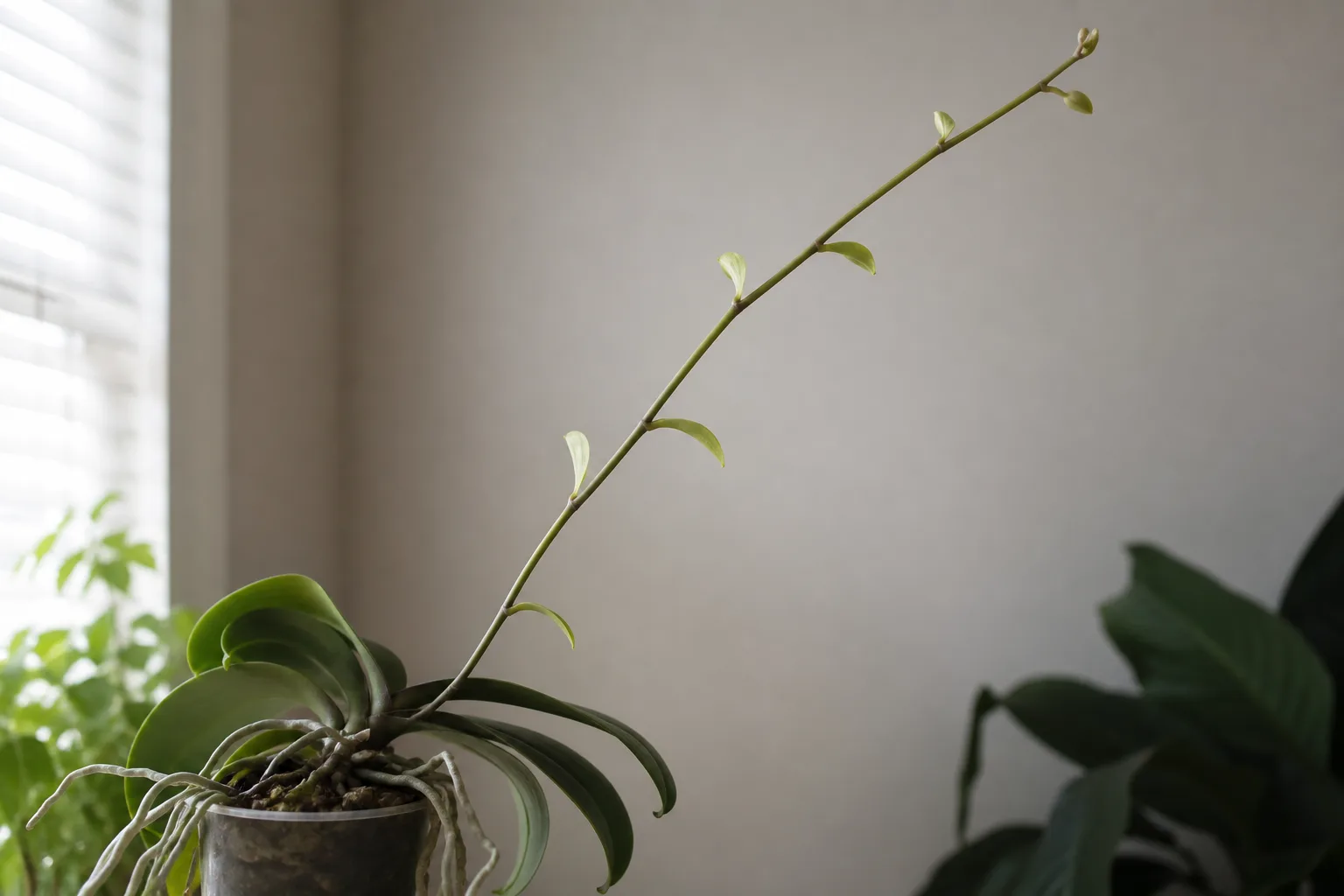
Leggy Growth on Phalaenopsis Orchid: Causes, Checks & Fixes
This guide covers leggy growth on Phalaenopsis Orchid. See also the general Leggy Growth guide, watering, and light pages for this plant.
Leggy Growth on Phalaenopsis Orchid: Causes, Checks & Fixes
Quick answer
Leggy Phalaenopsis Orchid growth is a light problem, not a feeding problem. Moth orchids are monopodial epiphytes that grow vertically from a single stem-when light is too weak, new leaves stretch and the whole plant leans toward the nearest window. First step: move the plant to Phalaenopsis Orchid light guide at an east window and acclimate over one to two weeks if it came from deep shade. Do not repot, fertilize heavily, or cut healthy leaves on day one.
What leggy growth looks like on Phalaenopsis Orchid
Leggy moth orchids look like they are climbing toward light rather than sitting compactly on the windowsill. The signs are distinct from normal slow vertical growth:
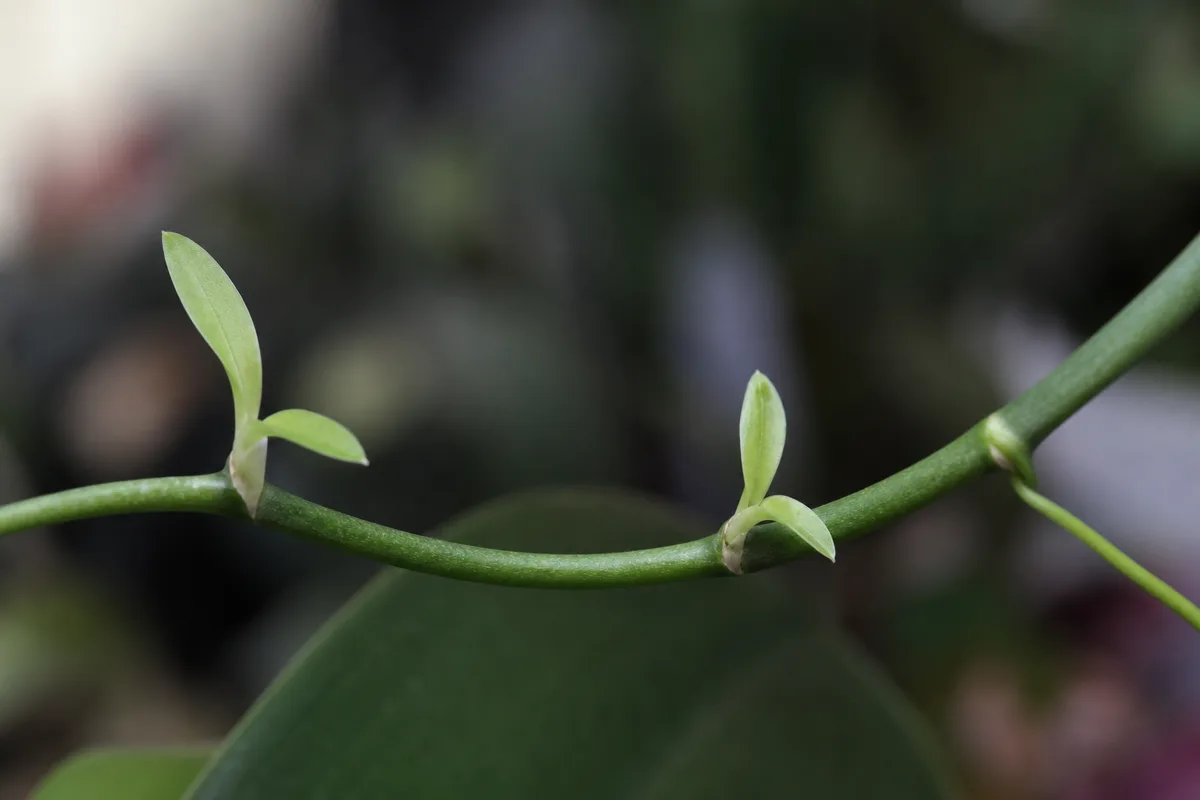
Leggy Growth symptoms on Phalaenopsis Orchid - compare with healthy tissue on the same plant.
Typical leggy (etiolated) signs:
- New leaves are longer, thinner, and softer than older leaves lower on the stem
- Gaps between successive leaf pairs are wider than earlier growth on the same plant
- The plant leans strongly toward glass, a lamp, or the brightest corner of the room
- Foliage stays dark green to yellow-green rather than healthy olive green-MOBOT notes dark green often signals insufficient light on Phalaenopsis
- Flower spikes are weak, slow to form, or absent for more than a year despite otherwise stable care
- Bark stays wet longer than expected because the plant is using water slowly in dim conditions
Normal growth to compare against:
Phalaenopsis naturally grows upward from the crown and sheds lower leaves as it ages. One or two new leaves per year in good light is normal. The difference is quality: firm leaves with moderate spacing and an upright habit, not a persistent lean with progressively weaker new foliage.
Why Phalaenopsis Orchid gets leggy
Insufficient light intensity (most common)
Phalaenopsis is classified as a low-light orchid relative to Cattleya or Dendrobium, but “low light” still means bright indirect exposure-not a dim interior room. In shade, the plant triggers etiolation: cells elongate and stems reach toward usable light. This is common on desks far from windows, north-facing rooms without supplementation, and shelves blocked by curtains or furniture.
Short winter daylight
Even a good summer window may fail in December and January. Phalaenopsis kept in the same spot year-round often stretches during the shortest days, then produces better leaves once daylight lengthens-unless the baseline exposure was already marginal.
Uneven light exposure
Moth orchids lean toward their light source. One-sided stretch develops when a plant sits against a wall or is never rotated. This can look like structural weakness, but the pattern-longest growth on the window-facing side-points to light geometry.
Over-fertilizing in low light
Phalaenopsis benefits from light fertilization but overfeeding produces lush vegetative growth at the expense of flowers. In dim conditions, excess nitrogen can push soft, elongated leaves that still lack the firmness of properly lit growth. Fertilizer cannot substitute for photons.
Causes that rarely cause true legginess
root rot on Phalaenopsis Orchid, chronic overwatering on Phalaenopsis Orchid, and pest damage can weaken a Phalaenopsis and slow new growth, but they do not typically produce the classic long-internode stretch toward a window. If roots are brown and bark smells sour, treat rot separately-but if the plant clearly leans toward light with widened leaf spacing, fix light first.
How to confirm the cause
Work through these checks in order:
- Light at the leaves - Hold your hand where the top leaves sit. A faint shadow at midday suggests usable indirect light; almost no shadow means the plant is too far from the window. An east window with morning sun filtered by sheer curtain is the reference point most growers use indoors.
- Growth pattern over time - Compare spacing between the last three leaf pairs. Widening gaps confirm etiolation. Stable spacing with one soft leaf may be stress, not chronic legginess.
- Lean direction - A consistent lean toward glass or a lamp confirms light-seeking behavior. Random flop without directional lean suggests watering or root issues instead.
- Leaf color and firmness - Dark, overly stiff leaves or pale limp new growth both occur under chronic low light on Phalaenopsis. Properly lit plants show light green leaves; very high light adds pink or red margins.
- Root and bark check - Slide the plant from the pot. Firm white or green roots in coarse bark that dries on a normal cycle support a light-only diagnosis. Mushy roots and sour bark mean you also have a watering or media problem.
- Recent bloom cycle - A brief pause after flowering is normal. Legginess that worsens across an entire warm season while light stays weak is not.
If light is clearly inadequate and roots are healthy, you have enough to act without further testing.
First fix for Phalaenopsis Orchid
Move the plant to the brightest indirect location available-ideally an east window-and acclimate gradually if it is coming from deep shade.
An east window is ideal for Phalaenopsis in the home; shaded south or west windows can work if direct sun is screened. Increase exposure over seven to fourteen days rather than jumping from a dim corner to harsh midday sun, which can scorch leaves adapted to shade.
Once relocated:
- Rotate the pot a quarter turn weekly so new growth stays more centered
- Resume watering by root color-silver-grey roots mean dry; bright green means moist-rather than a rigid calendar
- Hold off on Phalaenopsis Orchid repotting guide unless bark is clearly broken down; light correction does not require fresh media
- Skip heavy fertilizer until you see firm new leaf growth under the improved exposure
That single light move is the correct first response. Secondary steps come only after the plant sits in adequate indirect light for several weeks.
Step-by-step recovery
Weeks 1–2: Acclimate and stabilize
Place the orchid at the new window. If leaves were deep shade-adapted, use a sheer curtain for the first week and open exposure gradually. Watch for bleached or yellow patches-signs you moved too fast. Keep bark on a wet-dry cycle; brighter light may increase water use slightly, so check roots more often.
Weeks 3–8: Watch for new crown growth
The next leaf emerging from the center crown tells you whether recovery is working. It should open shorter and firmer than the last leggy leaf. Insufficient light is the most common cause of failed reblooming-improved exposure often precedes spike formation by months, not days.
If natural light is still inadequate: add a grow light
Apartments with small or obstructed windows may need supplementation. The American Orchid Society recommends full-spectrum LEDs placed 30–60 cm above the plant, emitting greater than 10,000 lumens per square meter for growth. Run lights on a consistent day-length schedule through winter rather than sporadic use.
What you cannot fix by pruning
Unlike vining houseplants, Phalaenopsis should not have healthy leaves cut to fix legginess. Each leaf photosynthesizes and stores resources; removing green foliage weakens a monopodial plant with no water-storage pseudobulbs. Trim only fully yellow or dried leaves at the base. Staking the main stem is optional for display but does not change internode length.
Recovery timeline and signs of progress
Realistic timeline:
- 2–4 weeks: Lean stops worsening; existing leaves may tilt less as you rotate the pot
- 1–3 months: A new crown leaf opens noticeably shorter and firmer if light is adequate
- 6–12 months: Plant looks structurally stronger overall, though lower stretched leaves remain long
- Next bloom cycle: Rebloom becomes more likely once light supports steady leaf growth; cool autumn nights may still be needed to initiate spikes
Signs recovery is working:
- New leaves are shorter with tighter spacing than the previous two leaves
- Foliage color shifts toward olive or light green rather than deep forest green or washed-out yellow-green
- Roots stay firm and bark dries on a predictable cycle
- A flower spike initiates from a leaf axil after a period of stable growth
Signs the problem is worsening or misdiagnosed:
- New leaves continue to elongate and soften despite the move-light may still be too low or blocked
- Crown turns soft or black-this is rot, not legginess; stop overhead watering and assess immediately
- Bark stays wet for weeks with declining roots-reduce watering and inspect media before blaming light alone
Lookalike symptoms
Leggy growth vs. normal monopodial height: Phalaenopsis always grows upward. Etiolation shows progressively weaker, longer new leaves and a directional lean-not simply a tall plant with firm upright foliage.
Leggy growth vs. slow growth after bloom: Post-flowering rest can pause new leaves for weeks. Slow growth without stretch or lean is often normal; legginess adds visible reach toward light and widened internodes.
Leggy growth vs. not enough light (overlap): These problems share the same root cause. Leggy describes the physical stretch; insufficient light is the diagnosis. Treat both by improving exposure.
Leggy growth vs. drooping from underwatering on Phalaenopsis Orchid: Dehydrated moth orchids show wrinkled, limp leaves but not typically long internodes or a strong window lean. Check root color and pot weight before assuming stretch is purely a light issue.
Mistakes to avoid
- Cutting healthy leaves to shorten the plant - Weakens a monopodial orchid that relies on leaf surface for energy storage
- Jumping from deep shade to unfiltered south sun - Scorches shade-adapted Phalaenopsis leaves within days
- Heavy fertilizing in a dim spot - Produces soft stretch without fixing the underlying light deficit
- Repotting into standard potting soil - Does not improve legginess and invites root rot in soggy mix
- Ignoring one-sided lean without rotation - Perpetuates uneven, structurally lopsided growth
- Treating ice-cube watering or misting as a substitute for light - Neither replaces adequate indirect exposure
How to prevent leggy growth next time
Place Phalaenopsis where it receives bright indirect light daily-an east window is the most reliable indoor placement for most homes. Rotate the pot weekly. Refresh bark every one to two years so roots breathe and water cycles stay predictable. In dark winters, run a supplemental LED rather than accepting seasonal stretch as normal. Feed lightly during active growth only, matching fertilizer to actual light levels.
When a new leaf begins to open, resist moving the plant until that leaf hardens-sudden orientation changes during active growth can twist the leaf. Once the leaf is firm, small rotation adjustments are fine.
When to worry
Leggy growth alone rarely kills a Phalaenopsis, but chronic weak light combined with wet bark creates a secondary risk: slow transpiration lets roots sit in stale moisture, which can lead to rot. Worry more if legginess comes with a soft crown, sour-smelling bark, or roots turning brown and hollow.
If you have corrected light for three months and new leaves still emerge long and floppy, the exposure is probably still insufficient-add a grow light or move closer to the window rather than stacking repots and fertilizer.
Conclusion
Leggy Phalaenopsis Orchid growth is etiolation: the plant stretching toward usable light because the current spot is too dim. Confirm it by comparing leaf spacing, lean direction, and root health, then move to bright indirect light at an east window as the first and most important fix. Old stretched leaves will not compact, but new crown growth can regain firmness and proper spacing when light is right-setting the stage for healthier roots and more reliable rebloom over the next year.
When to use this page vs other Phalaenopsis Orchid guides
- Phalaenopsis Orchid watering guide - Use for routine moisture checks before assuming leggy growth is the main issue.
- Phalaenopsis Orchid problems hub - Browse all 20 common issues on this species.
- Not Enough Light on Phalaenopsis Orchid - Different entry point when symptoms overlap with leggy growth.
- Slow Growth on Phalaenopsis Orchid - Different entry point when symptoms overlap with leggy growth.
- Yellow Leaves on Phalaenopsis Orchid - Different entry point when symptoms overlap with leggy growth.