Phalaenopsis Orchid Pruning: When, How, and Mistakes
Phalaenopsis Orchid Pruning: When, How, and Mistakes to Avoid
Phalaenopsis Orchid Pruning: When, How, and Mistakes to Avoid
Phalaenopsis orchid pruning starts with one inspection step, not a bundle of cuts. After the last flower drops, look at the flower spike - the arching stem that carried the blooms. If it is still firm and green, you can choose a node cut to encourage a possible secondary spike. If it is yellow or brown throughout, or the plant looks stressed, remove the spike at the base instead. Only after that spike decision should you turn to yellow leaves or cosmetic tidying.
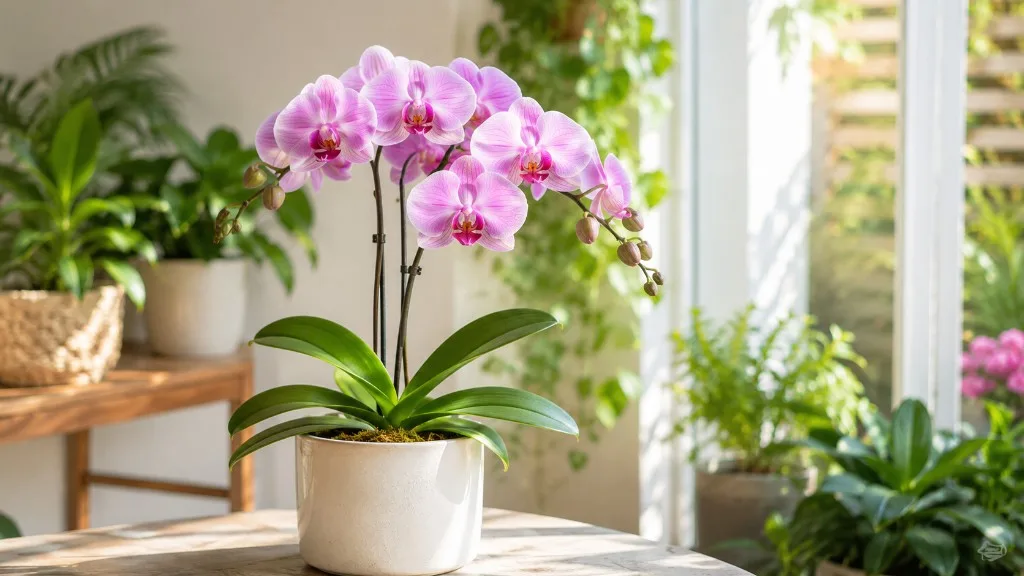
Phalaenopsis (moth orchids) are monopodial epiphytes: one upright stem, thick leathery leaves arranged from a central crown, and one or two flower spikes per bloom cycle. They do not branch from leaf nodes like pothos or produce side shoots from repeated tip pruning. Cutting leaves or spikes will not make the plant bushier - it manages bloom effort, removes failing tissue, and keeps energy directed toward roots and new leaves. Missouri Botanical Garden lists moth orchids among the most widely grown orchids for indoor bloom.
Among common houseplant orchids, Phalaenopsis is the type most likely to rebloom from an existing spike (Phalaenopsis novice guide) when cut above a node. Cattleyas, Dendrobiums, and Oncidiums typically need a fresh spike from the base after bloom. That distinction matters because the post-bloom cut on a grocery-store moth orchid is a strategic fork, not a cosmetic trim.
Quick Answer - Inspect the Spike Before Any Cut
When every bloom has fallen on its own, examine the spike color and the plant’s overall vigor. On a healthy plant with a green spike, cut 1–2 cm (about ½–1 inch) above the second or third node below the lowest spent flower - nodes are the small triangular bumps along the spike. On a weak plant, a spike turning brown, or when you want the orchid to rest, cut the entire spike at the base near the leaves. Sterilize scissors or a razor between plants. Leave aerial roots alone unless dry and dead. Remove fully yellow leaves only when they release easily from the crown.
What Pruning Does for Phalaenopsis (and What It Cannot)
Pruning on moth orchids serves specific goals:
- Post-bloom spike management - redirect energy toward a secondary bloom or vegetative recovery
- Removing senescent leaves - bottom leaves naturally yellow one at a time on healthy plants
- Clearing dead brown spikes - prevents wasted energy and hides pest entry points
- Cosmetic leaf tip trimming - optional; damage remains visible until the leaf is replaced
Pruning does not create a fuller plant, fix chronic overwatering on Phalaenopsis Orchid, or force bloom on an immature specimen. First inflorescences on Phalaenopsis typically emerge from the fifth or sixth mature leaf axil - a young plant with only three leaves is not failing to bloom because the spike was cut wrong. American Orchid Society bloom guidance notes that monopodial orchids need sufficient stem maturity before flowering is even possible.
What to Check Before You Cut
Walk through these checks while the spike is still attached - removing it first makes node counting harder.
Spike color and firmness
A green, plump spike with firm nodes may support a rebloom cut. A spike that is yellowing, browning, or soft from tip to base is finished - plan a base cut. Partial browning above a green lower section can sometimes be trimmed to healthy tissue, but if the lower nodes look desiccated, remove the whole spike.
Root and leaf health
Firm, silvery-green aerial roots and plump leaves suggest the plant can handle a rebloom attempt. Wrinkled leaves, multiple simultaneous yellow leaves, or mushy roots in the pot signal stress - choose the base cut and fix watering before expecting flowers. The American Orchid Society Phalaenopsis novice guide recommends that only healthy, robust plants be pushed to flower repeatedly from the same spike.
Single vs double spikes
Double-spike plants are common in retail hybrids. A practical approach: cut one spike at the base for rest and cut the other above a node for a possible secondary bloom - or remove both at the base if the plant looks tired. Trying to rebloom two spikes simultaneously on a small pot often overtaxes roots.
When to Prune Phalaenopsis
Flower spike pruning: after the last bloom has dropped naturally - never while buds are still opening. Trimming during active bloom adds stress and can shorten display time.
Yellow or brown leaves: any time once tissue is fully discolored and loose at the crown junction.
Dead brown spikes: as soon as you confirm the spike will not green up again - leaving dry spikes wastes energy and collects dust.
Cosmetic leaf splits: any time on stable, dry tissue.
Avoid heavy pruning when the plant was just repotted, moved to a new window, or shows active crown rot, mealybug clusters, or widespread leaf collapse. Stabilize care first, then trim.
The First Cut: Decide Rebloom or Full Spike Removal
This single decision shapes the next six to twelve months. Pick one path based on spike color and plant strength - do not combine a node cut with aggressive leaf stripping on the same day.
Node cut for secondary bloom (healthy plants)
Count nodes from the base of the spike upward - the bumps look like small triangles or rings encircling the stem. The American Orchid Society describes cutting the stem above the second node from the base, leaving two nodes below the cut. Many growers cut 1–2 cm above the second or third node below the lowest faded flower on a still-green spike.
Use a sterile blade at a slight angle. One node may swell and produce a secondary spike in roughly 8–12 weeks on willing hybrids - not a guarantee. Flowers on secondary spikes are often smaller and fewer than the first flush. Continue normal watering and light feeding while you wait.
Base cut for rest and recovery (weak or brown spikes)
When the spike is brown, the plant is recovering from root loss, or you prefer a stronger next-season display, cut the spike at the base near the leaf junction in one clean slice. Do not tug - cut through cleanly without nicking leaf tissue or the crown. The orchid redirects energy to roots and new leaves; expect a fresh spike from the base in roughly one year under good home conditions, often after a period of cooler nights in autumn.
How to Cut a Phalaenopsis Flower Spike Step by Step
- Wait until every bloom has dropped on its own timeline.
- Sterilize pruners with 70% isopropyl alcohol - wipe or dip blades between plants. Iowa State Extension notes alcohol is easy and effective for home gardeners; orchid viruses spread on unsterilized tools.
- Locate nodes on a green spike - raised sections below each former flower or branch point.
- Choose height: second or third node from the base for rebloom attempt, or base of plant for full removal.
- Cut once through the spike 1–2 cm above the chosen node (rebloom) or flush at the leaf junction (full removal).
- Optional: some growers dab cinnamon powder or a fungicide on large base cuts; open air healing is sufficient for most home setups.
- Discard spike debris - do not leave wet cuttings in the pot where they hold moisture against the crown.
Removing Yellow and Damaged Leaves
Bottom leaves age out naturally on healthy Phalaenopsis - typically one at a time. When a leaf is fully yellow or brown and pulls away easily with a gentle downward tug, remove it at the crown junction. If it resists, wait or snip at the base with sterilized scissors - never force a firmly attached leaf or cut into the crown.
Multiple yellow leaves appearing together usually indicate root stress, too much direct sun, or crown issues - inspect roots and bark moisture before removing all foliage. Aggressive defoliation on a stressed plant removes photosynthetic surface the orchid needs to recover.
Mechanical splits or brown tips on otherwise green leaves can be trimmed cosmetically along the damaged edge. Orchid leaves do not regenerate from tip cuts - the trimmed edge stays visible until the leaf is eventually replaced by a new one from the crown.
Aerial Roots and Cosmetic Leaf Trims
Green or silvery aerial roots with plump tips are functional - they absorb moisture from humid air and indicate a healthy epiphyte. University of Minnesota Extension notes moth orchids are grown in bark to supply both moisture and air to roots. Trim aerial roots only when dry, hollow, and clearly dead. Cosmetic shortening of healthy roots reduces the plant’s ability to manage humidity swings and is rarely worth the visual gain.
What Not to Cut
- The crown - the growing center between the leaves. Crown damage is often fatal. Work slowly and keep blades on spikes and detached leaves only.
- Green spikes on weak plants you intend to rest - a node cut sends a rebloom signal the roots may not support.
- Nodes on a fully brown spike - dead tissue will not produce a secondary bloom; cut at the base instead.
- Healthy aerial roots unless truly desiccated.
- Spikes during active bud opening on blooms you want to keep.
Tools and Sanitation
Use sharp bypass pruners, scissors, or a single-edge razor for clean spike cuts. Dull blades crush orchid tissue and invite infection.
Disinfect between every plant in a collection - CymMV and ORSV are incurable orchid viruses transmitted by sap on tools. Iowa State Extension recommends ethanol or 70% isopropyl alcohol with no prolonged soak required. Some AOS guidance suggests a heated blade to cauterize large cuts on valuable specimens; alcohol wiping is adequate for typical home moth orchids.
Avoid letting water sit in the crown after trimming - tilt the pot or blot the center gently if rinse water pooled during the same session.
After Pruning Care and Recovery Timeline
After a node cut, keep the plant in Phalaenopsis Orchid light guide (east or lightly shaded south window), maintain 50–70% humidity, and water when roots turn silvery and bark approaches dryness - the same rhythm as pre-prune care. Cooler night temperatures in autumn (roughly 15–20°F below daytime highs) help trigger the next primary spike on many mass-market hybrids. American Orchid Society Phalaenopsis bloom guidance explains that large-flowered lines depend on temperature drops for inflorescence initiation.
Recovery expectations:
- Secondary spike from node cut: 8–12 weeks on responsive hybrids if the plant has energy reserves - sometimes longer in low light or winter.
- New primary spike after base cut: often within one year, frequently following autumn cooling.
- Leaf replacement after yellow leaf removal: weeks to months depending on active growth season.
Hold fertilizer at normal weakly-weekly orchid rates during recovery unless the plant was heavily stressed - then pause feeding until new root or leaf growth confirms the plant is stabilizing.
Phalaenopsis is listed as non-toxic to cats and dogs by the ASPCA. Still keep bark, fertilizer, and trimmings out of pet reach, and sterilize tools regardless of toxicity.
Signs Pruning Worked - or Went Too Far
Positive signs after a node cut: a node below the cut swells within a few weeks, a secondary spike or keiki emerges, existing leaves stay firm, roots remain plump after watering.
Positive signs after a base cut: new root tips appear at the pot edge, a fresh leaf unfolds from the crown within one to three months during active growth, no further leaf yellowing spreads upward.
Warning signs: crown softening or blackening, sap-heavy crown after a slip with the blade, continued leaf wrinkling after base cut, secondary spike that aborts buds repeatedly - these point to root or crown problems beyond what spike trimming alone can fix.
Common Phalaenopsis Pruning Mistakes
- Cutting into the crown while removing a leaf or spike base - often fatal.
- Node cut on a brown spike - wastes time; the bud tissue is dead.
- Leaving a long dead spike attached for months - diverts energy and collects pests.
- Unsterilized tools moved plant to plant in a collection - virus risk.
- Rebloom cut on a dehydrated plant - secondary spike may form then abort.
- Removing all leaves on a stressed orchid - eliminates photosynthesis needed for root recovery.
- Trimming aerial roots for aesthetics - reduces humidity tolerance with little visual benefit.
Conclusion
Phalaenopsis orchid pruning is spike management first: inspect color after bloom fade, then either cut 1–2 cm above the second or third node on a green spike from a healthy plant, or remove the entire spike at the base when the stem is brown or the orchid needs rest. Groom yellow leaves gently without touching the crown, leave functional aerial roots alone, and sterilize blades between plants. Moth orchids will not bush like vining houseplants - correct spike and leaf grooming keeps the same plant reblooming on a realistic home timeline.
When to use this page vs other Phalaenopsis Orchid guides
- Phalaenopsis Orchid overview - Start here for whole-plant context before deep-diving this topic.
- Phalaenopsis Orchid problems hub - Jump to symptom-specific fix guides when this care topic does not resolve the issue.
- Leggy Growth on Phalaenopsis Orchid - Escalate here when pruning adjustments are not enough.
- Slow Growth on Phalaenopsis Orchid - Escalate here when pruning adjustments are not enough.
- Brown Tips on Phalaenopsis Orchid - Escalate here when pruning adjustments are not enough.
Related Phalaenopsis Orchid guides
- Phalaenopsis Orchid overview
- Phalaenopsis Orchid watering
- Phalaenopsis Orchid light
- Phalaenopsis Orchid soil
- Phalaenopsis Orchid propagation
- Phalaenopsis Orchid fertilizer
- Leggy Growth on Phalaenopsis Orchid
- Slow Growth on Phalaenopsis Orchid
- Brown Tips on Phalaenopsis Orchid
- Phalaenopsis Orchid problems