Weak Stems on Maranta Leuconeura: Causes, Checks & Fixes
Quick answer
Weak stems on Maranta leuconeura usually mean wet soil with soft crowns, thin stretched growth in dim light, or lost turgor from underwatering-not normal low spreading alone. First step: feel the top 2 cm of soil and squeeze the stem at the crown; wet plus mushy means stop watering and inspect roots, dry plus limp means water thoroughly once.
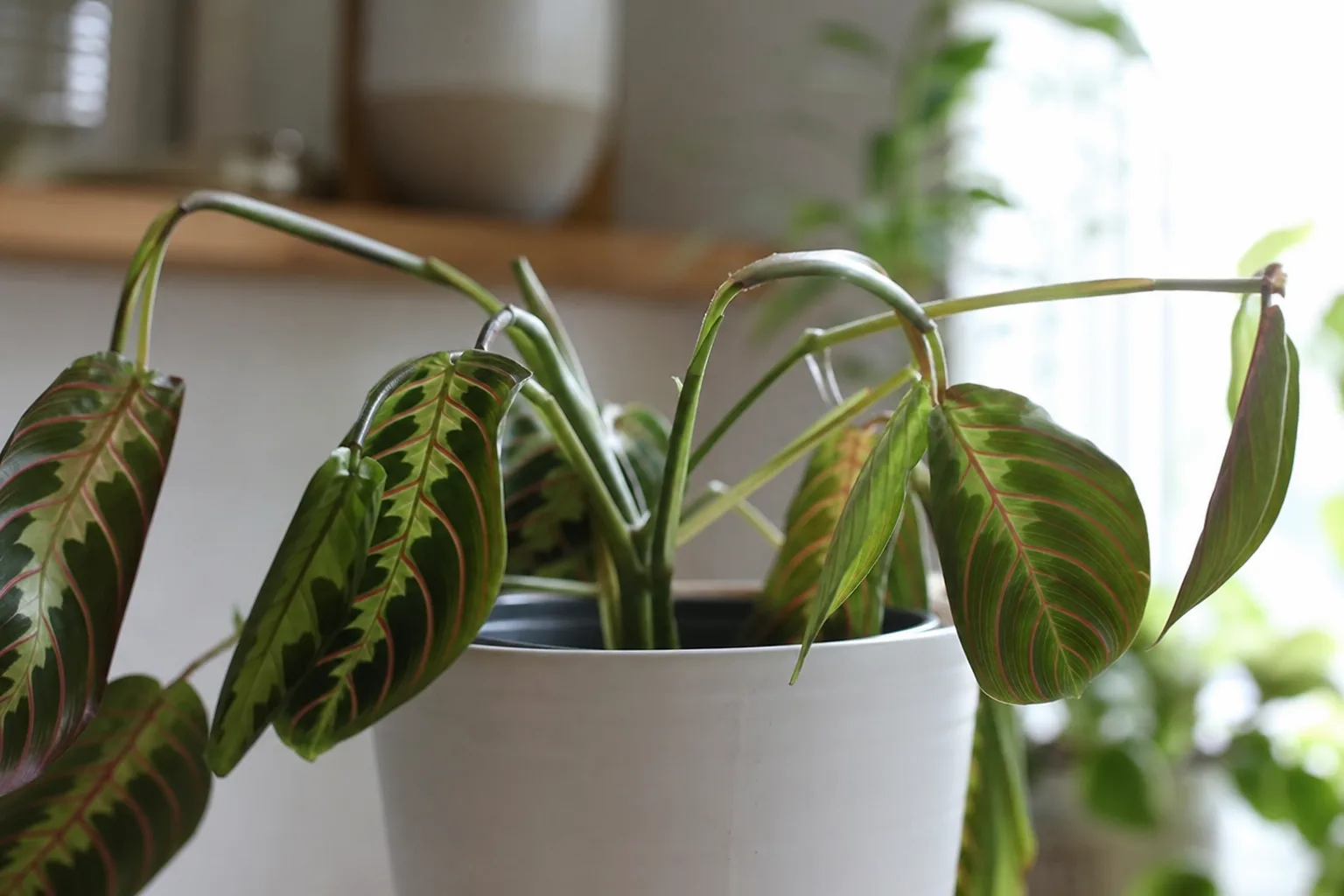
Weak Stems on Maranta Leuconeura: Causes, Checks & Fixes
This guide covers weak stems on Maranta Leuconeura. See also the general Weak Stems guide, watering, and light pages for this plant.
Weak Stems on Maranta Leuconeura: Causes, Checks & Fixes
Quick answer
Weak stems on Maranta leuconeura-the prayer plant-are not one problem wearing a single name. A low, spreading clump is normal; stems that bend, flop, feel hollow, or cannot hold patterned leaves upright signal that light, water, or roots are out of balance. Prayer plants grow from rhizomes close to the soil surface, so crown moisture and root oxygen matter as much as window placement.
First step: press your finger into the top 2 cm of soil and gently squeeze the lowest stem above the crown. If the mix is wet and the stem feels soft or mushy, stop watering, improve drainage, and inspect roots before Maranta Leuconeura repotting guide or fertilizing. If the mix is dry and stems are limp but not rotten, water thoroughly until a little drains from the holes. If soil moisture is reasonable but new shoots are thin with long gaps between leaves, move the pot to brighter filtered light within one to three feet of an east window.
What weak stems look like on Maranta Leuconeura
On prayer plant, stem weakness shows up in three distinct patterns-mixing them up leads to the wrong fix.
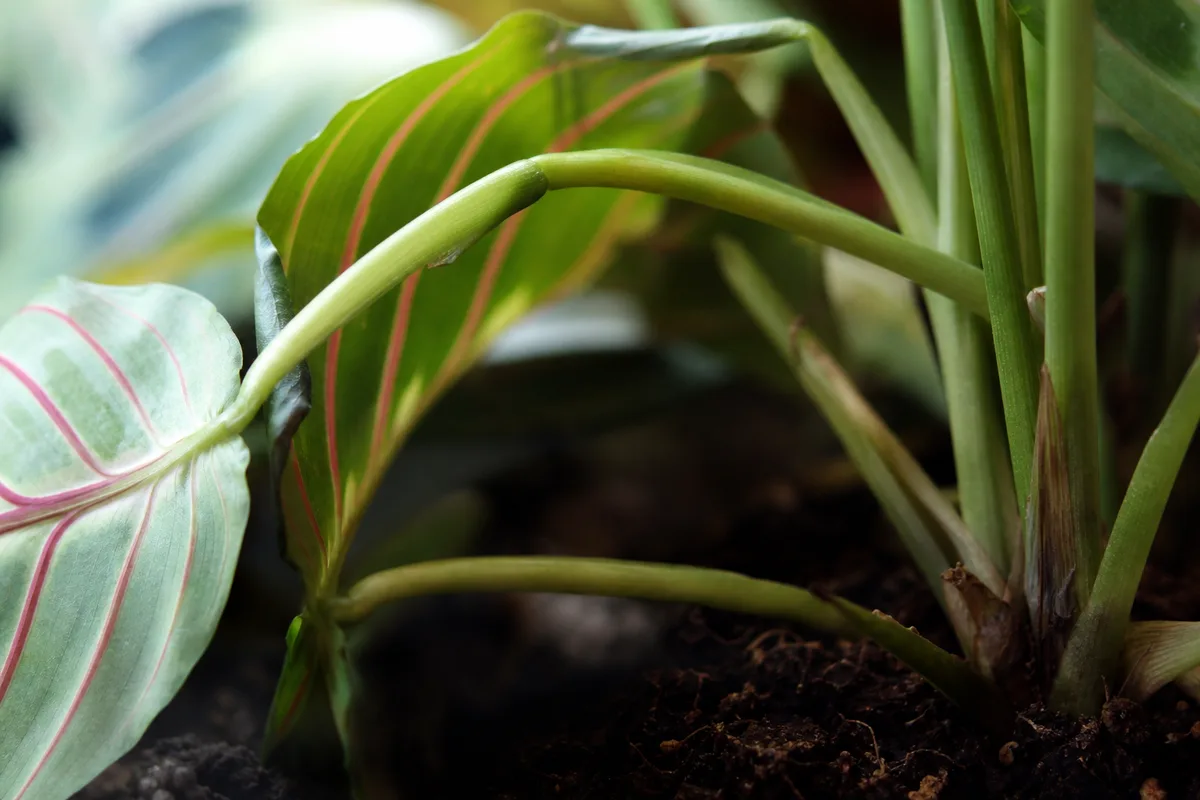
Weak Stems symptoms on Maranta Leuconeura - compare with healthy tissue on the same plant.
Typical signs:
- Floppy petioles where leaves hang down even though tissue is not yellow or brown-often a turgor or root-absorption problem
- Soft, mushy stem bases at or just below the soil line, sometimes with a sour smell from the pot-classic crown stress on a species whose stems rot easily when water stands on crowns
- Thin, pale new shoots with wide internodes that lean toward the brightest window-etiolation from insufficient light on a low-growing tropical perennial
- Collapsed outer stems while the center still pushes rolled leaves-common when outer rhizome sections stay wet in an oversized pot
- Weak nightly folding on thin leaves-not diagnostic alone, but paired with stretch it confirms the plant lacks energy
- Sticky joints or white cottony clusters on stems where sap-sucking pests have weakened tissue
Prayer plant naturally spreads horizontally rather than building a stiff upright trunk. Do not confuse graceful arching with failure. Worry when stems lose firmness, smell off, or new growth arrives smaller and paler month after month.
Weak stems vs. leggy growth vs. drooping leaves
| Pattern | Stem feel | Soil | Main driver |
|---|---|---|---|
| Weak from overwatering on Maranta Leuconeura | Soft at base; may brown | Wet, heavy, sour | Crown or root rot on Maranta Leuconeura |
| Weak from low light | Firm but thin; long internodes | Often wet slowly in shade | Etiolation |
| Temporary droop | Firm stem; limp leaf | Dry | Underwatering |
| Normal spread | Firm; horizontal | Evenly moist | Natural habit |
Leggy growth is mostly stretch; weak stems adds loss of structural integrity from rot, pests, or chronic stress.
Why Maranta Leuconeura develops weak stems
Several mechanisms weaken prayer plant stems indoors. Each fits Maranta Leuconeura overview’ shallow rhizomes, humidity needs, and understory light history.
Overwatering and crown rot. Maranta wants evenly moist soil that still dries between winter waterings, not saturation. Dense mix in low light stays wet for days. Water standing on crowns lets fungi attack stem bases; damaged roots cannot maintain turgor, so firm-looking leaves collapse on soft petioles.
Insufficient light. In dim corners, prayer plant stretches toward windows. Etiolation produces weak, elongated stems with smaller leaves-the plant invests in length, not strength. Months of shade also slow water use, which compounds soggy-soil rot.
Underwatering and lost turgor. Prayer plants dislike drying out completely. A dry spell drops turgor pressure; stems and leaves flop until roots rehydrate. Repeated drought weakens new shoots even after watering returns.
Root-bound or oversized pots. Tight roots in a small pot can stall firm new growth. An oversized pot holds excess wet mix around shallow rhizomes-the outer stems fail first while the crown looks fine briefly.
Pests on stem joints. Mealybugs and scale colonize the sheltered angles where petioles meet rhizomes. Sap loss thins stems and leaves sticky residue that attracts sooty mold.
Low humidity and drafts. Prayer plant prefers high humidity and steady warmth. Dry heated air or cold drafts stress new unfurling stems, especially after a recent move or repot.
How to confirm the cause
Work through these checks in order-each narrows the fix before you repot, prune, or fertilize.
- Soil moisture at 2 cm - Wet, cold mix with floppy stems suggests rot risk. Dry, light pot with limp but non-mushy stems suggests drought.
- Stem squeeze test - Pinch the lowest inch above the crown. Firm tissue bends and springs back; mushy or hollow tissue means decay.
- Smell and drainage - Sour odor or blocked drain holes support rot over simple underwatering.
- Light read - Measure distance from the nearest window. More than three feet from east or north glass, or deep interior shade, often produces thin weak new stems while older leaves stay green.
- New growth quality - The newest rolled leaf should unfurl with sharp herringbone veins. Small, pale tubes on thin stems confirm chronic stress.
- Pest scan - Inspect stem joints and leaf undersides with a hand lens for webbing, cottony clusters, or scale shells.
- Pot size vs. root mass - Slide the plant partly out. Circling dry roots in a tiny pot or a huge wet void around a small root ball both explain weak shoots.
If wet soil and soft crowns align, treat as root or crown stress first-even if the plant also sits in dim light. Fix water and roots before brightening, or improved light on rotting roots can accelerate decline.
The first fix to try
Diagnose water and crown firmness before changing anything else.
- Wet mix + soft stem base: Stop watering. Tip excess from saucers. Place in Maranta Leuconeura light guide without direct sun. After two to three days, if stems still soften, unpot, rinse roots, trim brown mushy tissue, and repot into fresh airy mix with open drainage. Do not fertilize until new firm growth appears.
- Dry mix + limp firm stems: Water thoroughly until a little runs from drainage holes. Empty the saucer. Check again in four to six hours-petioles should lift if roots were healthy.
- Moist appropriate mix + thin stretched stems: Move within one to three feet of an east window or add a grow light 12 to 18 inches above the canopy for 10 to 12 hours daily. Hold fertilizer until internodes on new leaves shorten.
Do not repot on day one unless mushy roots are obvious. Do not prune heavily until you know whether tissue is rotten or merely stretched-cutting into a wet crown spreads decay.
Step-by-step recovery
Once you have matched the fix to the confirmed cause:
- Stabilize the environment - Bright indirect light, 18°C to 27°C (65–80°F), humidity at 60 percent or higher via pebble tray or humidifier near the plant-not misting leaves directly.
- Correct Maranta Leuconeura watering guide - Check the top 2 cm before every pour. Active growth in bright light often needs water every five to seven days; winter and dim spots need less.
- Trim only dead or mushy stems - Cut above a firm node with clean scissors. Leave healthy stretched stems until compact new growth proves light is adequate, then pinch tips to encourage bushiness.
- Treat pests if present - Isolate the plant, wipe stems with damp cloth, and use insecticidal soap on joints if mealybugs or aphids are confirmed-avoid oil sprays on stressed wilted tissue in hot sun.
- Repot if roots fail inspection - Use 60 percent potting compost, 20 percent perlite, 20 percent coco coir in a pot sized to the trimmed root mass, not dramatically larger.
- Propagate insurance - Take stem cuttings below a node from firm sections if crown tissue is questionable; prayer plant roots readily in water or moist mix.
Recovery timeline
Recovery speed depends on which mechanism caused the weakness.
- Underwatering flop: Often visible lift within hours to one day after proper watering if roots are intact.
- Mild overwatering without rot: Firmness may return in seven to fourteen days once soil dries and crowns stay dry during watering.
- Trimmed root rot: Expect two to four weeks before a firm new rolled leaf appears; severely collapsed crowns may not recover-rely on cuttings.
- Low-light stretch: New compact stems need three to six weeks in brighter indirect light during the warm season; old long internodes never shorten.
Judge success by firm new growth from the crown, not by old stretched or yellowed leaves returning to perfect form.
Lookalike symptoms to rule out
- Normal horizontal spread - Firm rhizomes crawling over pot edges are habit, not weakness.
- Drooping leaves at night - Prayer plants fold leaves upward in darkness; daytime flaccidity is the concern.
- Leggy growth only - Long internodes without mushy crowns mean light first, not emergency repotting.
- Wilting with firm roots after repot - Temporary transplant shock; stems firm up as roots settle if mix is not waterlogged.
- Yellow leaves from cold - Firm roots and cold window glass suggest temperature, not rot-move off the sill, do not drown the plant.
Mistakes to avoid
- Watering a wilted prayer plant automatically without checking whether soil is already wet
- Repotting into a much larger pot hoping stems strengthen-excess wet mix around shallow rhizomes worsens outer stem collapse
- Moving straight into harsh south or west sun-too much direct light bleaches patterns and stresses recovering tissue
- Fertilizing weak stems in low light-nutrients cannot replace missing light or fix rotten roots
- Pouring water over crowns so it pools in the leaf bases-invites the stem rot this species is prone to
- Pruning all stretched stems before light improves-often produces another wave of weak shoots
Maranta Leuconeura care cross-check
Weak stems rarely exist in isolation on prayer plant. After the first fix:
- Light: Bright indirect at the leaf surface drives firm new internodes and faster healthy dry-down.
- Water quality: Filtered or overnight tap water limits fluoride brown tips that distract from stem diagnosis.
- Humidity: Keep 60 percent or higher so new rolled leaves do not crisp while unfurling on thin stems.
- Season: Reduce watering in fall and winter when growth slows, matching Illinois Extension guidance to allow soil to dry between waterings during winter.
Change one variable at a time so you can read the plant’s response.
How to prevent weak stems next time
- Water when the top 2 cm dries, not on a fixed calendar-adjust as light and season change.
- Use pots with open drainage; empty saucers after every watering.
- Keep crowns dry when you pour-water the soil surface, not the leaf whorl.
- Place within one to three feet of bright east or filtered north windows, or supplement with a grow light in winter.
- Inspect stem bases and leaf undersides monthly for pests before they weaken joints.
- Repot in spring every one to two years only when roots crowd-slightly larger pot, fresh airy mix.
When to worry
Escalate beyond basic care fixes if:
- Multiple stems collapse while soil stays soggy and smells sour
- Crown tissue turns brown and translucent despite drying out
- No firm new leaf appears within four to six weeks after correcting light and watering in warm months
- Pests return repeatedly on the same weakened stems after treatment
Advanced crown rot often kills the mother clump. Propagate firm cuttings early rather than repeating rescue on mushy bases. Maranta leuconeura is non-toxic to cats and dogs, so handling cuttings during salvage is safe for pet homes-still wash tools between plants.
Conclusion
Weak stems on Maranta leuconeura trace back to a short list of real failures: wet crowns and rotting roots, thin stretch in dim light, drought-turgor loss, or pests at stem joints-not the plant’s natural low spread. The fastest path is tactile: feel the soil, squeeze the crown, then apply one matched fix before stacking repotting, fertilizer, and heavy pruning.
Recovery shows up in firm new rolled leaves with shorter internodes, not in old floppy petioles standing upright again. Get moisture, crowns, and light aligned with prayer plant’s tropical understory needs, and the clump regains the rigid grace that lets herringbone leaves hold their position between nightly folds.
When to use this page vs other Maranta Leuconeura guides
- Maranta Leuconeura watering guide - Use for routine moisture checks before assuming weak stems is the main issue.
- Maranta Leuconeura problems hub - Browse all 40 common issues on this species.