Nutrient Lockout on Manjula Pothos: Causes, Checks & Fixes
Quick answer
On Manjula Pothos, nutrient lockout usually means roots cannot absorb minerals already in the pot-often from fertilizer salt buildup, pH drift, or exhausted two-year-old mix-not a simple shortage. First step: stop feeding, check for white crust on the soil surface, and flush with plain water if salts are present.
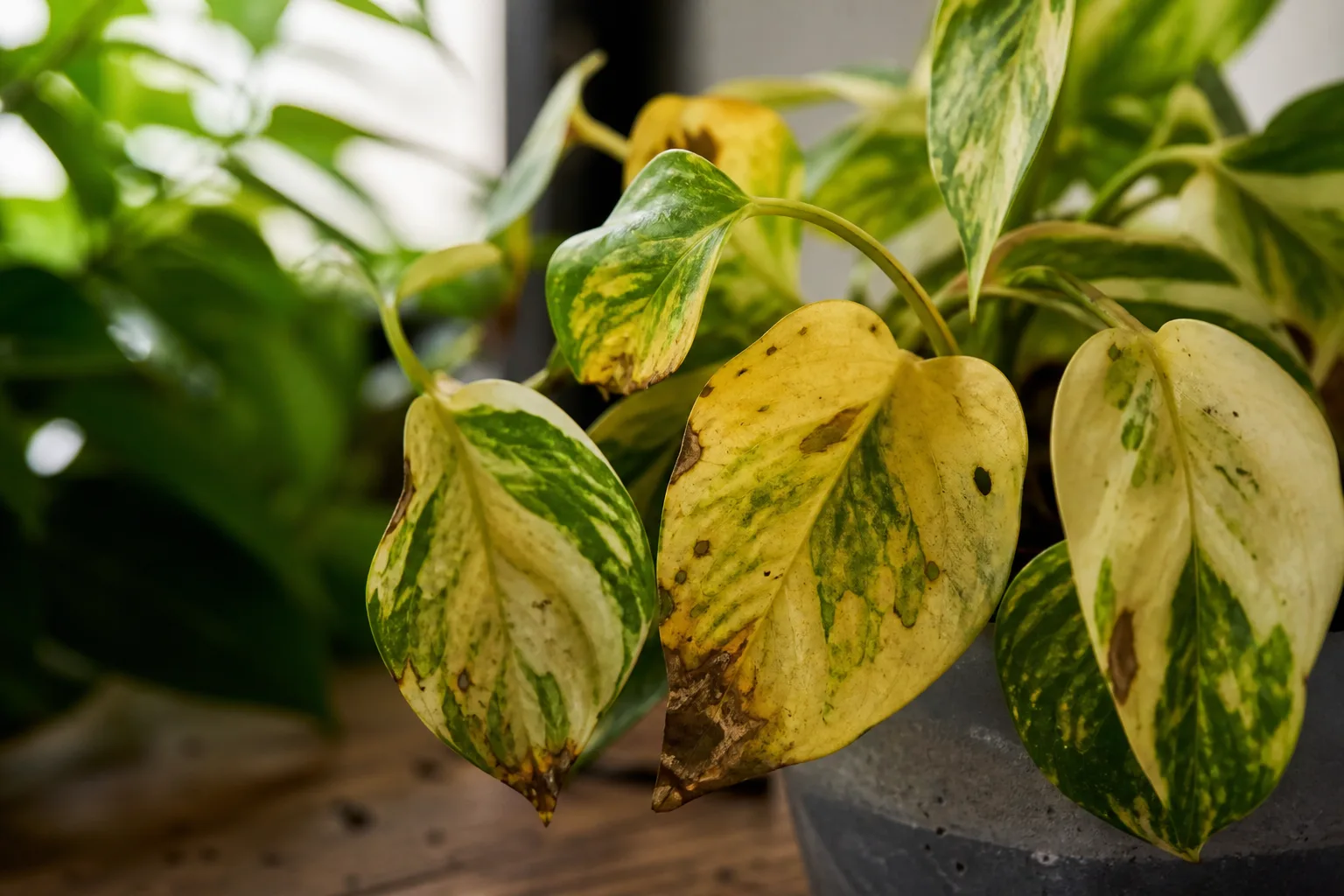
Nutrient Lockout on Manjula Pothos: Causes, Checks & Fixes
This guide covers nutrient lockout on Manjula Pothos. See also the general Nutrient Lockout guide, watering, and light pages for this plant.
Nutrient Lockout on Manjula Pothos: Causes, Checks & Fixes
Quick answer
On Manjula Pothos (Epipremnum aureum ‘Manjula’), nutrient lockout at home usually means roots cannot absorb minerals already in the pot-from soluble salt buildup, pH drift, or exhausted peat mix-not classic hydroponic pH lockout and not simple nitrogen hunger. Collectors often keep feeding when white marbling fades, hoping fertilizer restores variegation; that fed-but-failing pattern is this page’s focus.
First step: stop all fertilizer and look for white crust on the soil surface or pot rim. If you see salt deposits, or you recently fed at full label strength, flush with plain water until clear runoff drains from the bottom. Do not add more fertilizer until new leaves emerge with sharper marbling.
This page owns uptake-block triage when feeding fails despite salts or crust. Acute post-feed tip burn is covered on fertilizer burn. Variegation loss without salt signs in a dim corner belongs on not enough light. Post-recovery feeding rhythm lives on the fertilizer guide; dry-down checks align with the watering guide.
What nutrient lockout looks like on Manjula Pothos
Lockout and true deficiency can look alike, but the pattern on this slow-growing, heavily variegated cultivar gives clues.
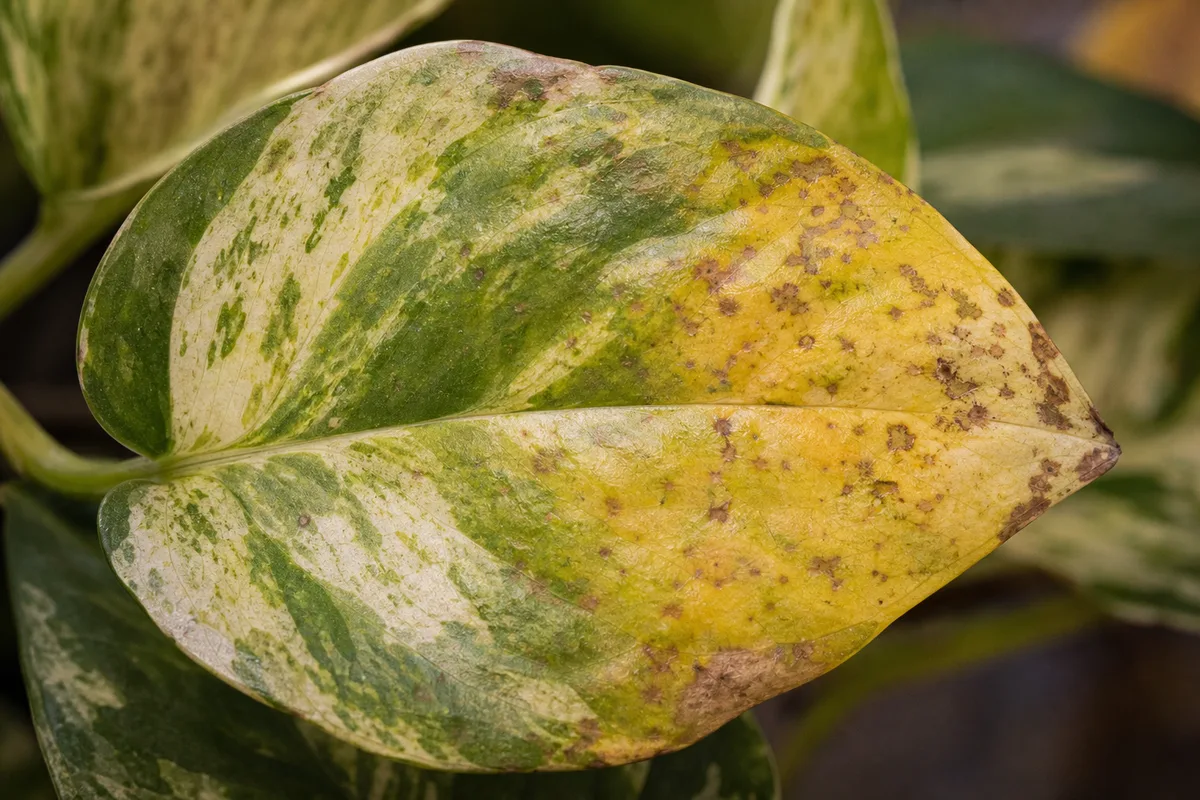
Nutrient Lockout symptoms on Manjula Pothos - compare with healthy tissue on the same plant.
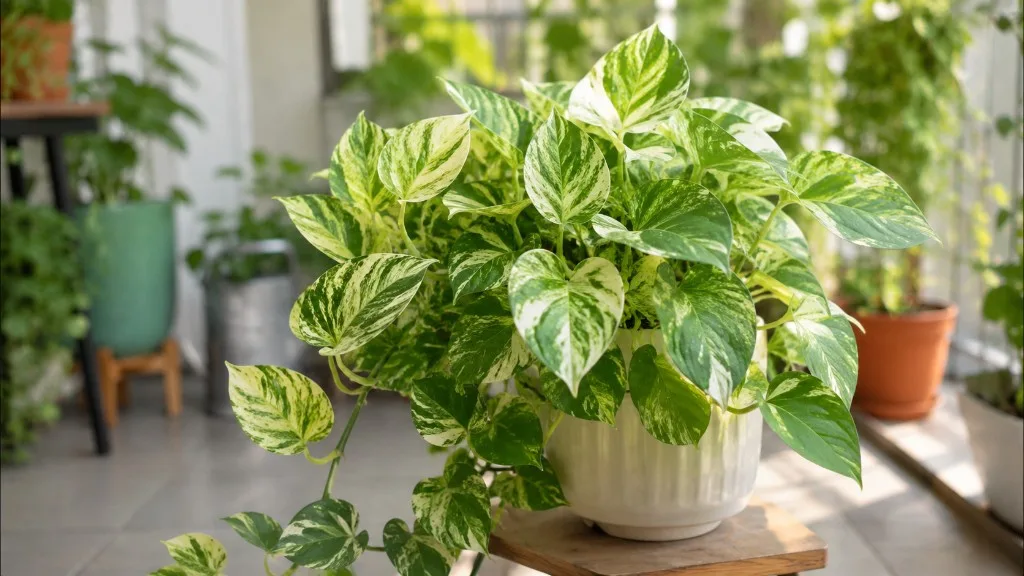
Diagnostic check at home: pale new marbling with weak white patches plus white crust on the soil rim points to lockout; mostly green small new leaves in a dim spot with no crust points to low light instead.
Typical lockout signs:
- Pale, mostly green new leaves with weak white marbling-despite regular feeding
- Yellowing starting on older lower leaves along trailing stems while soil is neither bone dry nor soggy
- Brown, crispy leaf tips or margins that appeared soon after a fertilizer application
- White or crusty deposits on the soil surface, especially along the inside pot rim
- Wilting or limp vines when the mix feels moist-roots damaged by salts cannot pull water effectively
- Stalled growth in spring or summer even under bright indirect light
What Manjula normally does:
Manjula is a slower-growing pothos cultivar with a bushy habit and broad, wavy marbled leaves. A new leaf every two to four weeks during warm months is normal. One or two yellow lower leaves on long vines is routine aging, not lockout.
Judge trouble by newest growth and whether symptoms worsen after feeding-not by comparing Manjula to a fast golden pothos in the same room. Cream and white sectors contain less chlorophyll and lose water faster through thinner tissue, so pale variegated patches often show stress before solid green areas on the same leaf-an early Manjula-specific lockout signal after repeated feeding.
Lockout vs. root rot vs. low light
| Pattern | Lead sign | Soil / roots | Route |
|---|---|---|---|
| Nutrient lockout | Fed but pale new marbling | Crust possible; firm roots | Flush + feed pause (this page) |
| Fertilizer burn | Crispy tips days after dose | Crust common; firm stems | Fertilizer burn |
| Low light fade | All-green small new leaves | No crust; slow dry-down | Not enough light |
| True nitrogen hunger | Uniform pale growth, zero feed history | No crust; firm roots | Fertilizer guide after light check |
| Root rot | Rapid yellowing, soft stem base | Wet, sour; mushy roots | Root rot |
Why Manjula Pothos gets nutrient lockout
Variegation-chasing over-feed and salt accumulation
Collectors often feed Manjula heavily because white variegation fades in weak light and they hope fertilizer will restore it. That backfires. High soluble salts from excessive or concentrated fertilizer burn root tips and block nutrient uptake-creating lockout while minerals accumulate in the mix. Continuing to feed during lockout worsens marbling fade even when the plant looks hungry.
Pothos leaf margins and tips can blacken from excess fertilizer salt buildup, sometimes alongside yellowing. Indoor pots have no natural leaching; salts concentrate with every feed unless you flush periodically. Variegated Epipremnum tissue shows stress on pale sectors first-so lockout and burn both hit cream patches before solid green.
pH drift and mineral availability in aging mix
Manjula prefers slightly acidic conditions around pH 6.0–6.5. As peat breaks down and ammonium fertilizers acidify further-or tap water with high alkalinity pushes pH up-certain minerals become chemically unavailable even when present. Optional pH test on moist mix helps separate alkaline iron chlorosis (green veins on newest leaves) from salt injury when crust is light.
Feeding stressed, waterlogged, or winter-dormant plants
Manjula in dim corners or chronically wet soil cannot metabolize fertilizer. Salts sit in saturated mix and damage roots further. Never fertilize a dry, wilted, newly repotted, or pest-stressed Manjula. Roots need to be active and the mix moderately moist-not saturated. Align watering with the watering guide dry-down rhythm before any feed resumes.
Depleted or compacted two-year-old mix
Repeated watering leaches nutrients from peat-based mix over one to two years. Manjula left in the same soil without repotting may show pale leaves and poor growth from nutrient deficiency-but dumping full-strength fertilizer onto exhausted mix can add salts without restoring balance. Fresh, airy mix with perlite often works better than another heavy feed.
Seasonal feeding mistakes
Pothos should not receive heavy feed in winter when growth slows. Salts from late-fall feeding sit in cool, slow roots through winter and show as tip burn when spring growth resumes.
How to confirm the cause
Work through these checks before changing anything beyond stopping feed:
- Salt crust check - White deposits on soil or pot interior strongly suggest fertilizer toxicity. No crust does not rule out subsurface salt buildup.
- Feeding history - Note date, product, and whether you used full label strength. Multiple feeds within two weeks on a small pot raises lockout risk.
- Leaf age pattern - Older-leaf yellowing with green veins can signal mobile nutrient issues; tip burn right after feeding points to salts.
- Soil moisture - Stick a finger 3–5 cm deep. Wet heavy soil with yellow lower leaves is overwatering first. Bone-dry soil with curled leaves is underwatering-not lockout.
- Light level - All-green, small new leaves in a dim corner mean increase light before any nutrient fix. Manjula loses variegation in lower light and cannot use fertilizer it cannot photosynthesize through white patches-route to not enough light when no crust and dim placement dominate.
- Mix age - Has the plant sat in the same pot more than two years without repotting? Depletion and compaction become likely.
- Root spot-check - If decline continues after flushing, unpot and look for brown limp root tips (salt damage) versus firm white roots. Mushy roots with sour smell mean root rot, not lockout alone.
Decision branch: crust + heavy feed history → lockout protocol below. No crust + north corner + all-green new leaves → not enough light. Obvious tip necrosis within days of one dose → fertilizer burn.
First fix for Manjula Pothos
Stop all fertilizer immediately and flush the soil with plain room-temperature water if you suspect salt buildup.
Run water through the pot until it flows freely from drainage holes-use a volume at least equal to the pot size, as University of Maryland Extension recommends for leaching excess salts. Empty the saucer. Repeat once more a few hours later or the next day, following Penn State leaching guidance for potted plants.
Hold fertilizer for four to six weeks. Move the plant to bright indirect light if it is not already there-Manjula needs stronger light than all-green pothos to recover through variegated tissue.
Do not repot and flush and prune every vine on the same day. One correction first, then watch new growth.
Mild, moderate, and severe recovery branches
| Severity | Signs | First action | Sibling routing |
|---|---|---|---|
| Mild | Pale new marbling, light crust, firm stems | Stop feed + single flush + four-week pause | Stay on this page |
| Moderate | Widespread pale leaves, thick crust, two-year-old mix | Double flush + scrape surface crust + repot if flush fails | Fertilizer burn if tips blackened post-feed |
| Severe | Wilting on wet soil, soft stem base, sour roots | Unpot, trim rot, fresh mix-no feed | Root rot immediately |
If crust returns within two weeks after two thorough flushes, repot into fresh perlite-rich mix rather than flushing a third time blindly.
Step-by-step recovery
After the initial flush and feeding pause:
- Adjust light - Place Manjula where it receives bright indirect light most of the day. Variegation on the next unfurling leaf tells you whether energy uptake is improving.
- Resume watering by dryness - Allow the top 3–5 cm of mix to dry before watering per the watering guide. Epipremnum aureum needs medium that dries between drinks so flushed salts can exit and roots regain oxygen.
- Repot if mix is exhausted - If the plant has not been repotted in two or more years and flushing did not help, move to fresh potting mix with 20–30% perlite in spring. Do not add slow-release pellets on top of recent soluble feed.
- Reintroduce feed cautiously - After four to six weeks, if new leaves emerge with stronger marbling, offer balanced liquid fertilizer at half label strength once, matching the fertilizer guide rhythm of every four to six weeks in spring and summer-not weekly full strength.
- Trim damaged leaves - Once growth stabilizes, remove heavily burned or yellow leaves near the soil line. They will not recover cosmetically.
- Scrape surface salt - If a thick crust remains after flushing, gently remove the top centimeter of crusty mix and replace with plain potting mix-avoid disturbing roots unnecessarily.
Recovery timeline
Salt-flush recovery often shows in the first clean new leaf within two to four weeks during spring or summer. Tip-burned tissue never re-greens; judge success by unfurling leaves with sharper cream-and-green marbling and shorter gaps between nodes.
Repot recovery from depleted mix may take three to six weeks before growth pace picks up. Winter recovery is slower-hold expectations until longer days return.
Lookalike symptoms
Overwatering - Yellow lower leaves with wet soil for a week, soft stems at nodes, sour smell. Fix drainage and dry-down rhythm on the watering guide, not fertilizer.
Low light - All-green, small new leaves, long bare internodes. Brighter placement fixes variegation fade; feeding in dim light worsens salt risk. See not enough light and faded leaves.
Underwatering - Dry light pot, curled leaves, wilting that perks after a deep soak. Water thoroughly; nutrients are irrelevant until roots rehydrate.
Root rot - Mushy brown roots, rapid yellowing spread, wet mix. Repot and trim rot; fertilizer accelerates decline. See root rot.
True deficiency - Uniform pale growth over months with zero feed history and no crust. Confirm light first, then follow the fertilizer guide-or yellow leaves when the pattern is unclear.
Pests - Stippling, webbing, or sticky residue on leaf undersides. Treat insects before feeding.
Mistakes to avoid
Do not chase white variegation with full-strength fertilizer every week-that deepens lockout; see fertilizer burn when acute tip injury dominates. Do not feed a plant whose soil has not dried in over a week. Do not combine slow-release granules with monthly liquid feed without leaching between. Do not use Epsom salt or random supplements without a clear magnesium pattern.
Keep Manjula out of pet reach during treatment-pothos contains calcium oxalate crystals toxic to cats and dogs. Wear gloves if sap irritates skin when trimming burned leaves. If a pet chews the plant, contact your veterinarian or ASPCA Animal Poison Control at (888) 426-4435-do not wait for symptoms to worsen.
How to prevent nutrient lockout next time
Feed lightly and only in the growing season per the fertilizer guide-half strength every four to six weeks in spring and summer, pause in winter. Leach salts periodically once or twice a year if you fertilize regularly. Repot every one to two years before mix collapses. Always dilute to half strength indoors. Fix light and watering before any nutrient intervention-on Manjula, those basics determine whether fertilizer helps or locks the plant out.
When to worry
Escalate if leaf tips blacken within days of feeding, stems collapse while soil stays wet, or yellowing climbs to every new leaf within a week despite flushing. Switch to root rot when the stem base softens on wet mix. A few pale leaves on an otherwise stable slow-growing Manjula after one missed flush is manageable. Widespread wilting on moist soil after heavy feeding needs same-day root inspection.
Related Manjula Pothos guides
- Manjula Pothos overview - cultivar context and full care map
- Fertilizer guide - conservative post-recovery feeding schedule
- Watering guide - dry-down rhythm during flush recovery
- Fertilizer burn - acute post-feed soluble salt injury; this page owns fed-but-failing uptake block
- Not enough light - variegation loss without salt signs
- Root rot - mushy roots and soft stem base escalation
- Faded leaves and yellow leaves - overlapping pale-foliage patterns
- Brown tips - chronic tip burn without recent feed
Conclusion
Nutrient lockout on Manjula Pothos is usually an uptake problem, not a simple shortage. Salt crust, recent heavy feeding, and old compacted mix are the top triggers on this variegated cultivar. Stop feed, flush salts when present, restore bright indirect light and proper dry-down watering, then reintroduce diluted fertilizer only after new marbled leaves prove roots are working again. When tip burn dominates after one heavy dose, use fertilizer burn; when marbling fades without crust in a dim corner, use not enough light first.