Transparent Leaves on Maidenhair Fern: Causes, Checks &
Quick answer
Glassy or water-soaked translucent patches on Maidenhair Fern usually mean direct sun bleaching or edema from wet soil in dim, humid conditions - not the harmless backlit glow of naturally thin fronds. First step: move to bright indirect light with no direct rays, then let the top centimeter of mix dry before watering again.
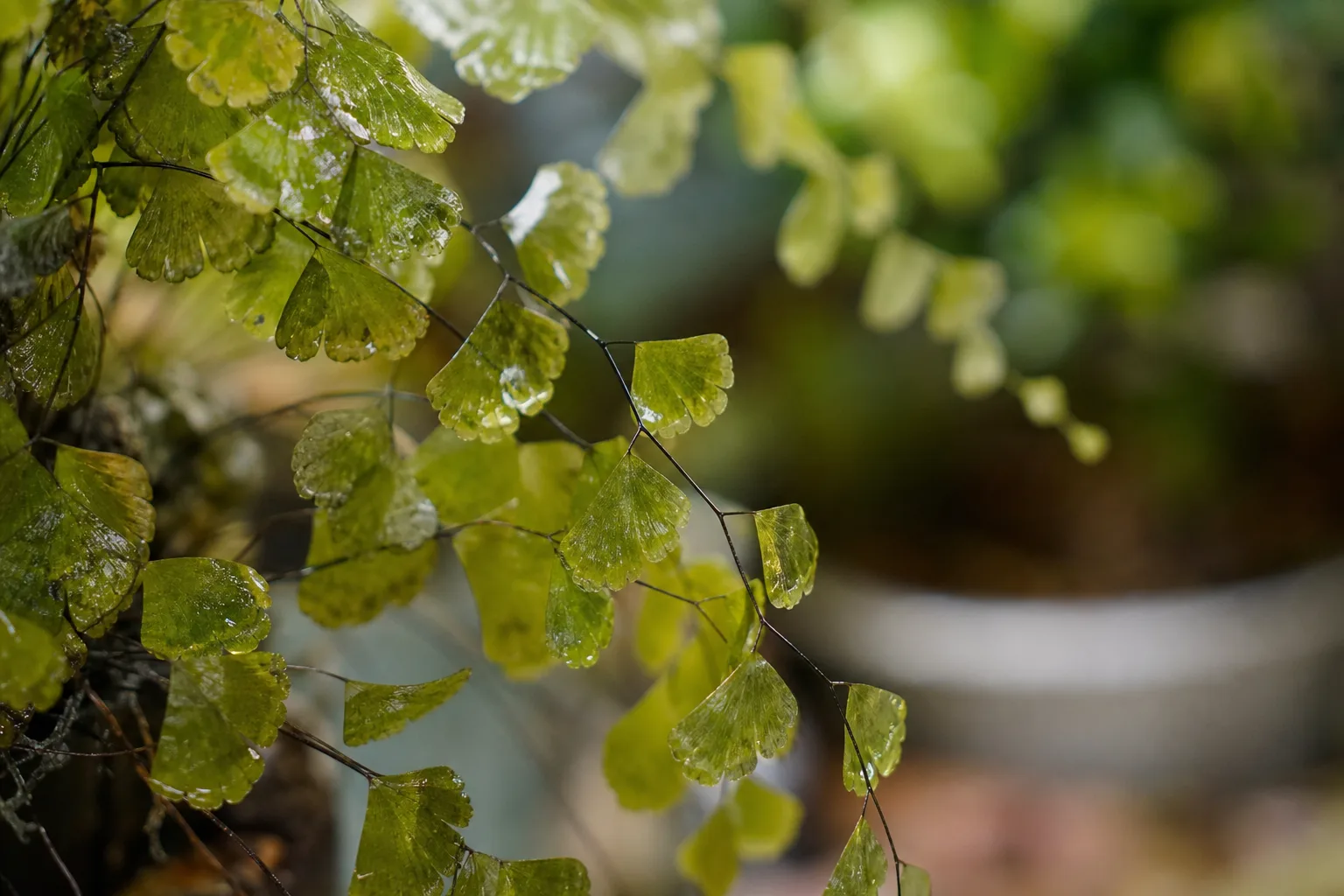
Transparent Leaves on Maidenhair Fern: Causes, Checks & Fixes
This guide covers transparent leaves on Maidenhair Fern. See also the general Transparent Leaves guide, watering, and light pages for this plant.
Transparent Leaves on Maidenhair Fern: Causes, Checks & Fixes
Quick answer
If your Maidenhair Fern (Adiantum raddianum) looks see-through against a window, hold the frond toward a lamp before panicking - healthy pinnae on black wiry stems naturally glow green when backlit. This page covers glassiness and water-soaked patches as a diagnostic entry point. When bleached tissue turns brown and crispy, switch to the sunburn on Maidenhair Fern guide for the scorch end stage.
Problem transparency means leaflets have lost their normal opaque green and show thin, glassy, or water-soaked patches - not uniform backlit luminosity. The two most common causes are direct sun bleaching and edema from overwatering in low light. First step: move to bright indirect light with no direct sun on fronds, then let the top centimeter of mix dry before the next watering.
Maidenhair Fern has delicate fan-shaped leaflets on black wiry stems, so light and water imbalances show up fast on the leaf surface. Leaves may scorch in direct sun, often passing through a pale, translucent stage before turning brown. At the same time, roots that absorb water faster than fronds can release it produce small translucent, fluid-filled blisters - classic edema on thin-leaved plants.
For baseline light and moisture rhythm, see the light guide and watering guide.
What transparent leaves look like on Maidenhair Fern
On Maidenhair Fern, transparency appears on fan-shaped leaflets along black wiry stems, not as a uniform plant-wide effect. Problem patterns differ from the even green glow you see when light passes through healthy tissue from behind.
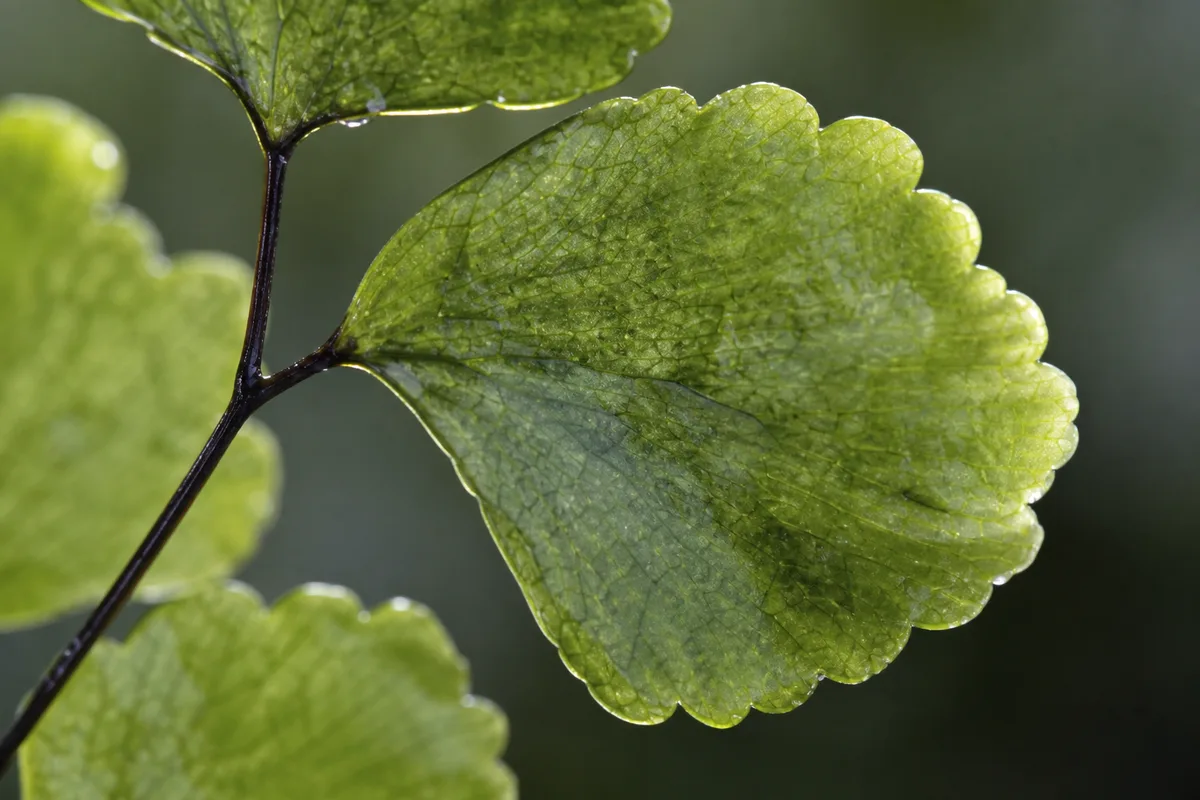
Transparent Leaves symptoms on Maidenhair Fern - compare with healthy tissue on the same plant.
Typical problem patterns:
- Bleached, glassy patches on the window-facing side of fronds, sometimes with crisp brown edges developing next - sun scorch in progress; hand off to sunburn when tissue browns
- Water-soaked, translucent spots between leaflet veins, often starting at margins or on lower frond surfaces - edema
- Papery, see-through leaflet sections that feel dry and crinkle when touched - dehydration after the root ball dried too far
- Soft flexible pale areas that stay supple rather than crispy - early light shock before tissue dies
- Corky tan bumps replacing earlier glassy spots as edema lesions age and scar
Transparency differs from faded leaves (overall loss of green without glassy patches), yellow leaves (whole-frond chartreuse from wet roots or sun), and brown tips (usually low humidity or fluoride). If only the oldest outer fronds look slightly thinner while new center croziers stay vivid green, normal senescence may be the explanation.
Visual patterns to compare at home
Use these field checks when you cannot photograph the plant yet:
| What you are comparing | Normal backlit glow | Problem transparency |
|---|---|---|
| Pattern | Even green when light passes through whole leaflets | Irregular cloudy or blistered zones inside individual pinnae |
| Location | Whole frond uniformly thin | Patches on one side, lower surface, or window-facing tissue only |
| Texture | Supple, vivid green | Water-soaked, papery, or corky |
| Soil / light context | Stable care | Recent sun move, wet mix in dim room, or standing saucer water |
| Lamp test | Uniform green luminosity | Patchy zones within leaflets when held toward light |
| Action | None | Fix light and/or watering |
Symptom cause comparison table
Use this matrix when multiple causes seem possible:
| What you see | Texture | Soil / placement | Likely cause | First fix | Deep-dive guide |
|---|---|---|---|---|---|
| Even green backlit glow | Supple, uniform | Stable care | Normal thin frond structure | None | - |
| Window-facing glassy bleaching | Soft then papery | Moist or dry; recent sunny move | Direct sun bleaching | Shade; no direct rays | Sunburn when brown |
| Lower-surface water-soaked blisters | Soft, fluid-filled | Wet mix 3+ days; bathroom/terrarium | Edema | Dry top centimeter; add airflow | Overwatering |
| Papery semi-transparent collapse | Dry, crinkly | Light pot; mix pulled from edges | Dehydration | Thorough soak + humidity | Underwatering |
| Whole-frond chartreuse on wet soil | Soft yellow, not glassy | Heavy wet pot | Root stress / rot path | Stop watering; inspect roots | Yellow leaves |
| Glassy edges without sun exposure | Thin, flexible margins | Drafty window or AC blast | Cold-draft thinning | Move off glass; stable temps | Cold damage |
Decision branch: Patches turning brown and crispy within days → sunburn guide; soft blisters on wet soil in a humid bathroom → edema protocol below.
Why Maidenhair Fern gets transparent leaves
Direct sun bleaching
Direct sun and light shock bleach thin fern tissue quickly. Adiantum raddianum needs partial shade to shade and responds best to bright indirect light including diffused sun, but dislikes direct sun. South- or west-facing sills without sheer curtains, or a sudden move from a dim shelf to harsh glass, overwhelm delicate lace-like fronds that lack waxy protection. When a plant gets too much direct light, the leaves become pale before browning - on maidenhair that pale stage reads as transparent or glassy.
Typical entry scenarios: moving from a nursery bench to an unfiltered south sill; removing a sheer curtain in late spring when sun angle intensifies; misting leaflets in direct afternoon rays, which can magnify light on wet pinnae.
Edema from wet soil in low light and humid bathrooms
Edema is the other leading indoor cause. Roots take in water faster than fronds transpire it, causing cells to swell and burst into water-soaked spots on affected leaves. Ferns are among plants susceptible to edema, especially when mix stays wet during cool, cloudy, or low-light stretches - common for Maidenhair Fern kept in humid bathrooms with infrequent airflow. Edema is often associated with excessive watering combined with reduced transpiration from low light or high humidity.
So in a dim bathroom with a wet saucer and no fan: roots stay active, fronds barely transpire, and lower pinnae develop glassy blisters first. Overlap with overwatering on Maidenhair Fern when wet soil persists for days. Wilting with wet soil can stack when root function fails alongside edema.
MOBOT notes that bathroom or terrarium placement suits humidity needs - but the same pocket traps moisture on leaf surfaces when watering runs on autopilot through cloudy winter weeks.
Dehydration collapse and cold drafts
Underwatering is less common but produces papery, semi-transparent leaflet collapse when fronds die back quickly if soils are allowed to dry out. The pot feels light, mix pulls from the edges, and fronds wilt before turning glassy-dry - see underwatering when dryness is the lead cause.
Cold drafts near windows can thin leaflet edges into a glassy appearance without full sun exposure - Maidenhair Fern is sensitive to drafty placement per NC State Extension. Keep fronds out of drafty areas and away from heat registers.
How to confirm the cause
Work through these checks in order:
- Light direction - Do translucent patches appear only on fronds facing the window? Did you recently move the plant closer to glass?
- Soil moisture - Has mix stayed wet three or more days? Is the pot heavier than usual with no dry top layer?
- Patch texture - Dry, papery bleaching suggests sun or drought; soft water-soaked blisters suggest edema.
- Location humidity - Bathroom or terrarium with wet soil and no fan increases edema odds - see low humidity context for dry-air lookalikes.
- Leaf surface - Edema often starts on lower leaflet surfaces; sun bleaching hits the most exposed upper side.
- New growth - If center croziers open already glassy, the active condition is still wrong - treat urgently.
| Check result | Likely cause | First fix |
|---|---|---|
| Window-facing bleached patches | Sun scorch | Shade; no direct rays |
| Wet mix + lower-surface blisters | Edema | Dry top centimeter; add airflow |
| Light pot + papery fronds | Underwatering | Soak + humidity |
| Corky tan scars after blisters | Healed edema | Wait for clean new fronds |
First fix for Maidenhair Fern
Relocate to bright indirect light with zero direct sun, then pause watering until the top centimeter of mix is barely dry.
Pull the fern back from the glass or add sheer curtains so no frond receives direct rays. If soil is wet and leaflets show water-soaked glassy patches - especially on lower surfaces - skip the next scheduled drink and improve airflow with a small fan or by opening a bathroom door briefly each day. Do not mist heavily while edema is active; extra surface moisture worsens the imbalance.
If the pot is light, mix is pulled away from the sides, and leaflets are papery-translucent, give one thorough soak and raise humidity - that path is dehydration, not edema.
When glassy patches progress to brown, crispy scorch within days, prioritize the sunburn guide - shading alone may not match the severity once tissue has died.
Step-by-step recovery by cause
Edema protocol
- Stop scheduled watering until the top centimeter of mix is barely dry.
- Improve airflow - space from walls, run gentle circulation in steamy bathrooms, empty standing saucer water.
- Hold misting and sealed humidity bags - surface moisture stacks the transpiration imbalance.
- Resume watering only when the surface dries slightly; see the watering guide for rhythm.
- Trim corky or fully collapsed fronds at soil level once new green croziers appear - old edema scars may stay tan permanently.
Sun bleaching protocol
- Eliminate direct sun today - sheer curtain, move back from south or west glass, or relocate to bright filtered light per the light guide.
- Do not flood wet soil - sunburn is a light problem; extra water on saturated mix invites root issues.
- Acclimate gradually if moving from deep shade - slowly expose to increasing amounts of sun over several days applies to brightness changes too.
- Hand off to sunburn recovery when patches turn brown and papery - sunburn on Maidenhair Fern covers trim timing and crozier monitoring.
Dehydration rehydration path
- Soak thoroughly at the sink until mix is evenly moist and water runs from drainage holes.
- Raise humidity toward 60–80% with a humidifier - not heavy misting alone.
- Keep bright indirect light - do not compensate for dryness by moving to direct sun.
- Judge recovery by new croziers, not papery old leaflets that will not re-darken.
For severe edema with corky scarring on most fronds, trim damaged tissue and wait for clean new growth rather than stacking sprays or repotting on day one.
Recovery timeline
Maidenhair Fern typically produces new opaque green fronds in two to four weeks once light and watering stabilize. Glassy or bleached leaflet tissue on old fronds will not regain normal color.
Edema scars may stay tan and corky even after the plant recovers - judge success by unblemished new leaflets, not old blemishes. Sun-bleached fronds that turned fully brown are dead tissue; remove them after new growth appears.
If transparency spreads to every new crozier despite corrected care, inspect roots for rot - advanced decay gives a poor prognosis on this species; see root rot.
Lookalike symptoms
| What you see | Likely cause | Guide |
|---|---|---|
| Even green backlit glow | Normal thin tissue | No action |
| Uniform washed-out green | Fading / light stress | Faded leaves |
| Whole-frond yellow on wet soil | Overwatering / rot | Yellow leaves |
| Brown crispy window-side patches | Sun scorch end stage | Sunburn |
| Fine stippling + webbing | Spider mites | Spider mites |
| Limp fronds on wet heavy pot | Root uptake failure | Wilting |
What not to do
Do not keep watering on schedule while glassy edema patches spread. Do not place the fern in direct sun hoping to dry leaves faster - that burns tissue. Do not mist heavily or enclose in a sealed bag during active edema. Avoid repotting immediately unless roots are mushy; stress from unnecessary repotting can drop fronds. Do not apply fertilizer to transparent stressed foliage.
How to prevent transparent leaves next time
Match bright indirect light with moist but draining mix and watering keyed to dryness at the surface - not the calendar. Reduce relative humidity near leaf surfaces by increasing plant spacing and air circulation in steamy bathrooms.
Keep Maidenhair Fern out of drafty areas and away from heat registers. Use sheer curtains on bright windows year-round. During cloudy winter stretches, water less frequently while light is low - the same volume of water in dim conditions favors edema. Pair bathroom or terrarium humidity with filtered light per the Maidenhair Fern overview - moisture without brightness still stacks edema risk.
When to worry
Treat as urgent when glassy patches appear on newly unfurling center fronds, the crown softens, or wet sour soil pairs with mass leaflet blistering and drop. Early sun-bleaching on a few window-facing leaflets after a placement change is reversible with shade and adjusted watering.
Related Maidenhair Fern guides
- Sunburn on Maidenhair Fern - brown scorch stage after glassy bleaching
- Overwatering on Maidenhair Fern - edema trigger from wet mix
- Wilting on Maidenhair Fern - wet-soil collapse overlap
- Yellow leaves on Maidenhair Fern - whole-frond color change
- Underwatering on Maidenhair Fern - papery dry transparency
- Maidenhair Fern light guide - bright indirect placement
- Maidenhair Fern watering guide - moisture rhythm
- Low humidity on Maidenhair Fern - dry-air lookalike
- Maidenhair Fern overview - full care hub