Cold Damage on Maidenhair Fern: Causes, Checks & Fixes
Quick answer
Sudden black, limp fronds with moist soil after a chill event point to cold damage on Maidenhair Fern - not underwatering. First step: move the pot to stable 60–75°F away from cold glass and AC vents before trimming, repotting, or watering more.
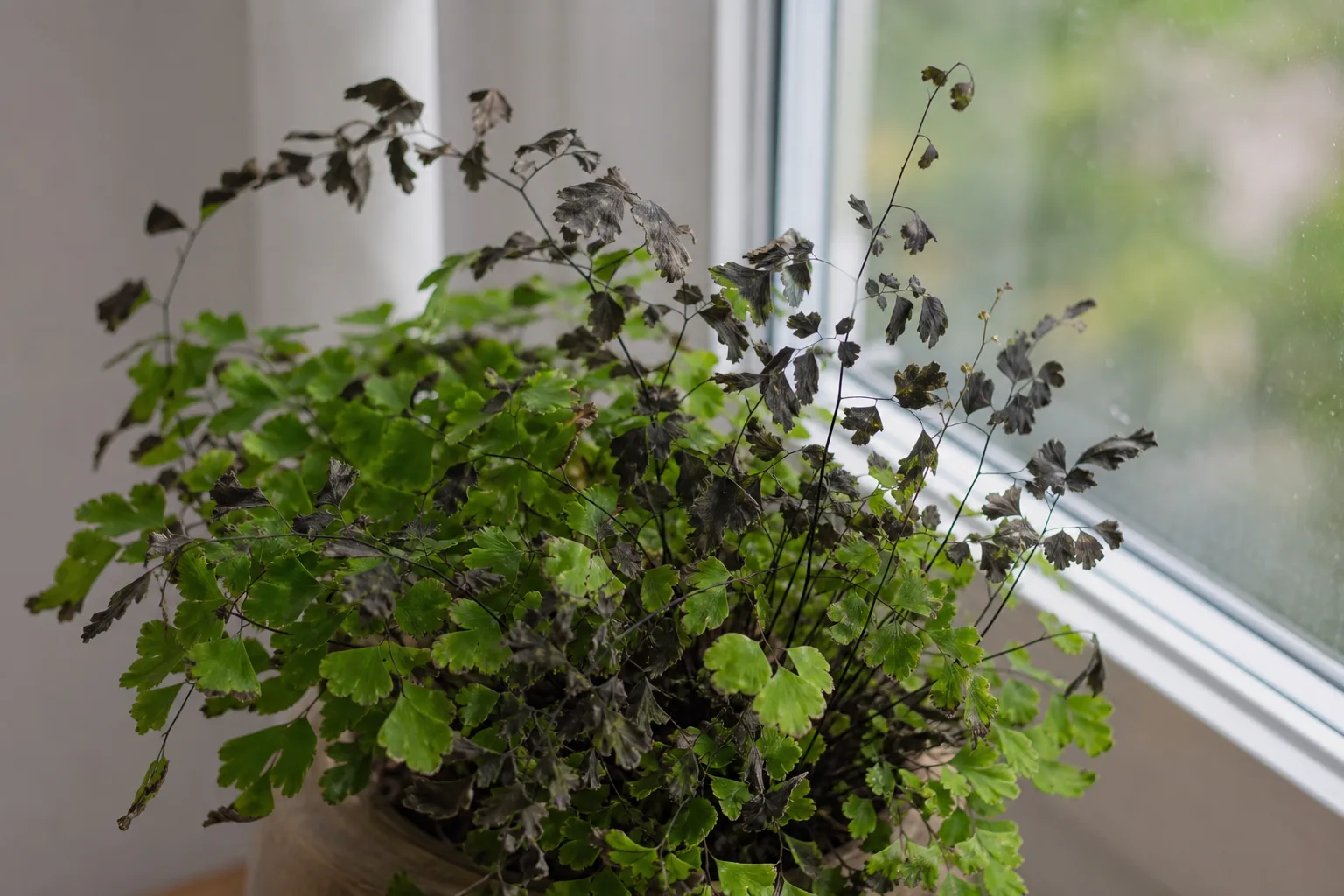
Cold Damage on Maidenhair Fern: Causes, Checks & Fixes
This guide covers cold damage on Maidenhair Fern. See also the general Cold Damage guide, watering, and light pages for this plant.
Cold Damage on Maidenhair Fern: Causes, Checks & Fixes
Quick answer
If your Maidenhair Fern (Adiantum raddianum and related Adiantum species) turned black and limp overnight by a window while the soil still feels appropriately moist, treat this as cold damage - not a signal to water more.
Move first: Relocate the pot to a stable 60–75°F (16–24°C) spot away from cold glass, exterior doors, and AC vents before trimming, Maidenhair Fern repotting guide, fertilizing, or adding water.
Adiantum raddianum is native to the Tropical Americas and West Indies and has no tolerance for temperatures lower than 10°C (50°F). Its thin membranous leaflets cannot buffer brief cold the way leathery ferns like holly fern can.
For baseline culture while you recover, see the Maidenhair Fern overview, watering guide, and low-humidity guide.
Cold damage vs. wilting vs. underwatering - which guide to use
Maidenhair Fern collapses fast for several reasons. Route to the right page before you act:
| Your situation | Likely cause | Use this guide |
|---|---|---|
| Black limp fronds after cold night, transport, or AC blast; soil moist | Cold damage | This page |
| Light dry pot, fronds collapsed after missed watering | Underwatering | Underwatering guide |
| Acute collapse - lift pot first; wet heavy soil, sour smell | Root rot / overwatering on Maidenhair Fern | Wilting guide or root rot |
| Gradual tip browning over weeks; hygrometer below 50% | Low humidity | Low-humidity guide |
Cold damage signature: sudden whole-frond blackening tied to a temperature event, often one-sided near a window or vent, with normal soil moisture. Wilting and underwatering usually show dry soil or wet sour mix - not a chill pattern.
What cold damage looks like on Maidenhair Fern
Cold injury on Adiantum typically shows:
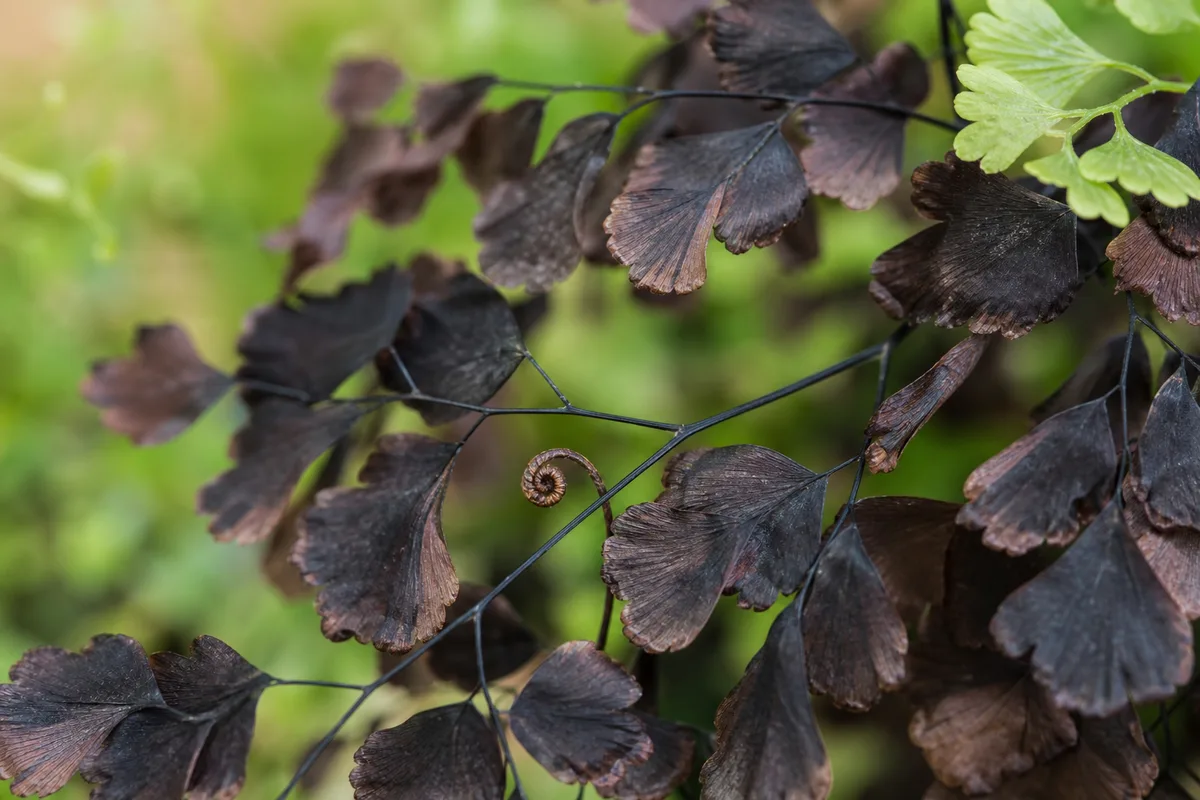
Cold Damage symptoms on Maidenhair Fern - compare with healthy tissue on the same plant.
- Black, limp fronds that were green hours or days earlier
- Whole frond collapse rather than slow tip browning
- Damage clustered on one side - nearest a window, vent, or door draft
- Darkened leaflets along fronds pressed against cold glass in winter
- Aborted croziers - new fiddleheads brown and stop unfurling mid-roll
- Black wiry stipes with dead pinnae still attached
Fronds die back quickly if soils are allowed to dry out, but cold damage differs: the pot may feel appropriately moist while fronds blacken from air temperature, not drought.
Adiantum cultivar notes
Most shop Maidenhair Ferns are delta maidenhair (Adiantum raddianum ‘Fragrans’ and similar cultivars). Northern maidenhair (Adiantum pedatum) and Venus maidenhair (Adiantum capillus-veneris) share the same membranous leaflet structure and cold sensitivity indoors - none tolerate sustained chill below 50°F. Holly fern (Cyrtomium) and bird’s-nest fern (Asplenium) tolerate cooler rooms better; if your fern has thick leathery fronds, cold damage patterns differ - confirm you have a true Adiantum before applying this guide.
Why Maidenhair Fern is vulnerable to cold
Tropical origin and membranous leaflets
Adiantum evolved in warm, humid understories where air and root zones stay stable. Maidenhair ferns have exceedingly delicate fronds with high surface area and almost no insulation - chill disrupts cell membranes faster than on thicker-leaved houseplants.
Window glass, AC microclimates, and transport shock
Fronds pressed against cold winter glass or hit by AC blasts receive temperatures far below wall-thermostat readings. A 68°F room can still expose leaflets touching 48°F glass. A warm shop-to-cold-car-to-home move in winter can collapse the entire plant within a day - faster than light-change acclimation alone.
Room thermostat trap: The sensor sits on an interior wall; fronds at sill height beside single-pane glass experience a different climate. Place a thermometer at frond height, not eye level across the room.
Cold irrigation water on the rhizome
Cold water can damage tropical roots when poured onto a warm rhizome, compounding air-side chill with root shock. Always use room-temperature or lukewarm water on Adiantum - especially during winter recovery.
Draft sensitivity
These ferns dislike cold draughts alongside dry air - avoid placing the plant in drafty areas or near heat registers where temperature swings are extreme. Hot radiator blasts after a cold night cause additional stress - relocate to stable warmth, not rapid heat compensation.
How to confirm the cause
Work through these checks in order:
- Thermometer at frond height - Readings below 60°F or brief dips near 50°F support cold damage.
- Event timeline - Did symptoms start after a cold night, AC season change, door left open, terrarium lid opened, or plant transport?
- Spatial pattern - Are damaged fronds clustered on the window side or vent side?
- Soil moisture - Normal moisture with sudden black fronds implicates temperature, not underwatering.
- Rhizome check - Firm, pale interior when lightly scraped suggests the crown can resprout.
| Check result | Points to |
|---|---|
| Moist soil + sudden black fronds + chill event | Cold damage |
| Bone-dry lightweight pot + full collapse | Underwatering |
| Wet sour soil + soft crown + no cold event | Root rot |
| Gradual tip crisp over weeks + RH below 50% | Low humidity |
| Dark patches on sun-facing fronds in warm room | Sun scorch - not this guide |
First fix for Maidenhair Fern
Relocate to stable warmth before any other intervention.
Move the pot to a spot that holds 60–75°F (16–24°C) with Maidenhair Fern light guide - most ferns prefer 60–70°F during the day and shelter from drafts. Pull the pot several inches back from winter windows so fronds never touch glass.
Do not repot, fertilize, or drench with cold tap water during the first week. Let the plant sit in stable conditions while you observe whether the rhizome stays firm.
Window placement, curtains, and insulated film
- Gap closure: Closing curtains at night helps only if fabric seals the sill gap - cold air pools between curtain hem and glass otherwise.
- Pull inward: On a north-facing sill in a 62°F room with glass at 48°F, fronds within 5 cm of glass are at risk even when the room feels “warm enough.”
- Insulated window film: Adds a thermal buffer on single-pane sills; still keep fronds off the glass surface.
- Terrarium users: Opening a lid on a cold morning dumps chill into a warm microclimate - wait until room air is stable, or vent briefly then re-close.
Step-by-step recovery
After relocation to stable warmth:
- Keep fronds away from glass, exterior doors, and AC vents.
- Water only with room-temperature water when the top centimeter is barely dry - follow the watering rhythm, do not overcompensate.
- Run a humidifier toward 60–80% - chill injury and dry winter air often overlap; see low-humidity recovery targets.
- Trim fully black or limp fronds at the soil line with clean scissors once the plant has sat in corrected warmth 48–72 hours.
- Hold fertilizer until new croziers emerge several inches tall.
- Monitor for new fiddleheads over 2–4 weeks.
- Judge success by clean new growth, not old black tissue re-greening.
Recovery timeline
| Phase | What to expect |
|---|---|
| Days 1–3 | No further blackening after relocation = positive sign |
| Weeks 2–4 | New croziers often appear if rhizome is firm and pale inside |
| Beyond 4 weeks | No new growth + soft foul crown = rhizome failure |
Stable warmth often produces new croziers within 2–4 weeks if the rhizome is healthy. Blackened leaflet tissue will not recover - it must be trimmed or replaced by new fronds.
Winter recovery may slow until nights stay consistently above 60°F at the plant. If no new growth appears after four weeks in stable warmth, scrape the crown lightly. Soft black tissue with foul smell means the rhizome has failed.
Lookalike symptoms
| Symptom pattern | Likely cause | Key differentiator |
|---|---|---|
| Sudden black limp fronds, moist soil, chill event | Cold damage | One-sided window/vent pattern |
| Light dry pot, crispy edges, missed watering | Underwatering | Dry soil throughout |
| Wet sour soil, yellow limp fronds, soft crown | Root rot | Not tied to cold event |
| Gradual tip browning over weeks | Low humidity | No sudden overnight black limp tissue |
| Dark patches on sun-facing fronds in warm room | Sun scorch | Warm conditions, not after chill |
| Tip burn with mineral crust on soil | Fluoride / tap-water burn | Not whole-frond overnight blackening |
Use the wilting guide when you need pot-weight triage for acute collapse where drought and rot both seem possible - but if a chill event preceded black fronds with moist soil, stay on this page.
What not to do
Do not leave the plant on a cold window sill hoping it recovers. Do not blast with hot air from a radiator to compensate - rapid heat swings cause additional stress. Do not repot a chilled fern on day one. Do not fertilize to stimulate growth while tissue is still collapsing. Do not overwater cold-stressed roots - rot risk rises when metabolism is slowed and soil stays wet in a cold room.
Do not confuse cold blackening with drought and soak a moist pot - that path leads to root rot.
How to prevent cold damage next time
Treat 50°F as a hard floor - tender ferns cannot tolerate temperatures lower than 10°C. Keep Maidenhair Fern in the 60–75°F comfort band year-round per the overview temperature guidance.
Winter windows: Pull pots back from glass or add insulated window film; seal curtain gaps.
Summer AC: Redirect vents away from the fern.
Water: Pre-warm replacement water to room temperature.
Transport: Bag the plant for outdoor air exposure; pre-warm the car for multi-hour moves. Gift-shop exits in winter are a common collapse trigger - wrap before the door opens.
Terrarium / cloche: Avoid opening lids during cold mornings; brief venting is safer when room air is already stable.
Maidenhair ferns are difficult to grow in most homes - temperature stability is non-negotiable alongside humidity and even moisture from the watering guide.
When to worry
Urgent: Multiple fronds blacken overnight or new croziers abort during unfurling - ongoing chill is killing active tissue.
Cannot recover: Soft, black, foul crown - discard or salvage rhizome sections only if firm tissue remains elsewhere.
Lower urgency but act soon: Slow darkening on one window-facing frond in midwinter - relocate before the pattern spreads to the crown.
If cold exposure repeats every winter on the same sill despite relocation attempts, contact your local extension office for placement advice - chronic window-side chill may need structural fixes, not more watering.
Related Maidenhair Fern problems
- Maidenhair Fern overview - temperature, humidity, and revival basics
- Watering - room-temperature water rhythm during recovery
- Low humidity - winter crisping vs. sudden cold blackening
- Wilting - pot-weight triage for acute collapse
- Underwatering - dry-soil collapse routing
- Root rot - wet sour soil after overwatering a chilled plant
When to use this page vs other Maidenhair Fern guides
- Maidenhair Fern watering guide - Use for routine moisture checks before assuming cold damage is the main issue.
- Maidenhair Fern problems hub - Browse all 55 common issues on this species.
- Drooping Leaves on Maidenhair Fern - Different entry point when symptoms overlap with cold damage.