Overfertilization on Java Fern: Causes, Checks & Fixes
Quick answer
Overfertilized Java Fern tanks show tank-wide algae pressure building over weeks after dose stacking-not sudden melt from one pour. Pause all liquid fertilizer, run sequential 30–50% water changes, siphon cyanobacteria mats, trim algae-coated fronds, and resume at half strength only after algae trend slows.
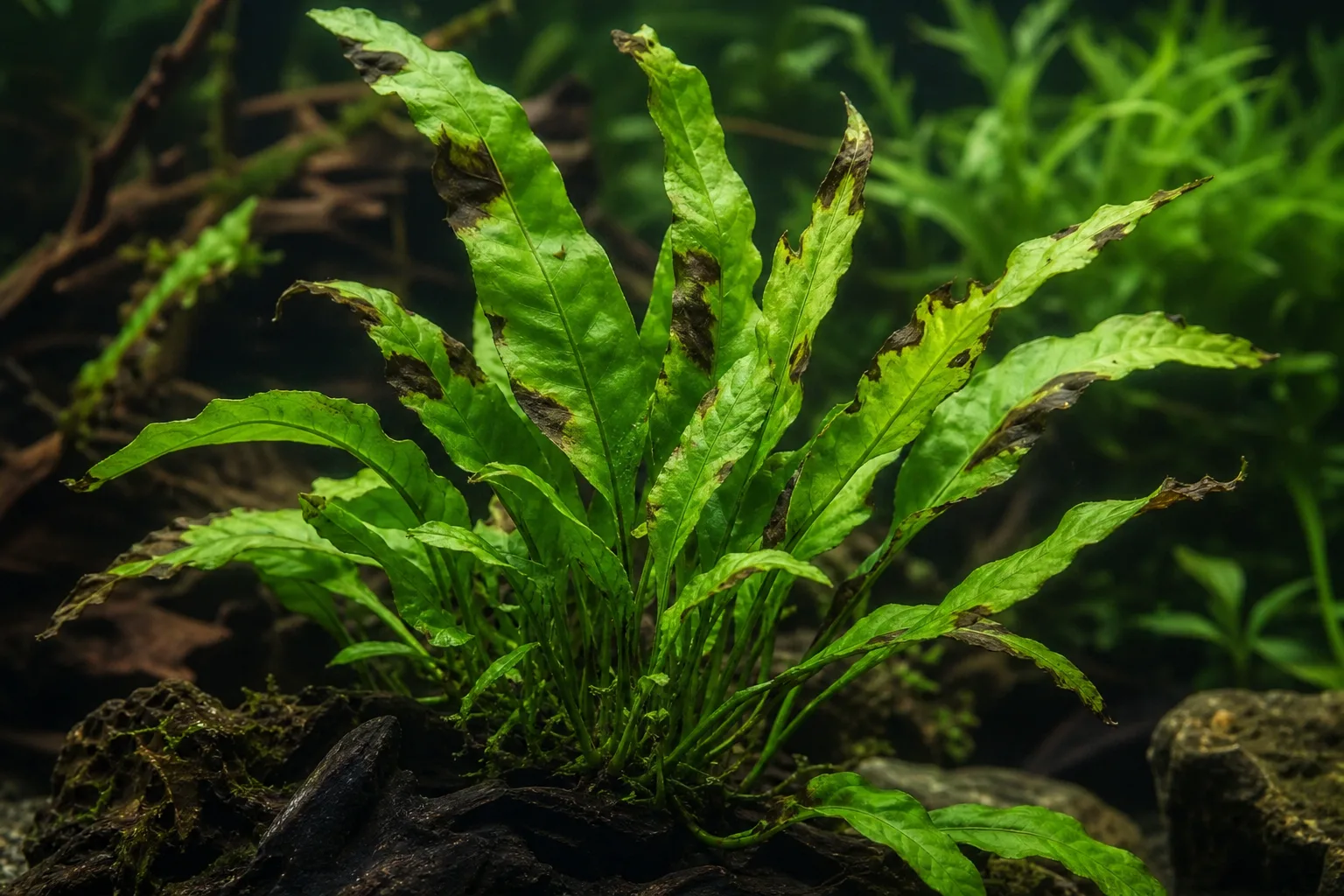
Overfertilization on Java Fern: Causes, Checks & Fixes
This guide covers overfertilization on Java Fern. See also the general Overfertilization guide, watering, and light pages for this plant.
Overfertilization on Java Fern: Causes, Checks & Fixes
Quick answer
Overfertilization on Java Fern (Microsorum pteropus) is chronic tank-wide nutrient surplus-dose stacking, root tabs plus aquasoil for carpet plants, or raising light and fertilizer together-not a single pour mistake. Java Fern is a slow-growing epiphyte that cannot absorb sudden nutrient surges the way fast stem plants can, so excess nitrogen and phosphorus often fuel algae growth in the water column before the fern itself looks worse.
This page covers algae bloom, green water, and cyanobacteria pressure building over weeks. For acute tip melt within 24–72 hours of a double dose or concentrate pour, use fertilizer-burn instead. For baseline product choice and stacking rules, see java-fern-fertilizer.
First fix: stop all liquid fertilizer immediately, perform a 30–50% water change, and siphon visible algae mats from glass, hardscape, and frond edges. Repeat water changes within 48–72 hours if nitrate or phosphate remain above your usual baseline.
Overfertilization vs fertilizer burn on Java Fern
These problems share a dosing mistake but show different timelines:
| Pattern | Overfertilization (this page) | Fertilizer burn |
|---|---|---|
| Timeline | Weeks of heavy or stacked dosing | 24–72 h after double dose or direct pour |
| Main symptom | Tank-wide algae, green water, cyanobacteria mats | Translucent tip melt tied to one event |
| Rhizome | Firm | Firm |
| First fix | Pause dose + sequential water changes + algae removal | Pause dose + one large water change; see fertilizer-burn |
If algae acceleration is your headline symptom and you cannot point to a single dosing event in the last three days, stay on this page. If melt appeared right after pouring concentrate on emersed fronds or doubling a weekly dose, switch to the burn guide.
Why Java Fern gets overfertilization
Java Fern absorbs nutrients from the water column through leaves and rhizome-not from buried substrate like rooted houseplants. Because it grows slowly, it cannot process the same macro load as carpet plants, stem plants, or floaters dosed on a high-tech schedule.
Dosing for carpet plants, root tabs, and aquasoil stacking
Mixed planted tanks are the most common trap. You dose full-strength liquid macros for Rotala, Ludwigia, or carpeting species while Java Fern sits on wood with low demand. At the same time, root tabs under swords or crypts and nutrient-rich aquasoil leach phosphorus into water the fern shares-even though the fern itself never needed tabs.
Example mistake: A 20-gallon community tank runs aquasoil under foreground plants, two root tabs near Amazon swords, and weekly full-strength all-in-one liquid. Nitrate climbs from the reader’s usual 15 ppm baseline to 40+ ppm within a month. Hair algae coats Java Fern fronds while the rhizome stays firm. That pattern is chronic surplus, not acute burn.
Light plus fertilizer: the algae recipe
Raising photoperiod or PAR at the same time you increase fertilizer gives algae a double advantage when plant uptake lags. Easy-category plants like Microsorum belong in lower light ranges-roughly 0.25–0.5 W/L-where nutrient demand stays modest. Pairing bright light with aggressive macro dosing in a tank dominated by slow epiphytes is a reliable path to green water and hair algae.
Other common triggers:
- Double dosing after a missed week instead of skipping
- Stacking trace-only liquid plus all-in-one macros in the same session
- Using non-aquarium fertilizers not designed for fish or shrimp systems
What overfertilization looks like on Java Fern
Tank-wide algae signs (hair algae, green water, cyanobacteria)
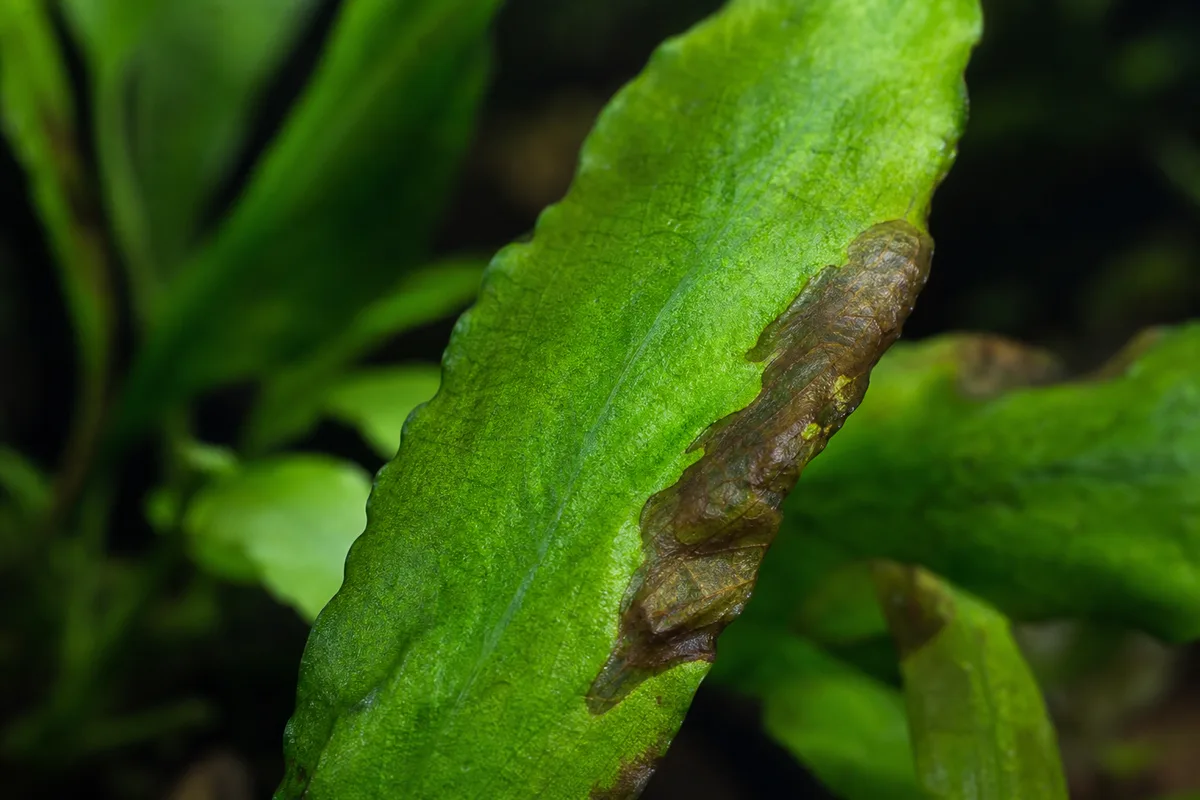
Overfertilization symptoms on Java Fern - compare with healthy tissue on the same plant.
Chronic surplus usually hits the whole tank before one plant:
- Hair algae or fuzz spreading on fronds, driftwood, and glass within days of a dose increase
- Green water (suspended algae bloom) after nutrient plus light changes
- Cyanobacteria-like mats in low-flow corners and under overhangs-nutrient imbalance can fuel harmful algal blooms in aquatic systems
- Persistent film on glass that returns within 48 hours of scraping
Plant-specific frond stress
On the fern itself you may see:
- Translucent or yellowing frond tips that do not improve when you add more fertilizer
- Brown patches or pinholes on older leaves while algae coats new growth
- Stalled new leaves while tank-wide algae keeps accelerating
The rhizome should stay firm and woody. Soft, dark, foul-smelling rhizome tissue points to burial rot-see root-rot, not overfertilization.
How to confirm the cause
Work through these checks in order:
- Timeline: Did algae acceleration begin within one to two weeks of a dose increase, new root tabs, or longer photoperiod-not within 48 hours of one pour?
- Water tests: Are nitrate and/or phosphate materially above your established baseline for this tank? In lightly stocked planted tanks, nitrates often sit around 10–25 ppm when macros are adequate; a spike well above your normal reading supports surplus.
- Dosing log: Did you stack liquid, tabs, and aquasoil without adjusting totals? Did you compensate for a missed week by doubling?
- Light check: Did photoperiod or intensity increase at the same time as fertilizer?
- Rhizome feel: Firm rhizome supports surplus or algae-pressure patterns; soft dark rhizome suggests rot.
If symptoms predate any fertilization change, review lookalikes below or check nitrogen-deficiency and potassium-deficiency.
Lookalike comparison table
| Pattern | Timing | Tank-wide signs | Rhizome | Key clue |
|---|---|---|---|---|
| Overfertilization | Weeks of heavy dosing | Hair algae, green water, cyano mats | Firm | Algae leads; dose log shows stacking |
| Fertilizer burn | 24–72 h after one event | Local melt, not full-tank bloom | Firm | Tied to double dose or pour; see fertilizer-burn |
| Nitrogen deficiency | Gradual over weeks | Little algae; pale tank | Firm | Low nitrate; lean water |
| Potassium deficiency | Gradual | Moderate algae possible | Firm | Pinholes in older leaves, not sudden bloom |
| Acclimation melt | After purchase or move | Minimal algae | Firm | No dosing change; trim and wait |
| Rhizome rot | Any time rhizome buried | Variable | Soft, dark, foul | Remount; see root-rot |
First fix for Java Fern
Stop all liquid fertilizer for 7–14 days. Overfertilization recovery is about diluting surplus nutrients and removing algae, not treating acute leaf melt (that protocol lives on fertilizer-burn).
- Perform a 30–50% water change with temperature-matched dechlorinated water.
- Siphon algae mats from glass, substrate surface, and Java Fern fronds-do not just scrape and leave debris in the water column.
- Trim algae-coated fronds at the rhizome so the plant is not supporting coated tissue.
- Reduce photoperiod toward about six hours during active algae control-shorter lighting periods are commonly used during tank stabilization.
- Increase surface flow in low-flow zones where cyanobacteria mats form; stagnant pockets collect organics that feed blooms.
Sequential water changes for persistent spikes: If phosphate or nitrate remain elevated above your baseline after the first change, repeat a 30–50% water change within 48–72 hours. Two or three dilution passes over one week often lower readings faster than a single large change followed by a long wait.
Do not add algicide, extra fertilizer, or new products on day one. Stabilize input and dilution first.
Green water and cyanobacteria recovery branches
Green water: Suspend or reduce lighting to about six hours, keep fertilizer paused, and run sequential water changes. Avoid massive light increases until the water clears. Fast-growing floaters or stem cuttings can act as nutrient sinks once the bloom thins-add them only after dilution, not as a substitute for water changes.
Cyanobacteria mats: Gently siphon mats off affected surfaces during water changes rather than stirring them into the column. Increase flow to dead zones behind wood and under overhangs. Keep fertilizer paused until mats stop spreading; cyanobacteria can thrive when nutrient ratios fall out of balance even after partial dilution.
Resume one aquarium-safe liquid product at half label strength once weekly only after algae pressure trends down and new Java Fern growth looks clean-not merely when old coated leaves remain.
Recovery timeline
Tank-wide algae often trends down within one to two weeks after dose pause and sequential water changes. Glass may look cleaner before fronds do.
Java Fern adds leaves slowly, so expect four to six weeks before the plant looks full again. Damaged or algae-coated old tissue will not re-green-success is clean new fronds, a firm rhizome, and reduced new algae load on glass and hardscape.
Maintain stable temperatures around 22–28°C/27914) during recovery; cold water below 20°C slows new leaf formation.
When fish or shrimp need emergency steps
Cosmetic algae on Java Fern is not the same as a livestock crisis. Treat as urgent if:
- Fish gasp at the surface or show lethargy after a massive dose
- Ammonia or nitrite reads above zero on a liquid test kit
- Cyanobacteria rapidly blankets large areas after a major dosing mistake
- You used a non-aquarium fertilizer with unknown chemistry
UF/IFAS notes that ammonia damages gills and stresses fish even at low concentrations, and that routine testing is the only reliable way to detect it. In a crisis:
- Stop feeding for 24 hours.
- Perform 40–50% water changes-repeat within 24–48 hours if ammonia or nitrite remain elevated.
- Increase aeration and verify the filter is running.
- Resume fertilizer only after ammonia and nitrite stay at zero and algae trend data improve.
For acute chemical injury from non-aquarium products, also read chemical-damage.
What not to do
Do not “catch up” missed doses by doubling. Do not increase light to fight algae while nutrients remain excessive-that pairs the two variables that caused the bloom. Do not bury or repeatedly disturb the rhizome while the plant is stressed. Do not reach for algicide as a first step; nutrient correction and manual removal come first. Do not add more fertilizer because fronds look pale during an active algae bloom-that usually worsens surplus.
How to prevent overfertilization next time
Dose one variable at a time-change light or fertilizer, not both in the same week. Keep a simple log: date, product, dose, photoperiod, nitrate, phosphate, and algae intensity on a 1–5 scale.
Use root tabs only under rooted plants, not as a default for Java Fern on hardscape. In shrimp-only or nano tanks, start at quarter to half label strength because bioload is low. Product categories and stacking rules live in java-fern-fertilizer-this page focuses on fixing surplus, not re-teaching the full feeding plan.
Preventive mindset: treat fertilizer as a controlled input matched to the slowest-growing plant in the tank, not the carpet species.
When to use this page vs other Java Fern guides
- Java Fern watering guide - Use for routine moisture checks before assuming overfertilization is the main issue.
- Java Fern problems hub - Browse all 28 common issues on this species.
- Fertilizer Burn on Java Fern - Different entry point when symptoms overlap with overfertilization.
Related Java Fern guides
- Java Fern overview
- Java Fern watering
- Java Fern light
- Java Fern soil
- Fertilizer Burn on Java Fern
- Java Fern problems
- Black Spots on Java Fern
- Chemical Damage on Java Fern
Related tool
Use the Plant Problem Diagnosis Tool to narrow causes for overfertilization on this plant before changing multiple variables at once.