Distorted Leaves on Java Fern: Causes, Checks & Fixes
Quick answer
Distorted Java Fern fronds usually come from emersed-to-submersed melt, nutrient imbalance, or abrupt light/flow changes. Check rhizome firmness first, stabilize light and water, then judge recovery by the next undistorted fronds.
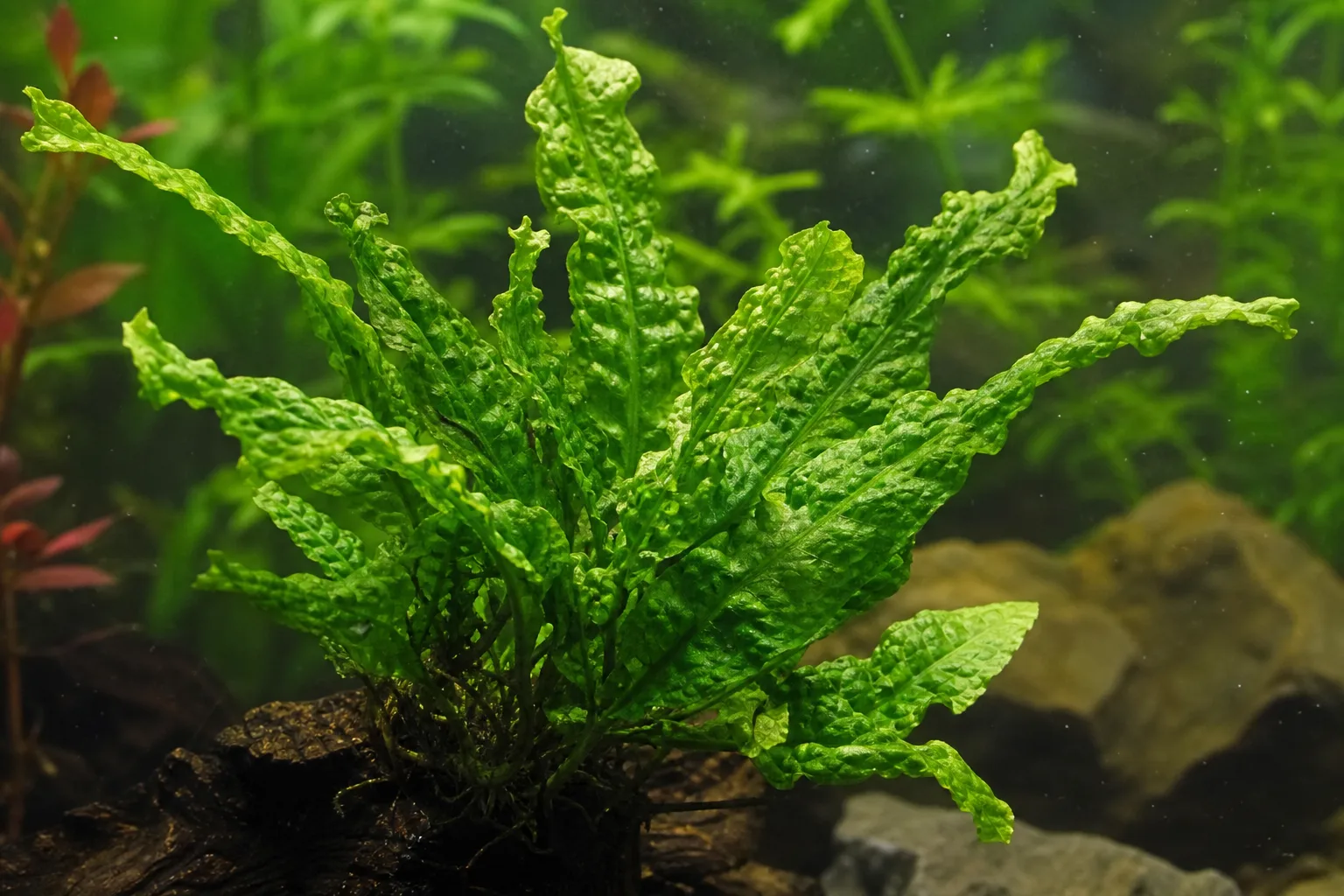
Distorted Leaves on Java Fern: Causes, Checks & Fixes
This guide covers distorted leaves on Java Fern. See also the general Distorted Leaves guide, watering, and light pages for this plant.
Distorted Leaves on Java Fern: Causes, Checks & Fixes
Quick answer
Distorted leaves on Java Fern (Microsorum pteropus) are usually a stress pattern, not a separate disease. In practice, most cases trace back to four causes: emersed-to-submersed acclimation melt, nutrient imbalance, abrupt light or flow changes, or rhizome damage from poor mounting. Java Fern is a slow-growing epiphyte, so old damage lingers for weeks; judge success by what the next fronds look like, not by whether existing distorted blades straighten.
What distorted leaves look like on Java Fern
Distortion usually appears in one of these patterns:
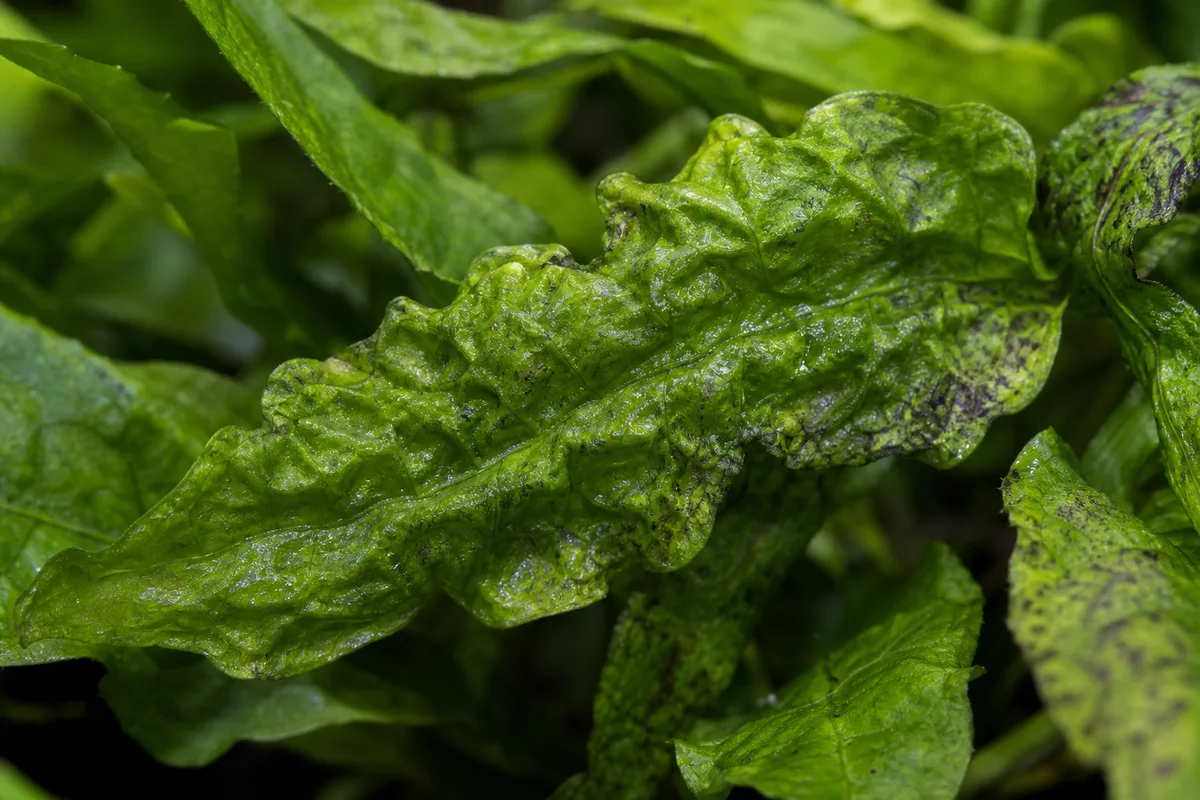
Distorted Leaves symptoms on Java Fern - compare with healthy tissue on the same plant.
- Melt distortion: translucent patches, wrinkling, or collapsing tissue after shipping or rescape.
- Nutrient distortion: small twisted new leaves, pinholes, uneven margins, or weak tissue.
- Light stress distortion: tip bleaching, narrow new fronds, or one-sided warping toward the lamp.
- Rhizome stress distortion: deforming leaves from the base upward, often followed by tissue collapse.
Do not confuse healthy sporangia (sori) with distortion symptoms. Firm dark bumps on mature frond undersides can be normal reproductive structures.
Distorted vs curling vs transparent leaves
These three Java Fern problems overlap, but they are not identical:
distorted-leaves: shape and tissue quality changes (twist, wrinkle, uneven blade thickness).curling-leaves: mostly blade edge rolling or cupping, often flow or Java Fern light guide driven.transparent-leaves: see-through tissue and melt progression, often nutrient or transition linked.
If your plant shows more than one pattern, start with this page, then use those related pages to narrow the dominant cause.
Why Java Fern gets distorted leaves
1) Acclimation melt after purchase or rescape
Many Java Ferns enter the hobby from emersed production, then must adapt underwater. During that switch, older leaves can deform, turn glassy, and melt before new submerged growth stabilizes. This transition behavior is widely noted in practical aquarium guidance from Tropica’s grow-in recommendations.
2) Nutrient imbalance in the water column
Java Fern does not behave like a heavy root-feeding rosette plant; it absorbs much of what it needs from circulating water around leaves and rhizome. When nutrient supply is inconsistent, distorted growth can appear before obvious dieback. General plant nutrition principles also explain pattern-reading: deficiencies in mobile nutrients tend to show first in older leaves, while immobile nutrient shortages show in newer growth (Cornell Soil Health).
3) Light and flow stress
Java Fern is classed as an easy, lower-demand plant and generally prefers lower-to-moderate light intensity (Tropica light guidance). Sudden increases in intensity, duration, or direct jet exposure can deform new fronds even when nutrients are acceptable.
4) Rhizome damage (especially burial)
The rhizome must remain exposed and attached to hardscape, not buried. When it stays submerged in low-oxygen substrate pockets, tissue can rot and produce distortion from the crown upward rather than isolated leaf defects (Tropica plant profile).
How to confirm the cause (checklist + matrix)
Run this checklist in order before dosing anything:
- Feel the rhizome: firm = likely recoverable; soft/mushy = urgent rot workflow.
- Check timing: symptoms within 1-3 weeks of purchase/rescape often mean transition melt.
- Review light/flow changes: new fixture, longer photoperiod, or direct outflow?
- Test nutrients: look for persistent near-zero nitrate or unstable fertilization routines.
- Inspect newest vs oldest fronds: pattern helps separate mobile vs immobile deficiency behavior.
| Pattern | Likely cause |
|---|---|
| Distortion starts soon after purchase/rescape | Transition melt |
| New fronds narrow/twisted after PAR or photoperiod jump | Light stress |
| Older leaves show pinholes/necrotic edges, newer growth stalls | Nutrient imbalance |
| Base-up distortion with soft black rhizome | Rhizome rot/burial damage |
| Distortion localized only in direct filter blast | Mechanical flow stress |
First fix to try (one action first)
First action: protect crown health by ensuring the rhizome is firm, exposed, and securely mounted out of direct high-velocity flow.
Once that is done, keep conditions steady for about two weeks:
- Use consistent weekly water changes.
- Keep photoperiod conservative at first (around six to eight hours in most low-tech setups) per Tropica start-up guidance.
- Trim only clearly failing fronds at the rhizome base; do not strip all imperfect leaves.
Step-by-step recovery by cause
If it is transition melt
- Maintain stable water, temperature, and light schedule.
- Remove dissolved tissue, keep intact tissue.
- Wait for the next growth cycle before making major new changes.
If it is nutrient distortion
- Keep fertilizer dosing consistent instead of sporadic high doses.
- Prioritize steady baseline nutrients over aggressive correction bursts.
- Reassess on new growth after 2-4 weeks.
If it is light/flow stress
- Reduce light intensity or duration incrementally.
- Redirect or diffuse direct outflow hitting the same fronds continuously.
- Keep all other variables stable while evaluating response.
If rhizome stress is present
- Unbury and remount immediately.
- Remove black/mushy sections if a healthy firm segment remains.
- If all rhizome tissue is soft, replacement is often more realistic than rescue.
Recovery timeline
Distortion recovery is not immediate on this species because growth is slow. Existing damaged fronds often stay misshapen. Improvement usually appears as cleaner, broader, less warped new fronds over 2-6 weeks, depending on conditions and plant size. Typical tropical aquarium temperatures around 22-28 C/27914) support steadier recovery in normal community setups.
Lookalike patterns to rule out
- Natural cultivar texture: Windelov-style frilled margins can be normal.
- New frond unfurling: juvenile fronds can look odd before full expansion.
- Sori on mature leaves: normal, firm, dark underside dots are reproductive.
- General old-leaf senescence: single old frond decline is not always a system problem.
What not to do
Do not stack multiple major interventions on day one (new light, new fertilizer regime, major rescape, and aggressive trimming together). Do not bury the rhizome to “stabilize” the plant. Do not push maximum light to force recovery on a low-demand epiphyte. Do not judge recovery by old fronds alone.
How to prevent distorted leaves next time
- Acclimate new plants in stable conditions before big layout changes.
- Mount rhizomes exposed on wood/rock from day one.
- Ramp light and fertilizer gradually, not in abrupt jumps.
- Keep a consistent maintenance rhythm (water changes + moderate flow + stable dosing).
- Use related problem pages when symptoms are mixed:
curling-leavesandtransparent-leaves, plus thejava-fern overview.
When to worry
Escalate quickly if every new frond emerges deformed while the rhizome softens, darkens, or smells foul. That pattern indicates crown failure, not cosmetic leaf damage. In that case, protect any remaining firm rhizome section, stabilize water quality, and remove decaying plant matter promptly to avoid compounding stress in the tank.
When to use this page vs other Java Fern guides
- Java Fern watering guide - Use for routine moisture checks before assuming distorted leaves is the main issue.
- Java Fern problems hub - Browse all 28 common issues on this species.