Slow Growth on Begonia Maculata: Causes, Checks & Fixes
Quick answer
Begonia Maculata is a fast-growing cane begonia in warm, bright months and normally pauses in cool, short-day winter. First step: confirm the season, then check whether red cane stems are firm with no new leaf nodes for weeks while the plant sits in dim light or dry air-move to bright indirect light within about two feet of an east- or west-facing window before fertilizing or repotting.
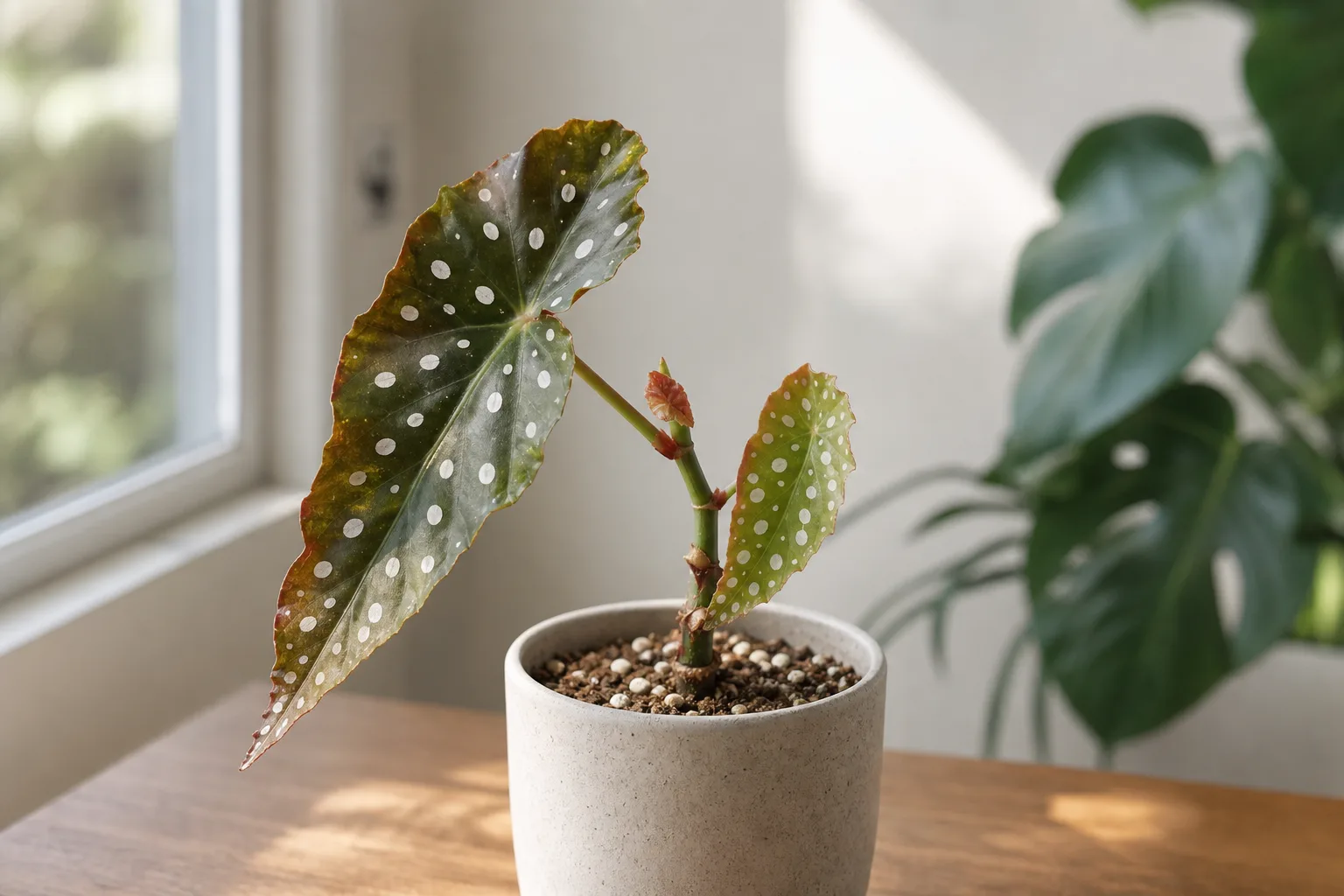
Slow Growth on Begonia Maculata: Causes, Checks & Fixes
This guide covers slow growth on Begonia Maculata. See also the general Slow Growth guide, watering, and light pages for this plant.
Slow Growth on Begonia Maculata: Causes, Checks & Fixes
Quick answer
Begonia maculata (polka dot begonia) is a rapid-growing cane begonia when warmth, bright indirect light, and humidity align-and it naturally slows when winter shortens days and cools the room. Slow growth becomes a problem when the plant produces no new leaf nodes for weeks during spring or summer while canes stay firm but the pot sits in a dim corner, dry heated air, or an undersized root-bound container.
First step: confirm the season, then assess light and cane firmness. In active months, move the pot to bright indirect light within about two feet of an east- or west-facing window and watch for new spotted leaves within two to three weeks. Do not fertilize, repot, or soak soil on day one-a stalled begonia in wet dim mix often needs brighter light and drier rhythm, not more inputs. Full species context: Begonia Maculata overview.
What slow growth looks like on Begonia Maculata (vs. normal winter rest)
On this upright cane begonia, growth rate is visible on the red segmented stems. Healthy active growth shows closely spaced leaf pairs with vivid silver spotting. Slow or stalled growth looks different depending on whether the cause is seasonal or care-related.
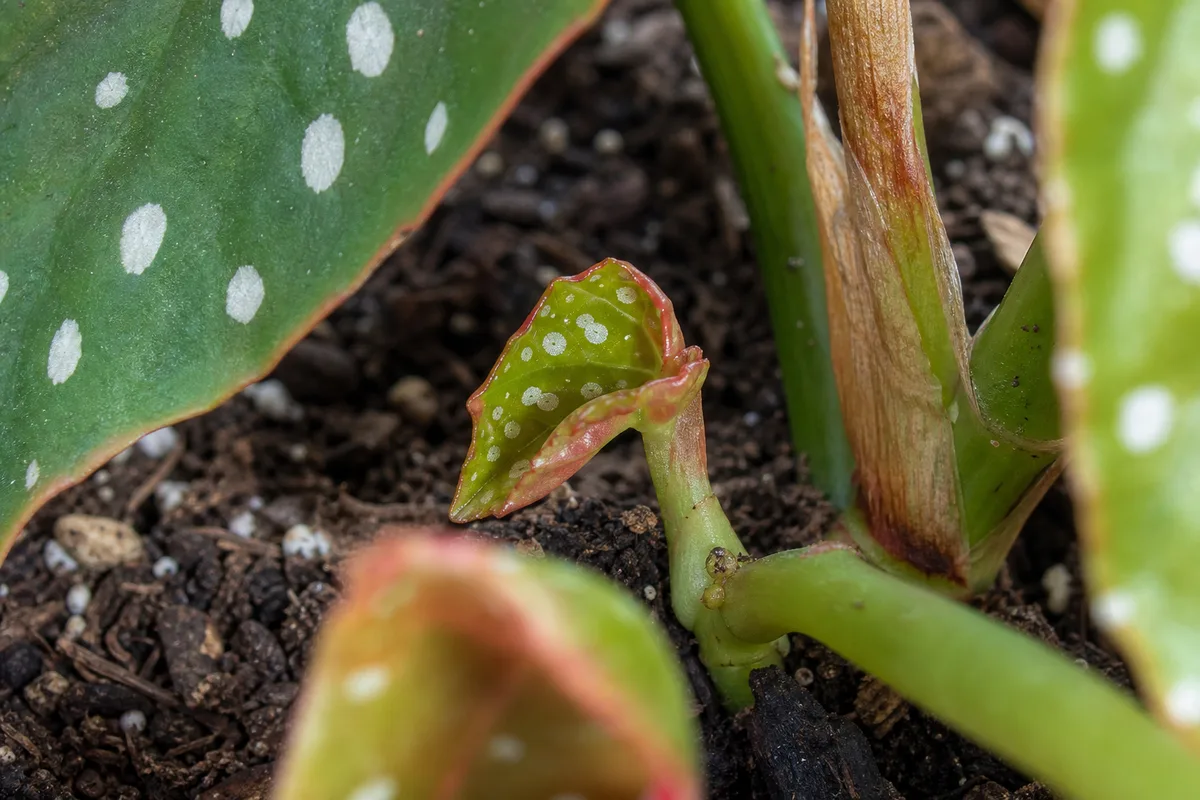
Slow Growth symptoms on Begonia Maculata - compare with healthy tissue on the same plant.
Abnormal slow growth (needs action):
- No new leaf nodes for three or more weeks during spring or summer while temperatures are above 65 °F (18 °C)
- Smaller new leaves that emerge infrequently, with widening gaps between the last few leaf pairs
- Faded silver spots on new foliage-the plant is growing, but weakly
- Firm red canes with no soft base-structure is sound, but metabolism is limited
- Soil that stays wet for many days in a dim spot-transpiration is too low for the watering schedule
Normal winter rest (usually not a crisis):
- Minimal to no new growth from late fall through early spring when light is low and nights cool
- Firm canes with existing foliage holding color; no mush at the soil line
- Slower dry-down on a reduced winter watering rhythm
- No dramatic lean or bare lower cane-those patterns point to light stress, not simple dormancy
Lookalikes to rule out:
- Leggy etiolation - long bare internodes with a leaf tuft at the tip; the plant is stretching for light, not simply stalled. See leggy growth on Begonia Maculata.
- Not enough light - overlapping with legginess but focused on dim placement; see not enough light for window tests.
- Root rot - soft stem base, sour mix, yellowing and wilting despite wet soil. See root rot.
- Underwatering - wilt with light, dusty dry mix, not firm canes with evenly moist soil.
| Pattern | Cane feel | New nodes | Season | Likely read |
|---|---|---|---|---|
| Normal winter rest | Firm | Rare or none | Nov–Feb | Seasonal pause |
| Light-limited stall | Firm | None for weeks | Spring–summer | Move to brighter indirect light |
| Leggy stretch | Firm, thin | Sparse, far apart | Any | Brighten light; may need pinching |
| Root-bound stall | Firm | Small, infrequent | Active months | Repot one size up |
| Root rot | Soft base | Wilting top | Any | Emergency-dry out, assess roots |
Why Begonia Maculata grows slowly
Polka dot begonia is built for fast upright growth in filtered tropical light. When conditions fall short of that baseline, cane elongation and new leaf production slow before older foliage shows dramatic damage.
Insufficient bright indirect light (most common limiter)
Cane begonias use light to fuel rapid stem extension and leaf pigment-they perform best in partial shade with bright filtered light, not dim interiors. In low light, photosynthesis drops, transpiration slows, and the plant may produce few or no new nodes while existing leaves hold color. Low light also leaves mix wet longer, which compounds stress on fibrous roots. This is the primary stall cause in spring and summer-not a nutrient deficiency. Deep dive: not enough light on Begonia Maculata.
Low humidity and dry heated air
Begonia maculata prefers humid rainforest understory conditions-native to Brazilian rainforests where warmth and moisture support steady growth. Chronic air below about 40% relative humidity often produces smaller leaves, crisp edges, and slower cane growth even when watering is correct. Winter heating without a humidifier is a common hidden limiter in otherwise bright rooms.
Cool temperatures and drafts
Growth pauses when sustained temperatures fall below about 60–65 °F (15–18 °C)-cane-stemmed begonias grow best at 15–22 °C (58–72 °F) and need a minimum of about 15 °C. AC vents, single-pane winter windows, and unheated rooms can stall metabolism while the plant looks otherwise healthy. Drafts beside exterior doors have the same effect.
Root-bound pot
In the same container for two or more years, roots may circle the pot and exhaust available nutrients and water-holding capacity. The plant stays alive but pushes small, infrequent new leaves despite correct light. See repotting Begonia Maculata when roots protrude from drainage holes or the mix dries within a day of watering.
Under-feeding during active season
Begonia maculata benefits from monthly balanced fertilizer at half strength during spring and summer when actively growing-feed established cane begonias from May through September per label rates. A plant in bright light that has not been fed through a full growing season may stall-not from toxicity, but from depleted mix. Do not feed a stressed plant in wet dim soil; fix light first.
Pests on new growth
Spider mites and mealybugs can stall new leaves by damaging tender tissue at the growing tip. Inspect leaf undersides and stem joints if growth stops while light and watering look fine. See spider mites and mealybugs.
Normal seasonal slowdown
Short days and cooler nights from late fall through early spring naturally reduce growth. This is expected-not a failure-if canes stay firm and you reduce watering accordingly.
How to confirm the cause
Work through these checks in order. One honest season-and-light assessment beats guessing from a single yellow leaf.
- Season check - Is it November through February with cool nights and short days? Firm canes and no new growth may be normal rest. Resume diagnosis in spring if the stall persists.
- Window direction and distance - Measure from pot to glass. East or west within about two feet is the usual target; more than six feet from any window often limits growth in active months.
- Newest node timing - Mark the top node today. If no new leaf pair appears within three weeks during warm bright months, light, humidity, or roots are likely limiting-not seasonal pause.
- Cane firmness at soil line - Firm red cane with evenly moist mix points toward light or humidity. Soft, dark base with sour smell means root crisis-see root rot.
- Soil dry-down speed - Push a finger 3 cm deep. Mix wet for a week in a dim corner confirms low-light overwatering risk; dusty dry mix points to underwatering.
- Humidity and heat sources - Note distance to radiators, AC vents, and fireplaces. Crisp leaf edges with slow growth suggest dry air.
- Root-bound signs - Roots circling the pot surface, stunted leaves after years without repot, or mix that dries within 24 hours of watering.
- Pest scan - Stippling, webbing, or white cottony clusters on new growth.
First fix for Begonia Maculata (ranked by likely cause)
If it is spring or summer and the plant sits more than a few feet from a bright window: move it to bright indirect light within about two feet of an east- or west-facing window. That single change is the first fix for most stalls. Cane begonias cannot sustain rapid growth on a dim shelf.
After the move, wait two weeks and read new nodes, not old leaves. Rotate the pot a quarter turn every few days so all sides of the cane receive light.
If light is already strong but air is dry: add a pebble tray or small room humidifier targeting 50% or higher relative humidity near the canopy. Avoid misting leaves directly.
If the plant has not been repotted in two or more years and roots circle the pot: plan a repot one size up in spring with airy, well-draining mix-after light and watering are stable. See repotting guide.
If growth is steady in bright humid conditions but leaves look pale: resume monthly half-strength fertilizer during active months only.
If the stem base is soft: stop-this is not slow growth. Address root rot before any other treatment.
Step-by-step recovery by confirmed cause
Light-limited stall
- Move to brightest safe indirect-light location (east or west window within about two feet).
- Wait two weeks; recheck watering-brighter light usually means faster dry-down. Follow watering guide finger tests.
- When two or three new leaf pairs show good spotting, optionally pinch tips to encourage branching.
- Hold fertilizer until new growth looks steady for several weeks.
Low-humidity stall
- Move away from heater vents and drafty windows.
- Add pebble tray or humidifier; target 50%+ at canopy height-maintain good humidity by standing the pot on a tray of moist gravel.
- Keep bright indirect light-humidity alone will not restart growth in a dark corner.
Root-bound stall
- Confirm active growth season (spring or early summer).
- Repot one container size up with perlite-amended mix; do not jump multiple sizes.
- Water thoroughly once; wait for new growth before feeding.
Under-fed stall (bright, stable plant only)
- Confirm mix has not been fed through a full growing season.
- Apply balanced liquid fertilizer at half strength monthly through spring and summer.
- Skip feed in fall and winter and on stressed wet plants.
Recovery timeline
Judge progress on new cane tissue, not old leaves.
- After a light move: first new spotted leaf pair often appears within 10–21 days in warm active months
- After humidity improvement: new leaves may look larger within 2–4 weeks; crisp edges on old leaves may not reverse
- After repotting: expect 2–3 weeks of adjustment before steady new nodes; minor leaf drop is common
- Winter rest: little visible progress until March–April light returns-normal, not failure
- Pest recovery: new clean growth within 2–4 weeks after treatment; damaged tips do not regenerate
Signs improvement is working: closer internode spacing, stronger silver spotting on new leaves, faster top-3-cm dry-down in brighter light, firm canes with no soft base.
Signs the problem is worsening: soft stem base, increasing yellow leaves, wilting in wet mix, pest webbing on new tips-escalate to root or pest guides immediately.
What not to do
Do not fertilize a stalled plant in wet dim soil before fixing light and drainage-salts on stressed roots worsen the stall. Do not repot during winter rest unless root-bound is confirmed and the room stays warm. Do not stack repotting, heavy pruning, and pesticide on the same day. Do not mist leaves as a humidity fix; wet foliage in stagnant air invites mildew on begonias. Do not interpret winter pause as failure and overwater-a firm cane with dry mix on a slow winter schedule is healthy rest.
How to prevent slow growth next time
Place Begonia Maculata in bright indirect light year-round, maintain humidity near 50% or higher, and keep temperatures above 60–65 °F (15–18 °C) away from AC blasts. Feed monthly at half strength during spring and summer per our fertilizer guide. Repot before roots bind the pot. Rotate weekly, adjust watering when you change light intensity, and add a grow light before winter short days if window light drops. Inspect new growth weekly during active months so stalls are caught before soil stays wet in a dim corner.
Related Begonia Maculata guides
- Begonia Maculata overview - growth-rate baseline and full care
- Not enough light - window placement and shadow tests
- Leggy growth - etiolation vs. true stall
- Watering - seasonal rhythm and dry-down checks
- Fertilizer - active-season feeding
- Repotting - root-bound recovery
- Root rot - soft cane emergency
- Low humidity - dry-air symptoms and fixes