Underwatering on Begonia Maculata: Causes, Checks & Fixes
Quick answer
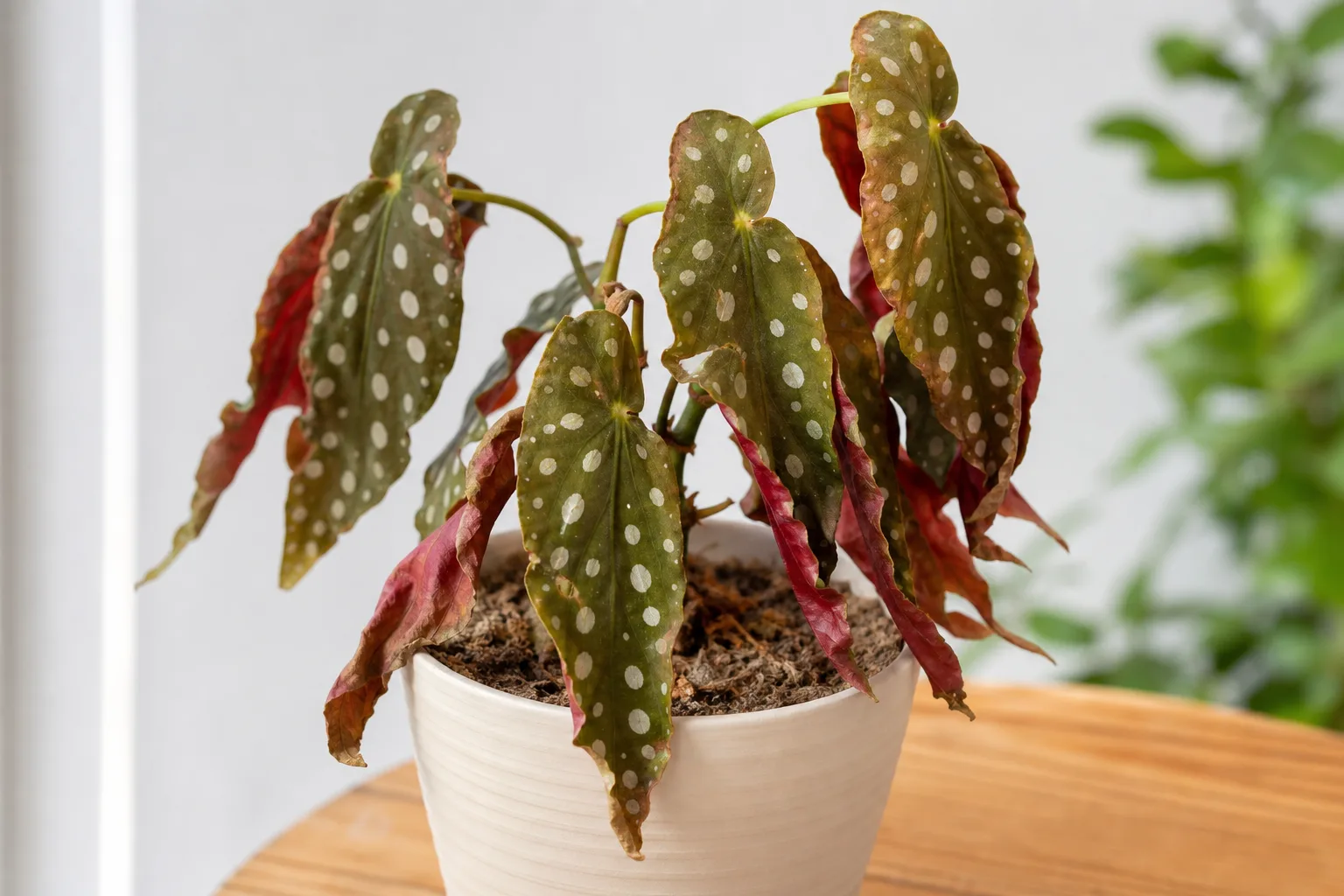
Underwatering on Begonia Maculata shows up as a very light pot, limp angel-wing leaves, and dry mix pulled away from the pot edge. First step: bottom-water thoroughly until the surface moistens, then drain completely before changing anything else.
Underwatering on Begonia Maculata: Causes, Checks & Fixes
This guide covers underwatering on Begonia Maculata. See also the general Underwatering guide, watering, and light pages for this plant.
Underwatering on Begonia Maculata: Causes, Checks & Fixes
Quick answer
Underwatering on Begonia Maculata (Begonia maculata, polka dot or trout begonia) means the root ball has stayed dry too long for this fast-growing cane begonia to keep its large, thin leaves turgid. The plant wilts not from disease but because roots cannot move water upward fast enough.
First step: bottom-water the pot today. Set it in a tray of room-temperature water until the surface of the mix darkens and feels moist, then lift it out, let it drain fully, and empty the saucer. One thorough rehydration beats repeated small sips that never reach dry roots deep in the pot.
Do not repot, fertilize, or mist leaves as your opening move. Confirm the soil was genuinely dry first-Begonia Maculata wilts from both drought and rotting roots, and the fix for each is opposite.
What underwatering looks like on Begonia Maculata
On Begonia Maculata overview, drought stress shows up quickly because the angel-wing leaves have a large surface area and transpire heavily in bright indoor light. Early signs include:
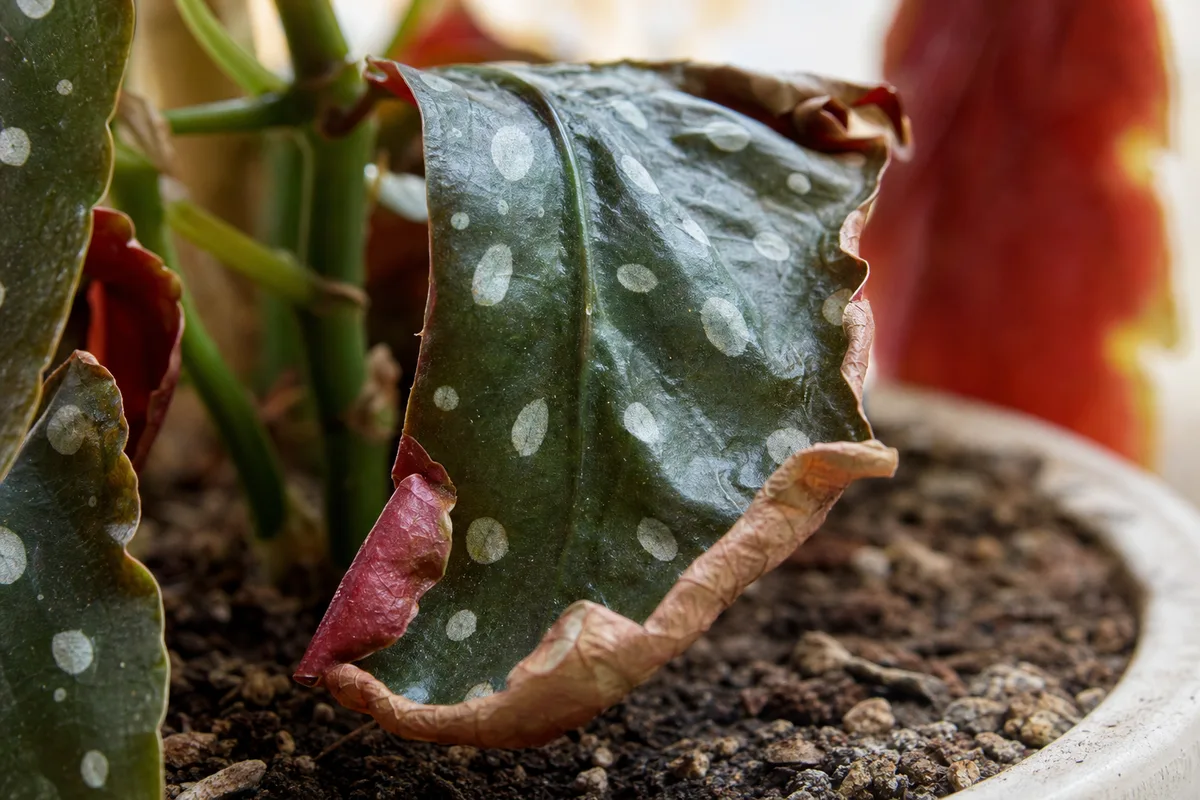
Underwatering symptoms on Begonia Maculata - compare with healthy tissue on the same plant.
- Limp, drooping leaves on Begonia Maculata on cane stems that normally hold themselves out at an angle
- Leaf edges curling inward or feeling thin and papery when pinched
- Dry, light-colored soil that may pull away from the inside of the pot
- A pot that feels unusually light when lifted
- Premature leaf drop, sometimes including newer green leaves after repeated dry cycles
- Slowed or stalled growth at cane tips during what should be active spring or summer growth
Unlike low-humidity brown tips-which usually start at margins while the rest of the leaf stays firm-underwatering makes whole leaves and stems lose turgor. The plant looks thirsty, not merely scorched at the edges.
Soil tells the story. Chronically dry mix looks pale, dusty, and may repel water on the surface while the center stays dry inside. Water poured from the top may run straight through the gap between soil and pot wall without soaking the root ball.
What healthy roots look like: If you tip the plant out, roots should be firm and pale, not brown and mushy. Dry roots are still pliable; rotted roots collapse and smell sour. Firm roots plus dry mix confirm underwatering. Mushy roots with wet mix mean rot, not drought.
Why Begonia Maculata gets underwatered
Begonia Maculata evolved in the humid forests of Southeast Brazil. Indoors it still wants consistent moisture in the root zone without staying soggy-a narrower band than succulents, but not the “let it dry completely” treatment some guides suggest for all houseplants.
Several factors push this species into chronic drought:
Fear of root rot on Begonia Maculata. Begonia Maculata is sensitive to waterlogged soil, and root rot at the cane base is a real risk when mix stays wet in low light. Many owners swing too far the other way and let the pot go dry for weeks. The correct approach is watering when the top 2–3 cm dries, not withholding water until leaves collapse.
Fast summer water use. This is a fast-growing cane begonia in Begonia Maculata light guide. Large leaves and active new cane growth use water quickly from spring through summer. A schedule that worked every 10–14 days in winter may leave the plant dry within a week once growth and light increase.
Small pots in bright windows. A root-filled pot in strong indirect light can dry out in only a few days. Heat from a radiator, HVAC vent, or south-facing window accelerates evaporation from both leaves and soil.
Hydrophobic, peat-heavy mix. When potting mix dries completely and repeatedly, it can become difficult to rewet. Water channels through dry cracks along the pot edge while the center of the root ball stays dry-giving you a briefly damp surface and a still-thirsty plant.
Calendar watering in winter without adjustment. In cooler months with shorter days, the plant needs less water-but “less” does not mean “none.” Easing off too aggressively in winter while indoor heating dries the air can still produce underwatering, especially if the plant sits near a heat source.
Top watering without wetting leaves. Begonia Maculata care often specifies not wetting foliage, which is wise for powdery mildew prevention. If you only add a small splash to avoid splashing leaves, the deep root zone may never get enough moisture.
How to confirm the cause
Work through these checks before treating:
- Pot weight - Lift the pot. A dry pot weighs much less than a freshly watered one. Compare to how it felt right after your last thorough watering.
- Soil moisture at depth - Insert your finger 2–3 cm deep, or use a dowel pushed to the bottom on larger pots. Dry throughout confirms drought; damp or cool mix deep down means wait before adding water.
- Soil shrinkage - Look for a gap between the mix and the pot wall. That pattern fits prolonged dryness and may require repeated soaking to rehydrate.
- Leaf and stem texture - Thin, limp, curling leaves on firm cane stems suggest drought. Soft, swollen stems with wet soil suggest overwatering on Begonia Maculata.
- Recent care history - Have you skipped waterings, traveled, or reduced watering because leaves yellowed? Yellow lower leaves on dry soil fit drought stress; yellow leaves on wet soil fit overwatering.
- Light and season - Is the plant in brighter light or faster growth than when you set your Begonia Maculata watering guide? Higher light increases water demand.
- Root check if unsure - Tip the plant out. Firm pale roots and dry mix confirm underwatering. Brown mushy roots with sour smell mean rot-do not soak a rotting plant.
If the pot is heavy, soil is cool and damp 2–3 cm down, and lower leaves are yellowing, overwatering or root rot is more likely than underwatering. Adding more water will make things worse.
First fix for Begonia Maculata
Bottom-water until the root ball is evenly moist, then drain completely.
- Fill a basin or sink with room-temperature water to roughly half the pot height.
- Set the potted plant in the water. Let it sit until the surface of the mix darkens and feels moist-often 20–45 minutes for a moderately dry pot.
- Lift the pot, allow excess water to drain from the drainage holes for several minutes, and empty any saucer so the plant is not sitting in standing water.
- If the mix had pulled away from the pot sides, repeat the soak once after the first drain-severely dry media often needs more than one pass to rewet fully.
- Place the plant back in bright indirect light and wait. Do not water again until the top 2–3 cm of mix feels dry.
This single deep rehydration is the first fix. It addresses the actual problem-dry roots-without flooding the plant daily or touching leaves with water.
If bottom-watering is not practical, top-water slowly in stages: add a little water, wait a few minutes for it to absorb, then add more until water runs from the drainage holes. Avoid a single fast pour that runs through hydrophobic cracks without soaking the center.
Step-by-step recovery
After the first soak, support recovery over the next two to three weeks:
- Monitor turgor daily - Leaves should firm up within several hours to a day if roots are healthy. If they stay limp while soil is moist, inspect roots for rot.
- Adjust your check rhythm - Note how many days until the top 2–3 cm dries again. That interval becomes your home-specific guide, not a generic “once a week” rule.
- Trim only after stability - Remove fully brown or crispy leaves once new growth looks firm. Do not strip the plant while it is still recovering.
- Hold fertilizer - Do not feed a drought-stressed begonia until watering is stable and new growth appears. Fertilizing dry or recovering roots can burn tissue.
- Address hydrophobic mix if it recurs - If water repeatedly runs through without soaking, refresh the top third of mix or repot into light, well-draining potting mix with perlite when the plant is stable-not on the same day as emergency rehydration.
Recovery timeline
Hours to 1 day: Mild underwatering often shows visible improvement in leaf turgor within hours after a proper soak.
1–2 weeks: The plant should hold firm leaves between waterings on a corrected schedule. New cane tips may resume elongating if growth season and light support it.
2–4 weeks: Damaged leaf margins remain brown, but new leaves should emerge firm and fully spotted. Judge success by new growth, not by old crispy edges greening up-they will not.
Longer or uncertain: Repeated dry cycles can cause sustained leaf drop and thin stems. If the plant keeps dropping leaves despite correct watering and firm roots, look for other stresses-pests, low light, or cold drafts below about 15°C (59°F).
Lookalike symptoms
Overwatering and root rot also cause wilting on Begonia Maculata. Wilted leaves may indicate soil that is too dry or too wet-the difference is soil moisture: underwatering pairs wilt with dry, light soil and firm roots; overwatering pairs wilt with wet, heavy soil, yellow lower leaves, sometimes sour smell, and soft roots.
Low humidity causes brown, crisp leaf tips and edges while stems stay relatively firm and soil moisture is normal. Underwatering affects turgor across whole leaves and stems first.
Heat stress near vents or windows can make leaves wilt on a hot afternoon even when soil has moisture. If the plant perks up overnight without new water, heat-not drought-was the trigger. Still check that the pot is not drying out faster because of the same hot spot.
Recent Begonia Maculata repotting guide shock can look like wilt without dry soil. If you repotted recently and soil is evenly moist, give the plant a few days in stable light rather than soaking again.
Mistakes to avoid
- Misting instead of watering roots - Leaf mist raises humidity briefly but does not rehydrate a dry root ball.
- Daily light top-ups after one dry spell - Alternating shallow sips and partial drying swings stress toward overwatering without fixing deep dryness.
- Assuming all wilting means overwatering on Begonia Maculata - Begonia Maculata is rot-sensitive, but drought wilt is common in bright, fast-drying setups.
- Fertilizing a collapsed plant - Rehydrate first; feed only after stable new growth.
- Repotting on day one - Emergency repotting adds stress unless mix is hydrophobic beyond repair or roots are rotting.
- Using cold water - Room-temperature water reduces shock to tropical roots.
- Letting the pot sit in a full saucer after bottom-watering - Drain completely to avoid the rot risk this species is known for.
How to prevent underwatering
Build a routine around soil checks, not calendar dates:
- Test the top 2–3 cm of mix before every watering. Water thoroughly when dry at that depth; wait if still moist.
- Lift the pot weekly to learn the weight difference between freshly watered and ready-to-water.
- Increase frequency in spring and summer when cane growth is active and light is stronger; ease off in winter but do not let the mix go bone dry for weeks.
- Keep the plant in bright indirect light so growth stays predictable-weak light slows water use but also weakens the plant’s ability to recover from stress.
- Use light, well-draining mix with perlite so water penetrates evenly rather than pooling or channeling.
- Empty saucers within 30 minutes of watering so you can safely soak thoroughly next time without fear of chronic soggy roots.
When to worry
Underwatering is urgent when the entire plant is collapsed, soil is dust dry throughout, and the pot is feather-light-especially during active growth. Prolonged drought can cause extensive leaf drop and stunted cane growth.
Stop soaking and inspect roots if leaves stay limp after the mix is evenly moist, stems soften at the base, or soil smells sour. Those signs suggest rot or crown damage, not simple thirst.
A plant that loses most leaves but retains firm cane stems and healthy roots can often push new growth after stable watering-but bare, dried cane with no new buds for more than a month after corrected care may not fully recover. Focus on one clear watering rhythm and bright indirect light before deciding the plant is beyond saving.
Conclusion
Underwatering on Begonia Maculata is one of the more reversible problems on this plant if you catch it while roots are still firm. Dry, light soil and limp angel-wing leaves are your cues. Bottom-water thoroughly once, drain completely, then shift to checking the top 2–3 cm of mix before every drink. Old crispy edges will not heal, but firm new spotted leaves mean your fix worked-and a consistent rhythm will keep the polka dots standing tall.
When to use this page vs other Begonia Maculata guides
- Begonia Maculata watering guide - Use for routine moisture checks before assuming underwatering is the main issue.
- Begonia Maculata problems hub - Browse all 16 common issues on this species.
- Wilting on Begonia Maculata - Different entry point when symptoms overlap with underwatering.
- Brown Tips on Begonia Maculata - Different entry point when symptoms overlap with underwatering.
- Yellow Leaves on Begonia Maculata - Different entry point when symptoms overlap with underwatering.