How to Propagate Begonia Maculata: Stem Cuttings
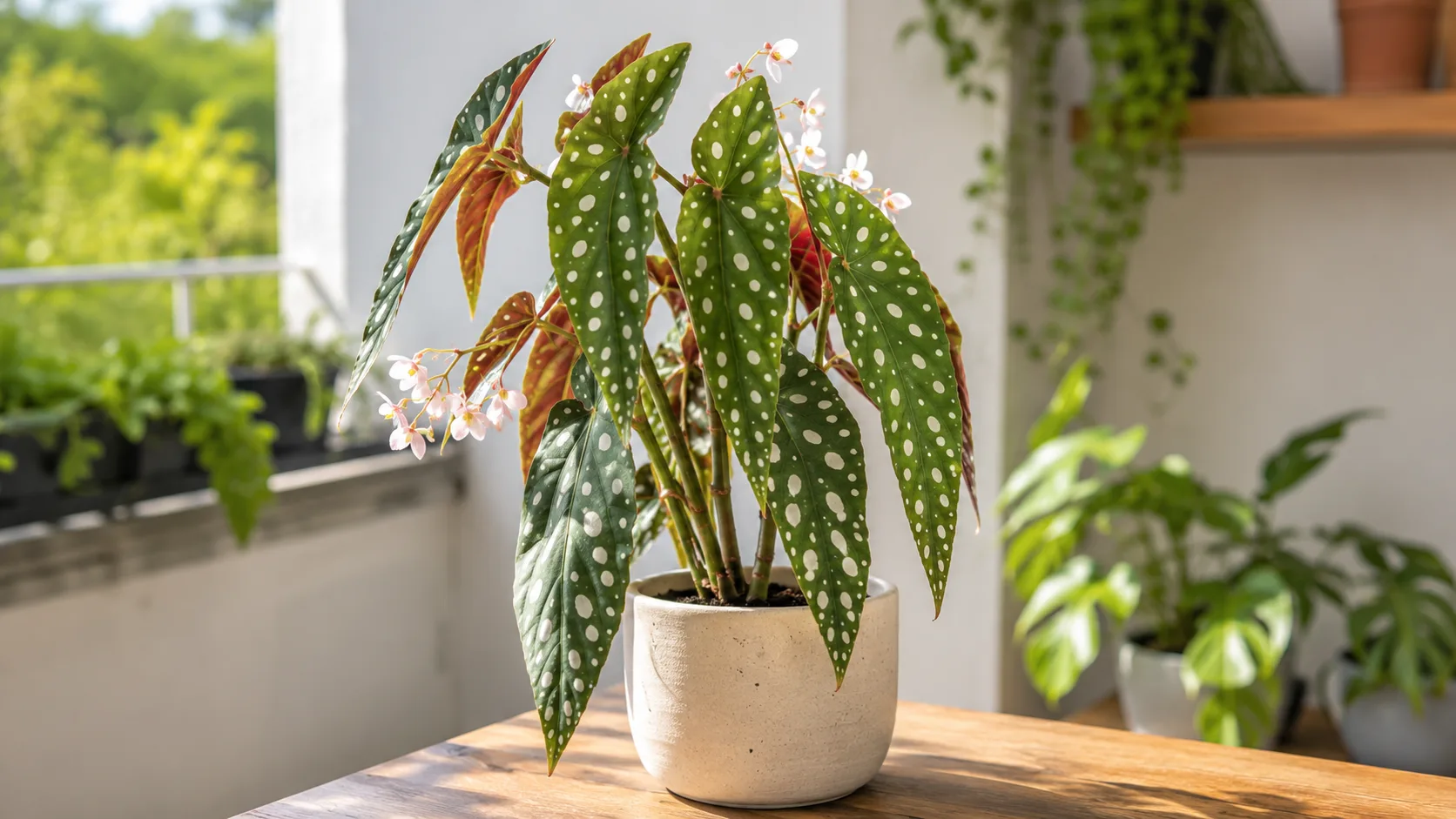
How to Propagate Begonia Maculata: Stem Cuttings and Aftercare
How to Propagate Begonia Maculata: Stem Cuttings and Aftercare
Begonia maculata - the polka dot or spotted begonia - is one of the most shareable houseplants you can grow because it roots readily from stem cuttings when you respect one simple rule: treat it like the cane begonia it is, not like a rex begonia that can restart from a leaf wedge. The bamboo-like stems that carry those silver-spotted, burgundy-backed leaves are built for vegetative reproduction. A short section with a healthy node, clean water or airy soil, and a few weeks of stable warmth will usually produce roots and, soon after, a small plant you can pot on its own.
That does not mean propagation is automatic. The same traits that make Begonia maculata dramatic indoors - fast cane growth, thin stems, sensitivity to wet leaves - also explain most failures. Cuttings rot when leaves sit underwater. Stems stall when light is too dim or the parent was already stressed. Leaf sections, copied from rex-begonia tutorials, sit in damp mix and never produce a plant because cane types lack the cellular machinery to form new shoots from leaf tissue alone. This guide walks through the full workflow: choosing material, rooting in water or soil, knowing when roots are ready, transplanting without shock, and caring for the young plant through its first month.
What Begonia Maculata Propagation Actually Involves
Begonia maculata propagation means creating a genetically identical new plant from a piece of the parent - almost always a stem cutting with at least one intact node, the joint where leaves and branches emerge. The cutting draws on stored energy in the stem while it develops adventitious roots from submerged nodes. Once those roots are active and new leaves appear, you have an independent plant that will grow with the same upright cane habit as the parent.
Home growers propagate polka dot begonias for practical reasons. A tall, leggy specimen can be shortened and replaced with rooted tops. A favorite plant can be backed up before Begonia Maculata repotting guide or a move. A broken stem after a knock does not have to become compost if the upper section still has healthy nodes. Propagation is also the most reliable way to fill out a sparse pot: several rooted cuttings potted together create a fuller silhouette faster than waiting for one cane to branch.
The phrase to remember is new plant, not instant plant. Cane begonias typically root in two to four weeks under warm, bright conditions, though cool rooms or weak light can stretch that timeline. A cutting that looks unchanged for ten days is not necessarily failing. A cutting that turns mushy at the base within a week usually is - and that difference comes down to node health, moisture control, and the condition of the parent plant before you cut.
Why Cane Begonias Root From Stems, Not Leaves
Begonia maculata belongs to the cane begonia group - upright, bamboo-like stems closely related to wax begonias but with very different foliage. Specialist begonia guidance is consistent on propagation: cane and angel wing types root from stem cuttings; leaf sections are unreliable and usually rot. Rex and rhizomatous begonias can restart from leaf wedges because their tissue retains the ability to form adventitious buds along veins or petiole bases. Cane begonias do not share that pathway in any practical home setup.
That distinction catches many beginners because Begonia maculata is often sold beside rex cultivars and labeled vaguely as an “angel wing” look-alike. Online tutorials showing half-leaf rex propagation get applied to polka dot stems, and the leaf sits in damp perlite until it dissolves. If you want a full new plant, use a stem segment 10 to 15 cm (4 to 6 inches) long with two or three leaves at the top and at least one bare node below them for rooting. Leaf-only experiments are fine as a curiosity, but they should not be your primary plan.
Stem cuttings also preserve the plant’s growth habit. A rooted cane cutting grows upward from the node, producing the same spotted asymmetrical leaves and burgundy undersides as the parent. That matters when you are rebuilding a leggy specimen or combining several cuttings in one pot for a bushy display. One healthy stem cutting can become one strong vertical plant; three to five cuttings grouped together can look like a mature clump within a season.
When to Propagate Begonia Maculata
The best time to propagate Begonia maculata is during active growth, when the parent is pushing fresh leaves and the room stays warm. For most indoor growers, that means late spring through summer, sometimes extending into early autumn if light remains strong. Warmth, Begonia Maculata light guide, and steady humidity support cell division at the cut surface and speed root initiation. Cool, dim winter months slow everything down and raise the risk that a wet cutting will rot before it roots.
Timing is about the plant’s condition, not a calendar date alone. Propagate when the parent looks vigorous: firm stems, clean leaf edges, no active pest infestation, and no recent shock from shipping, repotting, or root rot on Begonia Maculata recovery. If the plant has been underwatering on Begonia Maculata to the point of crisp leaves, or overwatered to the point of yellowing and mushy stems, stabilize it for two to three weeks before you take cuttings. Weak tissue propagates weakly.
You can propagate while pruning for shape - in fact, that is often the smartest approach. When a cane gets too tall, the top sections removed above a node become propagation material while the stub on the parent branches from lower nodes. Savvy Gardening recommends annual pruning of spotted begonias, cutting a few inches above nodes to encourage bushier growth; those pruned tops are ideal cuttings if they meet the node and leaf requirements (Savvy Gardening). Avoid taking cuttings during peak flowering if you can choose non-flowering stems instead, because nodes that have already bloomed may not restart growth as reliably as fresh vegetative nodes.
What You Need Before You Take a Cutting
You do not need a greenhouse to propagate Begonia maculata. A short list covers most successful home setups: sharp, clean snips or a knife; rubbing alcohol or dilute bleach for sterilizing blades; a clear glass or jar for water propagation or a small pot with drainage holes and light, sterile rooting mix for soil propagation; room-temperature water (rainwater, distilled, or dechlorinated tap); optional rooting hormone powder; optional clear plastic bag or humidity dome for soil cuttings in dry homes; optional seedling heat mat if your room runs cool; and a bright, indirect location out of direct sun.
Container size matters more than people expect. A 5 to 8 cm (2 to 3 inch) pot is enough for one or two cuttings in soil. Oversized pots hold excess moisture around the stem base and invite rot. For water propagation, a narrow-neck vase or propagation station helps support the thin cane so leaves stay above the water line - a detail Longfield Gardens emphasizes because submerged foliage decays and fouls the water (Longfield Gardens).
Before you cut, inspect the parent in good light. Check leaf undersides for mealybugs, scan for powdery mildew or Botrytis on damaged tissue, and feel the stem - it should be firm, not hollow or squishy. Begonia maculata is toxic to cats and dogs if chewed, containing soluble calcium oxalates; keep cuttings and tools away from pets during the process (ASPCA). Wash hands after handling if you have sensitive skin.
Choosing the Right Stem and Node
The quality of the cutting decides the outcome more than the propagation method does. Select a healthy, actively growing cane - not the oldest woody base, not the softest newest tip that has not hardened slightly. Aim for a section 10 to 15 cm long with two or three leaves remaining at the top after you strip the lower portion. The cutting must include at least one node that will sit in water or soil; two nodes submerged or buried improves odds if the lower one fails.
Avoid stems with yellowing leaves, brown spots, sticky residue (often honeydew from pests), or mealy white cottony patches along the joints. Avoid stems that have been flowering heavily at every node if you can find fresher vegetative growth lower on the cane. Specialist cane-begonia guidance notes that nodes where a bloom has already formed may not send new growth - the meristem at that site has already completed its flowering cycle. On a plant that has bloomed for months, prune back to encourage fresh shoots, wait for new nodes to develop, then propagate from that clean growth.
How to Identify a Viable Node
A node on Begonia maculata looks like a slight swelling or ring on the cane where a leaf petiole attaches or once attached. That bump is where roots emerge in water and where stem tissue contacts moist mix in soil. Run your finger along the stem: nodes feel thicker than the smooth internode between them. Your cut belongs just below a node - roughly 6 mm (¼ inch) below is a practical target recommended for polka dot begonia propagation (Savvy Gardening).
If you cannot see an obvious node, look for the scar left after a leaf dropped or a side branch was removed. As long as the ring is healthy and green inside when you make a test slice (on a sacrificial section), it can root. If the node tissue is brown or mushy when you cut, move up the stem to the next healthy joint or choose a different cane entirely.
Making a Clean Cut Without Damaging the Parent
Use a sharp blade wiped with 70% isopropyl alcohol before each cut. A crushed or torn stem seals poorly and invites bacteria. Cut just below the lowest node you want on the propagation piece - for the parent plant, cut just above a node on the remaining stub so it can branch cleanly. A slight angle on the cutting end increases surface area for water uptake without pooling moisture on a flat cut face.
Remove all leaves from the lower half of the cutting so nothing will sit underwater or buried in mix. Leave two or three leaves at the top for photosynthesis. On large leaves, some growers trim the leaf blade horizontally to reduce water loss; this is optional for Begonia maculata but useful if your home is dry and you are rooting in open air without a humidity cover.
Work quickly once the cut is made. Letting a cane wilt on the counter for an hour on a dry winter day stresses it unnecessarily. If you must pause, stand the cutting in a damp paper towel in shade. Dip the cut end in rooting hormone if you have it - Savvy Gardening lists this as a pro-tip for soil propagation, and it can help though it is not strictly required for cane begonias (Savvy Gardening). Tap off excess powder so it does not clump and hold moisture against the stem.
Propagating Begonia Maculata in Water
Water propagation is the most popular home method for Begonia maculata because you can see roots form and catch rot early. Fill a clean glass with room-temperature rainwater, distilled water, or tap water that has sat out overnight to dissipate chlorine. Submerge one or two nodes while keeping all remaining leaves above the water line. Leaves in water break down within days, cloud the water, and feed bacteria that attack the stem.
Place the jar in bright, indirect light - an east-facing windowsill filtered by a sheer curtain, or a shelf under gentle grow lights. BBC Gardeners’ World emphasizes bright but indirect light with no direct sun for Begonia Maculata overview. Avoid direct sun on the glass; heated water cooks tender tissue. Change the water every five to seven days, or sooner if it turns cloudy or smells off. Top up as it evaporates so nodes stay submerged. Longfield Gardens notes that stem softening at the base means you should trim back to healthy tissue and refresh the water (Longfield Gardens).
Expect the cutting to look imperfect while it roots. One lower leaf may yellow and drop as the plant redirects energy to root formation - that is common as long as the top leaves stay firm and the stem above the water line is not soft. Within two to four weeks at 18 to 24°C (65 to 75°F), white or pale roots should emerge from submerged nodes. Cooler rooms can take longer; a seedling heat mat under the jar (not boiling the plant) can shorten the wait.
Propagating Begonia Maculata in Soil
Soil propagation skips the water-to-soil transition and often produces roots that adapt faster to long-term potting mix. Fill a small pot with moistened, sterile, fast-draining mix - not garden soil. Insert the cutting so the lowest node sits just below the surface, with the stem supported upright. Firm the mix gently around the base so the node makes contact without air pockets, but do not compact it so hard that water cannot penetrate.
Keep the medium evenly moist, never waterlogged. Water when the top centimeter feels dry, using room-temperature water applied to the soil surface or bottom watering from a saucer. A clear plastic bag draped over the pot (not touching leaves) or a propagation dome raises humidity in dry homes; ventilate daily for a few minutes to prevent mold. Bright indirect light and warm temperatures match the water method. Gently tug the stem after two weeks - resistance suggests roots have anchored.
Soil propagation hides root development, which frustrates beginners, but it reduces the fragile-water-root problem at transplant time. If you tend to forget water changes or leave cuttings in jars too long, soil is often the safer long-term choice even if the first two weeks feel less visible. Rooting hormone (indole-3-butyric acid powder or gel) is optional but useful in soil - dip the cut end, tap off excess, and insert into moist mix. A seedling heat mat under the pot raises root-zone temperature a few degrees in cool rooms and can shorten rooting time when paired with perlite-heavy mix.
Perlite Mix vs Standard Begonia Potting Mix
For rooting, lighter is better. A 50/50 blend of perlite and peat-free or peat-based potting mix stays airy while holding moisture. Straight perlite or perlite with a little coco coir is even safer against overwatering on Begonia Maculata rot - specialist begonia propagation guidance often calls perlite the most forgiving medium for stem cuttings because it drains fast and stays sterile when fresh.
Standard begonia or tropical houseplant mix with extra perlite (roughly two parts mix to one part perlite) works well once roots form and you pot up. Savvy Gardening suggests a mature mix of two parts sterile potting mix, one part perlite, one part coco coir for established polka dot begonias (Savvy Gardening). For propagation, lean heavier on perlite than that recipe until the cutting is clearly rooted, then transition to the richer mix at pot-up.
How Long Until Roots Form
Cane begonias including Begonia maculata typically root in two to four weeks under favorable conditions - warm root zone, bright indirect light, clean water or lightly moist airy mix. American Begonia Society notes that cane-type begonias root readily from stem sections with intact nodes. Wax and fibrous begonias can root faster; rex leaf wedges take longer. If your cutting has no roots after four weeks, check light (move slightly brighter, still no direct sun), temperature (below 16°C / 60°F slows rooting sharply), and stem health (trim back to firm tissue if the base softened).
Signs of success before you see roots: the top leaves stay turgid, new tiny leaves or bud bumps may appear at nodes, and in soil a gentle tug meets resistance. Signs of failure: mushy stem base, sour smell, blackened nodes, or complete leaf collapse while the medium stays wet. Restart with a fresh cutting rather than nursing rotting tissue indefinitely - one clean retry beats weeks of watching decay spread upward.
Transplanting Water-Rooted Cuttings Into Soil
Pot up water-rooted cuttings when roots are about 2 to 5 cm (1 to 2 inches) long - long enough to anchor in mix but not so long that they tangle and break during transplant. Specialist guidance for cane cuttings notes that very long water roots become fragile; moving earlier with a short, sturdy root mass often succeeds better than waiting for a dense mat that tears when handled.
Use a small pot with drainage holes and pre-moistened, well-draining mix (perlite-heavy at first). Create a hole with a dibber or finger, lower the roots in without forcing, and backfill gently. Water lightly to settle the mix, then keep humidity slightly elevated for the first week - a loose bag or frequent misting of the air around the plant, not the leaves. Never wet Begonia maculata foliage during routine care; wet leaves invite fungal problems on this species.
The first week after transplant is when transplant shock shows up as wilt or leaf drop. Maintain bright indirect light, stable warmth, and even moisture without sogginess. Do not fertilize until you see new growth - roots need to adjust to soil chemistry first. If a leaf drops but the stem stays firm and new growth points appear within two weeks, the plant is likely recovering.
Aftercare for Newly Rooted Plants
New Begonia maculata plants need steadier, slightly more conservative care than established specimens for their first month. Think of them as recovering from surgery: roots are young, the root zone is small, and the plant has fewer leaves to buffer mistakes. Keep the pot in bright indirect light, maintain moderate humidity around 45 to 60% if possible, and water when the top 2 to 3 cm of mix is dry - roughly the same rhythm as a mature plant but with extra caution because small pots dry quickly yet can also stay wet in cold corners.
Hold off on fertilizer until new leaves unfurl, then use a dilute balanced houseplant fertilizer at half strength once during the first active month. Avoid repotting again immediately unless roots circle the pot within weeks. Avoid moving the plant between rooms every few days; stability helps more than perfection on any single variable. Stake only if a tall cutting wobbles and risks snapping fresh roots - use a soft tie and a thin bamboo stake rather than forcing the cane rigid.
Watch for pests on new growth; stressed young plants attract mealybugs and spider mites in dry homes. Inspect leaf undersides weekly. If you propagated to replace a leggy parent, you can pot two or three rooted cuttings together in one container for a fuller look - space them evenly and use a pot only one size larger than a single cutting would need.
First-Month Care Checklist
During weeks one through four after pot-up, run through this short checklist every few days. Light: bright indirect, no midday sun on leaves. Water: check moisture with a finger; water thoroughly when the top layer dries, empty saucers after bottom watering. Humidity: aim for comfortable room humidity; use a tray of pebbles and water or a small humidifier if leaves crisp at edges. Temperature: keep above 18°C (65°F) and away from AC blasts and cold window glass. Feed: none until active new leaves, then one half-strength dose if growth looks pale. Pests: scan undersides; isolate if you see cottony mealybugs or fine webbing. Patience: one new leaf in the first month is a win; do not repot, prune hard, or relocate repeatedly.
Light, Humidity, and Temperature During Rooting
Rooting and aftercare share the same environmental core Begonia maculata expects in mature form, adapted from its Southeast Brazilian forest origin: bright indirect light, warm stable temperatures, and enough humidity that leaf edges do not crisp while cuttings are leaf-heavy. Indoors, 18 to 27°C (65 to 80°F) is the practical comfort band; rooting slows noticeably below that range. Direct sun on cuttings causes leaf scorch and overheated water in jars.
Humidity helps but does not replace good moisture discipline in the medium. 45 to 60% relative humidity suits most homes; higher humidity speeds rooting in soil when paired with a vented cover. Do not seal cuttings in airtight plastic for days without airflow - Botrytis and powdery mildew thrive in cool, stagnant, wet conditions, both listed as common spotted-begonia issues (Savvy Gardening). A fan in the room at low speed, or daily dome venting, prevents mold without drying the cutting out completely.
Common Propagation Problems
Most failures fall into a short list with clear fixes. Stem rot at the base means too much moisture, poor airflow, leaves submerged, or a weak cutting - trim to healthy tissue, refresh water or replace mix, and improve light and warmth. Cloudy, smelly water means bacterial buildup - change water, scrub the jar, trim any soft stem tissue. No roots after a month often means insufficient light or temperature - brighten indirectly, warm the root zone, or take a fresher cutting from healthier growth.
Yellowing leaves on the cutting can be normal for one older leaf during rooting; all leaves collapsing while the stem stays wet signals rot or extreme dehydration. Black spots spreading on leaves may be bacterial leaf spot - discard affected tissue, improve airflow, stop splashing water on foliage. Mealybugs on fresh cuttings mean the parent was infested - treat or discard; do not introduce pests into your propagation station. Cutting rooted in water but dies in soil usually means transplant shock from over-long roots, dry mix at pot-up, or immediate full sun - pot with moist mix, shade slightly for a week, and keep humidity up.
Pruning the Parent Plant While You Propagate
Propagation pairs naturally with shaping the parent. When a cane exceeds your preferred height or goes leggy with bare lower stems, cut just above a node on the parent and root the removed top. The stub branches from lower nodes, and you gain a backup plant. Savvy Gardening recommends pruning spotted begonias at least once a year, removing a few inches above nodes to encourage bushier growth (Savvy Gardening).
Do not remove more than one third of the parent’s foliage in a single session if it is already stressed. Stagger hard pruning and propagation across two weeks if you are rebuilding a large specimen. Label cuttings with the date if you run several jars at once - cane begonias look similar mid-root, and dates help you judge when to pot up.
When Not to Propagate
Do not treat propagation as a rescue for every sick plant. If the parent has active root rot, severe mealybug infestation, or widespread leaf spot, fix or discard the parent and take cuttings only from clearly clean, unaffected stems - if any exist. If the entire plant is declining, a cutting may carry the same problem forward.
Skip propagation immediately after shipping, repotting, or a cold draft event until the plant shows stable new growth. Avoid propagating in dim, cold winter corners unless you can supply supplemental light and warmth; waiting until spring succeeds more often than forcing winter cuttings in a chilly room. Remember pet toxicity: new cuttings in open jars on low tables put curious cats and dogs at risk (ASPCA).
Conclusion
Propagating Begonia maculata comes down to respecting its identity as a cane begonia: take a 10 to 15 cm stem cutting with healthy nodes, cut just below a joint, strip lower leaves, and root in clean water or airy, moist soil in bright indirect light at warm room temperatures. Roots usually appear in two to four weeks; pot water-grown cuttings when roots reach 1 to 2 inches, then follow a steady first-month routine - controlled moisture, no early fertilizer, moderate humidity, and minimal moves. Leaf cuttings are a detour for this species; stem cuttings are the reliable path. Pair propagation with pruning above nodes on the parent and you reshape the old plant while building new ones, which is exactly why polka dot begonias belong in so many shared plant collections.
When to use this page vs other Begonia Maculata guides
- Begonia Maculata overview - Start here for whole-plant context before deep-diving this topic.
- Begonia Maculata problems hub - Jump to symptom-specific fix guides when this care topic does not resolve the issue.
Related Begonia Maculata guides
- Begonia Maculata overview
- Begonia Maculata watering
- Begonia Maculata light
- Begonia Maculata soil
- Begonia Maculata fertilizer
- Begonia Maculata repotting
- Begonia Maculata problems
Related tool
Try the Propagation Success Calculator with begonia-maculata pre-selected to estimate needs for your setup.