Watering Begonia Maculata: Schedule, Soil Checks & Mistakes
Watering Begonia Maculata: Schedule, Soil Checks & Mistakes
Watering Begonia Maculata: Schedule, Soil Checks & Mistakes
Why Watering Polka Dot Begonia Starts With the Pot, Not the Calendar
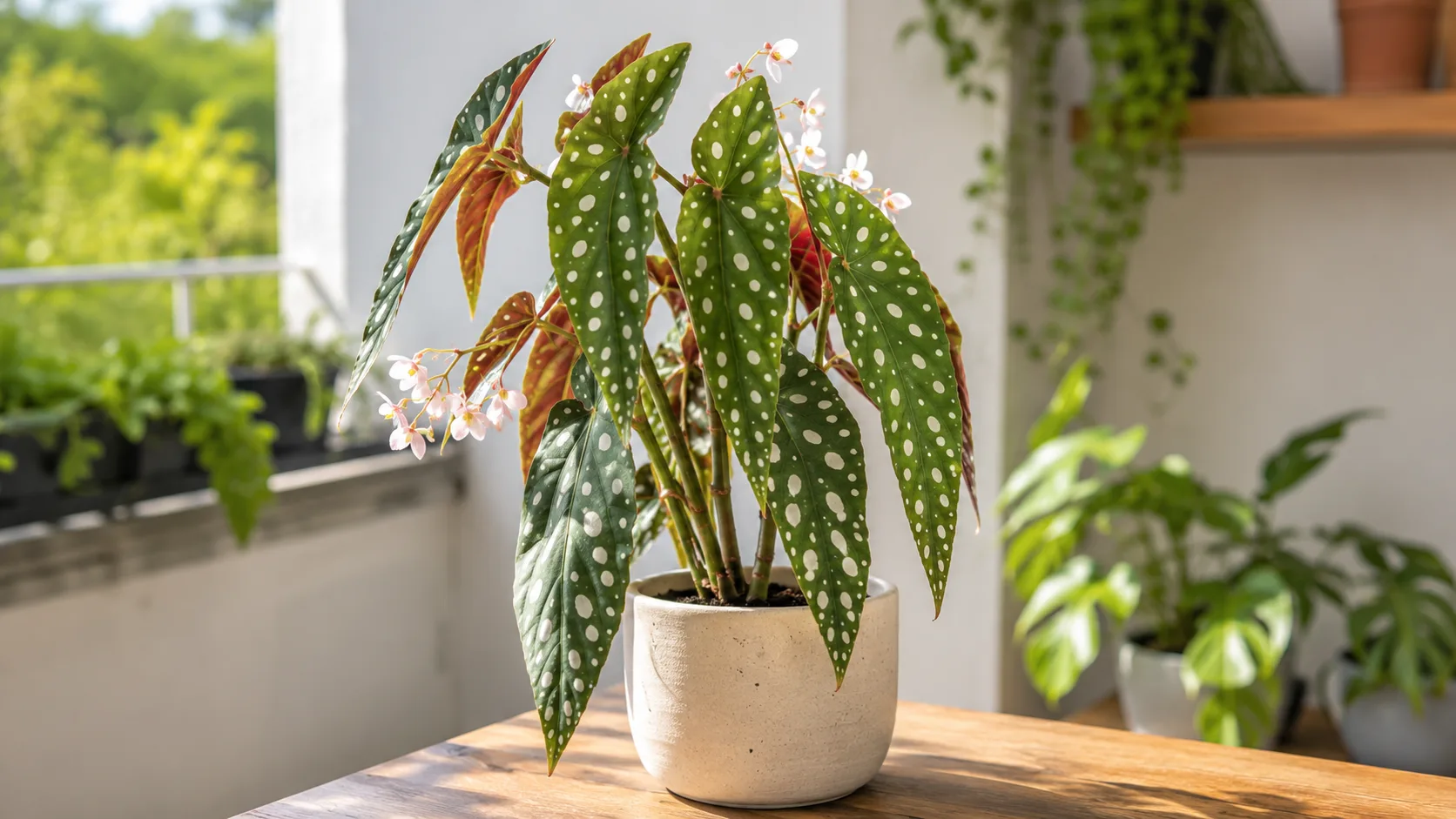
Begonia maculata - the polka dot begonia, spotted begonia, or angel wing begonia - is a cane begonia from the tropical rainforests of Southeast Brazil, where rainwater arrives often but drains instantly through loose leaf litter and airy forest soil. Indoors, that same plant lives in a small pot of peat-based mix, under a ceiling, beside a heater, and sometimes inside a decorative outer container with no drainage. The gap between those two worlds is exactly why watering Begonia maculata trips up so many growers. The plant does not want to sit in a swamp, but it also does not want to dry into a hard block for days on end. What it wants is a rhythm you measure at the root zone, not a day printed on a phone reminder.
A fixed weekly schedule feels responsible. It is also one of the fastest ways to rot fine roots on a cane begonia. Your polka dot begonia may drink every five days in June near a bright east window and every fourteen days in January on the same shelf because light, temperature, humidity, pot material, and root mass all change how fast water leaves the mix. Gardenia.net puts the practical rule plainly: water when the top inch of soil feels dry, avoid letting the plant sit in water, and be careful not to overwater because begonias are prone to root rot on Begonia Maculata. (Gardenia.net) That is not a calendar. It is a check.
The useful mindset is simple. Watering Begonia maculata means giving the root zone a full drink when the upper layer has dried slightly, then letting excess drain away so air can return to the mix before the next cycle. Everything else in this guide - seasonal ranges, symptom lists, recovery steps - hangs on that one idea. If you remember nothing else, remember to lift the pot, touch the soil, and look at the plant before you reach for the watering can.
How Begonia Maculata Uses Water in a Rainforest Pot
In its native understory, Begonia maculata experiences frequent moisture at the root level without ever standing in stagnant water. Organic debris holds humidity around the base while coarse structure lets oxygen move through. Indoors, you recreate a slice of that pattern with a light, well-draining potting mix - often peat or coir with perlite and sometimes bark - in a container with drainage holes. The Spruce describes the preference as soil that stays evenly moist but not soggy, watered when the top inch dries. (The Spruce) RHS cane begonia guidance likewise advises keeping compost moist but well-drained. Evenly moist does not mean constantly wet. It means the root ball feels like a wrung-out sponge: damp throughout, airy, never muddy.
Water does three jobs for Begonia Maculata overview. It hydrates leaf tissue so the spotted foliage stays firm and the red leaf reverses stay saturated rather than dull. It carries dissolved minerals the roots absorb when you fertilize during active growth. It also cools the root zone through evaporation, which is why a bright, warm polka dot begonia in a small plastic pot can dry faster than the same plant in a dim corner - even when you watered both on the same day last week.
Fibrous Roots and the Moisture-Air Balance
Cane begonias carry fibrous roots that are efficient at pulling water from a relatively small soil volume but unforgiving when that volume stays waterlogged. Roots need both moisture and oxygen. When mix stays saturated for days, air spaces collapse, fine roots suffocate, and fungi such as Phytophthora or Rhizoctonia can attack tissue that is already stressed. Patch Plants notes that overwatering on Begonia Maculata causes roots to rot while underwatering on Begonia Maculata makes the plant wilt and die, and recommends watering when the top inch feels dry with water that drains freely from the pot. (Patch Plants) NC State Extension lists good drainage as a cultural requirement for cane begonias.
That moisture-air balance is why drainage holes are non-negotiable for Begonia maculata. A beautiful ceramic pot without holes is a display sleeve, not a growing container. If you use a cachepot, keep the nursery pot inside it, water at the sink, and never let runoff pool at the bottom. The American Begonia Society emphasizes good drainage and avoiding waterlogged conditions for begonias generally - principles that apply directly to this species even when your tag calls it “easy care.”
The Best Soil Moisture Check for Begonia Maculata
The best polka dot begonia watering decision comes from reading the pot, not from guessing based on how many days passed. Three checks work together: surface feel, pot weight, and plant posture. None is perfect alone. Together they beat any fixed schedule.
Start with a routine. Check your Begonia maculata two or three times per week at first. After a month in the same spot, you will know whether it tends to need water every five days, every eight, or every twelve. The calendar becomes a reminder to look, not an order to pour.
Finger Test at the Top 2–3 cm
The finger test is still the most reliable tool because it measures the actual mix. Press gently into the top 2–3 cm (about 1 inch). If it feels cool and clearly damp, wait. If it feels lightly dry on the surface but not dusty and hard, the plant is likely ready for a full drink. If the surface is crusty, shrunken, or pulling away from the pot edge, you have gone too dry and need a careful soak-and-drain cycle rather than a nervous daily splash.
Peat-based mixes can fool beginners. The top may look dark while moisture has dropped, or the surface may dry quickly while the center stays wet. That is why the finger test pairs with pot weight. If the top feels dry but the pot still feels heavy for its size, the lower root zone is probably moist enough. Wait another day and check again. Overwatering on cane begonias often starts with “the surface looked dry” while the center never dried from the last watering.
Avoid jamming your finger deep into a small pot where you might damage roots. The top layer is enough for routine decisions. For a second opinion without disturbance, slide a wooden skewer down the inner edge of the pot, leave it for a minute, and pull it out. Damp skewer means wait. Dry skewer with a light pot means water.
Pot Weight and the Skewer Backup
The pot weight test teaches your hands what “ready” feels like. Lift the pot right after a thorough watering when excess has drained. Notice the heft. Lift it every day or two as the mix dries. When the pot feels noticeably lighter and the top layer reads dry, water. This method is especially valuable for plastic pots where you cannot see the mix color well and for growers juggling multiple houseplants that dry on different timelines.
Moisture meters can help as a backup, but they are not always accurate in loose peat-perlite blends. Treat them as supporting data, not the final authority. Your finger and your wrist scale are free, immediate, and improve with repetition. After two weeks, most people can tell a thirsty Begonia maculata pot from a wet one without thinking.
How Often to Water Begonia Maculata Through the Year
There is no honest answer to “how often” that works in every home year-round. There is a honest answer to “how do I know when”: when the top 2–3 cm is dry and the pot is lighter, water thoroughly; otherwise wait. In practice, many indoor polka dot begonias land near every 5 to 7 days during active growth and every 10 to 14 days in winter, but those ranges are starting guesses, not rules. Light, pot size, mix composition, humidity, and whether the plant is rootbound all shift the real interval.
Spring and Summer: Active Growth
From mid-spring through summer, Begonia maculata often grows quickly when light and warmth are adequate. New cane segments and leaves increase transpiration - the plant loses more water through foliage - and warm rooms speed evaporation from the mix. During this phase, check more often, not necessarily water more blindly. A plant in Begonia Maculata light guide near an east or west window may need water every five days. The same cultivar across the room in medium light may need water every eight to ten days because it is growing more slowly and using less.
Summer mistakes usually come from two directions. Vacation neglect causes crispy edges and droop. Overcompensation after neglect causes a heavy soak followed by another soak before the mix dried, which invites rot. If you return from travel to dry soil, rehydrate once at the sink until water runs from drainage holes, let the pot drain completely, then resume normal checks. Do not punish the plant with daily thimbles of water that never reach the root ball.
Fall and Winter: Slow Down as Light Drops
As days shorten and indoor heating dries air, growth slows. Roots absorb water more slowly, and pots stay wet longer in dim corners. Begonia maculata winter watering should mean fewer full drinks, not abandonment. Many plants need water only every ten to fourteen days in winter, sometimes longer if the room is cool and the plant sits far from windows. BBC Gardeners’ World and RHS cane begonia guidance agree on reducing frequency when growth pauses, but still using the dry-down check rather than a timed pour. (The Spruce)
Winter overwatering is the silent killer on cane begonias. The plant looks quiet, so you water out of habit. The mix stays cold and wet. Lower leaves yellow. You see limp stems and add more water because you assume thirst. In reality, rotting roots cannot move water, so the plant wilts while soil is wet - one of the most confusing signals in houseplant care. When wilt pairs with wet mix and a heavy pot, stop watering and read the overwatering section below before you reach for the can again.
The Right Way to Water Begonia Maculata
When checks say the plant is ready, water thoroughly once instead of giving small sips every day. Partial top-ups keep the upper layer moist while the center cycles between too wet and too dry. Cane begonias prefer a full wetting followed by a real dry-down in the upper layer.
Top Watering and Draining the Saucer
Top watering is the default method for most growers. Use a narrow spout or small watering can and wet the mix evenly until water runs freely from the drainage holes. That run-through confirms the entire root zone received moisture and helps flush minor salt buildup if you fertilize during the growing season. After watering, let the pot sit in the sink or tub for five to ten minutes so excess drains. Then empty the saucer or lift the nursery pot out of any decorative cachepot so no standing water touches the bottom.
Keep water off the spotted leaves when you can. Begonia maculata foliage is sensitive to prolonged wetness, especially in cool or still air. Wet leaves invite leaf spotting and mildew issues. The Spruce specifically recommends avoiding water on leaves for this reason. (The Spruce) If you splash accidentally, blot droplets or improve airflow until foliage dries. Do not mist as a substitute for soil watering; misting is a humidity tool with its own limits, not a root hydration strategy.
Bottom watering is useful when you want zero splash on leaves or when fungus gnats are a concern because the surface stays drier between cycles. Place the nursery pot in a shallow tray of room-temperature water for twenty to thirty minutes, let the mix wick moisture upward, then remove the pot and let it drain fully at the sink. Bottom watering works well for polka dot begonias if you still occasionally top water to flush salts. Bottom-only routines in peat mixes can sometimes leave minerals accumulating at the surface over months.
What Water Type and Temperature Work Best
The best water for Begonia maculata is room-temperature water that will not shock roots or spotted leaves. Aim for roughly 18–24 °C (65–75 °F). Cold tap water straight from the pipe can stress fibrous roots and contribute to edge browning on sensitive cane begonias, especially in winter when the plant is already metabolically slower.
Tap water is fine in many homes. If your water is heavily chlorinated, very hard, or softened with sodium-based systems, consider rainwater, distilled water, or filtered water for a few months and compare new leaf quality. The Spruce notes that polka dot begonias can be sensitive to chemicals in tap water and suggests distilled or rainwater as a safer option when quality is poor. (The Spruce) That is a conditional recommendation, not a mandate for every grower. If your plant looks healthy on tap water after you let it warm to room temperature, there is no need to complicate the routine.
Letting tap water stand overnight can dissipate some chlorine, though chloramine-treated municipal water will not fully degas from standing alone. If you use tap water, fill the can after watering and let it sit for the next session. Consistent temperature matters more than chasing perfect purity for most indoor growers.
Matching Water to Light, Humidity, and Pot Size
Watering Begonia maculata never happens in isolation. Light sets the pace of water use. Bright indirect light drives steady transpiration and keeps the plant using the moisture you supply. Low light slows growth and keeps pots wet longer, which raises rot risk even if you water less volume each time. If your polka dot begonia stretches toward a window, pale new leaves, or stays wet more than a week after watering, light - not water frequency alone - needs attention.
Humidity changes how leaves lose water but does not remove the need to check soil. Begonia maculata prefers 45–60% relative humidity or higher; many homes run drier in winter. Higher humidity can slightly reduce leaf water loss, but soggy mix still rots roots in a humid bathroom. A humidifier near the plant is a better stability tool than misting leaves that should stay dry. Patch Plants suggests misting weekly for humidity, but experienced cane begonia growers often prioritize airflow and consistent soil moisture over wet foliage. (Patch Plants)
Pot size and material change drying speed dramatically. A terracotta pot breathes and wicks moisture, so you may water slightly more often than in glazed ceramic or plastic. An oversized pot after Begonia Maculata repotting guide holds a large volume of wet mix around a small root ball; the center can stay soggy for days even when the surface looks fine. Right-size pots - only slightly larger than the root mass - make watering mistakes less dangerous. Fresh repotting into airy mix also slows the first few waterings because new mix without roots exploring it retains moisture differently until the plant settles.
Signs You Are Overwatering Begonia Maculata
Overwatering is the most common fatal mistake on polka dot begonias because the early signs look like thirst to untrained eyes. Learn the pattern and you save plants.
Yellowing leaves - especially lower leaves - that feel soft or mushy rather than crispy often point to excess moisture at the roots. A musty or sour smell from the mix is a serious warning. Leaf drop on stems that still look green can follow prolonged wet soil. The counterintuitive classic is wilting on wet soil: roots are damaged and cannot transport water, so leaves droop even though you watered recently. If you see that combination, do not water again until you understand what is happening below the surface.
Stems softening at the soil line, stalled new growth despite good light, and soil that stays dark and wet for more than seven days indoors also fit the overwatering picture. Gardenia.net lists root rot as typically caused by overwatering and poor drainage, and notes it can be fatal if not addressed quickly. (Gardenia.net) Prevention is easier than rescue, but rescue is sometimes possible if you act before the whole root system turns to sludge.
Root Rot and Stem Collapse
Root rot on Begonia maculata develops when roots sit in low-oxygen, wet mix long enough for fungi to colonize stressed tissue. Suspect rot when yellowing leaves, wilting on wet soil, and sour odor appear together. To inspect, slide the plant out of the pot. Healthy roots are pale and firm. Rotting roots are brown, black, slimy, or mushy and may smell foul.
If only a portion is affected, trim dead roots with clean scissors, rinse away old mix, and repot into fresh well-draining media with extra perlite. Water lightly once, then let the upper layer dry normally before the next drink. Keep the plant in bright indirect light without direct sun stress while it recovers. If most of the root mass is gone and stems collapse at the base, propagation from healthy cane segments above the rot line is often the realistic path. Prevention remains the same: drainage holes, no saucer water, dry-down between drinks, and pots matched to root size.
Signs You Are Underwatering Polka Dot Begonia
Underwatering is usually easier to correct than rot if you catch it before fine roots die back completely. Leaves develop dry, brown, crispy edges or tips, especially on older foliage first. Leaves may droop while feeling thin rather than mushy. Soil pulls away from the pot sides and may become difficult to rewet if it was dry too long.
A single dry episode after a missed check rarely kills a healthy Begonia maculata. Repeated drought cycles stress fine roots and make the plant react badly when water finally returns - new leaves may stay small, and edges may brown even after you correct the schedule. Rehydrate with one thorough soak at the sink, confirm drainage, and resume checking the top 2–3 cm instead of switching to daily micro-sips that never penetrate the root ball.
Do not confuse underwatering with low humidity. Both can brown edges, but underwatering pairs with light, dry pots and dusty soil. Low humidity with adequate soil moisture often shows edge crisping on newest leaves while older leaves remain firm and the pot still feels moderately heavy. Fixing humidity helps, but it does not replace soil checks.
Watering After Repotting, Propagation, or a Move
Freshly repotted Begonia maculata needs a adjusted rhythm for the first few weeks. New mix often holds moisture differently until roots explore it. Water once thoroughly after repotting if the mix was dry going in, then wait for the normal dry-down signal before the next full drink. Do not assume the old five-day interval still applies in a larger pot with more wet volume.
Propagated cuttings in water or moist soil have smaller or immature root systems. Keep medium evenly lightly moist for cuttings, not flooded. Rooted cuttings moved to soil should be watered like a small established plant: thorough drink, drain, then wait for the top layer to dry slightly. The American Begonia Society cautions that young begonias are sensitive to harsh conditions; gentle consistency beats enthusiasm. (American Begonia Society)
After moving homes or changing windows, wait before rewriting the schedule. Relocation shock can cause temporary leaf drop even when watering is correct. Keep soil moisture steady in the moderate range, avoid both drought and soggy recovery soaks, and let the plant acclimate for two to three weeks before judging your interval.
Common Begonia Maculata Watering Mistakes
These errors appear repeatedly on otherwise healthy polka dot begonias:
Watering on a calendar without checking soil. The most common mistake. Your plant does not know what day it is.
Leaving runoff in the saucer or cachepot. Standing water re-saturates the bottom root zone within hours.
Daily small sips instead of full soak-and-drain cycles. Keeps upper soil damp while the center goes unevenly dry or wet.
Using a decorative pot with no drainage as the primary container. Guarantees slow death unless you are extremely skilled at gauging volume - most growers are not.
Watering because leaves drooped without checking mix moisture. Drooping on wet soil means stop; drooping on dry light soil means drink.
Wetting foliage every time you water. Invites spotting and mildew on Begonia maculata leaves.
Misting instead of watering soil. Humidity help is not root hydration.
Ignoring winter slowdown. Same volume in December as July in a dim room is a rot setup.
Repotting into a much larger pot and watering on the old schedule. Extra wet mix stays soggy around a small root ball.
Using cold water straight from the tap in winter. Shocks roots and can worsen edge burn on sensitive cane begonias.
Assuming a humidity tray replaces watering. Trays help local humidity slightly; they do not water roots.
One more subtle mistake: chasing crispy tips with more water when the soil is already wet. Tips brown from salt, low humidity, drafts, or light stress too. Read the pot before you respond to leaf edges alone.
Conclusion: A Simple Watering Rule for Begonia Maculata
If this guide collapses to one line, it is this: check the top 2–3 cm and pot weight, then water thoroughly until drainage runs, empty the saucer, and wait until the upper layer dries again. There is no universal weekly number that works in every season, window, and pot. There is a reliable process. Begonia maculata rewards growers who treat watering as a response to the root zone, not a habit on the calendar.
In spring and summer, expect to check often and water more frequently when light is strong. In fall and winter, slow down as growth pauses, but do not forget the plant entirely in a dry heated room. Use room-temperature water, keep leaves dry when practical, and match pot size and mix drainage to fibrous cane roots that need both moisture and air. When yellow mushy leaves, sour soil, or wilting on wet mix appear, stop watering and inspect roots before the problem becomes fatal. When crispy edges and light pots appear, soak once and fix the check routine.
The polka dot begonia is not asking for perfection. It is asking for consistency you can observe. Learn how your pot feels the day after a good drink, learn how the top layer feels when it is truly ready, and the plant will show you the schedule - not the other way around.
When to use this page vs other Begonia Maculata guides
- Begonia Maculata overview - Start here for whole-plant context before deep-diving this topic.
- Begonia Maculata problems hub - Jump to symptom-specific fix guides when this care topic does not resolve the issue.
- Overwatering on Begonia Maculata - Escalate here when watering adjustments are not enough.
- Underwatering on Begonia Maculata - Escalate here when watering adjustments are not enough.
- Root Rot on Begonia Maculata - Escalate here when watering adjustments are not enough.
Related Begonia Maculata guides
- Begonia Maculata overview
- Begonia Maculata light
- Begonia Maculata soil
- Begonia Maculata propagation
- Begonia Maculata fertilizer
- Begonia Maculata repotting
- Overwatering on Begonia Maculata
- Underwatering on Begonia Maculata
- Root Rot on Begonia Maculata
- Wilting on Begonia Maculata
- Drooping Leaves on Begonia Maculata
- Mold on Soil on Begonia Maculata
Related tool
Try the Plant Watering Calculator with begonia-maculata pre-selected to estimate needs for your setup.