Begonia Maculata Fertilizer: When, How Much, and Mistakes
Begonia Maculata Fertilizer: When, How Much, and Mistakes
Begonia Maculata Fertilizer: When, How Much, and Mistakes
Why Polka Dot Begonia Responds to Light, Consistent Feeding
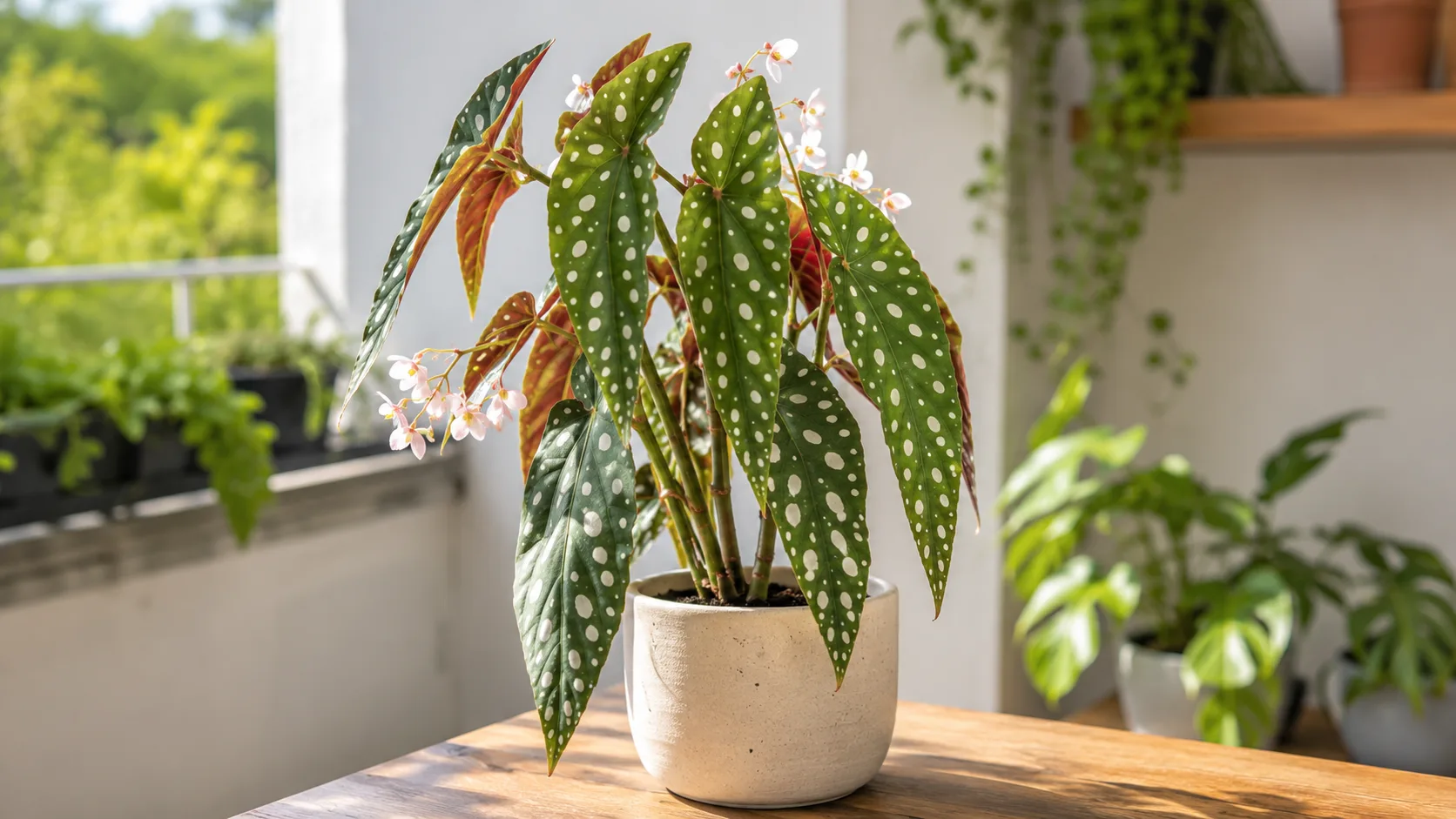
Begonia maculata - the polka dot begonia, spotted begonia, or angel wing begonia - is a cane begonia from the tropical rainforests of Brazil. Indoors it often reaches 60–150 cm on upright, bamboo-like stems, and during the warm months it can grow quickly when light, water, and drainage are aligned. That growth habit matters for fertilizer because cane begonias pull nutrients steadily from a relatively small root zone in a pot, not from deep forest soil that constantly renews itself.
In nature, leaf litter and rainwater deliver small, repeated doses of nitrogen, phosphorus, and potassium. Indoor potting mix does not replenish itself. Every watering leaches a little nutrition; every new leaf and flower cluster draws more. Begonia maculata fertilizer is not about forcing size. It is about replacing what the plant uses while it is actively growing - without building up salts that burn the fine roots cane begonias depend on.
The American Begonia Society is explicit on this point: begonias should be fertilized only when they are actively growing, synthetic feeds should be applied to moist soil, and a typical dilution is one-half to one-quarter of the label rate because delicate begonia roots burn easily when concentrations are too high. (American Begonia Society) That single paragraph explains most of what goes wrong on Begonia Maculata overview. Growers treat fertilizer like a growth switch. Begonia maculata treats it like a supplement that only works when the rest of the care is already in range.
Two decisions drive everything else: which NPK ratio you choose and how much you actually apply. Get those right, and timing, flushing, and seasonal pauses become straightforward.
Reading the NPK Label for Cane Begonias
Every fertilizer bottle shows three numbers - N-P-K - for nitrogen, phosphorus, and potassium. Those macronutrients run almost every process the plant cares about, and reading them correctly is the difference between crisp spotted leaves with red undersides and a leggy cane that never flowers.
Nitrogen and the Spotted Foliage
Nitrogen drives leaf production and chlorophyll. Begonia maculata is grown primarily for foliage: olive-green blades with silver spots and burnt-orange reverses. During spring and summer, nitrogen is usually the nutrient the plant uses most as it pushes new cane segments and leaves. A nitrogen-short plant grows slowly, new leaves arrive smaller than older ones, and the green base color can look washed out rather than deep.
That does not mean more nitrogen is always better. Excess nitrogen on a cane begonia often produces soft, fast stem extension without the firm structure or flower energy you actually want. The Spruce notes that over-fertilizing can prevent flower formation and instead encourages vigorous leaf and stem growth only - a common frustration on polka dot begonias that look lush but never bloom. (The Spruce)
Phosphorus, Potassium, and Bloom Support
Phosphorus supports root function and flowering processes; potassium supports water regulation, stress tolerance, and overall vigor. Neither should disappear from the bottle, but neither needs to dominate year-round unless you are deliberately trying to support blooms on a plant that already has enough light.
Longfield Gardens, in its cane begonia guidance, recommends a balanced water-soluble formula through the growing season and notes that growers seeking more flower clusters can switch to a bloom-leaning fertilizer with a higher middle number (phosphorus) once the plant is mature. (Longfield Gardens) That is a useful distinction: phosphorus helps after the plant has the light to bloom, not instead of light. Begonia maculata needs bright, indirect light and partial shade to flower well indoors. Fertilizer cannot substitute for that.
Best Fertilizer Types for Begonia Maculata
Most indoor growers succeed with one of two approaches: a balanced liquid feed at reduced strength for routine care, or a slightly bloom-leaning feed for part of the season on a mature, well-lit plant. Organic options work too, but they trade precision for gentleness.
Balanced 10-10-10 or 20-20-20 at Half Strength
A balanced fertilizer - equal nitrogen, phosphorus, and potassium - is the default recommendation across credible cane begonia sources. The Spruce suggests a basic 10-10-10 liquid formula in spring, applied about every two to three weeks when trying to support blooms. (The Spruce) Longfield Gardens and multiple angel wing care guides recommend 10-10-10 or 20-20-20, diluted and applied on a two-to-four-week rhythm through the active season. (Longfield Gardens)
The difference between 10-10-10 and 20-20-20 is concentration, not philosophy. A 20-20-20 product delivers more total nutrition per measuring spoon, which makes accurate dilution more important, not less. For Begonia maculata, half strength is the working default; quarter strength is safer if you feed more frequently or use a “weakly, regularly” approach at every other watering.
Always choose a complete water-soluble houseplant fertilizer with micronutrients when possible. Cane begonias in peat-based mixes depend on what you add; the mix itself contributes little long-term nutrition.
Bloom-Leaning Formulas When Flower Clusters Matter
If your plant already sits in Begonia Maculata light guide, produces firm new leaves, and still skips the white or pink flower clusters Begonia maculata is capable of in spring and summer, a phosphorus-leaning formula - for example a ratio with a higher middle number - is reasonable for a limited window in early spring. Think of it as supporting bloom chemistry, not triggering blooms by magic.
Do not reach for bloom booster first if the plant is in dim light, recently repotted, or showing salt stress. Bloom formulas on a struggling cane begonia often make the stem problem worse: more soft growth, still no flowers. Fix light and root health, return to balanced half-strength feeding, then test bloom-leaning feed on one plant before changing the whole collection.
How Often to Fertilize Begonia Maculata Through the Year
Schedule matters as much as product. Polka dot begonia appetite tracks light, temperature, and visible growth - not a calendar stuck to the refrigerator.
Spring and Summer: Every 2 to 4 Weeks
From early spring through late summer, when new cane segments and leaves appear regularly, feed every 2 to 4 weeks with half-strength balanced liquid fertilizer on already-moist soil. RHS cane begonia guidance recommends feeding established plants from May to September with a high-potassium plant food at label dose and frequency. The Spruce’s two-to-three-week bloom-support interval sits at the more frequent end; Longfield Gardens’ two-to-four-week cane begonia range sits in the middle. Both are correct because pot size, light, and heat change how fast the plant uses nutrients.
A practical default for most homes: half-strength balanced feed every three weeks from March through August, adjusted by what you see. A plant under grow lights in a warm room may need the two-week end. A plant in a cooler north window may still be fine at four weeks. When uncertain, wait an extra week. Cane begonias tolerate being slightly under-fed far better than being burned.
The American Begonia Society also notes that some growers use diluted synthetic fertilizer every other watering rather than on a fixed monthly date. That mimics nature’s small repeated doses, but it demands discipline. It is easy to drift into feeding at every watering, which is one of the fastest routes to salt crust and brown leaf tips.
Fall and Winter: Pause or Feed Very Lightly
As days shorten and indoor growth slows, reduce feeding sharply. The American Begonia Society describes a dormancy period that often begins around October, with growth restarting in spring, and recommends withholding fertilizer while the plant rests. (American Begonia Society) It also states that begonias do not grow or use fertilizer under about 60°F (15°C) - a detail many generic houseplant guides omit.
For most indoor Begonia maculata plants, the right winter move is no fertilizer at all from late fall until you see clear new spring growth. Longfield Gardens and The Spruce both align with that pause. (Longfield Gardens)
There is a narrow exception. Some plants under strong grow lights or in very bright, warm rooms continue pushing leaves through winter. In that case, one very light half-strength feed mid-winter may be fine - but only if new growth is obvious. If the plant is static, hold off. Unused fertilizer in a cool, slow pot becomes salt by spring.
How Much Fertilizer Is Enough (And When Less Wins)
“How much” is the question most articles skip. They list an NPK ratio and a frequency, then stop. For Begonia maculata, amount is the variable that separates healthy spotted leaves from fertilizer burn.
Half strength means mixing the fertilizer at 50% of the label’s recommended dose - typically one measure of concentrate in twice the water the label specifies, or half the scoops the label lists per gallon. Quarter strength means 25% of the label dose. The American Begonia Society’s begonia-specific guidance centers on that one-half to one-quarter band because synthetic salts can reach toxic levels quickly in small pots. (American Begonia Society)
Here is a practical amount framework for a mature indoor plant in a 6-inch pot during active growth:
| Situation | Strength | Frequency | Notes |
|---|---|---|---|
| Standard indoor care | Half strength balanced 10-10-10 or 20-20-20 | Every 3 weeks | Best default for most growers |
| Bright room, fast growth | Half strength balanced | Every 2 weeks | Watch leaf tips for early burn |
| Cooler room, slower growth | Half strength balanced | Every 4 weeks | Prefer waiting over doubling dose |
| Constant weak feed method | Quarter strength | Every other watering | Requires strict plain-water flushes |
| Winter / no visible growth | None | Pause | Resume at half strength in spring |
| Recovery after salt stress | None, then flush | 4–6 week pause | Restart at quarter to half strength |
Less wins when any of these are true: white crust on the soil surface, brown tips on newest leaves, the plant was recently repotted into fresh mix, you just propagated cuttings, or the pot stayed too wet last week. Doubling fertilizer after a slow month is the wrong correction more often than not. Check light and moisture first.
Step-by-Step: How to Fertilize Without Burning Roots
The most damaging mistake with angel wing begonia fertilizer is applying concentrate to dry soil. Synthetic salts increase osmotic stress; dry root hairs lose water to the salty zone instead of absorbing the feed. The plant looks wilted even though you just “fed” it.
Use this sequence every time:
- Check the calendar and the plant. Feed only during active growth. Skip if leaves are dropping from stress, the plant was repotted within the last month, or you see salt crust.
- Water with plain water first if the mix is dry. The soil should be evenly moist, not sopping and not dusty. Many growers water lightly the day before feeding; others feed immediately after a normal watering once excess has drained.
- Mix fertilizer separately. Measure concentrate and water in a jug - never guess in the pot. Half strength is the default.
- Pour slowly over the soil surface, not over the spotted leaves. Wet foliage invites fungal spotting on begonias and wastes feed.
- Let the pot drain fully. Empty the saucer. Do not let the plant sit in fertilizer runoff.
- Mark the date on a tag or calendar. Three weeks passes quickly in summer.
- Flush with plain water at least once every four to six weeks during the feeding season, or any time you suspect salt buildup. The American Begonia Society recommends following synthetic applications with plain water for several waterings to help flush excess salts. (American Begonia Society)
Room-temperature water matters. Cold solution shocks tropical roots and reduces uptake exactly when you want the plant to use the feed.
Never foliar-feed Begonia maculata as a routine. Cane begonias take nutrition through the root zone. Leaf feeding adds moisture and spotting risk without solving a root-zone deficiency.
Liquid, Slow-Release, and Organic Feeding Options
Liquid water-soluble fertilizer gives the finest control, which is why it is the best default for Begonia maculata in a pot. You can pause instantly in winter, cut strength after Begonia Maculata repotting guide, and flush salts without guessing how many prills remain in the mix.
Slow-release granules can work, and The Spruce mentions slow-release liquid options for bloom support, but granular products release on a temperature-and-moisture curve that is hard to predict in a small indoor pot. (The Spruce) If you use them, follow package rates conservatively, avoid topping up with liquid feed unless you know what is already in the soil, and flush more often. Many experienced cane begonia growers skip slow-release in containers under 8 inches because one hot week can dump too much salt at once.
Organic options trade speed for safety:
- Worm castings top-dressed lightly in spring provide gentle nitrogen with low burn risk. They suit growers who want a baseline without measuring concentrate weekly.
- Fish emulsion greens foliage quickly but smells strongly indoors; dilute more than the label suggests if you use it at all.
- Liquid kelp at half strength every four to six weeks supports stress tolerance and trace minerals; it is mild enough to alternate with diluted synthetic feed.
Organic feeds still accumulate over time. “Natural” does not mean “unlimited.” Pause in winter and flush on the same schedule you would with synthetic products.
Matching Fertilizer to Light, Water, and Soil
Fertilizer only amplifies what light, water, and soil already allow. Begonia maculata in bright indirect light and a light, well-draining mix with perlite uses feed efficiently. The same plant in a dim corner with soggy soil will store salts faster than it stores energy.
Light sets demand. More photons mean more photosynthesis, which means more nitrogen and potassium used for new tissue. A plant moved closer to a window in spring may need feeding on the two-week side of the range. A plant pushed into lower light for summer travel may need feeding paused entirely until it stabilizes.
Water sets delivery. Fertilizer moves with the water column. overwatering on Begonia Maculata does not “spread food around kindly”; it keeps roots in low-oxygen conditions where they cannot uptake nutrients and may rot. underwatering on Begonia Maculata followed by strong fertilizer burns dry roots. Align feeding with the same moisture checks you use for Begonia maculata watering: top few centimeters dry, pot lighter, then water or feed - never feed a drought-stressed plant.
Soil sets retention. Peat-perlite mixes hold nutrients differently than chunky aroid blends. Fresh repotting mix often includes a starter charge; skip supplemental feed for the first four to six weeks after repotting unless the plant shows clear deficiency on new growth. Old, compacted mix may hold salts even when you feed lightly; flushing or repotting beats increasing fertilizer.
Bloom timing adds one more link. Begonia maculata normally flowers in spring and summer, with some plants producing a secondary flush in late winter under strong light, according to The Spruce. (The Spruce) If you want flowers, secure light first, keep feeding moderate, then consider a short bloom-leaning window. If you want compact foliage, stay balanced and avoid pushing nitrogen too hard.
Signs Your Feeding Routine Is Working
A well-fed polka dot begonia tells you across the whole plant, not in one dramatic jump. New cane segments emerge at a steady pace. Leaves match or slightly exceed the size of the previous pair. Spot patterns stay crisp; the red leaf reverse stays saturated rather than dull. Stems are firm enough to support the canopy without staking in normal indoor light.
Soil surface looks like soil, not like chalk. The pot does not smell sour. After feeding, the plant does not wilt the next day. If you are aiming for blooms, bud clusters appear on mature canes after light is adequate - fertilizer supports that process but should not be credited alone.
Check newest growth monthly instead of chasing a calendar. If the last two leaf pairs are full-sized and evenly colored, the current amount and frequency are working. If growth is pale and slow after months in the same pot and light, investigate water and light before increasing fertilizer. Nutrition deficiency and salt stress can both pale leaves; context separates them.
Signs of Over-Fertilization and Salt Buildup
Over-fertilization is the most common nutrition mistake on cane begonias, and it follows a recognizable pattern. Brown or crispy leaf tips and edges, especially on the newest leaves, are often the first sign. A white or yellowish crust on the soil surface or pot rim is the most obvious. Distorted, brittle, or unusually small new leaves, sudden leaf drop on otherwise firm stems, and wilting despite moist soil appear later - the last symptom happens because excess salts pull water away from roots through osmotic stress. (PlantSolve)
On Begonia maculata specifically, heavy feeding also shows up as all leaves, no flowers even in bright light, because The Spruce warns that too much fertilizer pushes vegetative growth at the expense of bloom formation. (The Spruce) Longfield Gardens makes the same point for cane begonias generally: too much feed can burn roots or misshape leaves, and salt crust means it is time to flush and reduce frequency. (Longfield Gardens)
Under-fertilization exists but is less common indoors. Slow growth, pale new leaves, and older leaves holding color while new ones stay small can indicate mild hunger - after you rule out low light, underwatering, and root rot on Begonia Maculata. Do not amp up fertilizer on a plant with wet, sour soil or collapsing stems.
Flushing the Pot: A Recovery Protocol
When salt stress appears, stop feeding immediately and flush:
- Move the pot to a sink, tub, or outdoor hose area.
- Run plain room-temperature water slowly through the soil for several minutes until it drains freely. Aim for roughly three to four pot volumes of water total, poured in passes rather than one flood.
- Let the pot drain completely between passes. Do not leave it sitting in runoff.
- Repeat once more within 48 hours if crust remains or runoff still looks cloudy.
- Withhold all fertilizer for 4 to 6 weeks. Water normally. Damaged leaf edges will not revert green, but new leaves should emerge clean.
- Resume at quarter to half strength, on the longer end of the 2-to-4-week range, and flush monthly through the rest of the growing season.
If the mix smells sour, stays wet for days, or roots look dark and mushy when you inspect, repot into fresh well-draining mix instead of flushing alone. Do not add fertilizer to the new mix at repot time. Wait until the plant shows active growth again.
The American Begonia Society also warns never to fertilize seeds, tiny seedlings, or new cuttings - a rule many generic houseplant pages forget. (American Begonia Society) Freshly rooted Begonia maculata cuttings need plain moisture and light, not concentrate.
Common Begonia Maculata Fertilizer Mistakes
These errors appear repeatedly in homes with otherwise healthy polka dot begonias:
Feeding dry soil. Concentrated salts on dry roots cause rapid burn. Water first, then feed.
Using full label strength. Synthetic houseplant fertilizers assume outdoor beds and large root volumes. Half strength is the baseline; quarter strength is safer for frequent feeding.
Feeding on a calendar while the plant is dormant. Winter fertilizer sits unused and becomes salt by spring. Pause when growth pauses.
Doubling up after a missed month. Two doses do not equal recovery. One normal half-strength feed on schedule is enough.
Chasing blooms with fertilizer in low light. Bloom booster without six hours of bright indirect light produces soft stems, not flowers.
Slow-release pellets plus liquid feed in the same small pot without tracking total input. Salt loads stack silently.
Feeding immediately after repotting into fresh mix with starter charge. Wait four to six weeks unless deficiency is obvious on new growth only.
Ignoring the 60°F rule. Cool rooms slow metabolism; fertilizer applied in a chilly drafty window builds up because the plant cannot use it. (American Begonia Society)
Treating brown tips as humidity problems only. On a fed plant in summer, tips often mean salt. Flush before buying a humidifier.
One more practical mistake: splashing fertilizer on spotted leaves. It can leave marks and invites fungal issues. Pour at the soil line in a ring just inside the pot rim.
Conclusion: A Simple Fertilizer Rule for Begonia Maculata
If this guide collapses to one line, it is this: half-strength balanced fertilizer every 2 to 4 weeks on moist soil during active spring-and-summer growth, then stop. Choose 10-10-10 or 20-20-20 diluted to half the label rate, water the plant before you feed if the mix is dry, and flush with plain water every month or two while you are feeding synthetics. Pause entirely in fall and winter unless the plant is clearly growing under strong light. Switch to a bloom-leaning formula only on mature, well-lit plants that still refuse to flower after light is fixed.
Begonia maculata is not a heavy feeder in the garden sense. It is a fast cane begonia that punishes impatience. The growers who keep the silver spots crisp and the stems firm are the ones who feed just enough, watch newest leaves for the first sign of salt, and remember that fertilizer supports the plant - it does not rescue bad light, wet soil, or cold stress. Match the amount to visible growth, not to enthusiasm, and the polka dot begonia will do the rest.
When to use this page vs other Begonia Maculata guides
- Begonia Maculata overview - Start here for whole-plant context before deep-diving this topic.
- Begonia Maculata problems hub - Jump to symptom-specific fix guides when this care topic does not resolve the issue.
Related Begonia Maculata guides
- Begonia Maculata overview
- Begonia Maculata watering
- Begonia Maculata light
- Begonia Maculata soil
- Begonia Maculata propagation
- Begonia Maculata repotting
- Begonia Maculata problems
Related tool
Try the Fertilizer Dilution Calculator with begonia-maculata pre-selected to estimate needs for your setup.