Drooping Leaves on Begonia Maculata: Causes, Checks & Fixes
Quick answer
Drooping leaves on Begonia Maculata usually mean spotted angel-wing foliage is losing turgor from thirst, wet roots, dry air, or a top-heavy cane-not always the acute collapse called wilting. First step: press into the top 2–3 cm of mix and lift the pot; a light dry pot needs one thorough soak, a heavy wet pot needs watering paused.
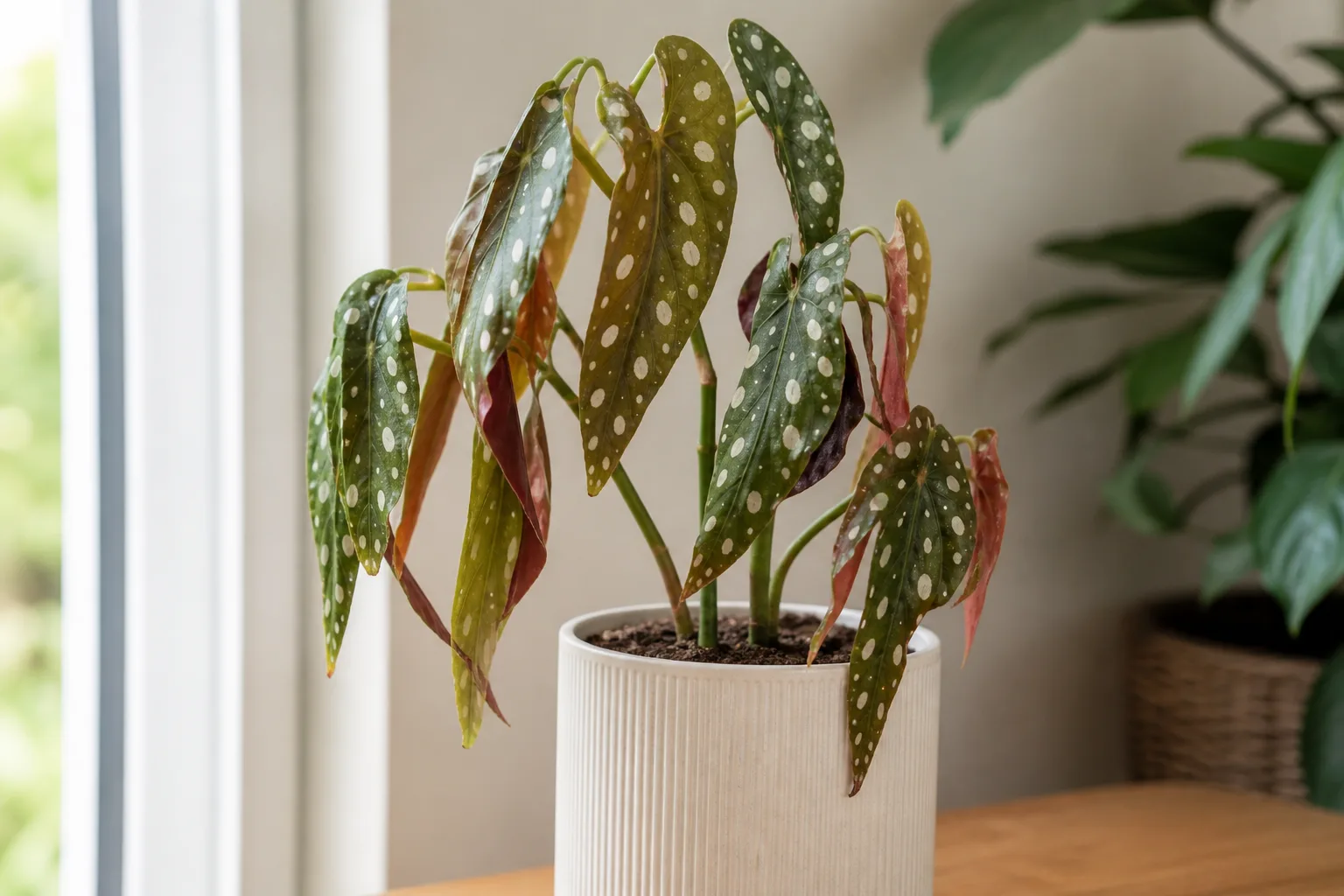
Drooping Leaves on Begonia Maculata: Causes, Checks & Fixes
This guide covers drooping leaves on Begonia Maculata. See also the general Drooping Leaves guide, watering, and light pages for this plant.
Drooping Leaves on Begonia Maculata: Causes, Checks & Fixes
Quick answer
Drooping leaves on Begonia maculata (polka dot begonia, angel wing begonia) means spotted foliage hangs at a softer angle than usual-petioles angle down and wing-shaped blades lose their crisp posture. On cane begonias this often develops gradually over days, unlike the sudden collapse covered on the wilting page.
First step: press your finger into the top 2–3 cm of mix and lift the pot. A light, dry pot with drooping leaves points to thirst-water once at the sink until runoff, then drain completely. A heavy, wet pot with limp foliage points to root stress-do not water; see overwatering. If moisture reads normal but leaves droop near a vent or bright window, check low humidity before you soak.
What drooping looks like on Begonia Maculata
Drooping is a posture change, not always an emergency. Learn these Maculata-specific patterns before you treat.
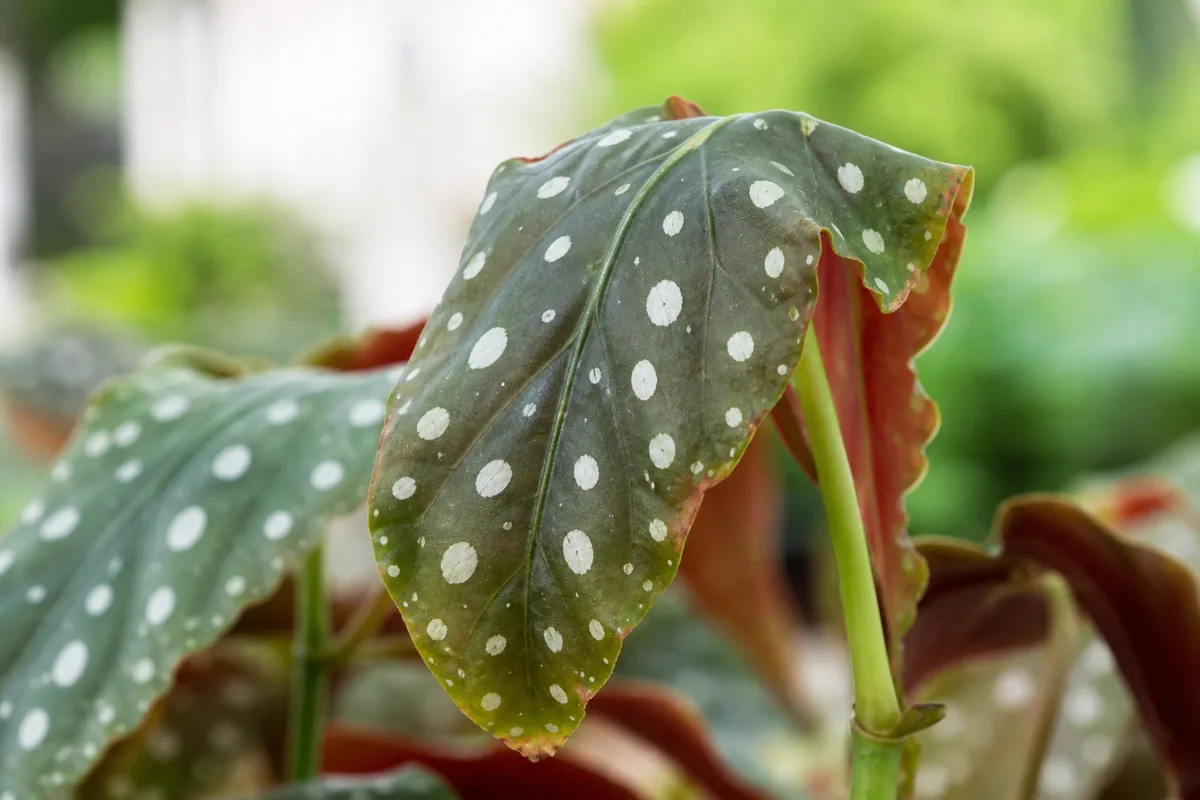
Drooping Leaves symptoms on Begonia Maculata - compare with healthy tissue on the same plant.
Soft angel-wing hang
Silver-dotted blades that normally sit at a proud angle begin to droop downward along the petiole. Lower leaves often show stress first because cane begonias shed older foliage under pressure. The leaf may still feel pliable-not papery-distinguishing mild droop from advanced dry damage.
Cane arch without collapse
Begonia maculata grows on segmented, bamboo-like canes with swollen nodes. Drooping canes arch when the pot is too small for mature height, when roots are weak, or when one side leans toward light. The stem base may still feel firm even when upper segments angle-unlike wet-soil wilt where the whole plant goes limp fast.
Evening droop vs chronic stress
Healthy Maculata in bright indirect light sometimes shows slight evening softening as transpiration peaks, then firms overnight. Chronic droop that never recovers by morning, spreads to new growth, or pairs with yellow lower leaves on wet mix is not normal diurnal movement-it needs diagnosis.
Crispy margins with firm stems
When droop comes with brown crispy edges but cane tissue stays green and firm, dry forced-air heat or AC drafts are often the driver-large angel-wing leaves lose turgor faster than small-leaf types in low humidity . Soil moisture may read normal; soaking will not fix air stress.
Top-heavy lean
Mature polka dot begonias can reach several feet on upright canes. An undersized or lightweight pot lets the whole plant lean as spotted foliage outweighs the root ball. This looks like droop but is mechanical-staking or upsizing the pot fixes posture without changing watering.
Why Begonia Maculata leaves droop
Cane begonias prefer partial shade, high humidity, and moist but well-drained humus-rich soil. Indoors, drooping usually traces to one of these mismatches:
Underwatering and dry root zones
Maculata does not tolerate the mix drying into a hard block. When the top 2–3 cm goes dry and the pot feels light, roots in the dry center cannot supply large wing-shaped leaves. Drooping builds over one to three missed checks rather than collapsing in hours-though severe dryness escalates to wilting.
Overwatering and weak roots
Fibrous cane-begonia roots need oxygen as well as moisture. Roots in saturated soil lose oxygen and function, so foliage droops on wet, heavy mix. NC State Extension notes begonias are highly susceptible to root rot when overwatered. Chronic wet-soil droop can linger after you correct watering because damaged roots recover slowly.
Low humidity and draft stress
RHS cane-begonia guidance recommends moist but well-drained compost and good humidity-standing pots on moist gravel or using a humidifier, not misting leaves. Winter heating and AC lower RH; large spotted leaves transpire heavily near east or west glass. Drooping with crispy margins fits environmental stress more than thirst.
Insufficient light and leggy weak growth
Cane begonias in dim corners stretch toward windows. Leggy, thin canes support heavy spotted blades poorly, so foliage droops even when watering is adequate. Moving to brighter indirect light stiffens new growth over weeks; old stretched stems may stay soft.
Top-heavy pot instability
As canes lengthen, foliage weight exceeds a small nursery pot. The plant leans or arches without root disease. This is common on fast-growing Maculata kept in the same container for two or more seasons.
Post-stress recovery lag
After underwatering, repotting, or a cold draft, leaves may stay droopy for days once the immediate stress is fixed. Firm cane tips and new spotted leaves mean recovery is underway-old limp tissue may never fully re-angle.
Drooping vs wilting vs overwatering
| Symptom pattern | Speed / soil clue | Likely issue | First direction |
|---|---|---|---|
| Soft droop for days, light dry pot, perks after soak | Gradual; top 2–3 cm dry | Thirst / underwatering | One thorough soak + drain |
| Lingering limp leaves, heavy wet pot, yellow lowers | Days to weeks; stays damp | Overwatering / weak roots | Stop water; inspect roots |
| Sudden whole-plant collapse | Hours; wet or very dry | Wilting (acute) | See wilting guide |
| Droop + crispy margins, firm canes, near vent | Variable moisture | Low humidity / heat | Move + humidifier |
| Cane arches, firm base, pot tips | Normal moisture | Top-heavy / small pot | Stake or repot upsize |
| Leggy soft growth in dim room | Moist mix | Low light weakness | Brighter indirect light |
How to confirm the cause
Work through these five checks before you change care. Do not water until you know your branch.
-
Surface moisture - Press into the top 2–3 cm. Lightly dry supports a full drink. Cool and clearly damp means wait-unless you are correcting planned underwatering with one soak. Crusty, shrunken mix means you went too dry.
-
Pot weight - Lift the pot after you learn what wet and dry feel like for this container. Light + droop = dry branch. Heavy + droop = wet branch.
-
Stem base firmness - Feel the cane at the soil line. Firm green tissue is reassuring. Soft, brown, or sour-smelling tissue with wet mix means escalate to root rot inspection.
-
Leaf margins and placement - Crispy edges with firm stems near radiators or AC favor humidity fixes. Uniform droop on a stable windowsill with normal moisture favors light or pot-size review.
-
Growth habit - Leggy internodes and pale new leaves suggest insufficient light. A plant that leans away from the window may need rotation, staking, or a heavier pot-not more water.
First fix for Begonia Maculata
Your first action depends on the branch you confirmed-one change, not a stack of treatments.
If soil is dry and the pot is light
Water once, thoroughly. Wet the mix evenly at the sink until water runs from drainage holes, let the pot drain five to ten minutes, then return it with an empty saucer. Avoid repeated small splashes that moisten only the surface. Recheck in two to three days using the top 2–3 cm rule from the watering guide.
If soil is wet and the pot is heavy
Stop watering immediately. Move to brighter indirect light if the plant sits in deep shade-slow evaporation worsens wet mix. Empty saucer water and confirm drainage holes are open. Do not fertilize. If leaves keep drooping after the top inch dries, inspect roots for brown mushy tissue.
If moisture is normal but leaves droop near heat or glass
Move off the vent path and raise humidity before you add water. A cool-mist humidifier targeting 50%+ at leaf height helps cane begonias recover transpiration stress. Do not mist leaves directly-damp foliage encourages mildew on begonias per RHS houseplant begonia advice.
If the cane arches but roots are healthy
Stake the lean or repot into a slightly larger container with fresh airy mix in spring. Choose a pot only one size up with open drainage. Water after repotting only when the upper layer dries normally-do not soak an already-moist root ball on repot day.
If growth is leggy in a dim spot
Move to brighter indirect light without hot direct sun on spotted leaves. Pinch soft cane tips after new firm growth appears to encourage bushier habit. Do not increase water to compensate for weak stems.
Recovery timeline
Dry-soil droop often shows firmer petioles within hours to one day after a proper soak. New spotted leaves over the next week confirm success. Old drooped blades may stay cosmetically angled.
Wet-soil droop is slower. Stems may stiffen over several days once watering stops, but damaged roots need one to three weeks before new growth looks normal. Judge progress by firm cane tips, not old yellow tissue.
Humidity-related droop stabilizes in one to two weeks once RH and placement improve, provided you did not overwater in the meantime.
Top-heavy lean corrects immediately with staking; repot upsizing shows stronger posture over two to four weeks as roots establish.
Light-related soft growth needs three to six weeks of brighter conditions before new leaves hold a firmer angle.
What not to do
Do not water until you confirm soil moisture-wet-soil droop is worsened by reflex watering. Do not fertilize a drooping plant before roots and rhythm are stable. Do not mist leaves to fix humidity on Maculata; use a humidifier or pebble tray instead.
Do not repot, prune heavily, and spray pesticide on the same day-change one variable so you can read the response. Do not assume all droop means thirst when the pot feels heavy or the surface stays cool and damp.
How to prevent drooping next time
Follow the Begonia Maculata watering guide: water when the top 2–3 cm feels lightly dry and the pot is noticeably lighter-not on a fixed calendar. Use well-drained peat-based mix in a pot with open holes, and empty saucers after every drink.
Keep bright indirect light so canes stay sturdy. Maintain moderate humidity-pebble trays, grouping, or a humidifier when winter heat drops RH. Upsize or stake before mature canes outweigh a small pot.
Scout weekly during active growth. Soft posture on one lower leaf is early warning; widespread droop across multiple canes is late.
When drooping is urgent
Treat droop as urgent if the crown or stem base feels soft, damage spreads across canes in days, or sour smell rises from wet mix-inspect roots immediately on the root rot page.
Lower urgency if a dry pot perks after one soak, or if only older lower leaves hang while new tips stay firm. Slight evening softening that recovers by morning on an otherwise healthy plant is usually acceptable.
Related Begonia Maculata guides
- Begonia Maculata overview - Light, watering, humidity, and general care
- Watering Begonia Maculata - Top 2–3 cm dry rule and wet-soil droop FAQ
- Wilting - Acute collapse and wet-soil wilt paradox
- Overwatering - Wet mix, yellow lowers, and drainage fixes
- Underwatering - Dry pot collapse and soak recovery
- Root rot - Mushy roots and repot escalation
- Low humidity - Crispy margins and transpiration droop
Conclusion
Drooping leaves on Begonia Maculata are a posture signal-often gradual, sometimes environmental, not always root failure. Light dry pot means one thorough soak; heavy wet pot means stop watering; normal moisture near heat means fix air first; arching cane on firm roots means stake or upsize. Use new firm growth as your benchmark, route acute collapse to the wilting guide, and protect fibrous roots before the crown softens.