Wilting on Begonia Maculata: Causes, Checks & Fixes
Quick answer
Wilting on Begonia Maculata usually comes from opposite watering mistakes-limp leaves on wet, heavy soil mean damaged roots, while limp leaves on a light, dry pot mean thirst. First step: press your finger into the top 2–3 cm of mix and lift the pot before you add any water.
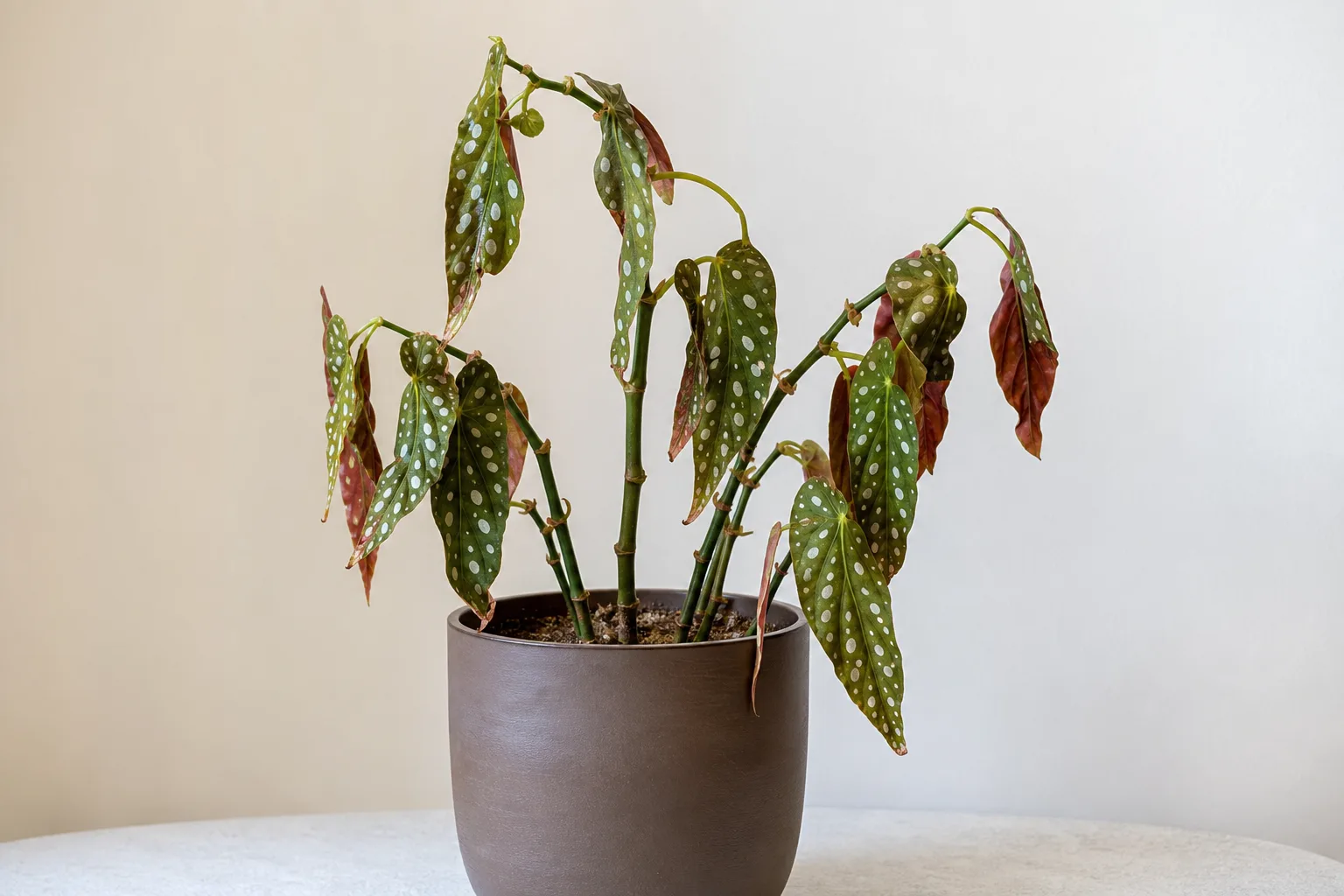
Wilting on Begonia Maculata: Causes, Checks & Fixes
This guide covers wilting on Begonia Maculata. See also the general Wilting guide, watering, and light pages for this plant.
Wilting on Begonia Maculata: Causes, Checks & Fixes
Quick answer
Wilting on Begonia maculata (polka dot begonia, angel wing begonia) means spotted leaves and upright cane stems lose turgor-the tissue goes limp instead of holding its wing shape. On this species, wilt shows up fast because thin cane architecture and large leaf blades move water quickly when roots or air moisture fail.
First step: press your finger into the top 2–3 cm of mix and lift the pot before you add any water. A heavy, wet pot with limp leaves points to wet-soil wilt from root failure-do not water. A light, dry pot with collapsed petioles points to dry-soil thirst-soak at the sink until water runs from drainage holes, then drain completely. The watering guide walks through the same wet-vs-dry branch in more detail.
What wilting looks like on Begonia Maculata
Wilting is an acute loss of firmness-not the slow soft posture of long-term drooping leaves. On cane begonias you may see:
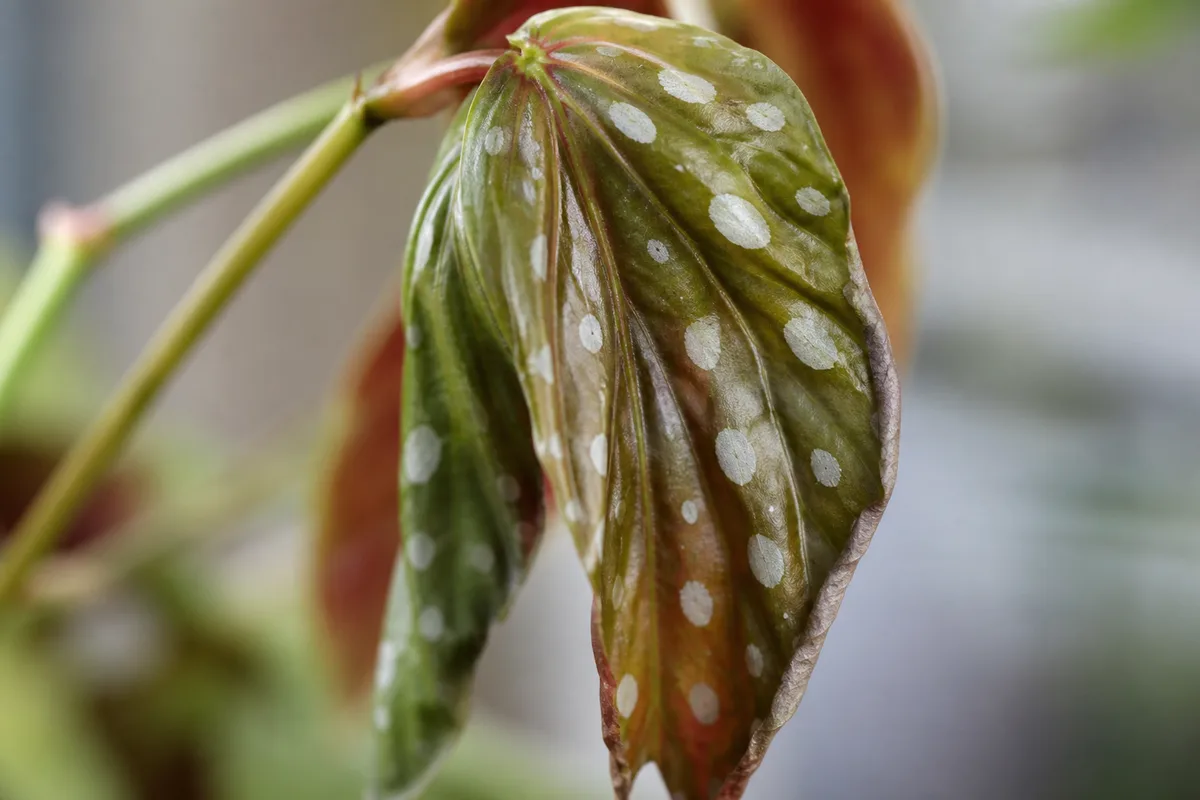
Wilting symptoms on Begonia Maculata - compare with healthy tissue on the same plant.
Limp spotted angel-wing leaves
The silver-dotted blades hang down instead of holding their usual angled wing shape. Lower leaves often show stress first because they are older and the plant sheds them under root pressure. Soft, yellow lower leaves on wet mix fit overwatering more than thirst.
Cane stem droop
Begonia maculata grows on segmented, bamboo-like canes with swollen nodes. When roots cannot supply water-or when the mix has gone bone dry-whole cane segments may angle downward and petioles collapse. Firm green cane with only slight leaf flop can be recovery lag; soft, mushy tissue at the soil line is urgent.
The wet-soil wilt paradox
One of the most confusing patterns on polka dot begonia: leaves wilt while soil stays wet. Damaged roots from saturation cannot take up water, so foliage looks thirsty even though the pot is heavy. Wilted leaves may indicate soil is too dry or too wet-rotting roots cannot absorb water. This is not underwatering, and more water makes rot worse.
Dry-soil collapse
When the top layer dries too far, the pot feels light, the mix may pull from the pot edge, and leaves go limp within a day or two of missed checks. Unlike wet-soil wilt, these plants often perk within hours after one thorough soak and drain-see underwatering for the full dry-down pattern.
Heat, draft, and low-humidity wilt
Bright windows, radiator drafts, and winter heating can wilt Maculata through fast transpiration even when soil moisture is moderate. Leaves may look limp with firm stems and crispy margins-that overlaps low humidity more than root failure. Do not soak a moderately moist pot just because leaves look tired near a heat source.
Why Begonia Maculata wilts
Cane begonias prefer partial shade, high humidity, and moist but well-drained humus-rich soil. Indoors, wilt usually traces to one of these root-zone or environmental mismatches:
Overwatering and root failure
Fibrous cane-begonia roots need both moisture and oxygen-roots in saturated soil lose oxygen and function. When mix stays saturated for days-calendar watering, oversized pots, dense peat, or blocked drainage-fine roots suffocate and fungi attack stressed tissue. NC State Extension warns that begonias are highly susceptible to root rot when overwatered. Wet-soil wilt is the visible result: leaves collapse while the mix stays damp.
Underwatering and dry root zones
Maculata does not tolerate the mix drying into a hard block for long. Roots in the dry center cannot move water to large wing-shaped leaves, so the whole cane can flop on a light pot. This is the fastest wilt to reverse if you catch it before leaf edges crisp.
Poor drainage and saucer water
Bottom-watering without draining, cachepots with standing runoff, and pots without drainage holes keep the root zone anaerobic. Even “correct” watering intervals fail when water never leaves the bottom of the pot. Empty saucers within 15–30 minutes of watering.
Seasonal rhythm shifts
Growth slows in short winter days while many growers keep summer watering habits. Cold, wet mix in a dim corner is a common wet-soil wilt trigger. The watering guide explains how to stretch intervals when the pot stays heavy longer in winter.
Heat and humidity shock
RHS cane-begonia guidance recommends moist but well-drained compost and good humidity. Dry forced-air heat accelerates water loss through spotted foliage faster than roots replace it-especially on plants pushed against east or west glass. Fix placement and humidity before you change watering if soil moisture reads normal.
How to confirm the cause
Work through these checks in order. Do not water until you know which branch you are on.
-
Surface moisture - Press into the top 2–3 cm. Cool and clearly damp means wait on water unless you are correcting chronic underwatering with a planned soak. Lightly dry at the surface supports a full drink. Crusty, shrunken mix means you went too dry.
-
Pot weight - Lift the pot right after you learn what “wet” and “dry” feel like for this container. Heavy + limp leaves = wet-soil branch. Light + limp leaves = dry-soil branch.
-
Stem base firmness - Gently feel the cane at the soil line. Firm green tissue is reassuring. Soft, brown, or collapsing tissue with sour smell means escalate to root rot inspection.
-
Leaf pattern - Yellow soft lower leaves on wet mix favor overwatering. Crispy margins with firm canes favor dry air. Uniform wilt after a heat spike favors environment before roots.
-
Drainage audit - Confirm holes are open, no standing water in saucers, and the plant is not sitting in a decorative pot that traps runoff.
-
Pest scan - Stippling, webbing, or sticky residue on undersides can weaken foliage; treat spider mites if present, but still resolve soil moisture first.
First fix for Begonia Maculata
Your first action depends on the branch you confirmed-one change, not a stack of treatments.
If soil is wet and the pot is heavy
Stop watering immediately. Move the plant to brighter indirect light if it sits in deep shade-slow evaporation worsens wet mix. Empty any saucer water and improve airflow around the pot. Do not fertilize. If leaves keep declining after the top inch dries, slide the root ball out and inspect for brown mushy roots; trim rot, repot into fresh airy mix, and resume watering only when the upper layer dries normally. Full escalation steps live on the overwatering and root rot pages.
If soil is dry and the pot is light
Water once, thoroughly. Wet the mix evenly at the sink until water runs from drainage holes, let the pot drain five to ten minutes, then return it to its spot with an empty saucer. Avoid repeated small splashes that moisten only the surface. Check again in two to three days using the top 2–3 cm rule from the watering guide.
If moisture is normal but leaves wilt near heat or glass
Move off the vent path and address humidity before you add water. A cool-mist humidifier targeting 50%+ at leaf height helps cane begonias recover transpiration stress. See low humidity for humidifier-first fixes.
Recovery timeline
Dry-soil wilt often shows firmer petioles within hours to one day after a proper soak-new growth over the next week confirms success. Old limp leaves may stay cosmetically bent even when the plant is stable.
Wet-soil wilt is slower. Once watering stops and mix oxygen returns, stems may stiffen over several days, but damaged roots need one to three weeks of corrected care before new spotted leaves look normal. Judge progress by firm cane tips and clean new growth, not by old yellowed tissue re-greening.
Environmental wilt from dry air stabilizes in one to two weeks once RH and placement improve, provided you did not overwater in the meantime.
Severe crown softness or spreading rot may not be reversible-discard only after you inspect roots and give one focused recovery attempt.
Lookalike symptoms to rule out
| Symptom pattern | Soil / placement clue | Likely cause | First direction |
|---|---|---|---|
| Limp leaves, heavy wet pot, yellow lowers | Stays damp days | Wet-soil wilt / overwatering | Stop water; inspect roots |
| Whole cane collapse, light dry pot, perks after soak | Top inch dry | Underwatering | Thorough soak + drain |
| Limp leaves, normal moisture, near vent or bright glass | Near heat/AC | Heat or low humidity | Move + humidifier |
| Soft stem base, sour smell | Wet mix | Root rot | Trim, repot, hold water |
| Soft droop for days after stress cleared | Variable | Drooping leaves (recovery lag) | One care fix; wait for new growth |
| Stippling + webbing | Any moisture | Spider mites | Treat pests + raise RH |
What not to do
Do not water a wilted Begonia maculata until you confirm soil moisture-the wet-soil paradox kills more plants than delayed drinks. Do not fertilize a wilted plant before roots and watering rhythm are stable. Do not repot, prune heavily, and spray pesticide on the same day; change one variable so you can read the response.
Do not assume wilt always means thirst when the pot feels heavy or the surface stays cool and damp. Do not leave the plant in standing saucer water after bottom-watering.
How to prevent wilting next time
Follow the Begonia Maculata watering guide: water when the top 2–3 cm feels lightly dry and the pot is noticeably lighter-not on a fixed calendar. Use well-drained peat-based mix in a pot with open holes, and empty saucers after every drink.
Keep bright indirect light without hot direct sun on spotted leaves. Maintain moderate humidity-pebble trays, grouping, or a humidifier when winter heat drops RH. Review interval length seasonally; winter usually means fewer drinks, not abandonment.
Scout weekly during active growth. A firm cane with one limp lower leaf is early warning; a whole plant collapse is late.
When to worry
Treat wilt as urgent if the crown or stem base feels soft, damage spreads across multiple canes in days, or sour smell rises from wet mix despite dry surface-inspect roots immediately. Fungus gnats with persistently wet soil suggest chronic saturation.
Lower urgency if a dry pot perks after one soak, or if only older lower leaves yellow while new tips stay firm. Cosmetic limp tissue on old leaves is acceptable when new growth arrives healthy.
Conclusion
Wilting on Begonia Maculata is a diagnostic signal, not a single disease. Heavy wet pot means stop watering and protect roots; light dry pot means one thorough soak; normal moisture near heat means fix air and placement first. Cane begonias recover when you match water, drainage, and humidity to their fibrous roots and spotted foliage-use new firm growth as your benchmark, and route wet-soil cases to the overwatering and root rot guides before the crown softens.
Related Begonia Maculata guides
- Begonia Maculata overview - Light, watering, humidity, and general care
- Watering Begonia Maculata - Top 2–3 cm dry rule and wet-soil wilt FAQ
- Overwatering - Wet mix, yellow lowers, and drainage fixes
- Underwatering - Dry pot collapse and soak recovery
- Root rot - Mushy roots and repot escalation
- Drooping leaves - Soft posture after stress vs acute wilt
- Low humidity - Transpiration wilt with firm stems and crispy margins