Mold on Soil on Begonia Maculata: Causes, Checks & Fixes
Quick answer
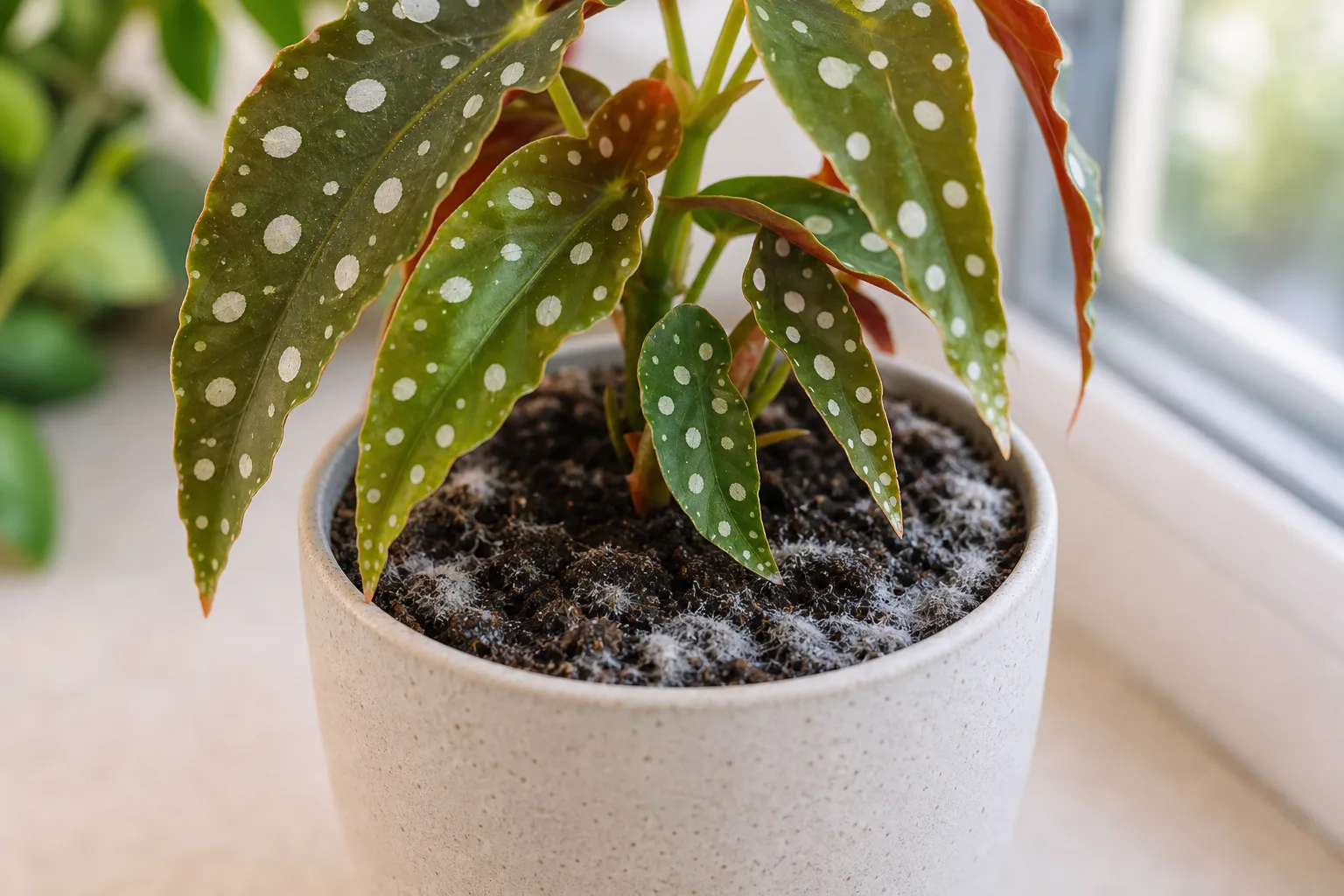
Fluffy white or gray mold on Begonia Maculata's soil means the top layer is staying damp. First step: stop watering until the top 2–3 cm of mix is dry, then scrape off the fuzzy surface layer.
Mold on Soil on Begonia Maculata: Causes, Checks & Fixes
This guide covers mold on soil on Begonia Maculata. See also the general Mold on Soil guide, watering, and light pages for this plant.
Mold on Soil on Begonia Maculata: Causes, Checks & Fixes
Quick answer
White or gray fuzzy mold on Begonia Maculata potting soil is almost always saprophytic fungus feeding on organic matter in a surface layer that stays damp-not a polka-dot leaf disease attacking your plant. The cane stems and silver-spotted foliage can look perfectly healthy while the soil looks alarming.
That does not mean you should ignore it. Surface mold is a moisture and airflow warning. On this cane begonia, the same wet conditions that grow harmless surface fungi also invite fungus gnats, oxygen-starved roots, and eventually mushy stem bases where root rot starts. Begonia Maculata tolerates consistent moisture in the root zone but still needs the top layer to dry between waterings-the same rule in the watering guide.
First step: stop watering and let the top 2–3 cm of mix dry completely. Only after the surface is dry should you scrape off any remaining fuzzy layer and discard it in the trash-not compost it indoors.
If your main worry is chronic wet mix rather than surface fuzz alone, start with the overwatering page for the full wet-soil diagnostic path.
What mold on soil looks like on Begonia Maculata
The classic sign is a white, gray, or occasionally yellow-green fuzzy film on the soil surface, sometimes spreading to the inner pot rim or around the base of cane stems. It often appears a few days after a heavy top watering, when humidity is high, or when the pot sits inside a decorative cover that traps moisture.
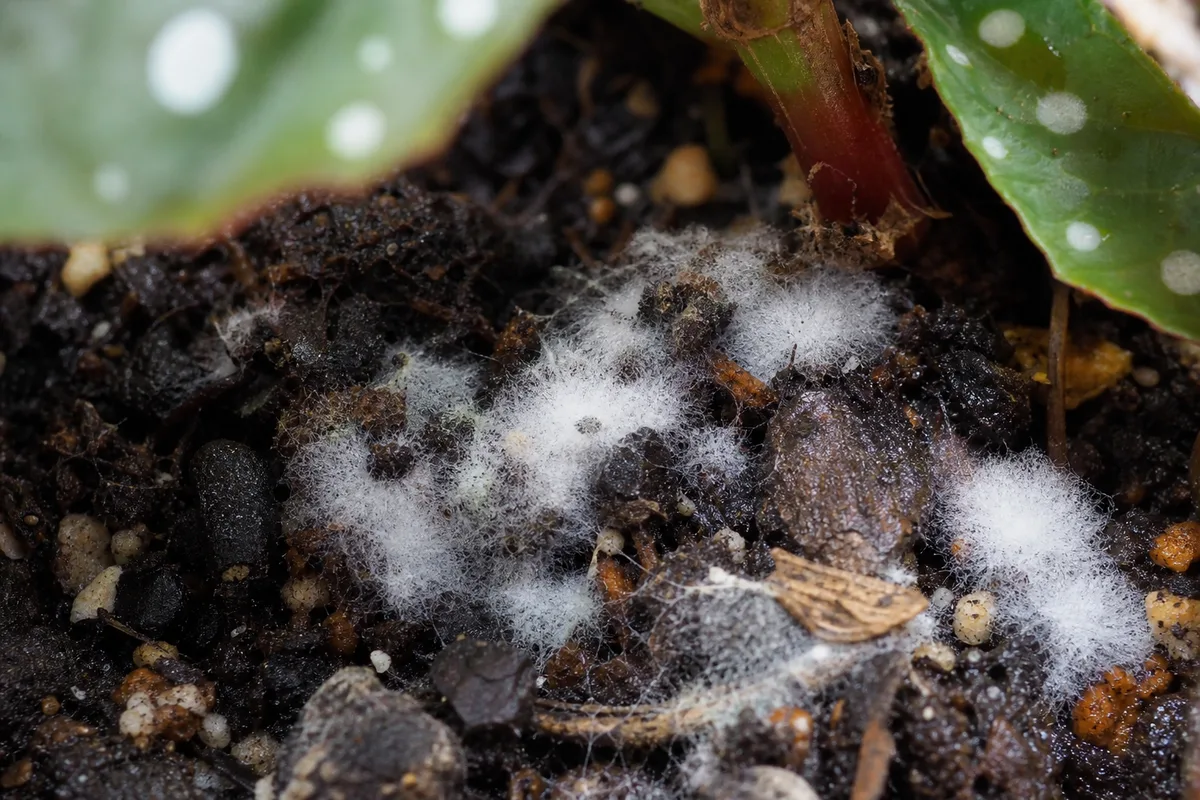
Mold on Soil symptoms on Begonia Maculata - compare with healthy tissue on the same plant.
On a healthy Polka Dot Begonia, leaves and cane stems often stay firm while only the soil looks wrong. The burgundy leaf undersides and silver spots may still look vivid. Lower leaves may yellow and drop-that is normal cane-begonia behavior-but the plant should not wilt unless roots are stressed.
Separate these from mold-adjacent trouble:
- Soft, mushy cane tissue at the soil line - stem or root rot, not cosmetic mold
- Wilting with wet soil - damaged roots from chronic saturation
- Small black flies when you water - fungus gnats breeding in the same damp top layer
- Powdery white patches on leaf surfaces - powdery mildew on foliage; different problem from soil-surface fuzz
- Green algae on the surface - constant surface moisture plus low light; same watering fix
If only the soil is fuzzy and cane bases feel firm when you press gently, you are likely dealing with surface fungus-not an emergency leaf infection.
Lookalike symptoms to rule out
| What you see | Where it shows | What it usually means | First check |
|---|---|---|---|
| White/gray fuzzy film | Soil surface, pot rim | Saprophytic mold on damp organic mix | Top 2–3 cm moisture; cane base firmness |
| Powdery white patches | Leaf tops, especially crowded growth | Powdery mildew on foliage | Leaf surface dry? Airflow around stems? |
| Green slimy film | Soil surface, cachepot rim | Algae from constant surface wetness + low light | Light level; saucer water; decorative cover |
| Hard white crust | Pot rim, soil surface | Mineral or salt buildup from hard water | Gritty texture; flush vs. dry-down |
| Soft brown cane at soil line | Lowest stem segment | Rot from chronic wet roots | Smell from drainage hole; deep soil moisture |
| Tiny flies on watering | Above soil, near windows | Fungus gnats sharing wet habitat | Sticky trap + dry top layer |
Use this table when you are unsure whether the problem is cosmetic soil fuzz or something that needs the root rot escalation path.
Why Begonia Maculata gets mold on soil
Begonia Maculata is a cane-type begonia with upright, bamboo-like stems and fibrous roots. It wants organically rich, well-drained mix that holds some moisture without staying waterlogged. That description is exactly what saprophytic fungi need: decaying bark fines, peat particles, and fallen leaf bits on a surface that rarely dries.
Several Maculata-specific habits make surface mold common indoors:
Overwatering or watering on a calendar. This plant should be watered when the top 2–3 cm of mix feels dry-not every fixed number of days regardless of season. When the root zone stays wet, the surface never dries and fungal hyphae spread across organic particles. Calendar watering that ignores pot weight is the most common trigger on the overwatering page.
Top watering that wets foliage and splashes debris. Maculata care guidance stresses keeping leaves dry. Overhead watering can knock lower leaves onto the soil, where they decompose quickly and feed surface fungi. It also leaves moisture on the pot rim longer than bottom watering would.
Winter slowdown with summer watering. In cool months growth slows and the plant drinks far less. If you keep watering every 7–10 days while the cane is semi-dormant, unabsorbed moisture sits in the pot and the top layer stays damp for weeks-often 14–21 days in a cool, dim room before the surface truly dries. Mold follows.
Low light slowing evaporation. Maculata needs bright indirect light. In a dim corner the plant uses less water and the pot surface dries slowly even if you are not grossly overwatering. See not enough light if the plant has been moved away from its bright spot.
High humidity without airflow. Target humidity around 45–60% supports healthy leaves, but stagnant humid air around the pot rim slows surface drying. Humidity at the foliage and dryness at the soil surface can coexist-you need gentle air movement, not a sealed shelf arrangement.
Decorative cachepots and outer sleeves. Polka dot begonias are often displayed in a pretty outer pot with no drainage. Water that collects at the bottom keeps the inner pot’s rim and the lowest cane segment in a humid pocket-exactly where mold and rot both start. Lift the nursery pot after every drink and empty standing water from the sleeve.
Organic debris on the soil. Cane begonias naturally shed lower leaves. Spent foliage that lands on the mix decomposes within days. That debris is food for surface fungi and keeps the top layer moist longer.
Peat-heavy mix in an oversized pot. Standard bagged potting soil without enough perlite or bark retains water at the surface long after roots have had enough. A small root ball in a large wet reservoir dries slowly at the top.
The mold is rarely the primary problem. Persistent surface wetness is-and on Begonia Maculata that wetness is what eventually softens cane tissue at the base.
How to confirm the cause
Work through these checks before repotting or spraying fungicide:
- Surface moisture - Is the top 2–3 cm cool, dark, and damp to the touch several days after watering? That confirms the environment mold needs.
- Pot weight - Lift the container. A heavy pot days after watering means slow dry-down; a light pot with mold still visible may mean you top-watered recently while lower mix was already stale and organic-rich.
- Cane firmness - Press gently at the base of the lowest cane. Firm tissue with fuzzy soil only supports a cosmetic diagnosis. Soft, collapsing tissue means investigate root rot, not just mold.
- Smell - Musty surface mold is common. A sour or swampy odor from the drainage hole suggests deeper anaerobic conditions and possible root damage.
- Season and recent watering - Are you in winter with reduced growth but unchanged watering frequency? That pattern fits dormancy overwatering.
- Light level - Has the plant been moved away from its bright spot, or is it blocked by seasonal short days? Slow evaporation fits.
- Pests and co-symptoms - Fungus gnats, yellow lower leaves, or leaf drop often share the same wet-soil root cause.
If canes are firm, new growth at stem tips looks normal, and only the top centimeter is fuzzy after one overwatering episode, you likely caught it early. Soft cane bases plus wet deep soil means escalate to root-rot protocol, not just scraping.
The first fix to try
Stop watering and let the top 2–3 cm of mix dry completely.
Do not scrape, repot, or spray on day one. Pausing irrigation gives you a clear read on whether the plant was simply overwatered. In warm active growth with bright indirect light, a small Maculata pot often dries in five to ten days. During winter slowdown in a cool room, 14–21 days is normal-and that is acceptable.
Once the surface passes the dryness test:
- Scrape off the top 1–2 cm of fuzzy soil with a spoon and discard it in the trash-not indoor compost, which can spread spores to other pots.
- Remove any fallen leaves or organic debris sitting on the mix.
- Move the pot to a brighter spot with space around it for airflow.
- Resume watering only when the top 2–3 cm is dry again-then water thoroughly until it runs from drainage holes, and empty the saucer.
That single correction resolves most first-time mold cases on Polka Dot Begonia.
What not to spray
Saprophytic surface mold does not need fungicide, cinnamon dust, or hydrogen peroxide drenches-fungicide applications are generally ineffective against saprotrophic soil fungi. Those treatments add moisture or disturb roots without fixing the wet environment fungi need. Maculata roots need oxygen and a dry surface, not another wet application. Save sprays for confirmed foliar diseases-not cosmetic soil fuzz.
If mold comes back within a week
Recurring fuzz means the environment still favors fungus. After the dry-down cycle:
- Top-dress with a thin layer of dry airy mix (perlite-heavy blend) to replace the removed surface layer.
- Bottom-water once if you tend to flood the surface every time-roots absorb from below while the top stays drier.
- Repot in spring if the mix is peat-heavy, smells sour, or takes more than ten days to dry in summer light. Use light mix with perlite and orchid bark in a pot only slightly larger than the root ball.
Repotting is a second-step fix, not an emergency response to a single mold patch on an otherwise healthy plant.
Mistakes to avoid
Do not drench with fungicide or cinnamon as a substitute for drying the soil-Maculata roots need oxygen, not another wet treatment.
Do not increase watering because a few lower leaves yellow while the soil is still damp. On this plant, yellow lower leaves with wet mix often mean root stress, not thirst.
Do not keep watering over the spotted foliage to “clean” the plant. Wet leaves invite powdery mildew and knock debris onto the soil.
Do not assume mold is harmless and ignore softening cane bases. Surface saprophytes and root rot share the same cause: too much moisture for too long.
Do not leave the pot sitting in a full saucer or decorative outer pot that holds water against the drainage holes.
Do not mist or foliar-feed over the soil surface on Maculata-the runoff keeps the top layer wet longer than the plant needs.
Recovery timeline and warning signs
With firm cane tissue and corrected watering, new growth at stem tips is the best sign you are clear. Surface mold should not return once the top dries between drinks.
Improvement usually shows within one dry-down cycle (roughly one to two weeks in warm active growth; up to three weeks in a cool winter room). Watch for:
- Good: Firm cane bases, dry soil surface before each watering, no new fuzz, healthy new leaves unfurling at cane tips in warm months.
- Bad: Cane tissue softening at the soil line, increasing leaf drop with wet mix, sour smell from drainage holes, mold returning within days of scraping.
Rotten cane tissue does not firm up again. You can sometimes save the plant by cutting above healthy firm tissue and rooting cane cuttings-the standard Maculata propagation method on the overview page-but prevention at the mold stage is far easier.
Editor observation (December dry-down)
A 6-inch Begonia Maculata in peat-heavy bagged mix developed white surface fuzz three days after a heavy top watering in mid-December. Growth had slowed in a 18 °C room with short daylight. Watering stopped; the top 2–3 cm took eleven days to pass the dryness test. After scraping the fuzzy top centimeter and removing two fallen lower leaves, the surface stayed clean. New cane tip growth remained firm by week three-no repot required. The lesson: winter dry-down takes longer than summer, and waiting beats scraping wet soil.
How to prevent mold next time
Match watering to Maculata’s rhythm: thorough drinks followed by a dry top layer, with reduced frequency in cool months when growth slows. Pair that with airy perlite-rich mix, bright indirect light, empty saucers, prompt removal of fallen leaves, and enough space between pots for air movement.
Bottom-water when you want to keep the spotted foliage dry. Use a pot with drainage holes sized to the root ball-not a large decorative cache that traps humidity at the rim.
Treat the first patch of white fuzz as a moisture alarm-not a cosmetic annoyance. On Begonia Maculata, fixing wet soil early is what keeps cane stems firm, the polka dots vivid, and root rot out of the picture.
Related Begonia Maculata guides
- Begonia Maculata overview - Light, watering, humidity, and general care
- Watering Begonia Maculata - Top 2–3 cm dry rule and seasonal rhythm
- Overwatering - Wet mix, yellow lowers, and drainage fixes
- Root rot - Mushy roots and repot escalation
- Fungus gnats - Flies sharing the same wet-soil habitat
- Not enough light - Slow evaporation and leggy growth