Fungus Gnats on Begonia Maculata: Causes, Checks & Fixes
Quick answer
Fungus gnats on Begonia Maculata mean the soil surface stays wet too long-often when fast summer growth meets calendar watering or bottom-watering leaves the top soggy. First step: stop watering until the top 2–3 cm of mix is dry.
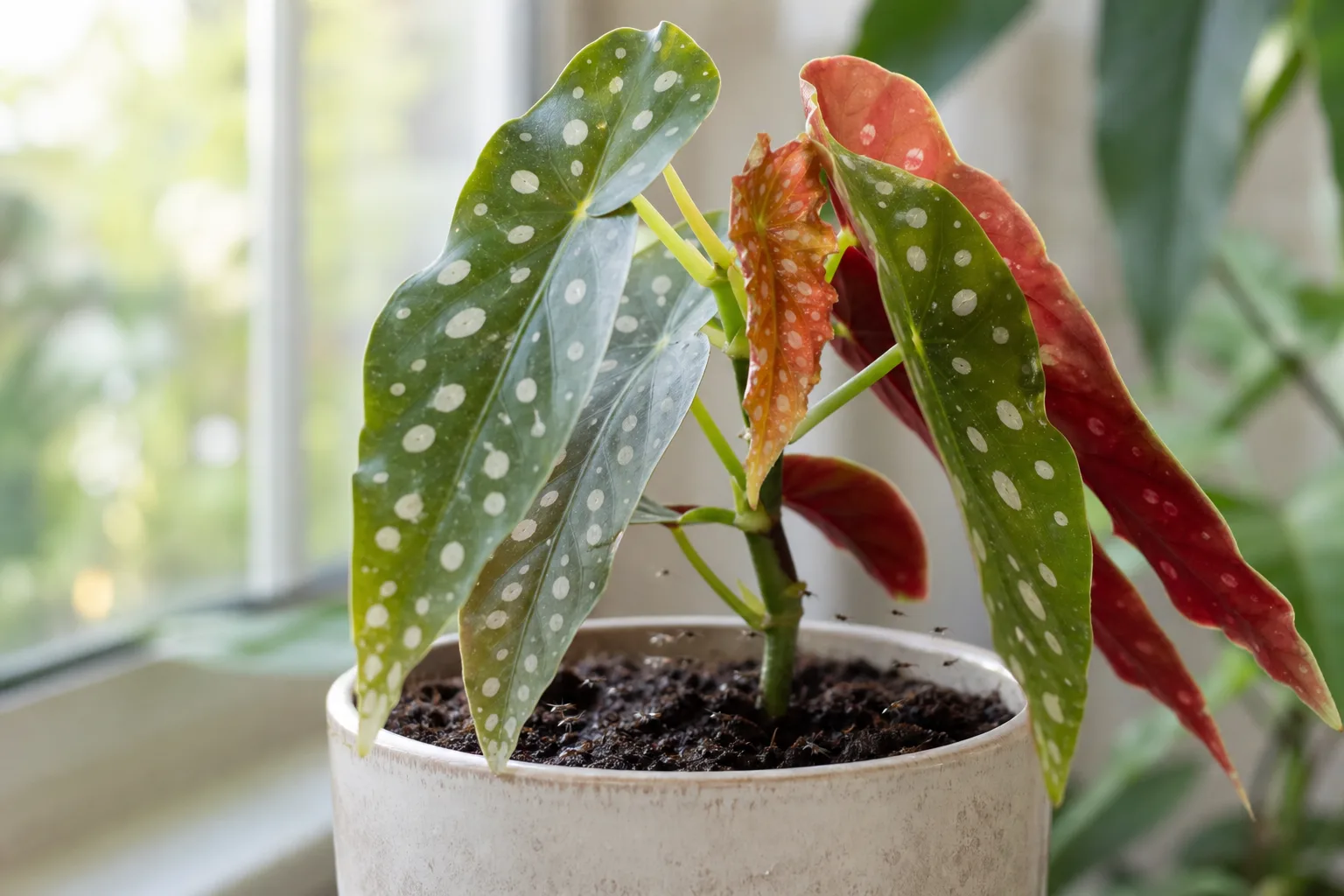
Fungus Gnats on Begonia Maculata: Causes, Checks & Fixes
This guide covers fungus gnats on Begonia Maculata. See also the general Fungus Gnats guide, watering, and light pages for this plant.
Fungus Gnats on Begonia Maculata: Causes, Checks & Fixes
Quick answer
Fungus gnats on Begonia maculata-the polka dot begonia or angel wing begonia-are a moisture signal at the soil surface, not a random fly invasion. Adults are mostly a nuisance; larvae in the top of the mix feed on fungi, organic debris, and fine feeder roots. On a cane begonia with fibrous roots in peat-rich mix, that hidden feeding stacks onto the real risk: soil that stays wet long enough to soften cane tissue at the base and invite root rot.
First step: stop watering and let the top 2–3 cm of mix dry completely before the next drink-the same dry-check standard in our Begonia Maculata watering guide. Do not spray polished spotted leaves, pour hydrogen peroxide on wet peat, or stack traps while the surface is still damp-dry soil breaks the life cycle faster than any product on soggy mix.
Maculata wants evenly moist but not soggy roots and is normally watered when the upper layer dries-not on a fixed calendar. Gnats appear when that routine keeps the surface wet between drinks, often from fast summer growth plus frequent watering, bottom-watering without dry-down, or winter slowdown with summer watering volume.
What fungus gnats look like on Begonia Maculata
Adults - About 1/16 to 1/8 inch long, dark, delicate flies that look like tiny mosquitoes. They run across the soil surface, fly up when you water or disturb the pot, and collect on nearby windows because they are attracted to light. They do not bite people or pets.
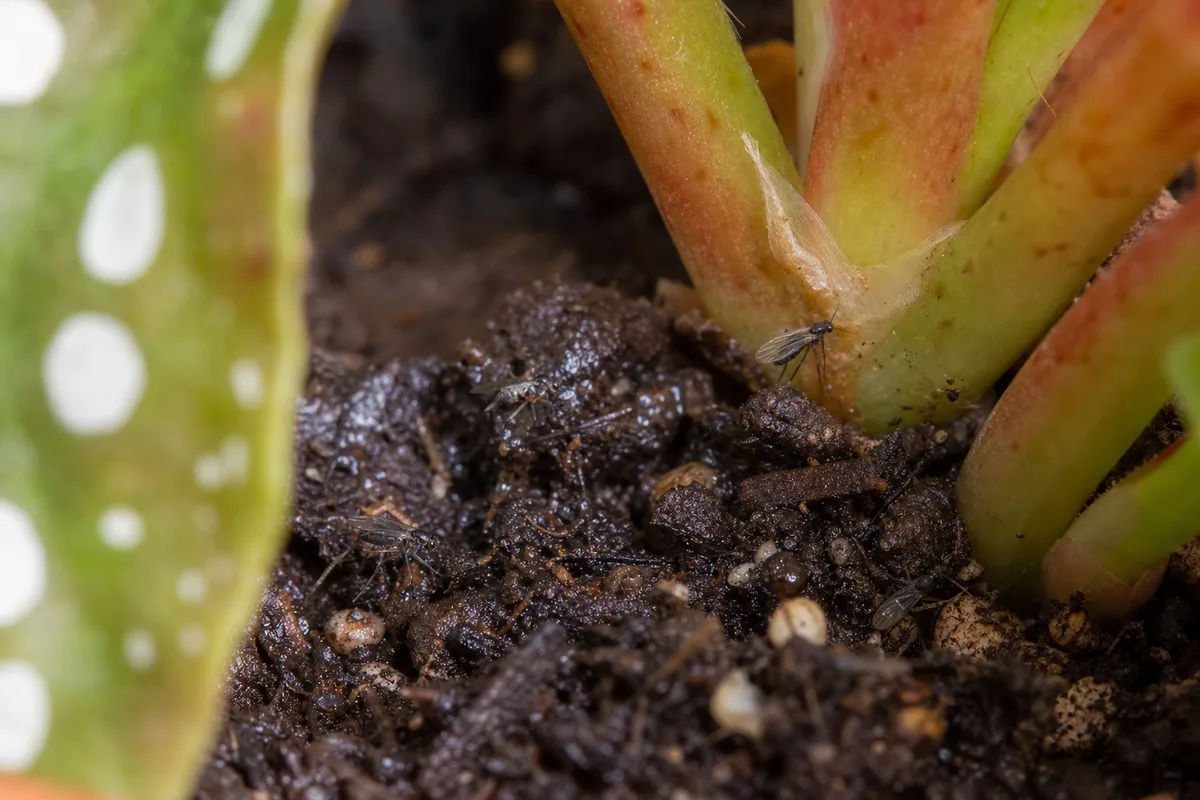
Fungus Gnats symptoms on Begonia Maculata - compare with healthy tissue on the same plant.
On the plant itself - A healthy polka dot begonia may show no obvious leaf damage while larvae work in the mix. Watch the pot surface and cane base, not only the silver-spotted foliage:
- Flies appear every time you water or bump a small pot on a humid windowsill.
- The top inch of mix stays dark and damp for many days after one drink.
- Fine translucent larvae with shiny black heads in the upper layer of mix (a magnifying glass helps).
- Potato test: a raw slice pressed cut-side down on the surface for 48 hours may show chewed tissue-larvae confirmed in that pot.
- Yellow sticky traps catch many adults just above the soil line without blocking upright cane stems.
Leaf and cane clues tied to wet soil - Gnats do not chew smooth Maculata leaves directly, but their presence often coincides with yellow lower leaves, stalled new growth at cane tips, white mold on the surface, or a sour smell from the drain hole when overwatering has already stressed roots. Firm cane bases on mix that dries normally with a few gnats may mean a recent overwater event-not active rot yet. See mold on soil when surface fuzz is the main symptom.
Why Begonia Maculata gets fungus gnats
Fungus gnat larvae need consistently moist, organic-rich surface mix to complete their life cycle. Polka dot begonia pots become ideal habitat when:
Surface stays wet between waterings - Cane begonias want steady moisture during active growth, but watering before the top 2–3 cm dries keeps the layer where females lay eggs constantly damp. A fast-growing Maculata in bright summer light may need water every five to seven days; the same pot in a cool winter room may hold surface moisture for two weeks if you keep the summer schedule-both patterns support gnats if the top never dries.
The fast-growth watering paradox - Maculata pushes upright cane growth quickly in spring and summer, producing new leaves that increase transpiration and tempt owners to water more often. Frequent top-watering on a small root ball in a peat-heavy nursery pot keeps the surface damp even when the plant genuinely needs moisture below-gnats exploit that upper layer.
Bottom-watering without dry-down - Bottom-watering keeps polished spotted leaves dry-critical Maculata care-but if you refill the saucer whenever the pot feels light without checking whether the surface has dried, the top layer stays soggy while roots below stay hydrated. That is perfect gnat habitat and masks the overwatering pattern our watering guide warns against.
Humidity preference vs. dry-surface control - Maculata tolerates 45–60% humidity around foliage for healthy leaves, but larvae need wet soil, not humid air. A humidity tray under the pot plus frequent drinks without airflow can slow surface evaporation at the rim even when you think you are watering less.
Peat-heavy mix in small pots - Most store-bought polka dot begonias arrive in dense peat in 4-inch containers. That mix retains moisture at the surface where most larvae live. Gnats mean the balance tipped toward too wet for too long-the same condition behind overwatering on Begonia Maculata.
Winter slowdown with summer watering - When day length drops and growth slows, the cane drinks far less. Owners who see a few yellow lower leaves and water more-thinking the plant is thirsty-often keep peat soggy for weeks. Gnats during cool months almost always confirm calendar watering on a resting cane begonia.
Poor drainage habits - Blocked holes, decorative cachepots holding runoff, or leaving the pot submerged in a full saucer extends the moist window gnats need.
Introduction from new plants - Nursery pots with wet organic media can carry eggs. Gnats spread quickly across a shelf shared with other begonias.
The gnats are telling you the root-zone environment is too wet for too long-often the same condition that leads to mushy cane bases and root rot.
How to confirm the cause
Work through these checks in order so you separate gnats from rot, other pests, and stray flies:
- Disturbance test - Tap the pot rim or water lightly. Gnats flying from the soil surface confirm breeding in that container.
- Surface moisture - Press a finger into the top 2–3 cm. Damp mix days after your usual watering, plus flies, supports chronic overwatering habitat.
- Pot weight - Lift the container. A heavy small pot long after watering confirms saturation; pair that with gnats and you have a confirmed moisture problem.
- Cane firmness - Press gently at the base of the lowest cane where it meets soil. Firm tissue with gnats means stress may still be reversible. Soft, collapsing tissue means prioritize root rot protocol-gnats are secondary.
- Larva check - Scrape the top inch gently or use the potato slice method. No larvae after two weeks of dry surface soil suggests adults are dying out or came from elsewhere.
- Trap trend - Rising adult counts on yellow traps week after week means active breeding, not a one-time hitchhiker.
- Co-symptoms - White mold on the surface, fungus gnats, and yellow lower leaves often share the same wet-soil root cause.
Confirmed diagnosis - Gnats plus wet surface mix plus larvae (or repeated adult emergence from the same pot). Suspected - A few adults on dry mix after you corrected watering may be stragglers; keep the surface dry and monitor traps for two weeks.
First fix for Begonia Maculata
Stop watering and let the top 2–3 cm of mix dry completely before the next drink. This single step kills many eggs and larvae by removing the moisture they require-and it is safer than stacking chemicals on roots that may already be stressed by wet soil.
After the surface is dry:
- Water thoroughly when the dry-check passes: soak until water exits drainage holes, then discard saucer water within 30 minutes. Top-water occasionally to flush salts if you fertilize during active growth.
- Set yellow sticky traps horizontally just above the soil line-place them at the pot rim so upright cane stems are not coated-to catch egg-laying adults and track whether numbers fall over two weeks.
- If adults persist and you confirmed larvae, apply a Bacillus thuringiensis israelensis (Bti) drench labeled for fungus gnats-soak the top of the mix where larvae feed. Repeat on a five-day schedule because Bti targets feeding larvae, not eggs or adults.
Do not mist spotted leaves, spray aerosols on polished foliage, or fertilize the same week you change watering-that adds moisture and salt stress to a plant already fighting wet mix.
Step-by-step recovery
Light infestation (few flies, firm canes, surface was only briefly wet)
- Hold water until the top 2–3 cm of mix are dry.
- Set one yellow sticky trap at soil level, clear of cane stems.
- Resume watering only when the dry-check passes; empty saucers promptly.
- Monitor traps for two weeks-counts should fall without Bti.
Moderate infestation (daily flies, damp surface 5+ days, firm canes)
- Isolate the affected plant from other pots on the same shelf.
- Hold all water until the top 2–3 cm are dry (longer in winter when growth slows).
- Trap adults with yellow sticky cards at soil level; replace when coated.
- Bti drench after the surface has dried-follow product dilution for soil soak, not foliar spray on spotted leaves.
- Repeat Bti every five to seven days for three to four weeks to catch overlapping larval hatches.
- Resume watering only when the top 2–3 cm are dry again.
Heavy infestation (swarms, soggy mix for days, yellowing lower leaves)
- Complete steps 1–5 above.
- Slide the plant partway from its pot and inspect cane bases and roots. Firm white roots support continued dry-down plus Bti. Mushy brown tissue means shift to root rot rescue-gnat spray will not save soft cane tissue.
- Repot into fresh airy mix only if infestation continues on chronically waterlogged peat, drainage holes are blocked, or root inspection shows extensive rot-otherwise dry-down plus Bti is usually enough. Do not jump to a much larger pot; extra wet mix makes saturation worse.
Recovery timeline during growth vs. dormancy
Expect two to four weeks of consistent dry surface conditions and larval control before adult counts crash, because overlapping life stages hatch in waves.
During active growth (spring and summer) - Surface mix often dries within five to ten days once you cut back water. Improvement signs appear faster: fewer flies on traps, firm new spotted leaves unfurling at cane tips, and pot weight dropping predictably between drinks.
During dormancy (fall and winter) - The cane uses less water. Dry-down can take two to three weeks, and that is acceptable. Do not interpret slow drying as permission to water on your old summer schedule.
Improvement signs: fewer flies on traps, surface mix that dries within a week in growth season, firm cane bases, and new leaves opening without yellowing. Worsening signs: soft cane tissue at the soil line, increasing leaf drop with wet mix, sour soil odor, or wilting on wet soil-shift focus to root rot rescue, not more gnat spray.
Old yellow lower leaves will not re-green; judge success by firm cane tissue and falling trap counts.
Lookalike symptoms
| What you see | Likely cause | Quick check |
|---|---|---|
| Tiny flies at soil line after watering | Fungus gnats | Larvae or potato test positive; flies rise from the pot |
| Flies around fruit bowl, not pots | Fruit flies | Traps at soil stay empty; kitchen hygiene fixes it |
| Moth-like flies from sink or shower | Drain flies | Breeding in plumbing, not polka dot begonia mix |
| Wilting on wet soil, few gnats | Root rot / cane stress | Soft base, mushy roots-see root rot guide |
| Whiteflies on leaf undersides | Whitefly | Flies on foliage, not soil; sticky honeydew on spotted leaves |
| Fine stippling or webbing on red undersides | Spider mites | Dry soil, pests on foliage-see spider mites |
| One or two bottom leaves yellowing, dry soil | Normal cane aging | Firm canes, no persistent larvae, traps stay empty |
This page covers cane-type Begonia maculata with smooth spotted foliage-not Begonia Rex, which has rhizomatous growth and fuzzy leaves with different spray cautions.
Mistakes to avoid
Do not spray polished spotted Maculata leaves with generic houseplant aerosols-mineral and pesticide residue leaves permanent marks on smooth foliage, and sprays ignore larvae in soil. Treat the mix only, not the leaves. Maculata care guidance stresses keeping leaves dry; wetting foliage to “clean” the plant invites powdery mildew and water spots.
Do not keep watering on a calendar because the plant “likes moisture”-especially in winter when growth slows. Do not use caterpillar Bt (kurstaki); fungus gnat control requires Bti israelensis. Do not increase watering to combat humidity stress while fighting gnats-the surface must dry between drinks. Do not assume gnats mean the plant needs fertilizer-salts on wet roots add injury. Do not repot into a much larger pot to “dry things out”; extra wet mix makes saturation worse.
Do not confuse this cane begonia with Rex begonia advice about fuzzy leaves-Maculata has smooth, spotted foliage with different handling rules.
Begonia Maculata care cross-check during treatment
| Care factor | Healthy target during treatment | Gnat-friendly mistake |
|---|---|---|
| Water timing | Top 2–3 cm dry before drink | Calendar watering every fixed number of days |
| Pot size | Slightly snug; perlite-rich mix | Oversized pot holding wet peat for weeks |
| Drainage | Open holes; saucer emptied within 30 minutes | Cachepot with no holes; standing saucer water |
| Light | Bright indirect-helps plant use water | Dim corner slowing dry-down all winter |
| Season | Cut water when growth slows in cool months | Summer volume on a resting cane |
| Surface | Dry or dusty between drinks | Dark, cool, soft top layer for 7+ days |
| Foliage | Keep spotted leaves dry | Top-watering over leaves every time |
Full seasonal rhythm and dry-down checks: Watering Begonia Maculata.
How to prevent fungus gnats on Begonia Maculata
Match watering to how fast your pot dries in your light and season:
- Check the top 2–3 cm before every drink-not a calendar.
- Empty saucers within 30 minutes of watering so mix is not re-absorbing standing water.
- Use light mix with perlite and orchid bark-not straight bagged peat without amendment.
- Keep drainage holes open and avoid cachepots without holes.
- Remove fallen leaves from the soil surface promptly-they decompose and feed larvae.
- Quarantine new nursery pots two to three weeks with a trap at soil level before adding them to a shelf.
- Yellow traps on shared shelves during humid months catch reinfestation early.
Healthy prevention is a dry surface between drinks-the same rhythm that keeps cane stems firm and polka dots vivid.
When to worry - root inspection and escalation
Treat fungus gnats as urgent when trap counts climb weekly, soil stays soggy for days despite cutting back water, or the plant wilts on wet mix with a sour smell. At that point, slide the plant gently from its pot and inspect cane bases and roots-mushy brown tissue means overwatering damage, not a gnat-only problem.
Root inspection protocol:
- Unpot carefully-Maculata fibrous roots sit in a relatively small soil volume.
- Feel the lowest cane where it meets soil. Firm and dense supports dry-down plus Bti. Soft, collapsing, or foul-smelling means rot.
- Check feeder roots. White and firm is reassuring; brown mush that pulls away easily is not.
- If canes are still firm, trim only clearly rotten roots, let cuts air-dry 30–60 minutes, and repot into fresh dry mix-see root rot recovery.
- If multiple cane bases are mushy, salvage may require rooting firm cane cuttings above healthy tissue.
Begonia species are toxic to cats and dogs if chewed. Contact your veterinarian if a pet ingests treated soil or trimmed foliage.
Conclusion
On polka dot begonias, fungus gnats are almost never the primary killer-they are a readable signal that the surface mix stayed wet too long for the fibrous roots underneath. Dry the top 2–3 cm first, trap adults, drench larvae with Bti only if needed, and align every drink with season and pot weight rather than a calendar. When cane bases stay firm and trap counts fall, new spotted leaves at stem tips are the proof the plant survived the wet spell.
When to use this page vs other Begonia Maculata guides
- Begonia Maculata watering guide - Use for routine moisture checks before assuming fungus gnats is the main issue.
- Begonia Maculata problems hub - Browse all 16 common issues on this species.
- Overwatering on Begonia Maculata - Different entry point when symptoms overlap with fungus gnats.
- Mold on Soil on Begonia Maculata - Different entry point when symptoms overlap with fungus gnats.
- Root Rot on Begonia Maculata - Different entry point when symptoms overlap with fungus gnats.