Not Enough Light on Begonia Maculata: Causes, Checks & Fixes
Quick answer
Begonia Maculata is a cane begonia that needs bright indirect light-not a dim shelf. First step: move it within a couple of feet of your brightest east- or west-facing window and watch new leaf spacing for two weeks before changing anything else.
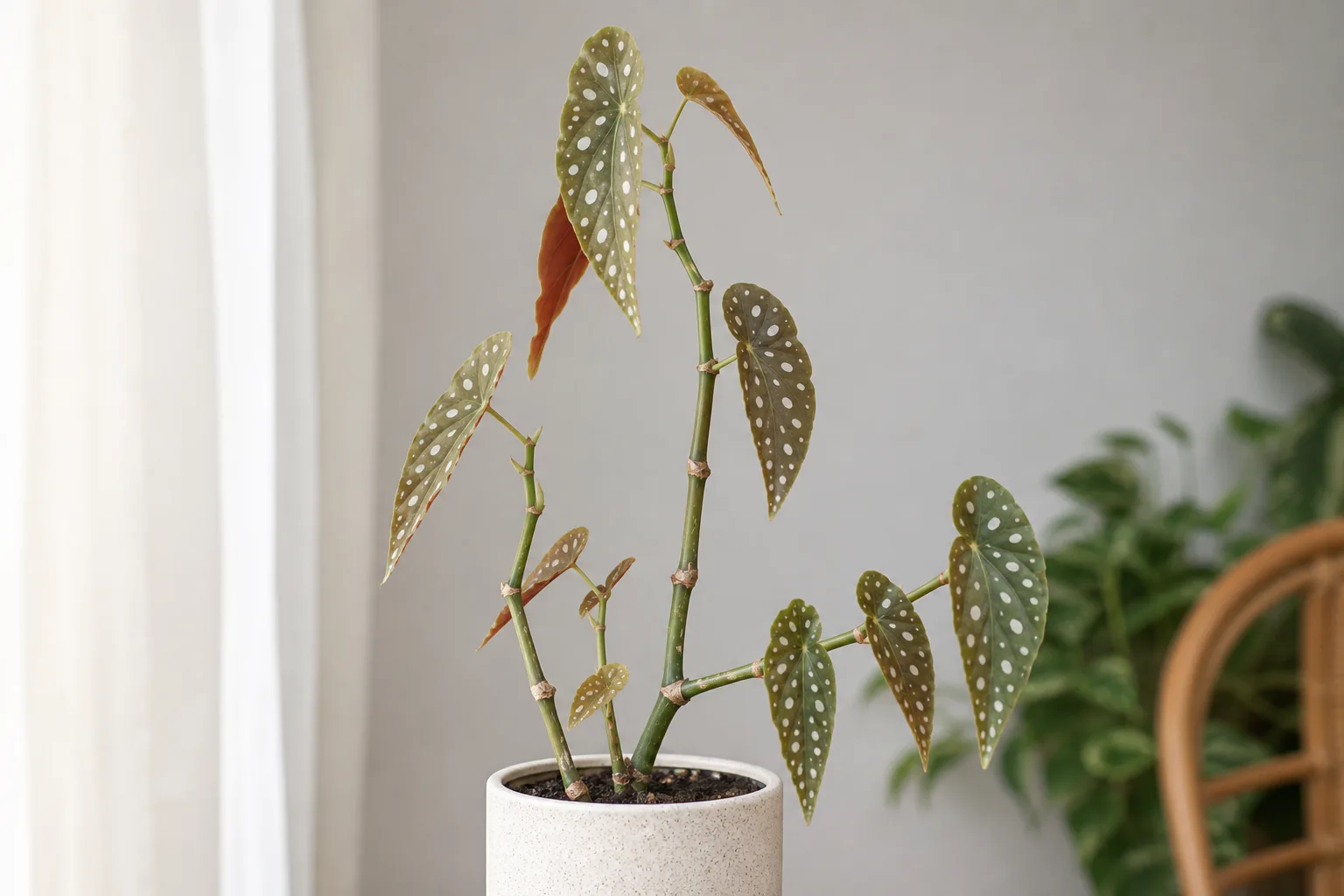
Not Enough Light on Begonia Maculata: Causes, Checks & Fixes
This guide covers not enough light on Begonia Maculata. See also the general Not Enough Light guide, watering, and light pages for this plant.
Not Enough Light on Begonia Maculata: Causes, Checks & Fixes
Quick answer
Begonia Maculata (Begonia maculata, polka dot begonia) is an upright cane begonia built for bright, filtered light under a tropical canopy-not the back of a dim room. When light is too weak, the plant stretches between leaf nodes, produces smaller foliage, leans toward windows, and often stops flowering even if watering and humidity look fine.
First step: move the pot to your brightest safe indirect-light location-typically within a couple of feet of an east- or west-facing window where leaves never touch hot midday sun. Give it two weeks and read the next new leaves, not the old stretched stems. Do not repot, fertilize, or soak the soil on day one; low light often masquerades as thirst or nutrient lack when the real limiter is photosynthesis.
What not enough light looks like on Begonia Maculata
On Begonia Maculata overview, light stress shows up on the cane architecture before it shows up as classic yellowing. Watch for these patterns:
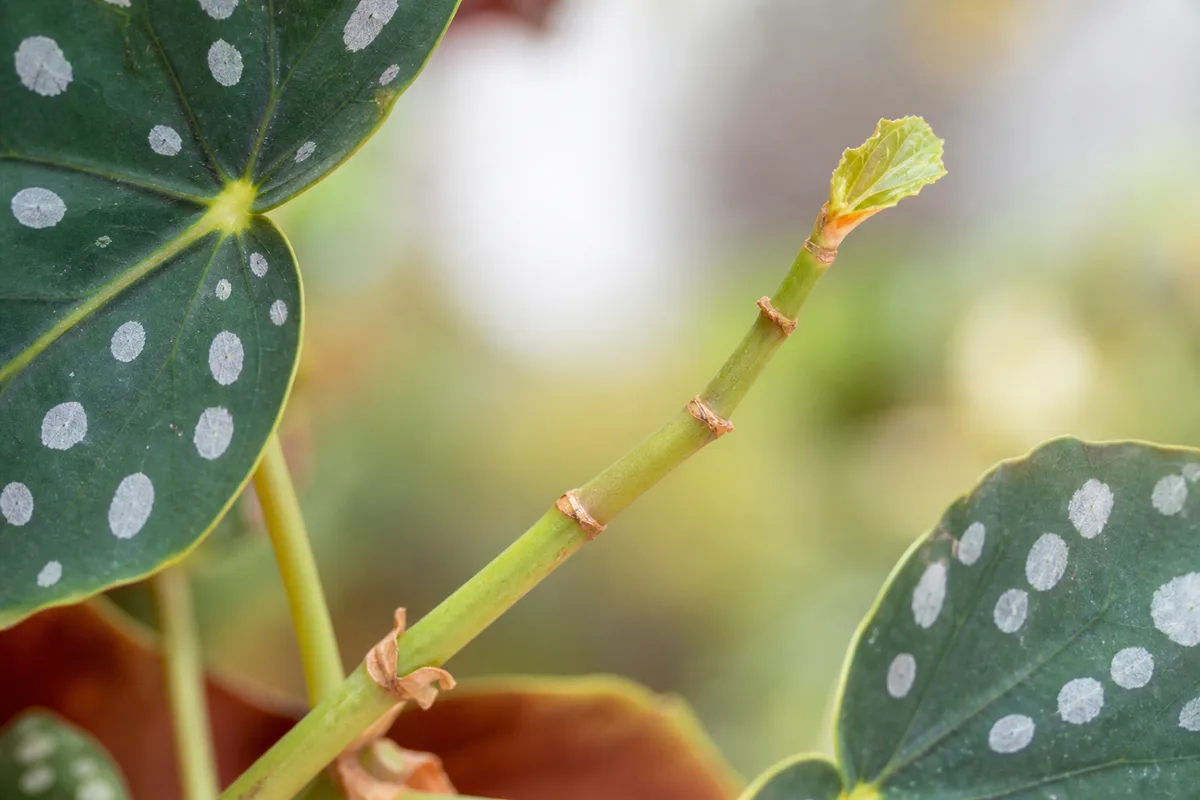
Not Enough Light symptoms on Begonia Maculata - compare with healthy tissue on the same plant.
- Long internodes - visible gaps between leaf pairs along red cane stems; new sections look like a ladder instead of a compact bush
- Smaller, thinner new leaves - the angel-wing shape stays, but blades are shorter and less rigid than older growth from a brighter period
- Dull or faded spotting - silver polka dots lose contrast; the upper surface may look flat dark green instead of crisp green-and-silver
- One-sided lean - stems and leaves angle toward the brightest side of the room
- Slow or absent flowers - white or pink clusters fail to form even during spring and summer when humidity and feeding are otherwise adequate
- Older leaf drop after months in shade - lower leaves yellow and fall while the top keeps reaching for light
- Soil that stays wet too long - in dim light the plant drinks slowly, so the top 3 cm may remain damp for a week or more despite your normal summer schedule
Normal lookalikes: A healthy Begonia Maculata in Begonia Maculata light guide still grows quickly and may need staking-that is structure, not etiolation. Winter slowdown with firm canes and soil drying on schedule is seasonal rest, not necessarily a dark-room crisis. underwatering on Begonia Maculata gives wilt with light, dry mix; overwatering on Begonia Maculata gives yellow leaves and soft stem bases with wet mix-different soil stories than lean-and-stretch alone.
Why Begonia Maculata gets not enough light
Polka dot begonia evolved in Brazilian Atlantic rainforest as an understory plant, but “understory” here still means bright, filtered daylight-not the low foot-candle corners where snake plants survive. Cane begonias like B. maculata use light to fuel fast upright growth, maintain leaf pigment, and trigger blooming. Deprive them of energy and they elongate stems to search for photons.
Common placement mistakes in real homes:
- North-facing rooms or deep interior shelves - often below the medium–bright range this species needs for compact growth
- More than six feet from any window - indoor intensity drops sharply with distance from glass
- Blocked windows - heavy curtains, frosted privacy film, outdoor awnings, or tall furniture between plant and pane
- Winter daylight shrink - the same summer spot may become marginal by December even if you never moved the pot
- Competing for one “plant window” - a crowded sill shades lower leaves on taller cane stems
- Decor-first placement - a spot that looks good on a bookcase but never receives sustained indirect brightness
There is a compounding risk on Begonia Maculata: low light slows transpiration, so the same Begonia Maculata watering guide that worked in summer sun can leave roots sitting moist in a dark corner-plants in inadequate light can become stressed or waterlogged. That pairing-dim room plus wet mix-is how rot starts on a plant that otherwise wants evenly moist, well-drained soil.
How to confirm the cause
Work through these checks before moving to grow lights or pruning:
- Window direction and distance - Measure roughly from pot to glass. East or west within about two feet is the usual target for cane begonias; a north window alone is often insufficient unless you supplement.
- Shadow test at midday - Hold your hand between the window and the plant. A soft, defined shadow suggests usable indirect light; almost no shadow means the spot is too dim for compact growth.
- Newest leaf spacing - Compare the gap between the last two leaf pairs to pairs from six months ago. Widening spacing confirms etiolation.
- Soil dry-down speed - Stick a finger 3 cm deep. If mix stays wet for many days while growth is slow, light may be limiting water use-do not respond with more water.
- Stem firmness and base color - Firm red canes with no mush at the soil line point toward light stress; soft bases with sour-smelling mix suggest rot from overwatering in low light.
- Two-week trial move - Shift the pot to the brightest indirect location you can offer (no direct hot sun). If the next leaves emerge closer together, light was the limiter.
If the plant wilts with dry soil and sits in a bright window, suspect underwatering or heat stress-not insufficient light. Wilting can also signal overwatering or insufficient light when the soil story is unclear. If bleached or crispy patches appear on sun-facing leaves after a move, you overshot into direct sun; pull back and diffuse.
The first fix to try
Move the pot to bright indirect light within about two feet of an east- or west-facing window, or to your brightest filtered south exposure if that is all you have-using a sheer curtain if midday rays hit the leaves.
That single change is the first fix. Begonia Maculata must be in front of a real light source; it will not stay compact on a credenza across the room. Keep leaves out of direct hot sun, which can bleach spots or scorch blades.
After the move:
- Wait two weeks before Begonia Maculata repotting guide, fertilizing, or heavy pruning
- Rotate the pot a quarter turn every few days for the first month so all sides of the cane receive light
- Recheck watering - brighter light usually means faster dry-down; resume your finger test at the top 3 cm rather than the old calendar schedule
If no suitable window exists, add a full-spectrum LED or fluorescent grow light 6–12 inches above the top leaves for 12–16 hours daily. Plain cool-white shop fluorescents can work on a timer when placed close to the canopy.
Step-by-step recovery
Once light improves, support the plant in this order:
- Stabilize watering - Water when the top 3 cm is dry, thoroughly and with drainage; never wet the foliage. In the new brighter spot this may happen more often than in the old dark corner.
- Stake if needed - Long cane stems may flop until new growth stiffens; use a slim stake and soft tie rather than letting stems snap.
- Pinch after new compact growth appears - When two or three new leaf pairs look tighter, pinch growing tips above a node to encourage branching. Old stretched sections will not shorten; pruning is cosmetic and optional.
- Hold fertilizer until growth looks steady - Resume balanced liquid feed at half strength only after new leaves hold good color for several weeks.
- Monitor humidity - Target 45–60% or higher so improved light does not pair with crispy leaf edges in dry heated air.
Recovery timeline
Expect to read progress on new tissue, not old stems.
- Week 1–2 - Lean may stop worsening; the plant orientates toward the new light source
- Week 3–4 - Next leaf pair should show shorter internodes and fuller blade size if light was the main issue
- Week 6+ - Spot contrast and stem thickness improve on successive leaves; flowering may return the following active season if light stays adequate
- Old stretched canes - Permanent unless you prune for shape after the plant is stable
If new leaves stay small and far apart after a month in a clearly brighter spot, look for root problems, chronic overwatering, or pest stress-not more light alone.
Lookalike symptoms to rule out
| What you see | More likely cause | Quick check |
|---|---|---|
| Wilting with wet soil and soft stem base | Overwatering / root rot | Smell mix; inspect roots |
| Wilting with dry, light pot | Underwatering | Weight pot; finger-test depth |
| Crispy brown patches on sun-facing leaves | Too much direct sun | Move back from glass or add sheer |
| Brown leaf edges only | Low humidity | Hygrometer; edges dry while stems firm |
| Sticky leaves + webbing | Spider mites | Inspect undersides with magnification |
| Yellow lower leaves, firm cane, winter | Seasonal slowdown | Growth resumes in spring with stable care |
Low light is the best fit when stretch, lean, dull spots, and slow dry-down cluster together without mushy roots or pest sign.
Mistakes to avoid
- Jumping into direct south-window sun to fix legginess - acclimate over one to two weeks or use a curtain; scorched begonia leaves do not recover
- Watering more because the plant “looks sad” in a dark corner - you may waterlog roots that are already idle from low light
- Fertilizing heavily to force growth - without adequate light, extra nitrogen produces weak, floppy stems
- Keeping the plant on a north windowsill as the only light source unless you run a grow lamp - many cane begonias need more intensity than north exposures provide
- Judging success on old leaves - stretched tissue will not revert; watch the next nodes
How to prevent low light next time
- Choose the brightest indirect station before the pot leaves the nursery bench - begonia maculata is a poor long-term fit for low-light rooms
- Supplement before winter - add a timer-driven grow light when days shorten so internodes do not elongate every December
- Clean glass and prune outdoor obstructions seasonally - small light losses add up
- Rotate weekly once growth is even - prevents one-sided cane development
- Adjust watering whenever you move the plant - light and water use move together on this species
When to worry
Escalate beyond a simple move if:
- Canes soften at the base while soil stays wet - unpot and inspect for rot; improve light and dry the root zone
- More than half the leaves drop within weeks in a very dark room - recovery may require grow lights, not just a slightly closer window
- New growth stays pale and sparse after a month in verified bright indirect light - rule out roots, pests, and chronic overwatering before assuming the window is still too dim
Begonia Maculata can recover from moderate etiolation when light improves early. A plant left years in deep shade may survive but rarely regain the dense, spotted look without hard pruning and supplemental lighting.
When to use this page vs other Begonia Maculata guides
- Begonia Maculata watering guide - Use for routine moisture checks before assuming not enough light is the main issue.
- Begonia Maculata problems hub - Browse all 16 common issues on this species.
- Leggy Growth on Begonia Maculata - Different entry point when symptoms overlap with not enough light.
- Slow Growth on Begonia Maculata - Different entry point when symptoms overlap with not enough light.
- Yellow Leaves on Begonia Maculata - Different entry point when symptoms overlap with not enough light.