Mealybugs on Begonia Maculata: Causes, Checks & Fixes
Quick answer
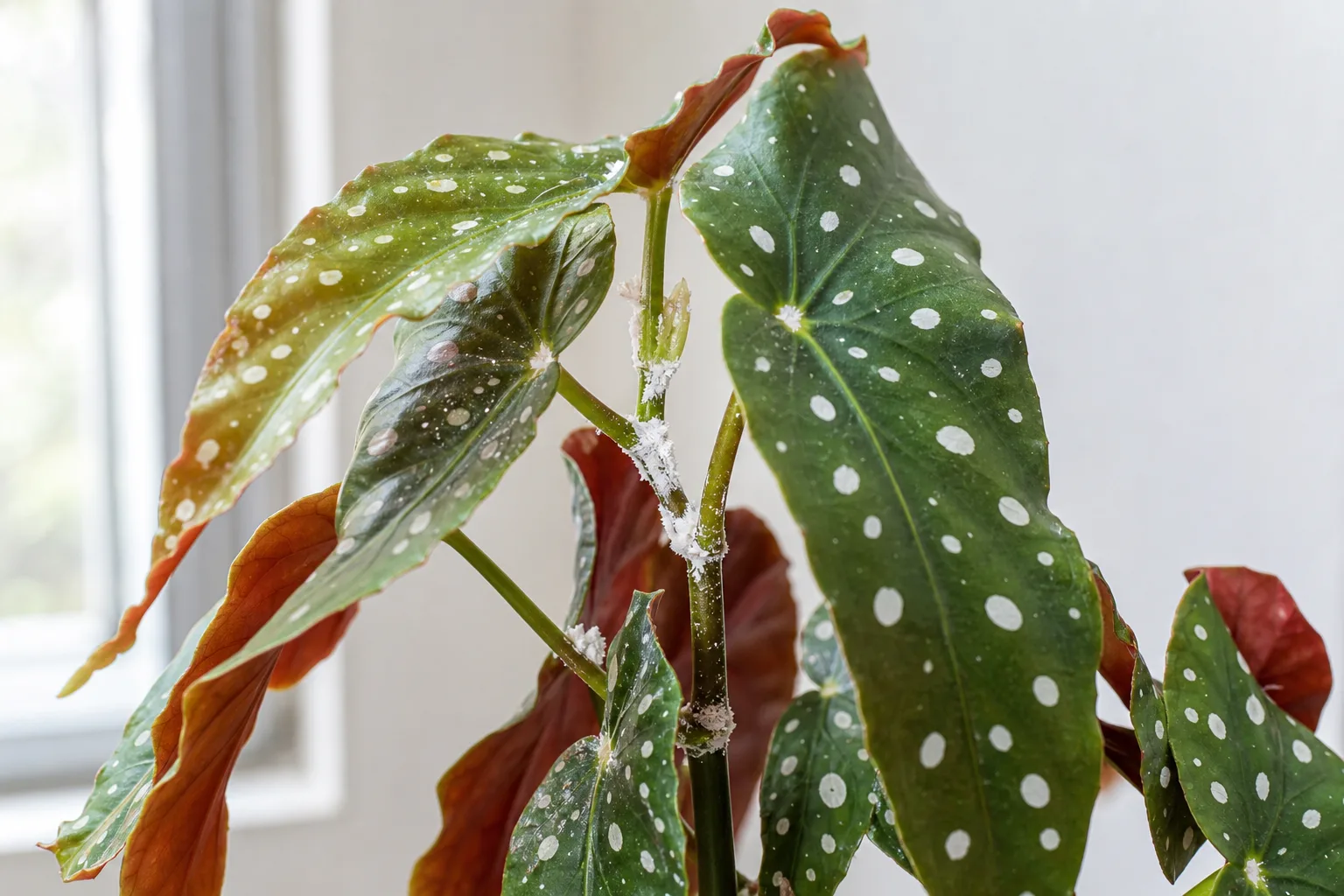
Mealybugs on Begonia maculata show as white cottony clusters tucked into stem nodes, leaf-petiole axils, and the undersides of wing-shaped spotted leaves-often with sticky honeydew on red undersides. First step: isolate the plant and dab every visible wax cluster with a cotton swab dipped in 70% isopropyl alcohol, touching only the pest, not the cane crown.
Mealybugs on Begonia Maculata: Causes, Checks & Fixes
This guide covers mealybugs on Begonia Maculata. See also the general Mealybugs guide, watering, and light pages for this plant.
Mealybugs on Begonia Maculata: Causes, Checks & Fixes
Quick answer
Mealybugs on Begonia maculata (polka dot begonia, angel wing begonia) show up as white cottony clusters tucked into cane stem nodes, leaf-petiole axils, and the undersides of wing-shaped spotted leaves-often with sticky honeydew on reddish leaf undersides and nearby pot rims. They suck sap from upright cane stems and tender new growth, weakening a plant that already dislikes wet crowns and drafty winter air.
First step: isolate the plant the same day you spot cottony wax. Move it away from other houseplants, shared humidity trays, and propagation cuttings before you dab, rinse, or spray anything. Once isolated, dab every visible wax cluster with a cotton swab dipped in 70% isopropyl alcohol, touching the pest directly-not pooling liquid on thin wing leaves or into the overlapping leaf crown.
Cane begonias evolved in Brazilian rainforest understory with filtered light and steady humidity. Judge recovery by clean new spotted leaves without fresh wax, not by expecting old damaged wing tissue to look perfect again. Full species context: Begonia maculata overview.
Why Begonia maculata gets mealybugs
Mealybugs are common sap-sucking pests on houseplants that usually arrive on new nursery stock, shared tools, or nearby infested pots-not because polka dot begonia is uniquely prone, but because its upright cane architecture gives pests protected hiding spots.
A cane begonia grows as bamboo-like segmented stems with swollen nodes where wing-shaped, silver-spotted leaves attach. Those nodes and the overlapping axils beneath each petiole are tight, sheltered crevices where mealybugs aggregate in hidden locations on stems and in branch crotches. Casual glances at the spotted leaf tops miss wax buried at stem joints, under red undersides, or against the inside rim of a plastic pot.
Warm indoor rooms suit mealybugs year-round. Indoor ornamentals are especially vulnerable because mild temperatures favor populations and natural enemies are absent. A recent nursery purchase, summer patio time with companion plants, or a maculata kept in dim stress after a move are common entry points.
Cane-begonia biology raises the stakes. Begonia maculata pushes fast new cane growth in spring and summer, producing soft tissue at stem tips that pests prefer. Over-application of nitrogen fertilizer combined with regular watering stimulates tender new growth where mealybugs prefer to lay eggs-so a heavily fed plant in warm bright conditions can attract mealybugs faster than a lightly maintained one. Drought-stressed or overwatered maculata is also weaker; see watering and fertilizer guides before treating pests alone.
NC State lists cane-type begonias among ornamentals to monitor for mealybugs alongside whiteflies, thrips, and spider mites. Good air circulation helps prevent fungal issues on begonias, but it does not replace weekly node inspection during active growth.
What mealybugs look like on Begonia maculata
Early infestations hide in stem joints, so check these patterns together-not just the silver-spotted leaf faces:
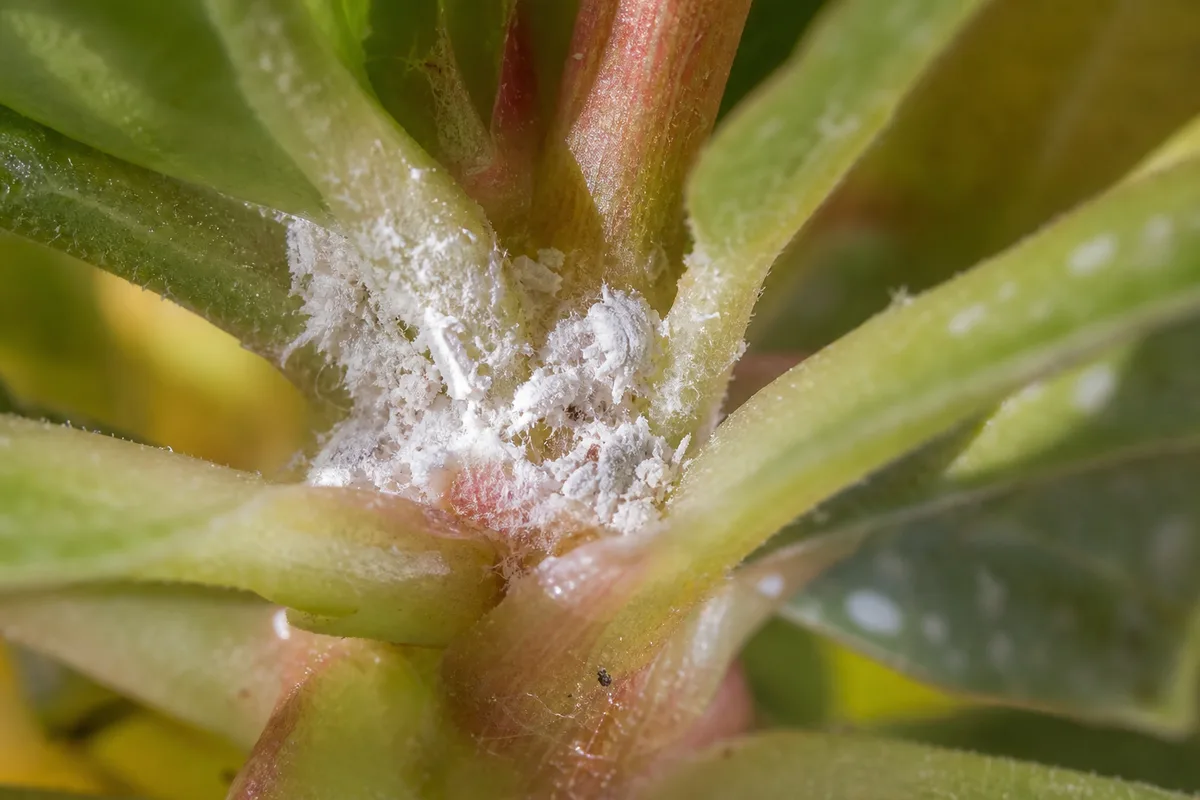
Mealybugs symptoms on Begonia Maculata - compare with healthy tissue on the same plant.
- White fluffy tufts at cane stem nodes where leaves attach-not silver polka dots, which are normal leaf coloration
- Cottony patches in petiole axils where the wing leaf meets the green or reddish cane
- Waxy clusters on red leaf undersides, especially along midribs and near stem junctions
- Sticky, shiny honeydew on petioles, red undersides, or the pot rim below active colonies
- Black sooty mold on honeydew-coated tissue once mold spores colonize the sugar residue
- Stunted or distorted new cane tips while older spotted leaves still look partially firm
- White cottony material at drainage holes or just below the soil line-possible root-zone mealybugs
- Ants on the pot rim farming honeydew from stem colonies
Do not mistake normal features for pests. Begonia maculata has smooth wing-shaped leaves with silver spots above and orangish-red undersides-there is no fuzzy rosette crown like a fern. Mealybug stress shows cottony wax at multiple node points, stickiness, and stalled clean new growth-not one pale lower leaf on an otherwise wax-free cane.
Where to inspect on a cane begonia
Mealybugs on maculata concentrate where stems segment and leaves overlap. Use this inspection map before treating:
- Stem nodes - The swollen bumps along each cane where petioles attach. Run a bright light along every node on all canes, top to bottom.
- Newest soft cane tips - Tender growth at the leading edge of each stem; crawlers settle here during fast summer growth.
- Petiole axils - The pocket where each wing leaf meets the stem, visible when you lift leaves gently away from the cane.
- Red leaf undersides - Follow midribs and veins; honeydew often shines here before you see wax on the upper surface.
- Pot rim and drainage holes - Wax at the soil line or holes suggests root-zone mealybugs, not just foliar colonies.
- Neighbor plants - Inspect houseplants that shared a windowsill, shelf, or nursery shipment.
How to confirm the cause
Do not treat from one white speck on a spotted leaf. Use this inspection order:
- Isolate first - Move the begonia away from other plants before handling so crawlers do not walk to neighboring pots.
- Stem nodes - Inspect every node on each cane with bright light. Most maculata mealybugs concentrate here before they spread to leaf faces.
- Petiole bases and undersides - Lift wing leaves gently and check both sides of each petiole where it meets the cane.
- New growth tips - Inspect the youngest cane segments and unfurling leaves; crawlers settle in tight sheaths before leaves fully expand.
- Disturbance test - Touch a white patch with a dry cotton swab. Mealybugs smear pinkish or yellowish body fluid when crushed; mineral deposits, perlite splash, or dried water spots do not.
- Neighbor check - Inspect plants that shared a windowsill or nursery box for node wax or honeydew.
If canes feel firm, mix smells neutral, and the only issue is cottony wax with stickiness, mealybugs fit. If the cane base is soft, dark, and sour-smelling while mix stays saturated, rule out root rot from overwatering before aggressive rinsing.
Lookalike symptoms to rule out
| What you see | Likely cause | Key difference |
|---|---|---|
| White cottony tufts at stem nodes | Mealybugs | Waxy filaments; pink smear when crushed; honeydew |
| White powdery patches on leaf faces | Powdery mildew | Flat powder, no filaments; worsens with wet leaves and stagnant air |
| Silver spots on green upper leaf | Normal maculata coloration | Fixed pattern from emergence; no stickiness or filaments |
| Chalky crust on soil or pot rim | Mineral deposits from hard water | Does not move; no pink crush; not clustered on nodes |
| Soft green/black pear-shaped insects on new tips | Aphids | No fluffy wax coat; clusters on upright tender shoots |
| Fine stippling + webbing on red undersides | Spider mites | No cottony wax; dry-air outbreaks common in winter |
First fix for Begonia maculata
Isolate the plant, then dab visible mealybugs with 70% isopropyl alcohol on a cotton swab or fine brush. That single action-touch the cottony mass directly without soaking the cane crown-is the correct first response, not a foliar spray on day one.
After isolation and spot dabs:
- Test alcohol on one hidden leaf underside - Test on a small part of the plant first and monitor for leaf burn. Wait 24 hours before treating the whole plant if maculata shows phytotoxicity.
- Dab every visible cluster at nodes, axils, and undersides. Re-wet the swab as needed; one pass rarely reaches hidden ovisacs.
- Repeat weekly for three to four weeks - Repeat this procedure every week until the infestation is gone to catch newly hatched crawlers that settle in nodes you already cleared.
- Knock down crawlers on sturdy canes - A gentle lukewarm rinse of leaf undersides in a sink can dislodge mobile nymphs before alcohol dabs, but do not leave the crown wet overnight. Maculata is prone to fungal issues when foliage stays saturated.
Do not stack neem, soap, and alcohol on the same day until you know the plant tolerates each product. One clear first fix beats five simultaneous treatments on stressed cane tissue.
Heavy infestation and recurrence
Light node clusters usually clear with weekly alcohol dabs alone. Escalate when wax covers most nodes on multiple canes, honeydew triggers sooty mold, or colonies reappear after three clean weekly passes.
Insecticidal soap on leaf undersides and stem joints can supplement alcohol for heavy foliar infestations. Insecticidal soaps applied directly to immature mealybugs can reduce numbers, but test on one leaf first-begonia foliage can react to repeated soap films. Spray undersides where crawlers hide, not the spotted upper surfaces unless necessary.
Root-zone mealybugs need different handling. If white wax persists at drainage holes after clean stems, inspect the root ball during repot. Discard heavily infested mix, rinse roots gently, and treat with insecticidal soap drench per label directions. Foliar alcohol alone will not reach soil-dwelling colonies.
When to discard rather than retreat: When infestations become severe, consider discarding houseplants rather than repeatedly treating them with insecticides. A maculata with wax throughout the root zone, a soft cane base, and no clean new growth for weeks is often cheaper to replace than to chase for months-especially if the infestation spread from a bargain nursery pot.
Avoid unnecessary systemic neonicotinoid spikes indoors unless you accept limited efficacy on mealybugs and potential impacts on beneficial insects. Physical removal and repeated spot treatment remain the first-line approach for houseplant maculata.
Recovery timeline
Visible wax clusters should decline within two weeks of consistent weekly alcohol dabs. Plan three to four weekly passes before calling the plant clear-crawler hatch cycles mean a node that looks clean today can show fresh cotton in seven to ten days.
Judge recovery by new spotted leaves emerging without wax and firm cane stems, not by old wing leaves that already yellowed or distorted from heavy feeding. Heavily damaged leaves may not fully recover cosmetically; trim them once insects are gone if they detract from the plant’s appearance.
If wax returns only on newest cane tips after three clean weeks, you likely missed a hidden node cluster or have root-zone mealybugs-re-inspect every stem joint and the soil line before adding sprays.
What not to do
Do not spray alcohol broadly over the crown or soak overlapping wing leaves. Begonia maculata dislikes wet foliage combined with stagnant air; pooled alcohol in leaf axils can burn thin tissue and invite fungal problems.
Do not apply alcohol to sun-stressed leaves in hot direct light the same day. Move the plant to Begonia Maculata light guide before treatment.
Do not compost infested prunings indoors or leave trimmed canes where crawlers can walk to clean pots.
Do not over-fertilize while fighting pests-nitrogen-rich soft growth attracts the next generation. Pause feeding until wax stays gone for two weeks, then resume light fertilizer during active growth only.
Do not mist foliage heavily as pest prevention. Cane begonias are prone to powdery mildew when leaves stay wet; raise humidity with a gravel tray or humidifier instead.
Do not ignore ants on the pot-they protect mealybugs from predators and signal an established honeydew colony.
How to prevent mealybugs on Begonia maculata
Prevention is inspection plus stable care, not constant spraying:
- Quarantine new plants for two weeks before placing them beside maculata. Check stem nodes and red undersides on day one and day fourteen.
- Inspect weekly during active growth - Nodes on fast summer canes need more frequent checks than slow winter growth.
- Feed lightly - Balanced fertilizer during spring and summer only; skip heavy nitrogen that produces tender pest-attracting tissue.
- Stable watering - Even moisture without soggy crowns keeps maculata resilient; see watering guide.
- Good air circulation - Provide good air circulation around cane stems without blasting heat vents directly on leaves.
- Clean tools - Wipe pruners with alcohol between plants when trimming cane begonias.
Pet safety when treating mealybugs
Begonia species are toxic to cats and dogs, with soluble calcium oxalates that can cause vomiting and oral irritation if chewed. The underground parts carry higher concentration, but stems and leaves still pose risk.
When dabbing alcohol on accessible plants, keep pets away until treated surfaces are dry. Bag and discard trimmed infested leaves promptly. If a pet chews treated foliage, contact your veterinarian or the ASPCA Animal Poison Control Center at (888) 426-4435.
When to worry
Treat mealybugs as urgent when:
- Wax spreads to multiple cane nodes on the same week you first noticed one cluster.
- Honeydew and sooty mold coat red undersides across most leaves.
- The infestation jumps to neighboring houseplants - isolate and inspect the whole collection.
- Wax reappears at drainage holes after three weeks of clean foliar treatment - suspect root mealybugs.
- New spotted growth stops while cane bases soften - pest stress may overlap with root failure.
A few cottony tufts on one node of an otherwise firm maculata is manageable with isolation and weekly dabs. Wax on every cane segment with ants on the pot rim is not-escalate or consider discarding.
When to use this page vs other Begonia Maculata guides
- Begonia Maculata watering guide - Use for routine moisture checks before assuming mealybugs is the main issue.
- Begonia Maculata problems hub - Browse all 16 common issues on this species.
- Yellow Leaves on Begonia Maculata - Different entry point when symptoms overlap with mealybugs.
- Slow Growth on Begonia Maculata - Different entry point when symptoms overlap with mealybugs.
- Spider Mites on Begonia Maculata - Different entry point when symptoms overlap with mealybugs.