Leaf Spot Disease on Zebra Plant: Causes, Checks & Fixes
Quick answer
Leaf spot on Zebra Plant shows as brown or black circular spots on glossy striped leaves when humidity stays high and foliage stays wet. First step: remove the worst spotted leaves with clean scissors and stop wetting leaves when you water.
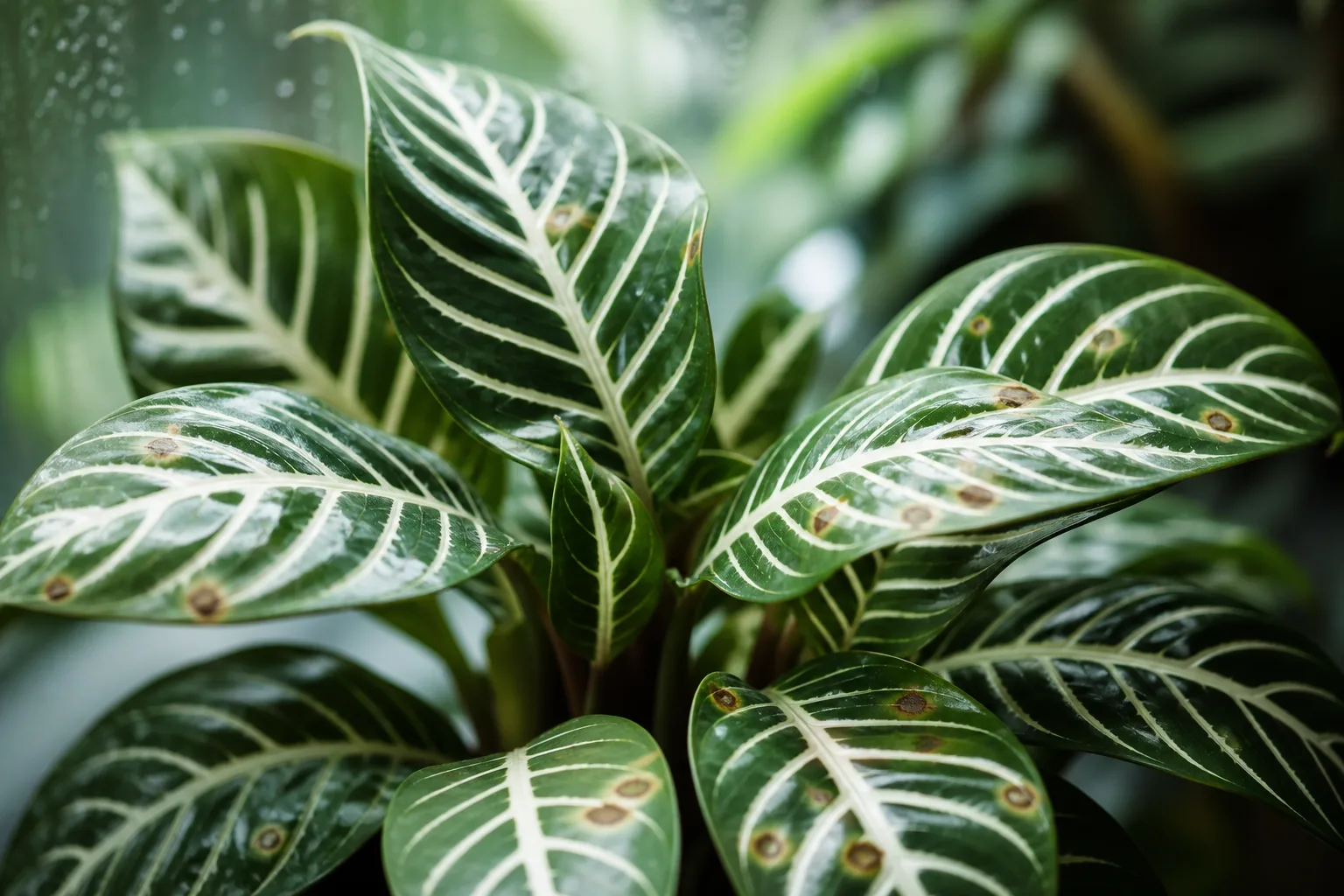
Leaf Spot Disease on Zebra Plant: Causes, Checks & Fixes
This guide covers leaf spot disease on Zebra Plant. See also the general Leaf Spot Disease guide, watering, and light pages for this plant.
Leaf Spot Disease on Zebra Plant: Causes, Checks & Fixes
Quick answer
Leaf spot on Zebra Plant (Aphelandra squarrosa) is usually a fungal infection that takes hold when the plant gets the humidity it craves but leaves stay wet too long in still air. Missouri Botanical Garden notes that crown rot and leaf spots may occur on Zebra Plant overview when culture slips-especially with overhead watering, crowded shelves, or peaty mix that stays soggy.
First step: remove the most heavily spotted leaves with clean, sharp scissors and stop wetting foliage when you water. That single action cuts the spore load and breaks the wet-leaf cycle that keeps fungi spreading. Fix airflow and watering technique before reaching for fungicide on a plant already under stress.
What leaf spot looks like on Zebra Plant
Zebra plant leaves are dark green with bold white veins-the contrast makes spots easy to spot once you know what to look for.
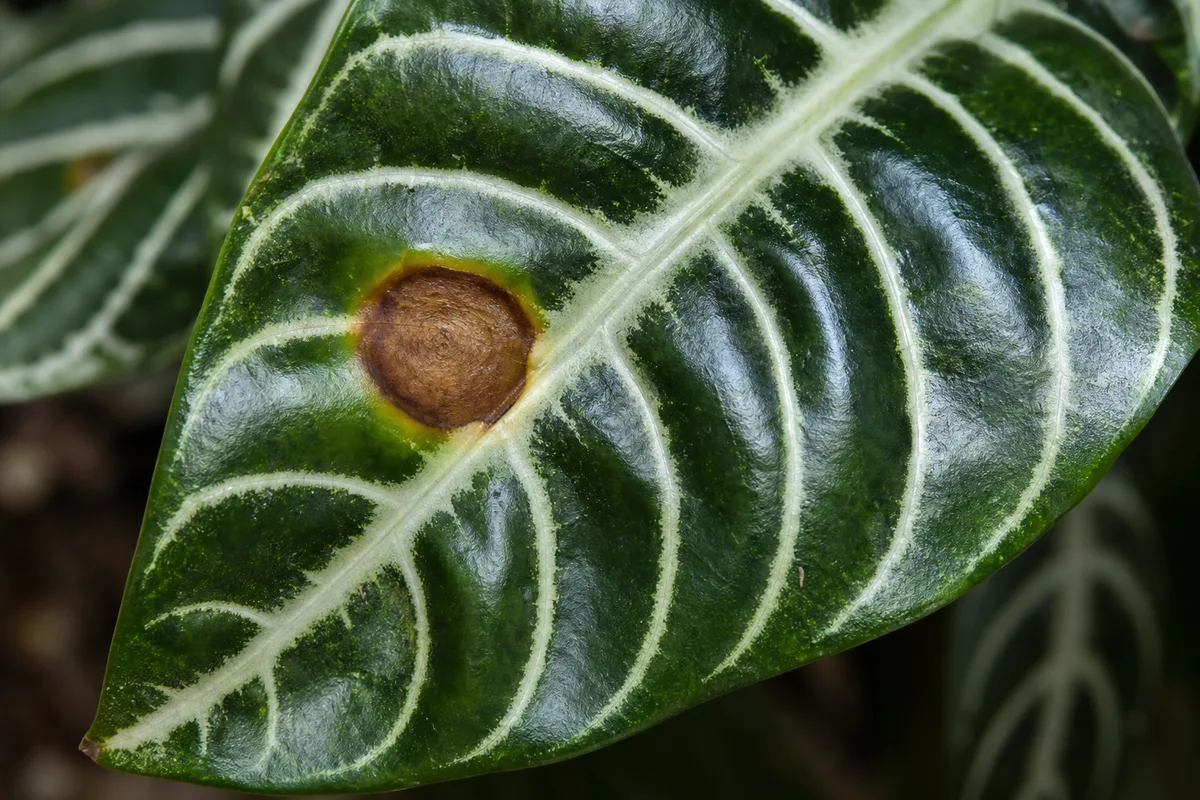
Leaf Spot Disease symptoms on Zebra Plant - compare with healthy tissue on the same plant.
Typical fungal leaf spot on Aphelandra squarrosa:
- Tan, brown, or black roughly circular spots on the leaf face, sometimes with a yellow halo
- Spots may show concentric rings or merge into larger patches as infection advances
- Lower and inner leaves often show damage first where airflow is weakest
- Affected tissue feels papery or sunken; it does not wipe off like sooty mold or powdery mildew
- Spots can spread to adjacent leaves over days to weeks if leaves stay damp
What it is not:
- Brown tips only on Zebra Plant - Usually fluoride sensitivity or low humidity crisping margins, not scattered spots on the blade
- Powdery white coating - That is powdery mildew, a different fungus that sits on the surface
- Sticky residue with insects - Scale or aphid honeydew; check stems and leaf axils
- Uniform yellowing of entire lower leaves - Often overwatering on Zebra Plant or nitrogen stress, not discrete spots
Research on commercial Aphelandra production identifies fungi such as Corynespora cassiicola and Myrothecium roridum as leaf spot pathogens on this genus. You do not need to identify the exact species at home-pattern, spread, and wet culture tell you enough to act.
Why Zebra Plant gets leaf spot
Aphelandra squarrosa is a tropical understory plant from Brazil that needs bright indirect light, consistent moisture, and high humidity. Those same requirements create a narrow window: the plant wants humid air but cannot tolerate leaves that stay wet for hours.
High humidity without airflow is the classic trigger. Many growers place zebra plants in humidified rooms, bathrooms, or tight plant shelves to meet the high humidity. When air sits still around glossy leaves, fungal spores germinate on surfaces that never dry. Clemson HGIC notes that fungal leaf spots develop most rapidly under humid conditions with poor ventilation.
Water on foliage speeds infection. Overhead watering, evening misting, or splashing from saucers keeps the striped leaf surface wet overnight-the window many fungi need to colonize tissue. University of Maryland Extension recommends watering early in the day and avoiding splash on leaves so surfaces dry quickly.
Overwatering and soggy peat mix weaken the plant even when spots look like a leaf-surface problem. Zebra plants want even moisture but soils must not be allowed to dry out completely-yet waterlogged roots reduce vigor and make crown rot more likely alongside leaf spots. A stressed Aphelandra recovers slowly from any infection.
Crowding and shared tools spread spores plant to plant. Leaves touching neighbors, reused drip trays, and unsterilized pruning scissors move pathogens faster in a humid collection.
How to confirm the cause
Work through these checks before you treat:
- Spot pattern - Discrete circular or irregular brown/black lesions on the blade suggest fungal leaf spot. Water-soaked angular patches bounded by veins may indicate bacterial infection instead.
- Spread over time - Mark one leaf with a tag or photo. New spots on other leaves within two weeks confirm active disease, not old mechanical damage.
- Leaf wetness habit - Do you mist leaves, water from above, or keep the plant in a closed cabinet with no fan? Wet culture strongly supports fungi.
- Airflow check - Hold your hand above the plant. Stagnant humid pockets around lower foliage fit leaf spot; gentle movement does not.
- Soil moisture - Stick a finger into the top inch. Soggy peat that never dries suggests overwatering stress stacking with surface infection.
- Pest inspection - Flip leaves and check axils for aphids, scale, or mealybugs. Honeydew and sooty mold mimic dirty spots but come with insects.
- Powdery mildew screen - White talc-like dust that rubs off is mildew, not leaf spot. Both need dry leaves and airflow, but treatment emphasis differs.
If spots are static on one old leaf, the plant is otherwise healthy, and you recently corrected watering, monitor for a week before aggressive pruning.
First fix for Zebra Plant
Remove the worst spotted leaves with sterilized scissors and stop wetting foliage when you water.
Cut each heavily infected leaf at the base of its petiole. Bag and discard trimmings in household trash-do not compost infected tissue indoors. Wipe blades with rubbing alcohol between cuts and before moving to another plant. This reduces spore load immediately without stressing the whole plant the way a full defoliation would.
From this point forward, water at the soil line only. Let chlorinated tap water sit overnight if you normally mist for humidity; switch to a humidifier or pebble tray so leaves get ambient moisture, not direct spray.
Do not apply fungicide, fertilizer, or repot on day one. A stressed zebra plant with wet roots handles those poorly. Confirm the first sanitation step, then adjust culture over the next few days.
Step-by-step recovery
Once infected leaves are removed and overhead wetting stops:
- Improve airflow - Space the plant away from walls and neighbors. A small fan on low several feet away helps humid air circulate without blasting leaves. Clemson HGIC advises good air circulation around houseplants to reduce fungal leaf spots.
- Adjust watering - Water when the top inch of mix feels slightly dry but before the plant wilts. Empty saucers after each drink. Avoid keeping roots in stale water.
- Light check - Move to bright indirect light while avoiding direct sun that scorches foliage. Stronger appropriate light helps the pot dry evenly and supports new growth.
- Remove new spots promptly - As soon as fresh lesions appear on lower leaves, cut them off. Early removal limits spread better than waiting for fungicide alone.
- Hold fertilizer - Skip feeding until new growth looks clean for two weeks. Salt stress on recovering leaves adds another margin burn that confuses diagnosis.
- Fungicide only if spots persist - If sanitation and airflow fail to stop spread after two weeks, apply a houseplant-labeled copper soap or other fungicide listed for leaf spots per label directions. Clemson HGIC lists copper soap and other options after infected parts are removed. Test on one leaf first; zebra plants can be sensitive to sprays on hot days.
Repot only if mix smells sour, roots are mushy, or drainage has failed. Surface leaf spot alone rarely requires Zebra Plant repotting guide-and repotting a diseased plant into fresh wet mix without fixing watering can worsen crown problems.
Recovery timeline
Week 1–2: Spot spread should slow or stop once wet leaves and heavy infection are removed. Expect some older spotted leaves to yellow and drop naturally.
Week 3–6: Clean new leaves emerging from the top confirm culture is working. Aphelandra squarrosa is not a fast grower; one or two unblemished leaves are a solid win.
Beyond six weeks: Gradually resume half-strength fertilizer during active spring or summer growth if new foliage stays spot-free. Old scarred leaves never heal-trim them for appearance once replacement growth is established.
Worsening signs: Spots on new upper leaves despite dry foliage, soft stem at soil line, or rapid defoliation mean escalate-inspect roots, consider fungicide, and isolate from other tropicals.
Lookalike symptoms
- Brown tips and crispy margins - Low humidity or fluoride in tap water; spots stay at edges, not scattered on the blade center.
- Powdery mildew - White powdery patches on leaf surfaces in humid stagnant air; rubs off with a finger.
- Sticky leaves with sooty mold - Pest honeydew from scale or aphids; insects visible on stems or undersides.
- Cold or draft damage - Large tan patches after exposure below 65°F; often sudden after a cold window episode rather than gradual spot spread.
- Sun scorch - Bleached or crisp patches on leaves facing direct sun; linked to light change, not humidity pockets.
What not to do
Do not mist spotted leaves hoping humidity helps-the moisture feeds fungi. Avoid overhead watering even after recovery. Do not compost infected leaves indoors where spores persist.
Skip heavy fungicide sprays before removing infected tissue and fixing airflow-chemicals alone rarely clear leaf spot in stagnant humid corners. Do not fertilize a plant actively dropping spotted leaves.
Avoid crowding the plant back into a humid cabinet or terrarium until new growth stays clean for several weeks. Do not ignore soft stems at the base; that may be crown rot, which needs different intervention than surface leaf spot.
How to prevent leaf spot next time
Match zebra plant culture to its dual needs: humid air, dry leaf surfaces.
- Water at soil level; use pebble trays or humidifiers instead of foliar mist
- Keep high humidity with gentle air movement, not sealed stagnant zones
- Space plants so leaves do not touch; rotate pots for even exposure
- Use well-drained, peaty potting mix and let the top inch dry slightly between waterings
- Sterilize pruning tools between plants
- Quarantine new Aphelandra purchases for two weeks before placing them in a humid collection
Because zebra plant is listed as non-toxic to cats and dogs by the ASPCA, you can discard infected leaves in household trash without pet-specific disposal concerns-still bag them so spores do not spread in the home.
When to worry
Treat as urgent when more than a third of foliage shows active spots within a week, stems soften at the soil line on wet mix, or spots reach new growth tips despite dry leaves and airflow fixes. Isolate the plant from other humidity-loving tropicals until spread stops.
A few spots on one or two lower leaves in an otherwise firm, growing plant is manageable with sanitation and culture change-no panic required.
Conclusion
Leaf spot on Zebra Plant is a culture problem dressed as a disease: humid air plus wet, still leaves invite fungi onto glossy striped foliage. Confirm it by spot pattern and spread, then remove infected leaves and keep foliage dry before anything else. Fix airflow, water at the soil line, and judge recovery by clean new growth-not by old scarred blades. Most Aphelandra squarrosa recover when wet-leaf habits stop early.
When to use this page vs other Zebra Plant guides
- Zebra Plant watering guide - Use for routine moisture checks before assuming leaf spot disease is the main issue.
- Zebra Plant problems hub - Browse all 32 common issues on this species.