Tulsi Problems: Causes & Quick Fixes
Quick answer
Tulsi is prone to 17 common issues - each link below is a plant-specific fix guide.
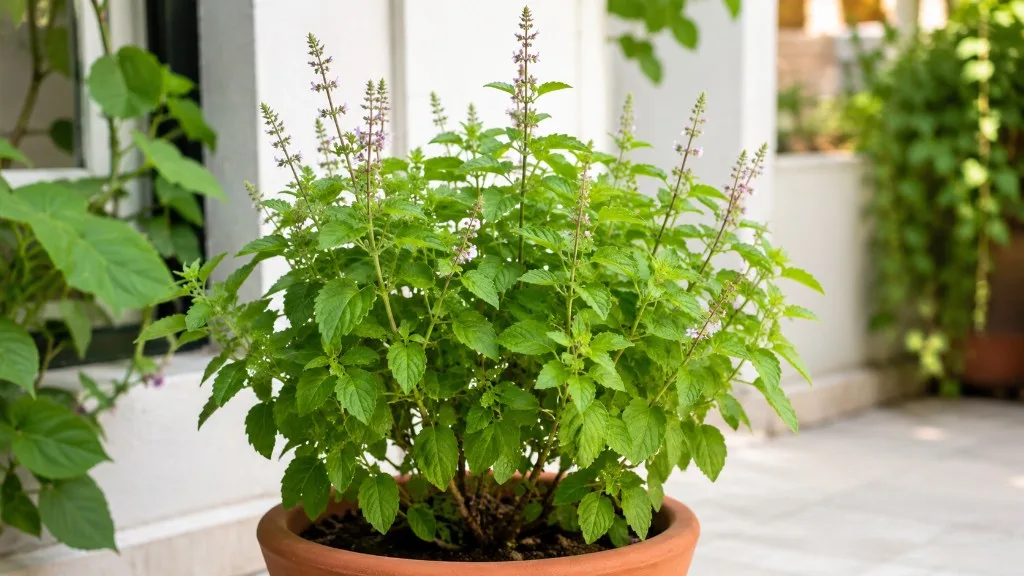
Tulsi problems
Use the guides below to diagnose and fix common issues on Tulsi. Each problem page explains why it happens on this species and what to do first.
Or use our problem diagnosis tool to narrow down symptoms.
Common problems on Tulsi
Leggy Growth
MediumLikely cause: Insufficient sunlight or lack of regular pinching causes long, sparse growth
Quick fix: Move to full sun; pinch growing tips regularly to encourage bushy dense growth
Full fix guide →Mold on Soil
LowLikely cause: Overwatering and poor air circulation cause soil surface mould around tulsi
Quick fix: Reduce watering, improve air flow around the plant, remove mouldy surface soil and top-dress with fresh mix
Full fix guide →Wilting
MediumLikely cause: Tulsi wilts quickly when underwatered (recovers within hours) but also wilts from root rot which does not recover
Quick fix: Check soil: dry soil - water immediately. Wet soil with wilting - check roots for rot and improve drainage
Full fix guide →Water Stress
MediumLikely cause: Oct 2, 2025 · Holy Basil—also known as Tulsi—is a sacred and healing herb used for centuries. Learn its many health benefits, how to grow it, and delicious tea and infused water recipes.
Quick fix: Confirm diagnosis on your Tulsi, then address the most likely care or pest factor described in current extension guidance.
Full fix guide →Yellow Leaves
MediumLikely cause: Overwatering, poor drainage, or nutrient deficiency (especially nitrogen) causes yellow leaves
Quick fix: Improve drainage; allow top inch to dry before watering; apply organic fertiliser
Full fix guide →Aphids
MediumLikely cause: Aphids on Tulsi cluster on soft new tips and leave sticky honeydew on holy basil leaves. First step: move the pot away from other herbs and blast stem tips and leaf undersides with a strong stream of
Quick fix: See plant-specific guide for step-by-step fixes.
Full fix guide →Brown Tips
MediumLikely cause: Brown tips on tulsi usually mean leaf margins dried out before roots could resupply water-often from a dry spell in a sunny pot, fertilizer salt buildup, or harsh sun after a move. First step: stick y
Quick fix: See plant-specific guide for step-by-step fixes.
Full fix guide →Drooping Leaves
MediumLikely cause: Drooping leaves on Tulsi usually trace to one of five stresses: dry soil, wet failing roots, cold below 50°F (10°C), heavy harvest, or weak light. First step: press your finger 2–3 cm into the mix and
Quick fix: See plant-specific guide for step-by-step fixes.
Full fix guide →Fungus Gnats
MediumLikely cause: Fungus gnats on tulsi mean the compost surface stays wet too long-common on daily-watered altar pots and winter indoor containers. First step: let the top inch of mix dry completely before the next wa
Quick fix: See plant-specific guide for step-by-step fixes.
Full fix guide →Low Humidity
MediumLikely cause: Low humidity on tulsi browns leaf margins on the side facing heating vents while soil stays evenly moist-common on overwintered holy basil in heated rooms below about 40% RH. First step: move the pot
Quick fix: See plant-specific guide for step-by-step fixes.
Full fix guide →Mealybugs
MediumLikely cause: Mealybugs on tulsi show up as white, cottony clumps in leaf axils and stem forks on holy basil. First step: move the pot away from other herbs and dab every visible cluster with 70% isopropyl alcohol
Quick fix: See plant-specific guide for step-by-step fixes.
Full fix guide →Not Enough Light
MediumLikely cause: Not enough light makes Tulsi stretch toward windows, thin its leaves, and lose aroma and purple tint. First step: move the pot to your brightest spot-full sun outdoors or a south or west window indoor
Quick fix: See plant-specific guide for step-by-step fixes.
Full fix guide →Overwatering
MediumLikely cause: Overwatering on tulsi keeps holy basil roots in soggy mix without dry-down time-often from a summer watering schedule applied in a cool winter room. First step: stop watering until the top inch of soi
Quick fix: See plant-specific guide for step-by-step fixes.
Full fix guide →Root Rot
MediumLikely cause: Root rot on tulsi means waterlogged mix has suffocated roots on this fast-growing holy basil herb. First step: stop watering, confirm the top inch is still wet while leaves hang limp on a heavy pot-th
Quick fix: See plant-specific guide for step-by-step fixes.
Full fix guide →Slow Growth
MediumLikely cause: Slow growth on Tulsi usually means insufficient light, over-harvesting, or cool room temperatures-not generic houseplant neglect. First step: move the pot to at least six hours of direct sun or very b
Quick fix: See plant-specific guide for step-by-step fixes.
Full fix guide →Spider Mites
MediumLikely cause: Spider mites on tulsi cause pale stippling and fine webbing on serrated leaves in hot, dry air. First step: isolate the pot and rinse every leaf underside with a forceful stream of lukewarm water.
Quick fix: See plant-specific guide for step-by-step fixes.
Full fix guide →Underwatering
MediumLikely cause: Underwatered tulsi wilts dramatically, feels light in the pot, and often shows soil pulling away from the pot wall. First step: water thoroughly until drainage runs free-or bottom-soak 20–30 minutes i
Quick fix: See plant-specific guide for step-by-step fixes.
Full fix guide →