Tulsi Pruning Guide: When, Where, and How Much to Cut
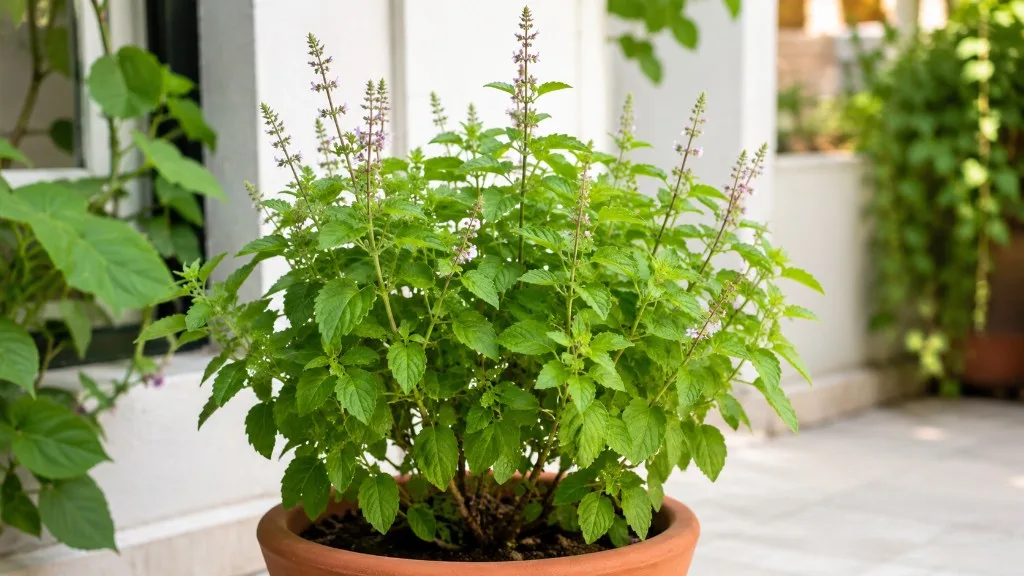
Tulsi Pruning Guide: When, Where, and How Much to Cut
Tulsi Pruning Guide: When, Where, and How Much to Cut
Quick Answer - Pinch Flower Buds First, Then Cut Above a Node
First action: Scan stem tips for flower buds and pinch or snip them off before they open. Then, on any branch ready for harvest, cut one-quarter inch above a leaf node-the joint where a pair of opposite leaves meets the square stem. That order matters: buds steal momentum toward seed production, and a node cut removes the terminal bud so side shoots can branch out.
If your tulsi is still a single skinny spike under 6 inches tall, skip renovation cuts and wait until the plant has enough leaf pairs to survive losing its top. One early pinch above a node once the seedling is tall enough is the shape-setting move everything else builds on.
What Pruning Does for Tulsi
Ocimum tenuiflorum-holy basil, sacred basil, tulsi-belongs to the Lamiaceae (mint) family and grows as a fast, erect, multistemmed herb that can reach about 3 feet in warm conditions. Unlike woody houseplants you reshape once a year, tulsi is grown for repeated leaf and tip harvest. Pruning here means pinching tips, harvesting stem ends, and removing flower spikes so the plant stays in vegetative, leaf-producing mode as long as your season allows.
Left alone, a young seedling sends one dominant stem upward, stacks a few leaf pairs, then races toward the small tubular flowers arranged in terminal racemes typical of tulsi. Regular pinching interrupts that upward sprint and redirects growth into lateral branches-each one a future harvest point. Pruning cannot turn a exhausted woody stem into a seedling again, but it can stretch a single pot’s useful life from a few weeks of leggy stretching to months of tea-ready tips.
Square Stems, Nodes, and Apical Dominance
Run your finger up a tulsi stem and you will feel the square cross-section shared with sweet basil and mint. Each pair of opposite serrated leaves marks a node; the bare section between nodes is the internode. In the leaf axil-the angle between leaf and stem-dormant buds wait for a signal. The growing tip releases hormones that suppress those side buds (apical dominance). Remove the tip cleanly just above a node and the buds at that node, and often the node below, awaken into new shoots.
Cut mid-internode and you leave a stub with no buds to activate. Cut through the node and you risk crushing the tissue that should branch. The reliable target matches sweet-basil guidance from University of Arizona Extension: about one-quarter inch above the top leaf pair you intend to keep. Krishna tulsi’s purplish leaves, Ram tulsi’s greener foliage, and Kapoor tulsi’s camphor-scented shoots all branch from nodes the same way-only growth speed and bolt tendency differ.
Leaf Harvest Versus Flower Spikes
A tulsi plant has finite energy from light, water, and roots. Pinching tips for tea refills new leaves along expanding side shoots. Allowing terminal flower spikes to develop shifts that budget toward bloom and seed. Illinois Extension recommends removing basil flower buds by pinching as soon as they form because flowering affects leaf flavor and yield-a rule most leaf-first tulsi growers follow even though tulsi leaves can stay usable longer into bloom than sweet basil often does.
For daily tulsi tea and cooking, treat flower buds as a timing alarm, not decoration. If you want seeds for next year, let one plant flower late in the season while you keep pinching your main harvest plant.
What to Check Before You Cut
Before any session, scan the plant in good light:
- Flower buds at stem tips-remove these first.
- Stem readiness-at least four to six true leaf pairs on the main stem before the first hard pinch.
- Moisture and stress-wilting from drought, recent Tulsi repotting guide, or cold nights means lighter harvests only.
- Pests on tender tips-aphids and whiteflies often cluster on soft new growth.
- Tool cleanliness-wipe scissors with rubbing alcohol if you recently cut diseased plants.
Plan the session before you start snipping. Tulsi tolerates frequent light harvests far better than one rare aggressive scalp.
When to Prune and Pinch Tulsi
Routine tip pinching and flower removal can happen whenever the plant is actively growing-pushing new leaves, drinking on a steady rhythm, and not wilting from root trouble. Tulsi does not need a dormant-season pause the way temperate trees do. Hard renovation cuts-shortening a 60 cm leggy stem back to lower nodes-work best during the brightest, warmest months when cell division is fast.
The First Pinch at 6 to 8 Inches
Start the first pinch when tulsi reaches roughly 6 to 8 inches (15–20 cm) tall with at least four to six pairs of true leaves, matching Arizona Extension basil guidance for beginning harvest height. At that stage roots can support renewed top growth. Snip the top growing point down to just above the uppermost healthy node, leaving at least two leaf pairs on the plant so photosynthesis continues.
Within days to two weeks in warm sun-slower on a cool windowsill-you should see two new tips emerging from the node below your cut. Pinch those when they have added a few nodes of length, not while they are still pinpricks. If you bought a nursery start with multiple branches already, pinch each lead shoot once to synchronize bushiness.
Best Timing for Renovation Cuts
Save major shaping or hard cutbacks for late spring through summer outdoors, or whenever your indoor plant sits in its strongest light. In short-day winter months, limit yourself to light tip harvests and bud removal. Dead, diseased, or pest-infested stems are exceptions-cut those out whenever you find them.
In frost-free climates (USDA zones 10–11 and comparable tropical lowlands), tulsi can behave as a short-lived perennial with year-round pinching, though growth still slackens in cooler dry spells. On a temperate windowsill where tulsi lives as a warm-season annual, do heavy renovation early enough that the plant has months to refill before cold stress or indoor heat fatigue.
How to Prune Tulsi Step by Step
Work in this order each session:
- Remove flower buds from every stem tip you can reach.
- Harvest or pinch growing tips that have added two to three leaf pairs since the last cut.
- Shorten leggy branches back to a lower healthy node if internodes have stretched.
- Trim dead or damaged stems to the first live node or to soil level if fully brown.
- Step back and check balance-pinch any stem racing ahead of the others.
Use sharp scissors on fibrous stems; soft tips can be pinched with fingers if you do not crush the tissue. Position blades one-quarter inch above the node and make one clean snip.
Pinch Growing Tips Every Two to Three Weeks
A practical rhythm is to pinch growing tips every two to three weeks on each active branch during warm growth-faster in peak summer, slower indoors in winter. The removed tips are your harvest for fresh tea; the remaining plant stays slightly shorter and bushier. Rotate the pot every few days so all sides receive similar light; lopsided growth usually means lopsided light or one forgotten flowering branch stealing vigor.
Remove Flower Buds Before They Open
Tulsi buds form at terminal growing points as small stacked bumps above the newest leaf pair-purplish on Krishna selections, pale green on Ram types. Catch them at a few millimeters and pinch the cluster with fingernails or snip with scissors, taking minimal stem above the top node. Check buds at every harvest pass: weekly in cool slow growth, every two to three days in hot summer when tulsi can jump from bud to open flower quickly.
Some tulsi cultivars bolt faster than others, so check soft tips regularly during warm weather. Open flowers are not a disaster-remove the spike anyway-but consistent early pinching trains the plant more efficiently than repeated late removal.
How Much You Can Safely Remove
Do not remove more than about one-third of the plant’s total leafy growth in one session during active season. That limit protects the leaf surface driving photosynthesis and prevents root shock in a small pot where moisture swings are abrupt. Daily pinches of a few millimeters per tip rarely approach one-third; the rule matters when you harvest long stem sections for drying, take propagation cuttings, or renovate a leggy plant.
If you need a large quantity for drying, spread harvest across two sessions a week apart, or take one-third from each of several plants instead of scalping one. A mature multi-branched tulsi in a large outdoor pot can survive a heavier cut because remaining branches still carry plenty of leaves, but sudden denuding slows recovery and can stress sun-exposed stems.
Where to Cut and What to Avoid
Always cut just above opposite leaf nodes on live stems, leaving at least two leaf pairs below the cut on each branch. When removing a flower spike, cut down to the topmost healthy leaf pair even if that shortens the branch more than a cosmetic pinch.
Avoid:
- Mid-internode cuts on live stems
- Stripping lower healthy leaves for tidiness
- Pruning a wilted, recently repotted, or heat-scorched plant hard
- Removing more than one-third of foliage at once
- Crushing stems with dull tools
Dead stems with no live leaves below can be cut back to the first live node or removed at soil level. Penn State Extension advises cutting basil just above a pair of leaf nodes-the same placement tulsi needs on its square stems.
Shaping a Bushy Plant and Fixing Leggy Growth
A bushy tulsi comes from repeated node pinches, bright light, and timely flower removal-not a one-time haircut. Leggy plants with long bare internodes usually mean insufficient light, skipped pinches, or allowed flowering on the dominant stem. Improve light first, then pinch every lead on a two-to-three-week rhythm.
When tulsi is already tall and leggy, trace the worst stem down to a lower node with healthy leaves or small side shoots. Cut back to just above that node, removing up to one-third to one-half of total height in one action if the plant is otherwise healthy. Tulsi often responds with vigorous side branching within two to four weeks in warm bright conditions. If several stems are leggy, stagger renovation over ten-day intervals so the plant never loses all its canopy at once.
Removed tops with nodes and no heavy flowering can root in water or moist mix-pruning and propagation overlap naturally with this herb.
Aftercare and Recovery
Water if the top inch of mix is dry after a heavy session. Expect slight afternoon wilting on hot days; evening recovery is normal. Hold fertilizer for two to three weeks after a major renovation cut; light daily pinching on a healthy plant does not require a pause. Keep light steady or slightly brighter-dimming slows branch fill.
Harvest in the morning after dew dries and before afternoon heat, when aromatic herbs often hold their best flavor and turgid stems, per UC IPM basil cultural guidance. Watch new tips for aphids and whiteflies on soft regrowth.
Recovery timeline: tip pinches show new buds in one to two weeks; hard renovation shows substantial branching in two to four weeks during active season, longer in winter. If cut ends turn black, trim to healthy tissue with a clean blade and let the soil surface dry between waterings.
Mistakes to Avoid
Waiting too long to pinch lets tulsi flower and lignify before branching architecture forms-start at 6 to 8 inches. Allowing flowers to open repeatedly on a leaf plant trains it toward seed. Cutting in the wrong place produces dieback; memorize the node rule. Removing more than one-third at once shocks small pots. Pruning without improving light yields a bushy plant on paper that still stretches thin. Stripping lower leaves reduces sugar export to roots and rarely helps. Using dirty tools spreads disease between houseplants.
Conclusion
Tulsi pruning works best when harvest, flower removal, and shaping are one habit-not three separate chores. Pinch growing tips every two to three weeks, cut just above leaf nodes, remove flower buds as soon as you see them, and treat regular morning harvest as the engine that keeps Ocimum tenuiflorum bushy and leaf-focused. Start the first pinch at 6 to 8 inches, respect the one-third harvest limit, and save hard renovation for warm active growth when a leggy plant needs reset.
When to use this page vs other Tulsi guides
- Tulsi overview - Start here for whole-plant context before deep-diving this topic.
- Tulsi problems hub - Jump to symptom-specific fix guides when this care topic does not resolve the issue.
- Leggy Growth on Tulsi - Escalate here when pruning adjustments are not enough.