Leggy Growth on Tulsi: Causes, Checks & Fixes
Quick answer
Leggy Tulsi usually combines insufficient light with missed harvest pinches-long internodes, a single vertical spike, and weak leaf aroma. First step: move the pot to full sun or very bright light within 30 cm of glass, then pinch growing tips one-quarter inch above a leaf node once light improves.
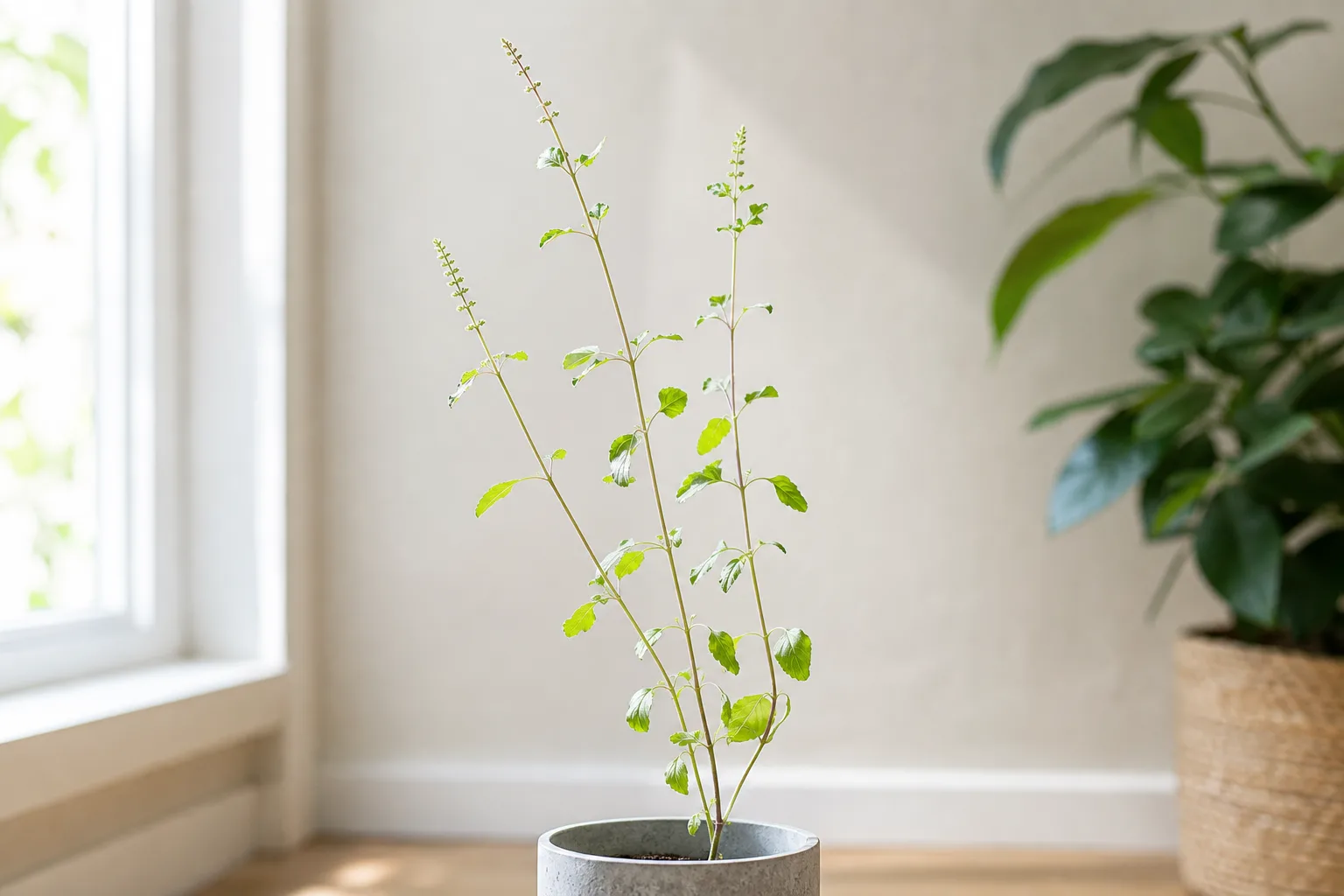
Leggy Growth on Tulsi: Causes, Checks & Fixes
This guide covers leggy growth on Tulsi. See also the general Leggy Growth guide, watering, and light pages for this plant.
Leggy Growth on Tulsi: Causes, Checks & Fixes
Quick answer
Leggy growth on Tulsi (Ocimum tenuiflorum, holy basil) means the plant is stretching instead of branching-a tall single spike with long gaps between leaf pairs, thin pale stems, and often weak clove-like aroma when you crush a leaf. On a daily-harvest herb, legginess usually comes from two causes working together: insufficient light (etiolation) and missed pinching that leaves one dominant stem racing upward.
This page is the dual-cause troubleshooting entry point. If your problem is only pale, leaning foliage without a harvest-pinching history, see not enough light on Tulsi. For full window placement and grow-light setup, see the Tulsi light guide. For node placement and the one-third harvest rule, see the Tulsi pruning guide.
First step: move the pot to full sun or the brightest window you have-within 30 cm (12 inches) of the glass on south, west, or east exposure. NC State Extension classifies holy basil as a full-sun plant requiring six or more hours of direct sunlight daily. Wait one to two weeks for new growth to firm up, then pinch each lead shoot one-quarter inch above a leaf node. Do not repot, fertilize, and scalp every stem on the same day.
What leggy growth looks like on Tulsi
Healthy Tulsi forms a bushy clump of opposite leaf pairs on square mint-family stems with a sharp scent when rubbed. Leggy plants lose that balanced harvest shape.
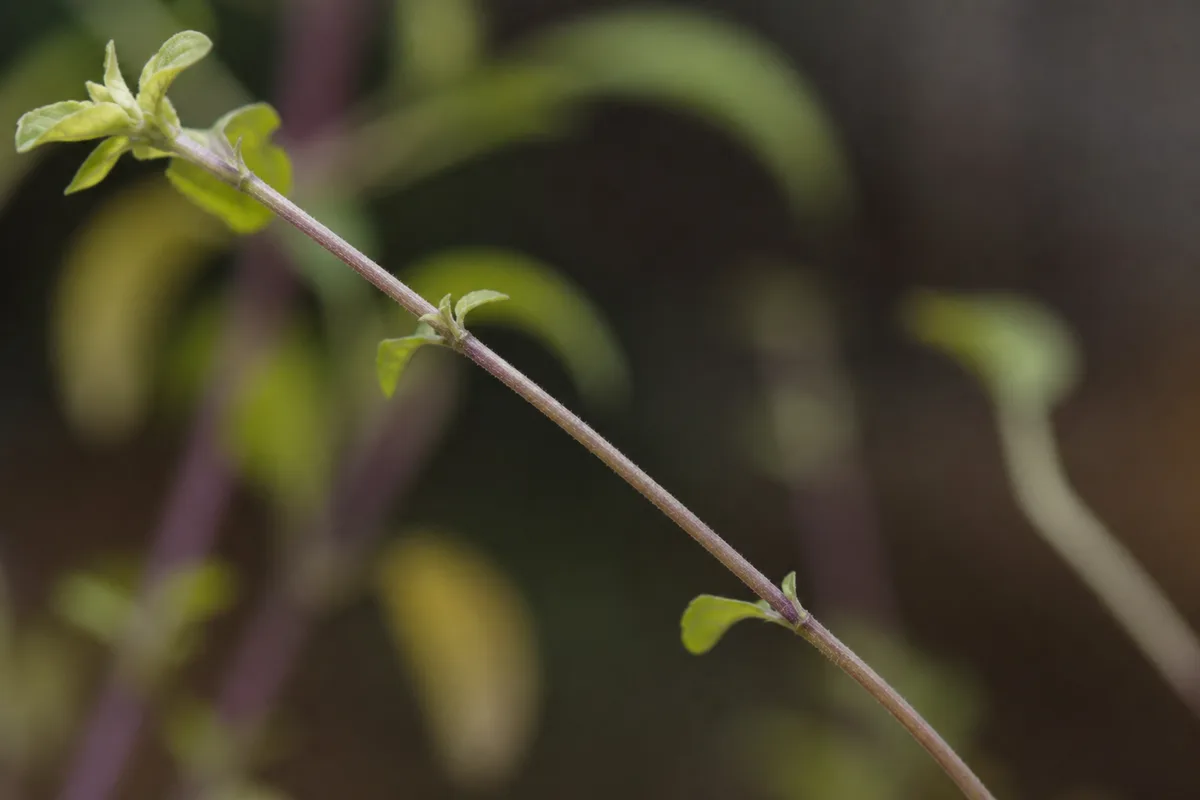
Leggy Growth symptoms on Tulsi - compare with healthy tissue on the same plant.
Typical signs on holy basil:
- Long internodes - gaps of 3 cm or more between leaf pairs on the newest growth, noticeably longer than older compact sections lower on the stem
- Single dominant vertical spike - one main stem racing upward with few or no side branches, especially on young plants that were never pinched
- Thin, soft stems that lean hard toward the window or grow light
- Small, pale green leaves on new growth, sometimes yellow-green rather than the deep tone sun-grown tulsi shows
- Weak or muted aroma - the plant grows green tissue but loses the volatile compounds that make tulsi worth the counter space; compare a dim windowsill sprig to outdoor sun tulsi and the difference is obvious
- Slow side-shoot regrowth after you harvest a few top leaves without removing the terminal bud
Legginess is not the same as slow growth from cool temperatures alone-slow plants may look firm but stalled. It is not the same as overwatering yellowing, though dim corners where tulsi stretches often stay wet too long. Leggy tissue usually looks uniformly stretched across the whole plant or concentrated at the newest tips after a move to a darker spot or weeks without pinching.
Why Tulsi gets leggy
Tulsi is a fast-growing Lamiaceae herb native to bright tropical and subtropical conditions. It does not behave like a shade-tolerant foliage houseplant. When light drops or the terminal bud stays in place, the plant allocates energy toward height instead of bushiness.
Insufficient light is the primary driver
In too little light, tulsi etiolates-it stretches toward the brightest source, producing long internodes, smaller leaves, and weak stems. Indoor plants in too little light become spindly or leggy as they stretch. Illinois Extension notes that basil-family herbs need strong light for compact growth; without it, plants become pale and spindly. Indoors, a pot on a dining table two metres from a south window is not getting south-window light; intensity drops sharply with distance.
NC State lists holy basil as preferring full sun in moist, well-drained soil. A north-facing sill, enclosed balcony shade, or short winter days commonly produce the classic indoor pattern: the plant lives, stretches, and stops earning its harvest space.
Light also controls aroma intensity. Tulsi grown for tea and ritual use depends on leaf quality, not just leaf count. Weak light produces thin leaves with muted fragrance before obvious pale color appears-an early signal worth trusting.
Missed pinching lets one stem dominate
Left alone, a young tulsi seedling sends one erect stem upward, stacks a few leaf pairs, then races toward flower spikes. The growing tip releases hormones that suppress side buds at lower nodes (apical dominance). University of Arizona Extension basil guidance recommends cutting just above a pair of leaves so new growth emerges from the leaf axils below the cut within about a week.
If you pluck individual leaves without removing the terminal bud, or harvest only once and forget the plant for three weeks, the main spike keeps elongating. Bare lower internodes with no side branches usually mean pinching was skipped, not that the plant is diseased.
Flower-bolt stretch
When tulsi is allowed to form terminal flower spikes, stems elongate as the plant shifts energy toward bloom and seed. Illinois Extension recommends removing basil flower buds by pinching because flowering affects leaf flavor and yield. Bolt looks like rapid vertical growth with bud clusters at tips-not the pale uniform stretch of chronic shade. Check stem tips for stacked bumps before blaming light alone.
Seasonal winter light drop
Leggy tips that appear only on newest growth after October often trace to shorter days and lower window intensity, not a sudden care mistake. The fix is brighter placement or supplemental lighting during the darkest months-not more fertilizer.
Light-induced etiolation vs. missed pinching vs. flower bolt
| Pattern | Internode length | Stem color | Side branches | Stem tips | Aroma |
|---|---|---|---|---|---|
| Low light (etiolation) | Long on all new growth | Pale, thin | Few or none | No bud clusters | Weak |
| Missed pinching | Long on dominant spike; lower nodes may look normal | Often greener if light is adequate | Absent on main stem | May be vegetative, no buds yet | Can be normal if light is good |
| Flower bolt | Rapid lengthening | Green to purplish | Side shoots may exist | Visible bud clusters | Leaf flavor declines |
| Overwatering stall | Normal or short | Green; may yellow lower | Variable | No bolt pattern | Normal until advanced |
Most indoor tulsi on a dim windowsill that has not been pinched in weeks shows both etiolation and apical dominance-fix light first, then branch with node cuts.
How to confirm the cause
Work through these checks before heavy renovation pruning:
- Internode length on newest growth - Measure the gap between the last two leaf pairs. Healthy sun-grown tulsi often stays near 1–2 cm; gaps of 3 cm or more on fresh tissue strongly support etiolation.
- Pinching history - When did you last remove the terminal bud above a node on each lead shoot? If never, missed pinching is confirmed regardless of light.
- Light at the leaf surface - Hold your hand above the foliage at midday. A sharp defined shadow suggests usable intensity; a faint or absent shadow means low light even if the room feels bright. See the light guide for window placement detail.
- Aroma test - Crush the newest leaf pair between your fingers. Muted scent with pale stretch points to chronic under-lighting.
- Flower buds at tips - Small stacked bumps above the top leaf pair mean bolt; pinch them off before addressing stretch.
- Soil dry-down speed - Push your finger 2.5 cm into the mix. If the top stays damp for two weeks while the plant looks pale and stretched, low light is slowing water use-adjust watering after you improve light, not before.
If light is clearly inadequate, you have enough to act without Tulsi repotting guide to confirm legginess.
First fix for Tulsi: improve light, then pinch above nodes
Move the pot to the brightest location that still avoids scorching unacclimated leaves.
Practical placements:
- Outdoors or balcony edge - six or more hours of direct sun when temperatures stay above 10°C (50°F)
- Indoors - within 30 cm of south, west, or east glass; rotate a quarter-turn every two to three days
- Winter or dim rooms - full-spectrum LED grow light 10–30 cm above the canopy, 12–16 hours daily on a timer
If the plant came from deep shade, move to bright light in one step-not from dim shelf to hot afternoon terrace sun without acclimation over 7–14 days. Pull back if sun-facing leaves bleach or crisp.
After one to two weeks of better light, pinch each lead shoot one-quarter inch above a leaf node-the point where opposite leaves meet the square stem. Arizona Extension recommends this placement for basil-family harvest cuts. Remove up to the top two node pairs on each stem if the plant is otherwise healthy, staying below the one-third foliage limit described in the pruning guide.
Do not increase watering to “help” a leggy plant. Lower light use means slower dry-down. Container herbs need bright light and good drainage; water when the top inch of soil is dry, matching the rhythm from your main watering routine.
Pinching technique for leggy stems
Run your finger up a tulsi stem and feel the square cross-section shared with sweet basil and mint. Each leaf pair marks a node; the bare section between is the internode. Dormant buds sit in the leaf axils waiting for the terminal tip to come off.
Correct cut:
- Identify the second or third node from the tip-the first node with firm leaves below the stretched section.
- Position scissors one-quarter inch above that leaf pair, not through the node and not mid-internode-Penn State Extension advises cutting basil just above a pair of leaf nodes.
- Make one clean snip. Two new shoots typically emerge from buds at that node within one to two weeks in warm bright conditions.
- Pinch flower buds whenever you see them at any stem tip.
Wrong cuts that keep tulsi leggy:
- Plucking side leaves only, leaving the terminal bud
- Cutting between nodes, leaving a stub with no buds to activate
- Removing more than one-third of total foliage in one session on a stressed plant
For a already-tall spike, trace the stem down to a lower node with healthy leaves and cut back to just above it-up to one-third of total height in one action if light is already improved. Stagger hard cuts on multiple stems by ten days so the plant never loses all its canopy at once.
Step-by-step recovery
Once light is corrected:
- Let new growth lead - Watch the node below your first pinch. Shorter internodes and deeper green on fresh pairs confirm placement is working.
- Pinch on a two-to-three-week rhythm during active growth-faster in summer, lighter in winter.
- Remove flower spikes before they open on harvest plants.
- Trim old stretched sections only after side shoots are visible-you cannot shorten old internodes without cutting them off.
- Hold fertilizer for two to three weeks after major renovation; light and pinching drive recovery, not feed.
Recovery timeline and what to expect
Tulsi responds quickly once light and pinching align, but old tissue does not transform.
- Week 1–2: Lean may stop worsening; new tiny leaves may look slightly darker than stretched tissue above them
- Week 2–4: Side shoots visible at pinched nodes; aroma may strengthen on new growth first
- Month 2–3: Multi-branched harvest shape returns if pinching and bud removal stay consistent
- Beyond: Old leggy internodes remain long unless you prune them back to lower nodes
If six weeks in clearly brighter light with regular node pinches produce no side shoots, reassess whether the location is still too dim or whether root problems are limiting recovery.
Lookalike symptoms
Not enough light vs. leggy growth: On LeafyPixels, not enough light covers the broader low-light symptom set-pale color, leaning, slow recovery. This page focuses on the elongated internode and single-spike pattern plus the missed-pinching half of the dual cause.
Slow growth: Firm stems with stalled but not stretched new pairs often trace to cool temperatures or over-harvest stress. See slow growth on Tulsi.
Overwatering stall: Yellow lower leaves with wet soil and soft stems at the base are root-zone problems. Leggy plants can have green leaves and still stretch. Fix light first, then let soil dry appropriately.
Normal post-shipping regrowth: A nursery start may look compact at purchase then stretch on your windowsill. That is acclimation to lower light, not a separate disease-treat as etiolation plus first pinch at 15–20 cm height.
Mistakes to avoid
- Pinching heavily before improving light - Cut stems regrow, but they stretch again if the photon budget is still too low.
- Jumping from deep shade to hot afternoon window - Unacclimated tulsi scorches. Bright indirect or gradual outdoor hardening is safer.
- Feeding more to “bulk up” a stretched plant - Fertilizer does not replace photons and may reduce aroma.
- Repotting on day one - Legginess is not a pot-size problem unless separate root-bound signs exist.
- Confusing flower bolt with etiolation - Check for bud clusters at tips before moving the plant again.
- Keeping the same watering calendar - Dim corners and bright windows dry at different speeds.
How to prevent leggy growth next time
Place tulsi where it receives six or more hours of direct outdoor sun or bright indoor light within 30 cm of glass, supplemented through winter with a grow light on a timer. Pinch growing tips every two to three weeks during active season, always above a leaf node, and remove flower buds before they open on harvest plants.
Inspect weekly during routine care so early stretch stays small. Match watering to dry-down in that specific spot-leggy shade-grown tulsi in stale wet mix invites gnats and root stress.
For species context and cultivar notes (Krishna, Ram, Kapoor), see the Tulsi overview.
When to worry
Leggy growth alone is a cosmetic and cultural issue, not an emergency. Escalate care when:
- Soil stays wet for weeks and lower leaves yellow while stems soften at the base-possible root rot in a dim, overwatered corner
- New growth continues to pale and stretch even after a clear move to bright light for six or more weeks
- Leaf surfaces bleach or crisp after a sudden unacclimated move to intense afternoon sun-pull the plant back and harden off gradually
Tulsi rarely dies from legginess alone. It does suffer when low light pairs with chronic overwatering around its roots. Fix placement first, then align watering with how the plant actually uses moisture in the new spot.
Conclusion
Leggy Tulsi is one of the most common indoor complaints-and one of the most fixable when you treat light and pinching as a pair. Move the pot to full sun or equivalent bright light, wait for new growth to firm up, then cut one-quarter inch above leaf nodes on every lead shoot. Old stretched internodes will not shrink, but fresh side branches with strong aroma can replace them within weeks.
Use this page when stretch and missed harvest pinches both apply. For light placement alone, see the light guide. For ongoing harvest rhythm and the one-third rule, see the pruning guide. For pale slow growth without a dominant spike, see not enough light or slow growth.
When to use this page vs other Tulsi guides
- Tulsi watering guide - Use for routine moisture checks before assuming leggy growth is the main issue.
- Tulsi problems hub - Browse all 5 common issues on this species.
- Yellow Leaves on Tulsi - Different entry point when symptoms overlap with leggy growth.