Yellow Leaves on Tulsi: Causes, Checks & Fixes
Quick answer
Yellow leaves on tulsi usually trace to wet soil, heavy harvest without feed, cold below about 50°F (10°C), or too little light-not a single mystery disease. First step: press your finger one inch into the mix and note whether it is soggy, evenly moist, or bone dry before changing water, light, or fertilizer.
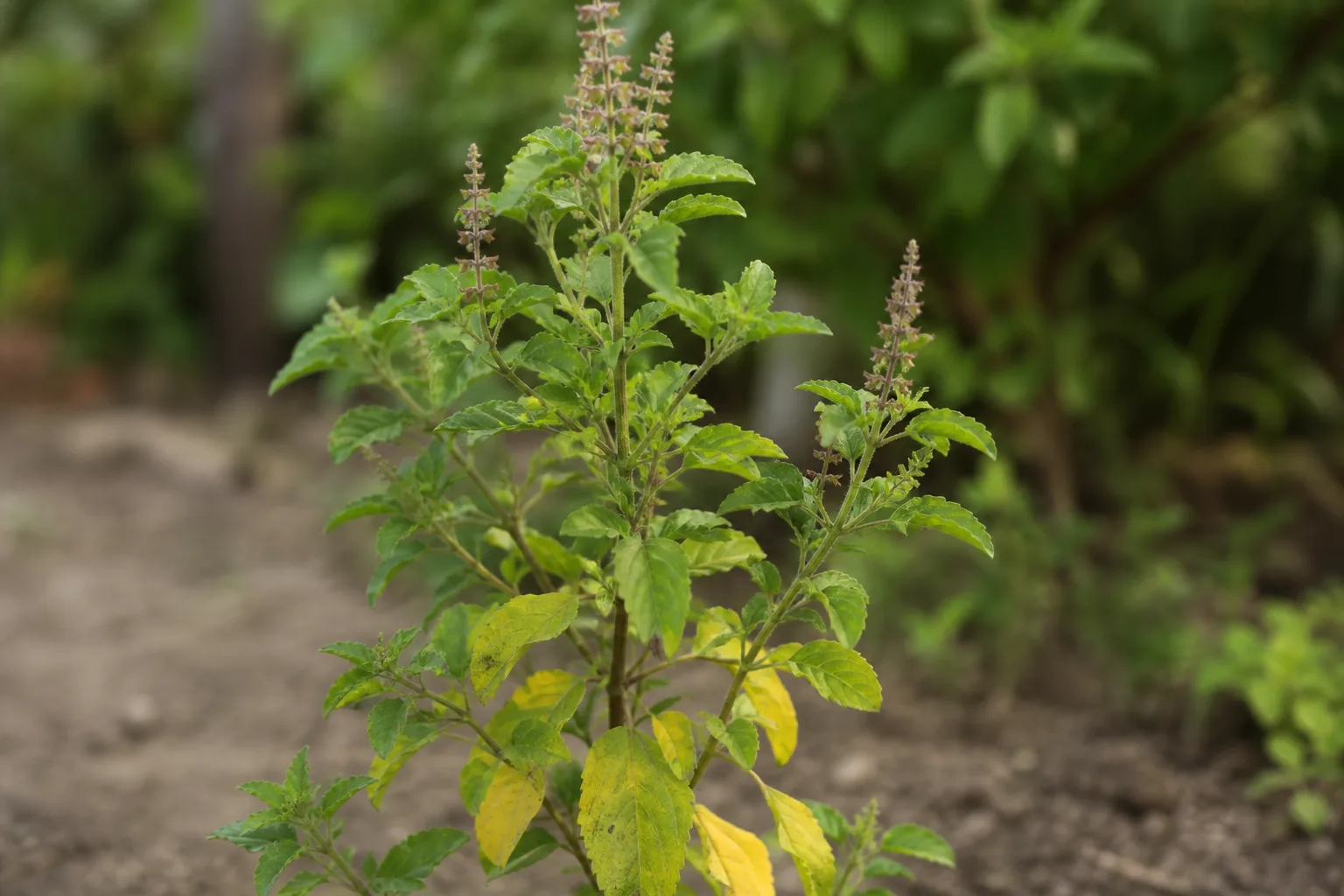
Yellow Leaves on Tulsi: Causes, Checks & Fixes
This guide covers yellow leaves on Tulsi. See also the general Yellow Leaves guide, watering, and light pages for this plant.
Yellow Leaves on Tulsi: Causes, Checks & Fixes
Quick answer
Yellow leaves on tulsi (Ocimum tenuiflorum, holy basil) are a stress signal, not a single disease. On this fast-growing aromatic herb, chlorosis usually means one of five things: overwatering or poor drainage, underwatering in Tulsi light guide, nitrogen depletion after heavy harvest, cold exposure below about 50°F (10°C), or too little light-with a few bottom leaves simply aging out on an otherwise healthy plant.
First step: check soil moisture one inch deep before you change anything. Press your finger into the mix. Soggy, cold-wet soil points toward overwatering. Bone-dry mix with a light pot points toward underwatering. Evenly moist soil with firm stems and only lower-leaf yellow after daily harvest suggests nutrient drain. A drafty winter sill with stalled growth suggests cold stress.
Do not fertilize, repot, and move the plant on the same day. Fix one confirmed stressor, then watch new shoot tips for two weeks. Old yellow leaves rarely re-green; recovery means the pattern stops spreading and fresh growth looks firm and richly colored. For full care context, see the tulsi overview and watering guide.
What yellow leaves look like on Tulsi
Tulsi yellowing has patterns that separate causes faster than counting leaves alone. Watch which leaves yellow first, how the stem feels at the soil line, and whether the pot is heavy or light.
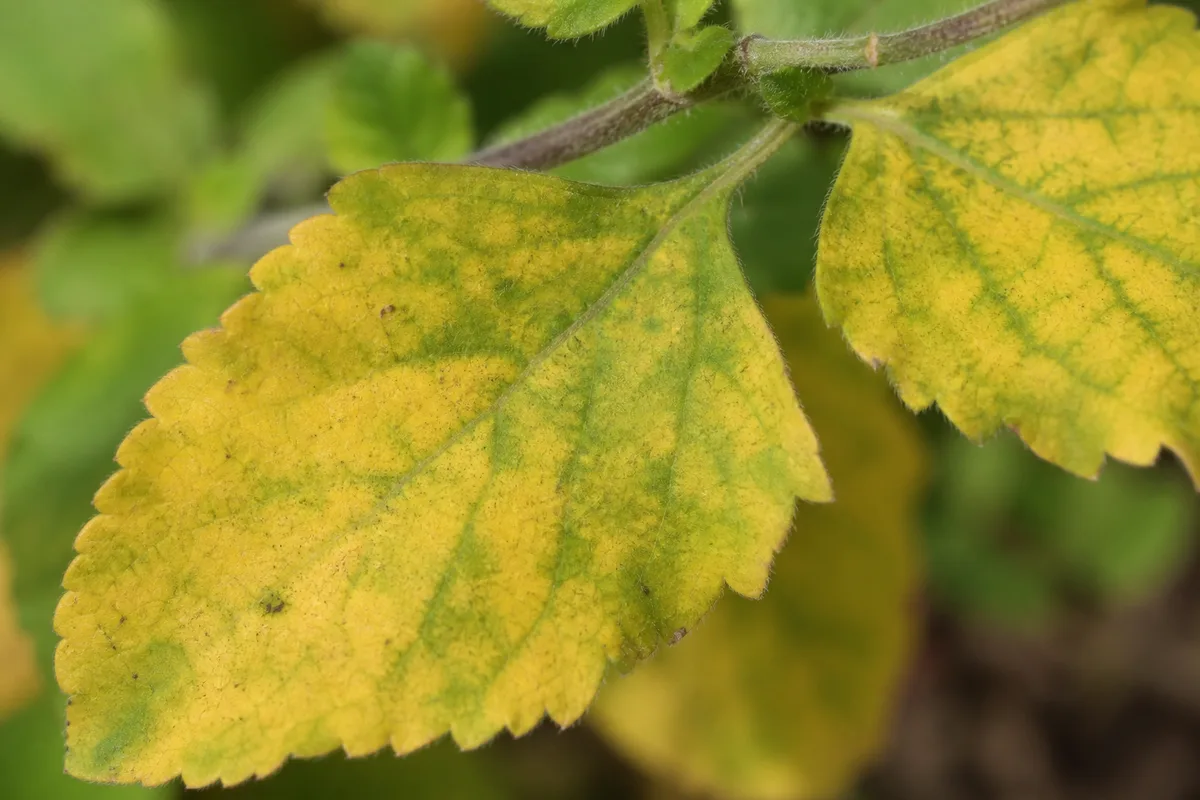
Yellow Leaves symptoms on Tulsi - compare with healthy tissue on the same plant.
Common presentations:
- Lower-leaf chlorosis spreading upward on wet, heavy soil-often paired with limp stems even though you watered recently (the wet-soil wilt trap)
- Uniform pale yellow on oldest leaves only while new tips stay small but green-common after weeks of daily harvest without feed in a small pot
- Whole-plant fade and thin, leggy stems in a dim indoor corner-pale new growth, weak aroma, slow internodes
- Crisp yellow-brown margins after a cold night near a drafty window-often on outer leaves first, not centered on the wettest soil zone
- Yellow with dry, lightweight soil and midday wilt on a sunny terrace-revives within hours after a deep soak
- Speckled or stippled yellow with fine webbing or sticky residue on leaf undersides-pest stress, not a watering calendar issue
- One or two yellow bottom leaves on a bushy plant in good light with evenly moist (not soggy) soil-often normal aging after heavy pinching
Krishna tulsi (purple stems) and Rama tulsi (green) show the same stress patterns; Krishna selections sometimes look more dramatically pale in very low light because purple pigments fade before the plant fully collapses.
Normal aging to ignore: A few yellow leaves at the base of a heavily harvested, otherwise vigorous plant in bright light is not an emergency. Stress yellowing is a pattern-spreading chlorosis, wrong soil moisture for the season, soft stems, cold damage, or pest signs-not a single old leaf.
Why Tulsi gets yellow leaves
Holy basil evolved as a warm-climate, sun-loving herb native to tropical and subtropical Southern Asia. In a container, yellow leaves appear when culture fights that biology-especially water, light, temperature, and harvest load out of sync.
Overwatering and poor drainage
The most common cause indoors and in cool seasons. Tulsi wants evenly moist, well-drained soil-not a waterlogged root zone. Soggy mix displaces oxygen, fine roots die, and the plant cannot move water upward even when the pot is heavy. Leaves yellow and wilt while soil stays wet-the paradox that sends many growers to water again. Chronic wetness also invites root rot. Full wet-soil diagnosis lives on the overwatering page.
Heavy harvest without replenishment
Tulsi is grown for continuous leaf removal-tea, cooking, prasad pinching. Each harvest exports nitrogen from a finite pot. Fast summer growth in full sun depletes a small container herb in weeks if you never feed. Lower leaves yellow first; new tips may look pale green rather than deep green. This pattern is easy to misread as overwatering when soil moisture is actually fine.
Cold stress and winter slowdown
Tulsi is frost-sensitive and growth stalls below about 50°F (10°C). Sustained cool air-drafty windows, unheated porches, AC blasts-yellows margins, drops lower leaves, and stalls new shoots even when watering is conservative. Cool soil also holds moisture longer, so winter overwatering yellowing stacks with cold damage in the same pot.
Too little light
Indoor tulsi in a short-day winter window photosynthesizes slowly. Old leaves fade as the plant reallocates energy to weak new growth. Leggy stems, small pale leaves, and thin aroma precede widespread yellowing. Low light also slows water use-so dim placement plus frequent watering produces wet-soil yellowing even when you think you are being careful. See not enough light on tulsi.
Underwatering in full sun
On a hot terrace, small terracotta pots can dry completely within a day. Lower leaves yellow and crisp; the plant wilts dramatically, then perks after soaking. Unlike overwatering, the pot feels light, soil pulls from the walls, and stems stay firm at the base.
Pests and disease
Aphids, whiteflies, and spider mites can stipple or yellow tender tips. Fungal issues linked to chronic wet foliage are less common than water and light mistakes but matter when yellowing comes with spots, mold, or sudden collapse. Inspect undersides before assuming a feed or drainage fix.
Yellow leaves vs. lookalikes
Tulsi wilts and yellows for opposite water problems. Use this table before treating.
| Pattern | Most likely cause | Key check | First direction |
|---|---|---|---|
| Heavy wet pot, yellow lower leaves, wilt on damp soil | Overwatering | Stop watering; probe 1 inch depth | Overwatering guide |
| Heavy wet pot, mushy stem, sour smell | Root rot (advanced) | Unpot and inspect roots | Root rot guide |
| Light dry pot, crisp yellow edges, perks after soak | Underwatering | Finger at 1 inch; pot weight | Underwatering guide |
| Lower leaves only yellow; firm stems; even moisture; daily harvest | Nutrient depletion or aging | New tip color; feed history | Half-strength feed if roots firm |
| Pale whole plant, leggy stems, dim window | Low light | Hours of direct sun | Brighter spot or grow light |
| Yellow margins after cold night; slow growth | Cold stress | Room temp below 60°F (15°C) | Warmer placement; less water |
| Midday wilt, firm stems, dry-ish mix, evening recovery | Heat stress | Time of day | Afternoon shade in extreme heat |
| Stippling, webbing, sticky residue | Pests | Leaf undersides | Isolate; rinse; targeted treatment |
The single best separator on tulsi: limp leaves on soil that is still wet at depth means stop watering and check roots-not thirst. limp leaves on bone-dry soil that recover after one deep soak means drought.
How to confirm the cause
Work through this checklist in order. Stop when one cause fits clearly.
- Soil moisture at 1 inch depth - Soggy days after one watering confirms excess moisture. Bone dry throughout with a light pot confirms drought. Evenly moist with firm stems points away from water extremes.
- Pot weight - Heavy days after watering means water is not leaving. Very light with wilted leaves means underwatering.
- Newest shoot tips - Pale, tiny tips in dim light need more sun. Dark green new leaves with only bottom yellow may be harvest depletion or aging.
- Stem firmness at soil line - Pinch the base. Mushy or hollow tissue with sour smell means escalate to root rot inspection-not fertilizer.
- Season and room temperature - Is the plant on a cold sill below about 60°F (15°C) with stalled growth? Cold stress fits even when soil feels correct.
- Harvest frequency - Daily pinching for weeks without feed in the same small pot strongly suggests nitrogen drain if moisture and light check out.
- Light exposure - Count honest direct sun hours. Fewer than five to six hours on a windowsill during active growth often produces pale, yellow-prone foliage indoors.
- Leaf undersides - Webbing, clusters of insects, or sticky residue mean pests-not a watering fix alone.
- Wilting pattern - Persistent wilt on wet soil suggests root failure (wilting guide). Wilt that resolves after one thorough soak on dry mix suggests drought.
Unpot only when the base is soft, smell is sour, or yellowing spreads while soil stays wet after a five- to seven-day dry-down pause.
First fix for Tulsi
Your first action depends on what the checklist confirmed-not a generic bundle of repot, prune, feed, and spray.
If soil is soggy (overwatering)
Stop watering until the top inch feels dry, and empty any saucer water. Do not add more water because leaves look limp. See the overwatering guide for dry-down timing, drainage fixes, and when to unpot.
If soil is bone dry (underwatering)
Water thoroughly until a small amount runs from drainage holes, then empty the saucer. Wait for the top inch to dry before the next drink-do not keep the mix saturated. See underwatering on tulsi for terrace vs. indoor rhythm.
If harvest depletion fits (firm roots, even moisture, heavy pinching)
Apply half-strength balanced liquid fertilizer to already-moist soil once. Do not feed dry or waterlogged roots. Wait two weeks before repeating. Resume light feeding every two to four weeks during active growth per the tulsi overview feeding notes.
If cold stress fits (cool room, stalled growth, draft exposure)
Move tulsi to a warmer spot above about 60°F (15°C) with the brightest light available. Reduce watering until new growth resumes-cold roots absorb slowly. Do not fertilize a cold-stressed plant.
If low light fits (leggy, pale, dim placement)
Move to a south- or east-facing window or add a grow light for 12–14 hours daily. Better light increases water use-recheck moisture after you move the plant so you do not swing from underwatering to overwatering.
If pests fit (webbing, stickiness, visible insects)
Isolate the plant and rinse leaf undersides with plain water. Confirm active pests before spraying. Heavy infestation on a sacred or edible plant may mean discarding severely compromised specimens rather than repeated pesticide cycles-handle gently and avoid harvesting treated leaves until any product label interval passes.
Recovery timeline
Recovery speed depends on cause and severity. Judge success by new shoots and firm stems, not old yellow leaves turning green.
Mild overwatering or underwatering - Correct moisture rhythm and drainage. Expect perky foliage within a few days and visible new side shoots within 7–14 days in warm, bright conditions.
Harvest depletion - One careful half-strength feed after moisture is right. New tips should deepen in color within 10–14 days. Lower yellow leaves will not re-green.
Cold stress - After warmth returns, stalled plants may sit quiet for 1–2 weeks, then push new growth. Leaves damaged by cold are cosmetic; do not expect them to recover.
Moderate root damage from chronic wet soil - Tulsi repotting guide and root trim may leave rough foliage for 2–3 weeks. New white root tips and firm shoots mean recovery is working.
Severe root rot - Salvage often means stem cuttings. Root formation takes 2–4 weeks; bushy regrowth follows a hard pinch once roots are established. See root rot on tulsi.
Signs recovery is working: New shoots emerge, yellowing stops climbing, stem bases stay firm, soil dries at a predictable rate, aroma strengthens on new leaves.
Signs it is getting worse: Softness spreading up stems, more yellow while soil stays wet, sour smell after repot, no new growth for three weeks in warm light-escalate immediately.
What not to do
- Watering because leaves wilt without checking soil - Wet-soil wilt on tulsi means pause irrigation, not another soak
- Fertilizing waterlogged or cold-stressed plants - Salts on failing roots and dormant tissue worsen decline
- Repotting on day one unless mushy roots or sour smell are already present-mild yellow often resolves with moisture or light correction alone
- Stacking repot, prune, feed, and pesticide the same day - You will not know which change helped
- Stripping every yellow leaf at once during recovery-remove mushy or diseased tissue only; keep some foliage for photosynthesis
- Keeping a summer terrace watering calendar on a winter windowsill - Cool, low-light pots dry far slower; see the watering guide
- Assuming all yellow leaves need more sun - Plants in soggy soil yellow too; light fixes do not replace drainage
- Harvesting heavily from root-compromised plants - Pinching diverts energy from root repair until new growth confirms recovery
How to prevent yellow leaves on Tulsi
Prevention means matching water, light, feed, and temperature to how this pot behaves in this season-not copying a calendar from a different plant or room.
- Check moisture before every drink - Water when the top inch feels dry during active growth; stretch intervals in cool, low-light months (UMD Extension - overwatered indoor plants)
- Give strong light - Holy basil prefers full sun outdoors and bright windows indoors; dim corners produce pale, yellow-prone growth
- Feed lightly during heavy harvest - Half-strength balanced fertilizer every two to four weeks in warm active growth replaces nitrogen removed by pinching
- Protect from cold - Keep pots above about 60°F (15°C); move indoors before nights approach 50°F (10°C)
- Use drainage holes and empty saucers - Moist roots in airy mix, not standing water
- Inspect weekly - Leaf undersides, stem firmness, and pot weight catch problems while they are still mild
- Adjust after room moves - A plant that thrived on a summer terrace needs a different rhythm on a January sill
For seasonal depth checks and terrace vs. indoor schedules, follow the tulsi watering guide. For the full care picture-light, soil, pinching, propagation-see the tulsi overview.
When to worry
Treat as urgent the same day if:
- Stem bases turn soft, black, or hollow
- A sour rot smell comes from drainage holes
- Yellowing spreads rapidly while soil stays wet after a dry-down pause
- Pests coat multiple shoots and new growth collapses
- The whole plant wilts and does not recover after you corrected confirmed underwatering
Those patterns point to advancing root rot, severe infestation, or crown failure-not a wait-and-see yellow leaf. When roots are mostly gone but firm green stems remain above the rot line, stem cuttings are often the practical salvage path-tulsi roots readily in warm active growth.
Related Tulsi problems
Yellow leaves overlap with several sibling guides. Use these when your checklist points to a specific stressor:
- Overwatering on tulsi - wet-soil wilt, soggy mix, fungus gnats
- Underwatering on tulsi - dry pot, crisp leaves, terrace heat
- Root rot on tulsi - mushy roots, sour smell, crown softness
- Wilting on tulsi - collapse with wet or dry soil
- Not enough light on tulsi - leggy pale growth indoors
- Tulsi watering guide - seasonal rhythm and finger-test depth
Guide by sai-ananth · Reviewed by LeafyPixels Review Board · Plant problem guidance is reviewed against botanical references, extension resources, and LeafyPixels plant-care data before publication.
When to use this page vs other Tulsi guides
- Tulsi watering guide - Use for routine moisture checks before assuming yellow leaves is the main issue.
- Tulsi problems hub - Browse all 5 common issues on this species.