Water Stress on Tulsi: Causes, Checks & Fixes
Quick answer
Water stress on Tulsi is the swing between too wet and too dry, showing as dramatic wilting, yellow lower leaves, papery foliage, and sour soil on the same fast-growing herb. First step: stick your finger into the top inch of mix and lift the pot before you water or withhold again.
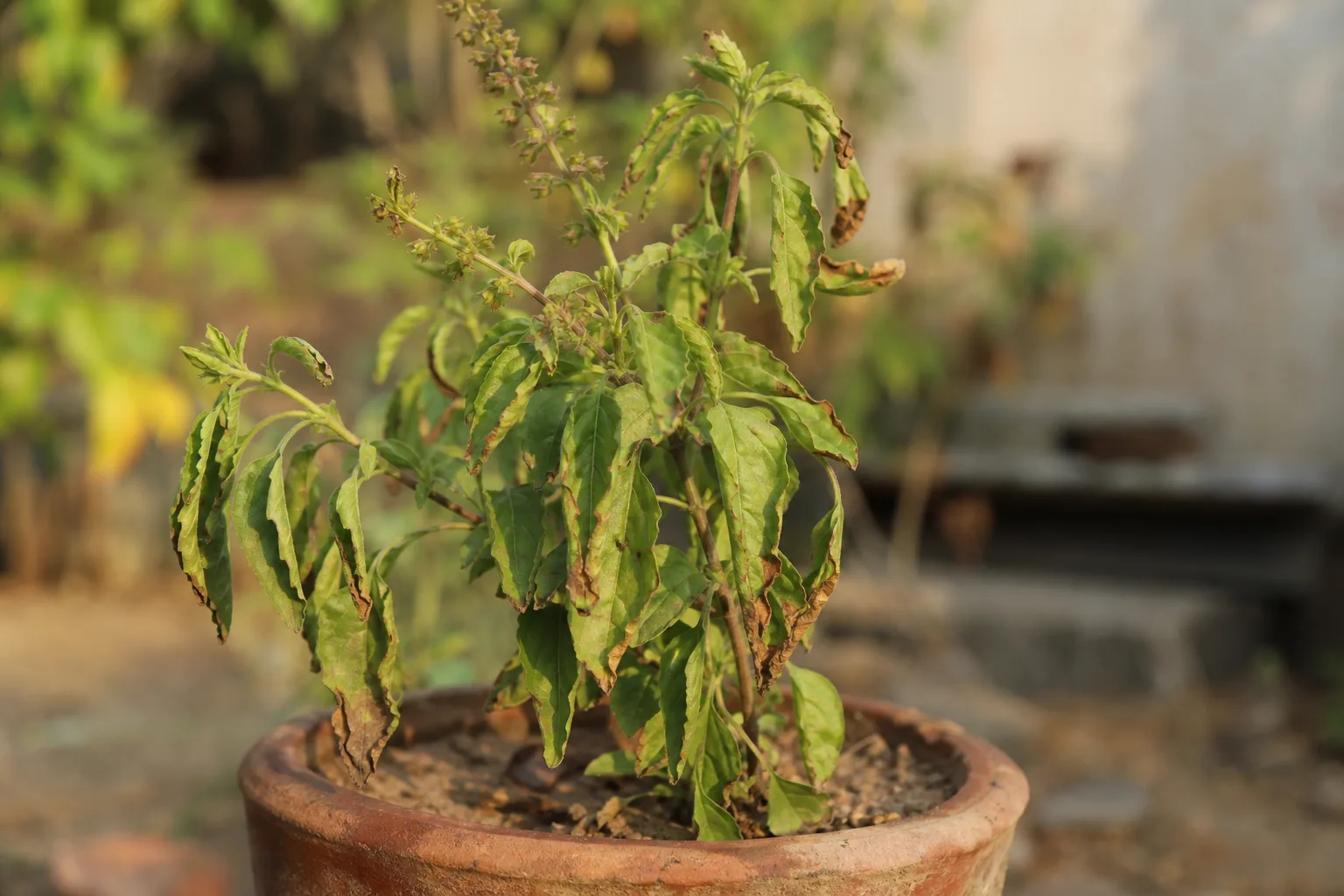
Water Stress on Tulsi: Causes, Checks & Fixes
This guide covers water stress on Tulsi. See also the general Water Stress guide, watering, and light pages for this plant.
Water Stress on Tulsi: Causes, Checks & Fixes
Quick answer
Water stress on tulsi (Ocimum tenuiflorum, holy basil) is rarely one bad watering-it is the swing between too wet and too dry that keeps roots from holding steady moisture in this fast-growing harvest herb. You may see dramatic wilting, yellow lower leaves, papery foliage, and sour-smelling soil on the same plant because each extreme leaves different damage behind.
First step: stick your finger into the top inch of mix and lift the pot before you water or withhold again. That single check tells you whether tulsi needs a drink, needs to dry out, or needs root inspection-not another calendar guess.
For seasonal rhythm depth, see the tulsi watering guide. If mushy roots and sour smell are already present, escalate to root rot on tulsi.
What water stress looks like on Tulsi
Tulsi is grown for fresh leaves and quick regrowth, so it transpires heavily in full sun with moist, well-drained soil. When hydration swings, the whole plant reacts fast-but the symptoms from each extreme can overlap on one pot.
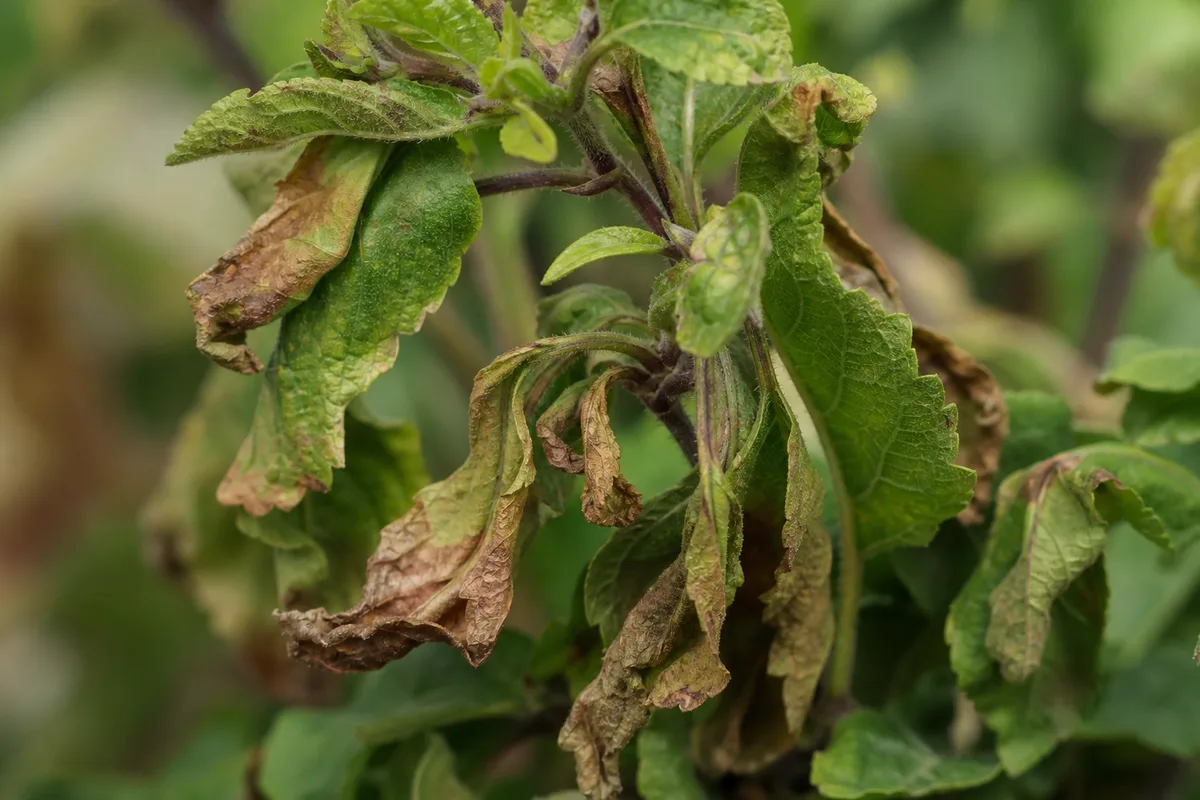
Water Stress symptoms on Tulsi - compare with healthy tissue on the same plant.
After a dry spell or skipped waterings, expect:
- Dramatic wilting and drooping of serrated oval leaves
- Soil pulling away from the pot wall; dusty dry mix in the top inch
- Leaves feeling slightly papery or thin when you pinch them
- A noticeably light pot when lifted-a 6-inch terracotta that felt roughly 1.2 kg (2.6 lb) when moist may drop toward 0.7 kg (1.5 lb) when bone dry
- Crispy brown edges on older leaves, especially after a hot sunny day on an Indian balcony or terrace
After a wet spell or guilt-soaking, expect:
- Yellow drooping leaves, often starting on lower stems
- Mushy or soft feeling at the stem base
- Soggy soil with a sour or musty smell
- White mold on the soil surface or fungus gnats after days of damp mix
- Heavy-feeling foliage while soil stays wet-the same 6-inch pot may feel closer to 1.8 kg (4 lb) when saturated
The water-stress pattern is both sets together: one branch wilted and papery, another yellowing at the base, and the whole plant looking exhausted-because you soaked hard after letting it go dry, or kept it wet then skipped a week in bright sun. Pure underwatering rarely causes yellow leaves on damp soil; pure overwatering rarely causes a feather-light pot and papery edges without wet mix underneath.
Tulsi wilts so quickly when dry that many growers assume every droop means thirst. That dramatic recovery within hours after watering is real-but it also masks the wet phase that follows a heavy soak, which is why water stress and simple wilting are different diagnoses on this herb.
Why Tulsi gets water stress
Holy basil wants full sun in moist, well drained soil and does poorly in waterlogged soils. That narrow band-consistent moisture without saturation-punishes calendar watering on a plant that dries out fast in summer sun but barely uses water in a dim winter corner.
Calendar watering is the most common trigger. Watering every four days indoors ignores that a sunny balcony pot may need water every two to three days outdoors in summer, while the same plant moved inside in winter stays wet if you keep that rhythm. University of Maryland Extension recommends watering when the plant needs it, not on a fixed schedule.
Guilt-soaking after dramatic wilting completes the cycle. Tulsi’s leaves collapse when dry, which prompts a heavy soak-then the fast-growing root ball sits in wet loam while the owner waits another week. When potting mix stays saturated, roots cannot take up the oxygen they need and may rot even after the visible top layer dries.
Harvest pressure and fast growth increase water demand unevenly. Regular pinching for tea or cooking removes foliage that was shading the soil, so the pot dries faster on harvest days. Skipping water after a heavy harvest in full sun, then flooding when the plant wilts, is a classic tulsi water-stress loop.
Seasonal light shifts change water use without changing habit. Tulsi in six or more hours of direct sunlight transpires heavily in warm months; the same plant in a short-day winter window barely draws moisture. Continuing summer frequency in low light keeps soil cold and wet-a wet phase that sets up the next dry crisis when you finally skip a week.
Dense loam without enough drainage amendment holds water longer than tulsi roots tolerate. Fertile compost-rich mix is correct for flavor and harvest, but without coarse perlite or sand to loosen the potting mix, the wet phase extends after every soak.
Cache pots and blocked drainage extend the wet phase. Water pools at the bottom while the surface looks dry, so you withhold until the whole plant wilts-then soak again.
How to confirm the cause
Work through these checks in order before repotting, pruning, or feeding:
- Soil moisture in the top inch - Stick your finger into the mix at the depth tulsi care targets. Dusty dry throughout the top inch with a light pot points to the dry side of stress. Damp or cold mix with a heavy pot points to excess moisture-even if the surface looks dry.
- Pot weight - Lift the container. A dramatic weight drop since last week confirms dry-down; persistent heaviness confirms wet mix.
- Symptom pattern - Papery wilted leaves plus light pot = dry side. Yellow lower leaves plus damp soil = wet side. Both sets together = alternating water stress.
- Recovery test - Tulsi underwatered often perks within hours after one thorough soak. If leaves stay limp on wet soil, roots-not drought-are the problem.
- Recent history - Did you skip watering during travel then soak heavily? Water on schedule through a dim winter? Repot into a much larger container? Each pattern fits tulsi water stress.
- Stem base firmness - Softening at soil line on wet mix suggests rot from the wet phase-do not water until you inspect roots.
- Light reality check - Note daily sun hours. Tulsi with leggy growth and wet soil is often overwatered for its light level; papery wilt on dry mix in a sunny window often means underwatering layered into the cycle.
- Drainage path - Saucer water sitting more than thirty minutes, sealed cache pots, or mix without perlite keeps the wet phase going.
If soil is wet and stems are softening, treat as possible root rot-not simple drought. If soil is dry, stems are firm, and the pot is light, a thorough watering is appropriate.
First fix for Tulsi
Stop calendar watering. Check moisture in the top inch and pot weight, then act on what you find-nothing else today.
- Dry top inch, firm stems, light pot: Water thoroughly until excess runs from the drainage holes, then empty the saucer within thirty minutes. Do not mist, fertilize, or repot.
- Wet mix, firm stems: Withhold water until the top inch is dry throughout. Improve airflow around the plant. Empty any saucer water and scrape off surface mold if present.
- Wet mix, soft stem base or sour smell: Do not water. Unpot and inspect roots before any soak-rot from the wet phase needs trimming and dry repotting per the root rot guide, not another drink.
This one pause prevents the classic tulsi mistake: dramatic wilting triggers a soak when roots are already drowning, or dry soil triggers neglect when the herb only needs a single even watering.
Step-by-step recovery
Once you know which side of the cycle you are on, work in this order:
- Stabilize the rhythm - Water when the top inch of soil is dry, then water until a small amount drains out. Outdoors in summer that may be every two to three days; indoors every four to seven days-but let the soil tell you, not the calendar.
- Empty saucers every time - Never let tulsi sit in standing water; that extends the wet phase and invites fungus gnats in moist top layer.
- Water at the soil surface, not over the crown - Direct moisture around the root zone at the pot rim rather than flooding the stem base where rot starts.
- Match season to frequency - Reduce checks in late fall and winter when growth slows; increase monitoring-not volume-in bright warm months when tulsi harvest and pinching drive faster dry-down.
- Address chronic wetness - If mix stays damp more than a week in moderate light, repot into fresh loam with perlite or coarse sand in a pot only slightly larger than the root ball-after the plant is stable and stems are firm.
- Rewet hydrophobic dry peat - If water runs through in seconds on a dry pot, use a slow bottom soak so the center rewets without one massive flood.
- Trim only dead tissue - Remove fully yellow or collapsed leaves for hygiene. Keep blemished but firm leaves; they still photosynthesize while new harvest shoots return.
- Hold fertilizer - Skip feed until new growth looks firm for two weeks. Stressed roots cannot use nutrients reliably, and heavy nitrogen on wet soil worsens soft growth.
Recovery timeline
Mild water stress on tulsi often shows improvement within hours to one day after the correct single action-firm leaves after a needed soak, or stopped yellow spread after dry-down begins on wet soil. This fast rebound is one reason growers confuse water stress with simple underwatering, but recovery speed only confirms drought when soil was actually dry.
New aromatic shoots with firm serrated leaves usually appear within one to two weeks once rhythm stabilizes in warm bright conditions. Tulsi grows rapidly compared to most houseplants, so do not expect months of dormancy-but also do not expect instant lush recovery if roots were damaged during the wet phase.
Old damage-fully yellow leaves, papery brown edges, dull fragrance on collapsed foliage-does not revert. Those leaves may drop while the plant replaces them with fresh harvest growth.
If stems stay soft on wet soil after a full dry-down cycle, or no firm new shoots appear within three to four weeks in good light, root damage from the wet phase may be too advanced for simple rhythm correction. See root rot on tulsi for salvage steps.
Lookalike symptoms
Several tulsi problems overlap with water stress. Separate them before treating:
Pure underwatering - Light pot, bone-dry mix throughout the top inch, limp leaves that perk within hours after one deep watering. No yellow leaves on wet soil, no sour smell. See underwatering on tulsi.
Pure overwatering - Heavy wet pot for days, spreading yellow on lower leaves, sour smell, soft foliage on damp mix. Not alternating with extreme dryness unless you also skipped water afterward. See overwatering on tulsi.
Wilting alone - Tulsi wilts from both drought and root rot; wilting is the symptom, water stress is the pattern of alternating wet and dry causing mixed damage over time. See wilting on tulsi.
Heat stress outdoors - Crispy leaf edges on the hottest afternoon without whole-plant wilt or yellow base leaves on damp soil. Shade during peak heat rather than only watering more.
Not enough light - Leggy sparse growth, loss of bushy form, and wet soil that never dries because the plant barely transpires. More water makes this worse. See not enough light on tulsi.
Root rot - Wet soil plus soft stem base, collapse despite dry surface, sour smell. Requires root inspection and repot-not another soak-or-dry guess. See root rot on tulsi.
Mistakes to avoid
- Soaking every time leaves droop without checking soil-droop on wet mix means damaged roots, not thirst.
- Withholding water for weeks after one yellow leaf-tulsi still needs regular dry-down cycles, not desert treatment.
- Repotting into a much larger pot to “fix” watering-extra wet soil volume prolongs the soggy phase.
- Misting leaves instead of fixing soil moisture-tulsi needs root-zone rhythm; plants absorb most water through roots, not leaves.
- Fertilizing stressed plants to push harvest growth-salt stress on compromised roots worsens yellowing.
- Changing water, light, and pot size all at once-you will not know which adjustment helped.
How to prevent water stress next time
Build a tulsi routine around predictable dry-down, not a fixed calendar:
- Check the top inch before every watering with finger or moisture meter.
- Use well-draining loam with perlite or coarse sand; confirm drainage holes and empty saucers within thirty minutes.
- Place tulsi where full sun (6+ hours of direct light daily) is realistic most of the day so it uses water steadily-dim corners need less water, not the same weekly soak.
- Reduce frequency when growth slows in winter; increase monitoring in warm bright months and after heavy harvest pinching.
- Keep pot size matched to the root ball-only slightly larger at repot time.
- After travel or a missed week, reintroduce water with one thorough soak when the top inch is dry-not daily mini-drinks that keep the root zone alternately flooded and starved.
Lift the pot weekly until you know how it feels at proper moisture. Firm aromatic leaves, stable pot weight between waterings, and fresh harvest shoots are the signs your tulsi has escaped the wet-dry swing.
When to worry
Escalate beyond rhythm correction when:
- Stems soften at the base while soil is wet or just dried on the surface
- Leaves collapse and stay limp after correct watering on dry mix
- Sour smell persists after withholding water for a full dry-down cycle
- Yellowing spreads to most of the plant within days
- No firm new growth appears after three to four weeks in adequate light
Tulsi is rarely lost to one irregular month if stems stay firm-it is a forgiving herb you can often restart from cuttings. It may not be saveable if the stem base has collapsed, roots are entirely mushy, and no firm tissue remains. Take a healthy four-to-six-inch cutting above a leaf node and root in water before discarding if any firm section still exists.
Conclusion
Tulsi punishes watering swings more than occasional mistakes at either extreme. This fast-growing holy basil wilts dramatically when dry and yellows when wet-often on the same plant when care alternates between neglect and overcorrection. One check at the top inch and pot weight breaks the cycle before repotting, misting, or feeding. Stabilize the rhythm, match water to light and season, and judge recovery by firm leaves and fresh aromatic shoots-not by old damaged tissue turning green again.