Pale Leaves on Syngonium: Causes, Checks & Fixes
Quick answer
Pale leaves on Syngonium-especially Pink, Neon Robusta, and variegated cultivars-usually mean insufficient light washing out pigment on newest growth, not fertilizer deficiency. First step: compare the colour on your newest arrowhead leaf to older leaves, then move to brighter filtered light for a two-week trial.
Pale Leaves on Syngonium: Causes, Checks & Fixes
This guide covers pale leaves on Syngonium. See also the general Pale Leaves guide, watering, and light pages for this plant.
Pale Leaves on Syngonium: Causes, Checks & Fixes
Quick answer
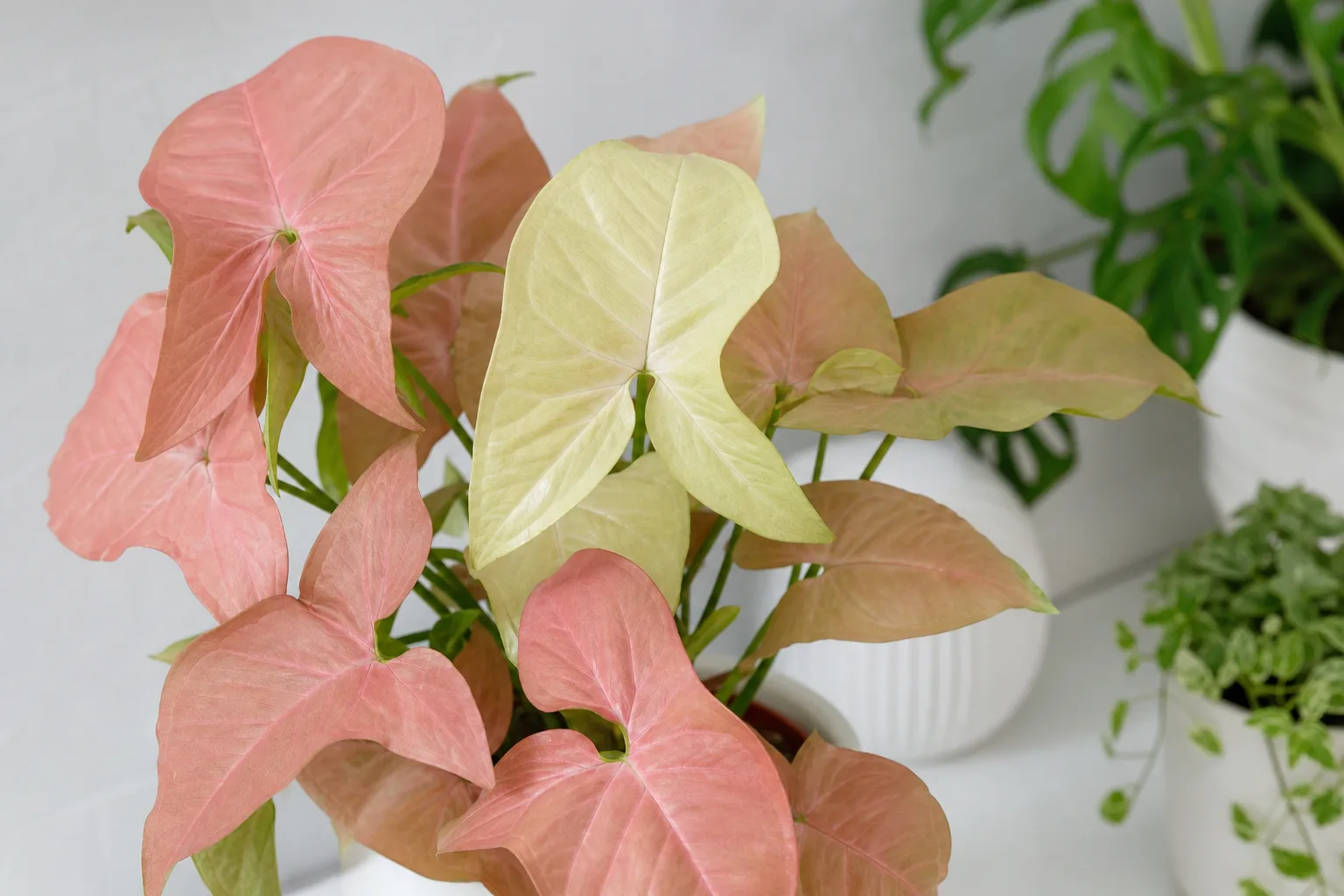
Your Neon Robusta just opened ivory or dull green instead of blush pink-that colour shift on the newest arrowhead leaf is the classic Syngonium pale-leaf pattern. On Syngonium podophyllum, washed-out pigment is usually a light-energy problem on coloured cultivars, not hunger. Pink, Neon Robusta, and white-variegated types need more photons than plain green syngonium to maintain blush, cream sectors, and contrast.
First step: compare newest leaves to older ones. Fading on fresh tips in a dim room points to current light, not past care. Move the pot to brighter filtered light-east window, sheer-filtered south or west, or a grow light 30–45 cm above the canopy-and run a two-week trial before fertilizing, Syngonium repotting guide, or soaking more water.
This page is a pigment router: it tells you whether pale colour means low-light fade, sun bleach, nitrogen deficiency, or root stress. For full placement audits, internode stretching, and grow-light setup, see the not enough light guide. For yellowing lower leaves in wet soil, see yellow leaves and overwatering.
What pale leaves look like on Syngonium
Pale leaves on syngonium show up as colour loss on new growth first, especially on pigment-heavy cultivars. Plain green types may stay acceptably green in moderate shade longer; pink and variegated forms wash out weeks earlier.
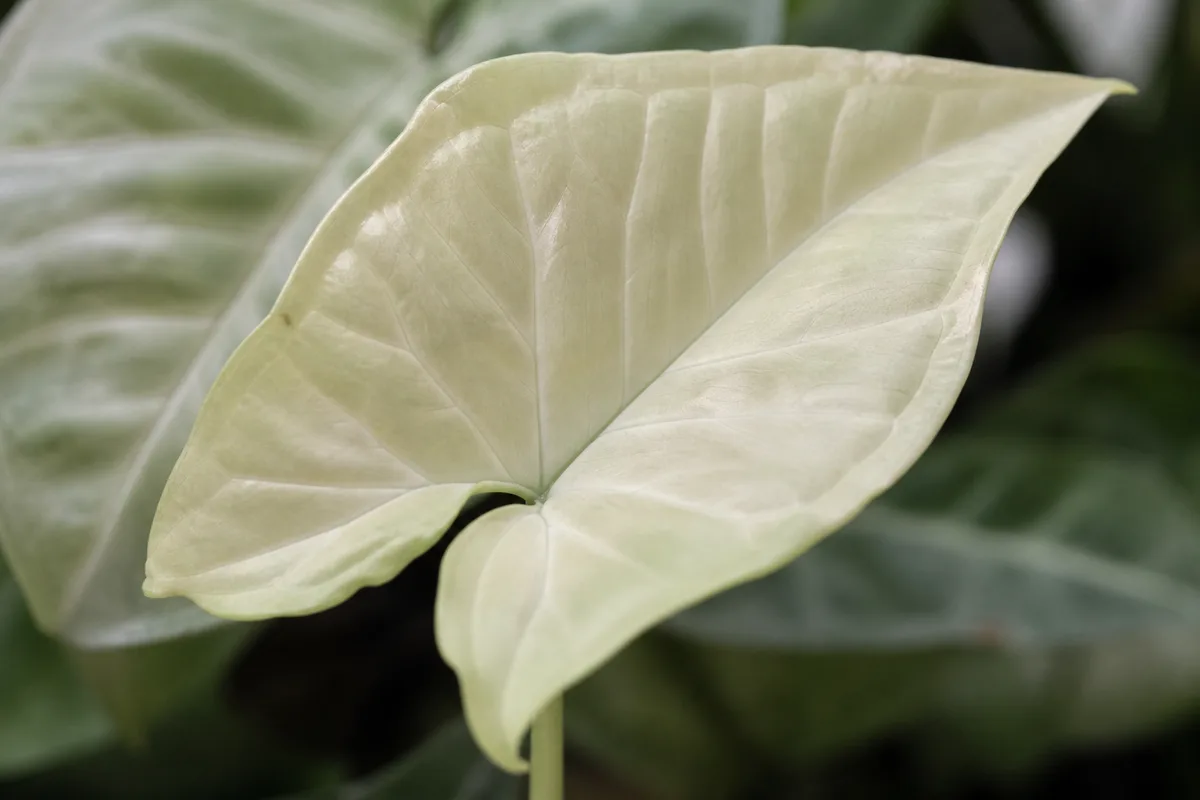
Pale Leaves symptoms on Syngonium - compare with healthy tissue on the same plant.
Pink and Neon Robusta: rosy salmon fades to dull green or ivory
On Pink Allusion and Neon Robusta, healthy new leaves open with rosy salmon or blush tones over green. In insufficient light, the newest arrowhead leaves emerge uniform dull green, yellow-green, or ivory-the blush never develops. Older leaves may still show pink while tips stay washed out, which confirms the problem is current placement, not a sudden nutrient crash.
Variegated cultivars: white or cream sectors shrink on newest growth
On Albo, White Butterfly, and speckled types, white or cream zones shrink or disappear on the freshest leaf while older foliage still shows strong contrast. The plant is prioritizing chlorophyll over decorative pigment where light is weak-a common response on variegated houseplants in dim corners.
Stretching toward windows as a companion signal
Pale new tips often pair with stems leaning toward glass and longer gaps between leaves on vining growth. That phototropic reach is etiolation-the same low-light stress covered in depth on the leggy growth and not enough light guides. Pale colour alone can appear before stretch becomes obvious on compact juvenile plants.
Juvenile arrowhead versus mature lobed foliage
Young syngonium shows heart- or arrow-shaped juvenile leaves; mature climbing stems may develop lobed adult foliage with support. That natural shape change is not pale-leaf stress. The diagnostic clue is colour fade and internode length on new tips, not leaf silhouette alone.
Why Syngonium loses leaf colour
Low light and pigment energy on coloured cultivars
Syngonium is a tropical climbing aroid evolved for bright filtered understory light-not deep interior shade. Missouri Botanical Garden recommends bright indirect light indoors with protection from harsh direct sun. Coloured and variegated leaves carry less efficient photosynthetic tissue in pale zones; when photons are scarce, the plant produces greener, more productive leaves on new growth.
Pink and Neon Robusta lose rosy pigment before plain green types look stressed because blush sectors add little photosynthetic return. A vine that looked fine six feet from a north window in summer may wash out by February when daylight drops-even if you never moved the pot.
Overwatering compounding in dim corners
Low light slows transpiration. Many owners keep a summer watering rhythm while the plant sits in a dim winter corner-soil stays wet, roots lose oxygen, and pale tips may coincide with limp stems despite damp mix. That wet-soil wilt paradox overlaps overwatering and root rot risk; fixing light alone is not enough if roots are failing.
Sun bleach after sudden bright moves
The opposite mistake also causes pale patches: pulling a shade-adapted syngonium into direct midday sun to “fix” colour. White and pink tissue bleaches to papery white or tan with crispy margins on the sun-facing side-different from the even dull-green fade of low light. Acclimate over one to two weeks; see the sun-burn lookalike row below and the acclimation steps in the not enough light guide.
Nitrogen deficiency versus light fade
Nitrogen deficiency tends to produce uniform pale green on old and new leaves across the plant in otherwise bright light. Low-light syngonium usually fades newest growth first in a dim room and rarely responds to fertilizer until light improves. Unlike nitrogen stress, pale syngonium in shade does not need a feed fix-move it first.
How to confirm the cause
Work through these checks in order:
- Newest versus older leaf colour - Blush or variegation fading only on fresh tips supports low light. Uniform pallor on every leaf including old ones suggests nutrient stress or chronic root trouble.
- Light at the leaf surface - At midday, hold your hand above the newest leaves. Almost no shadow means pigment will wash out on coloured types. Within about two feet of an unobstructed east window counts as bright indirect for most foliage plants.
- Stem direction and internode spacing - Lean toward one window plus long gaps between small pale leaves confirms insufficient light; see the not enough light guide for the full two-week trial protocol.
- Soil moisture and pot weight - Push a finger into the top inch. Pale tips with soil wet for ten days or more, soft stems, or sour smell shift priority to drainage and roots-not more light alone.
- Recent move history - Sudden shift to harsh sun after months in shade? Look for bleached crispy patches on exposed leaves, not even dull-green fade throughout.
Suspected, not confirmed: a single pale new leaf after repotting may be temporary stress. Confirmed: repeated washed-out tips on several stems that improve after a brighter trial spot.
Lookalike decision table
| What you see | Most likely cause | What to do first |
|---|---|---|
| Newest leaves dull green or ivory; older leaves still pink; dim room; optional lean toward window | Low-light pigment fade | Move to brighter filtered light; two-week trial per not enough light |
| Bleached white or tan patches on sun-facing leaves after sudden bright move; crispy margins | Sun bleach | Pull back to filtered light; acclimate gradually over 1–2 weeks |
| Uniform pale green on all leaves including old ones; plant in bright spot; normal watering | Nitrogen deficiency (less common indoors) | Confirm light is truly adequate first; then light feed in active season only |
| Pale new tips + wet heavy soil + limp stems + sour smell | Root stress / overwatering | Stop watering; inspect roots; follow root rot if tissue is mushy |
| Pale yellow-green lower leaves on wet soil without strong new-tip blush loss | Overlap with yellow leaves | Fix water timing and light together |
| Long thin stems, small leaves, extreme lean | Etiolation-light problem beyond colour | Leggy growth and not enough light workflows |
First fix for Syngonium
Move the pot to the brightest safe indirect location you have-today.
For most homes that means:
- An east-facing window where leaves get bright morning light without hot afternoon rays
- A south or west window with a sheer curtain or three to five feet of setback so light is filtered
- A grow light 30–45 cm (12–18 inches) above the canopy for twelve to fourteen hours daily on a timer if natural light is insufficient-especially before winter short days
Keep the same watering rhythm for the first week so you isolate the light change. Do not jump from deep shade to direct midday sun; pink and white tissue scorches quickly without acclimation.
Two-week trial-move protocol
- Day 1 - Relocate to the brightest filtered spot without changing fertilizer or pot size.
- Days 1–7 - Check soil moisture every few days; brighter appropriate light often speeds dry-down-do not preemptively soak.
- Days 7–14 - Watch the next one or two arrowhead leaves for stronger blush, cream sectors, or greener contrast-not old faded tissue.
- After 14 days - If new leaves show clearer pigment and shorter internodes, the trial succeeded. If tips stay pale and soil stays soggy, inspect roots before assuming more light alone will fix the plant.
Once new growth proves the fix, optionally pinch or trim the palest leggy stems above a node for a cleaner silhouette. Old pale leaves do not re-pigment-that is normal.
Recovery timeline
Expect visible improvement in new leaf colour within two to three weeks after a meaningful light increase-new growth responds first when conditions improve. A compact bushy shape may take several months if you pinch after a long stretch phase.
Old pale or washed-out leaves usually stay faded-judge success by the next one or two sets of arrowhead leaves, not the full vine length. Sun-bleached crispy tissue will not green up; trim damaged tips if margins brown.
Worsening signs during recovery: new tips stay small and ivory while stems soften and yellow with persistently wet soil, or lower leaves drop with a sour smell-shift focus to root rot and drainage, not more light alone.
What not to do
Do not fertilize heavily to force pink or variegation-salts brown tips on stressed plants and deepen green without restoring blush in dim light. Do not assume pale leaves mean more water; check light and soil dry-down first per our watering guide.
Avoid moving instantly into harsh direct sun after months in shade. Do not repot into a larger container on day one hoping volume fixes colour-extra wet soil in low light raises rot risk.
When pruning faded stems, keep toxic arrowhead vine away from pets. Contact your veterinarian if a pet chews pruned tissue.
Prevention
Place coloured syngonium where bright indirect light is realistic year-round, not only in June. Before winter, move closer to glass or start a grow light so short days do not trigger another washout on Neon Robusta and variegated types.
Pair better light with watering when the top inch of mix dries-roots need oxygen as well as moisture. Moderate humidity supports steady new growth but does not replace photons for pigment. Rotate the pot weekly, clean windows seasonally, and recheck watering the same week you increase light.
For measurable light targets and window placement detail, use the Syngonium light guide and the broader Syngonium care overview.
When to worry
Pure pigment fade in normally drying soil is a gradual placement fix, not an emergency. Escalate if pale leaves coincide with wet heavy soil, limp stems, rapid lower-leaf yellowing, or sour smell-those patterns need root inspection per root rot, not only a window move.
If two weeks in your brightest indirect spot produce no change in new leaf colour or size, verify the location truly receives usable daylight (not just “bright to human eyes”) and consider a stronger grow light before assuming another problem.
Conclusion
Pale leaves on Syngonium are a pigment signal on coloured cultivars-Neon Robusta blush fading to ivory, variegated sectors shrinking on new tips, or even dull green where pink once appeared. Confirm low-light fade versus sun bleach, nitrogen deficiency, or root stress with the lookalike table, then move once to brighter filtered light and judge recovery on the next arrowhead leaves. Existing faded tissue stays pale; new growth tells you the fix worked. For stretching, grow lights, and full dim-room audits, continue with the not enough light guide rather than duplicating that workflow here.
When to use this page vs other Syngonium guides
- Syngonium watering guide - Use for routine moisture checks before assuming pale leaves is the main issue.
- Syngonium problems hub - Browse all 17 common issues on this species.