Root Rot on Syngonium: Causes, Checks & Fixes
Quick answer
If your Syngonium droops while the soil is still wet, treat root rot as likely. Stop watering first, unpot to confirm root condition, trim rot, and repot into airy mix in a right-sized drainage pot.
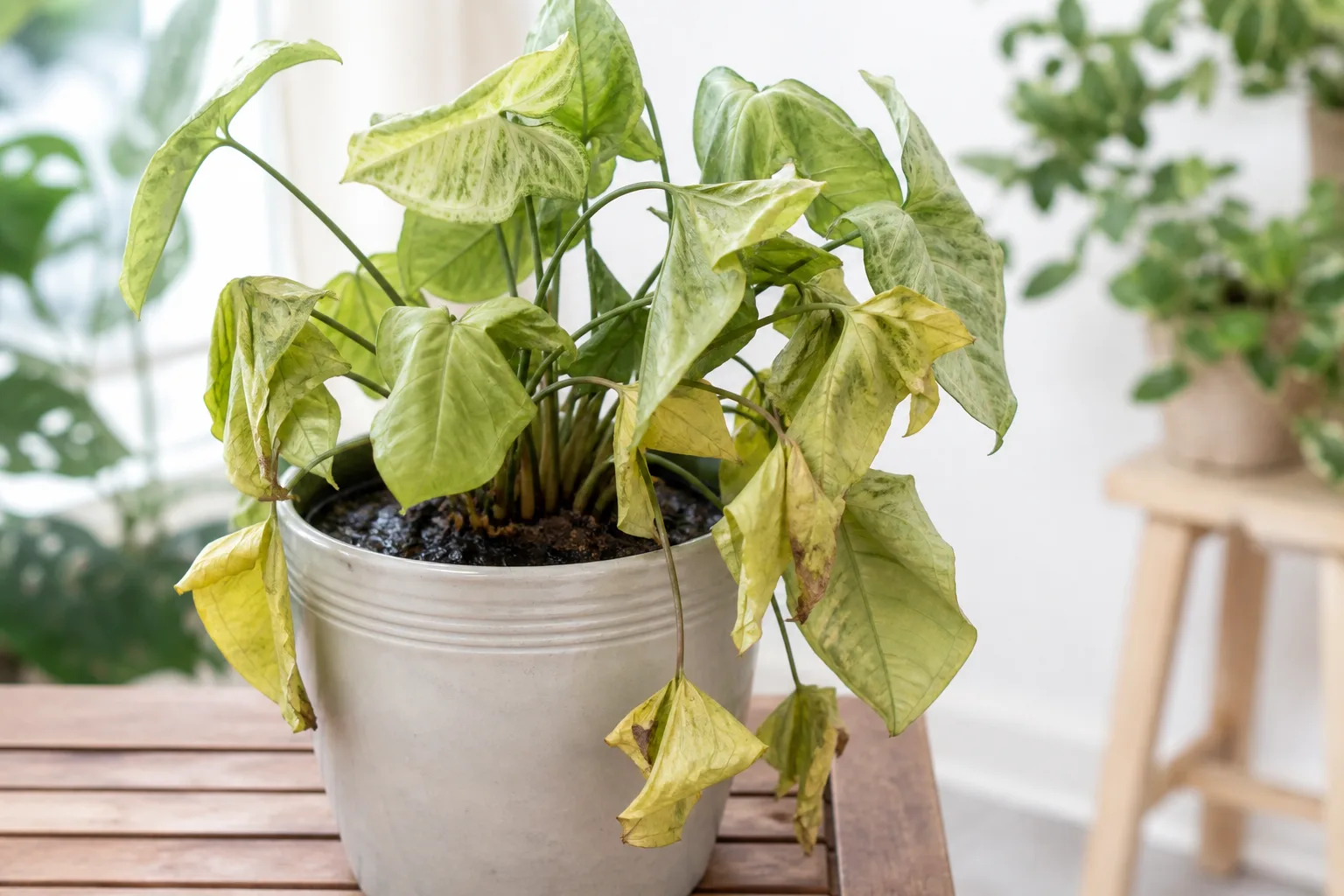
Root Rot on Syngonium: Causes, Checks & Fixes
This guide covers root rot on Syngonium. See also the general Root Rot guide, watering, and light pages for this plant.
Root Rot on Syngonium: Causes, Checks & Fixes
Quick answer
The most useful Syngonium clue is the wet-soil wilt paradox: leaves droop even though the pot is still heavy and damp. Syngonium overview is a tropical climbing aroid that likes steady moisture but still needs oxygen around roots. First action is simple: stop watering now, then unpot and inspect roots before doing anything else.
What root rot looks like on Syngonium
Syngonium root problems often start with yellowing and limp growth that looks like thirst. Root-rot references describe this pattern clearly: plants can wilt while soil is wet because damaged roots cannot move water effectively (Wisconsin Horticulture). You may also notice soft petioles at the soil line, a sour odor from the mix, stalled new growth, and gnats hovering around consistently wet media.
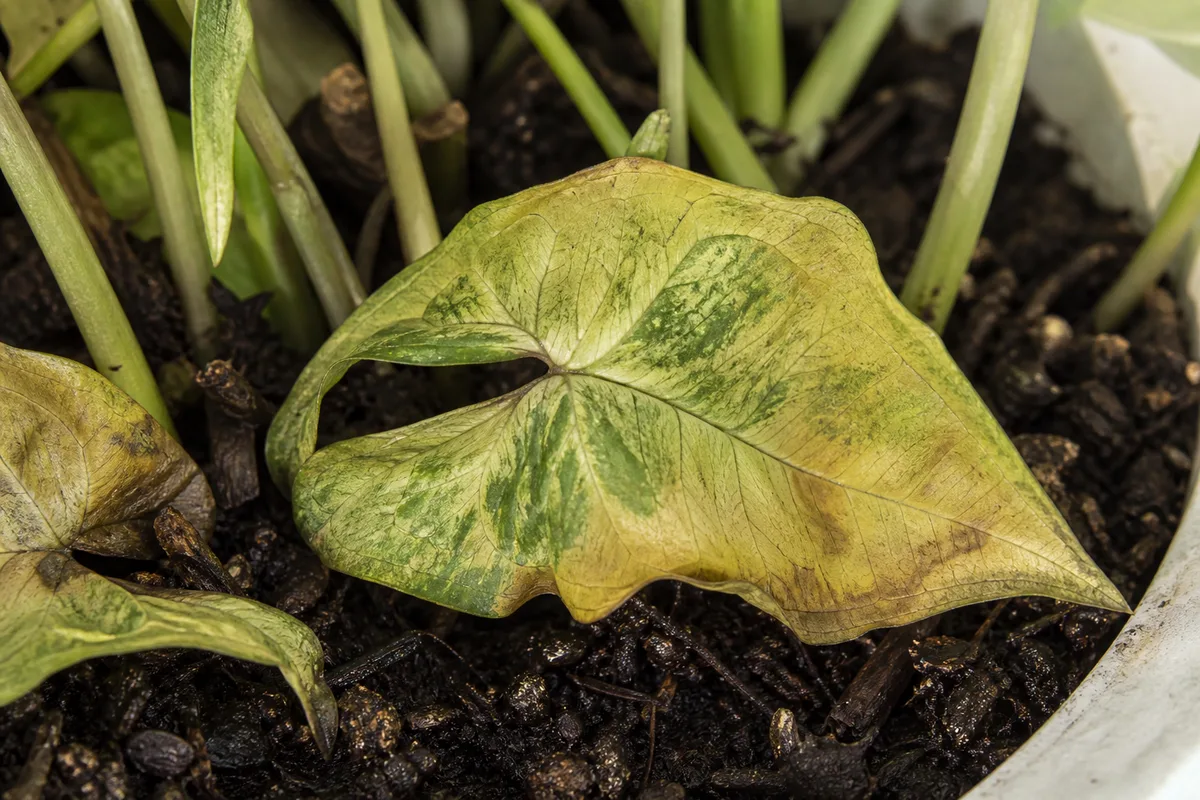
Root Rot symptoms on Syngonium - compare with healthy tissue on the same plant.
Why Syngonium gets root rot
The common trigger is repeat watering before the previous cycle has dried enough. For interiorscape Syngonium, UF/IFAS recommends letting the surface dry slightly before irrigation and reducing frequency in winter (UF/IFAS). Missouri Botanical Garden guidance also pairs regular growth-season watering with reduced watering from fall to late winter (Missouri Botanical Garden).
On this species, risk climbs when you combine low light, cool rooms, oversized pots, dense compacted mix, and standing runoff in decorative cachepots.
Lookalikes: what to rule out first
Do not assume every limp Syngonium has active root rot.
- Early overwatering stress: wet mix with mostly firm roots; recovery is easier.
- underwatering on Syngonium: light pot, dry mix at depth, perk-up after a full soak.
- Low light stress: weak growth but no sour smell or mushy roots.
- Salt stress: tip burn and poor vigor; root decay may be absent.
UC IPM notes that wilting can come from both drought and root decay, so root inspection is the deciding test when symptoms conflict (UC IPM).
How to confirm the diagnosis
Unpot gently and rinse off enough media to inspect real root texture.
- Healthy roots are firm and light-colored.
- Rotted roots are dark, soft, slimy, or hollow.
- Sour odor plus mushy roots confirms active rot.
- Crown firmness guides recovery odds.
If the crown is still firm and some roots are healthy, repot recovery is realistic. If crown tissue is soft throughout, propagation salvage is usually the better plan.
First fix to try
Stop watering immediately.
Do not fertilize, flush heavily, or repot into a bigger pot as a panic response. The first goal is to stop additional saturation and assess living tissue.
Step-by-step recovery
Mild to moderate rot (firm crown, partial healthy roots)
- Remove plant and trim all mushy roots with sterile scissors.
- Discard old wet mix and clean the pot.
- Repot into fresh airy mix with drainage, in a pot close to remaining root mass.
- Keep warm bright-indirect light and avoid direct midday sun.
- Resume watering only after the top 1 to 2 inches dry and deeper checks agree.
Severe rot (soft crown, major root loss)
Switch to salvage propagation from firm nodes. Remove collapsing base tissue and start healthy nodes in a clean propagation setup. Waiting too long after crown softening usually lowers success.
Recovery timeline
If action is early and crown tissue is firm, many Syngonium plants stabilize within 1 to 2 weeks, then show clear new growth in about 2 to 6 weeks. Severe cases can take longer and may never fully recover older leaves. Judge success by new healthy growth and stable stems, not by damaged foliage returning to perfect condition.
What not to do
Do not water again because leaves look limp if the pot is still wet. Do not keep sour old media. Do not repot into a much larger container. Do not leave runoff trapped in a cachepot or saucer. Do not fertilize until recovery is obvious.
For pet households, ASPCA lists arrowhead vine (Syngonium) as toxic due to insoluble calcium oxalate crystals (ASPCA). Keep trimmed tissue and runoff away from pets that chew foliage.
How to prevent root rot next time
Build your routine around dry-down, not a fixed calendar.
- Use a drainage pot with airy aroid mix.
- Check top 1 to 2 inches plus deeper moisture before watering.
- Empty saucers and cachepots after each soak.
- Reduce frequency in low-light and winter conditions.
- Avoid upsizing pots more than one size at a time.
If you are troubleshooting overlapping symptoms, use the related guides for Syngonium overwatering, Syngonium wilting, and the full Syngonium watering guide. For salvage cuttings, use the Syngonium propagation guide.
When to use this page vs other Syngonium guides
- Syngonium watering guide - Use for routine moisture checks before assuming root rot is the main issue.
- Syngonium problems hub - Browse all 17 common issues on this species.
- Overwatering on Syngonium - Different entry point when symptoms overlap with root rot.
- Yellow Leaves on Syngonium - Different entry point when symptoms overlap with root rot.
- Wilting on Syngonium - Different entry point when symptoms overlap with root rot.