Syngonium Light Requirements: Best Window, Sun, and Warning
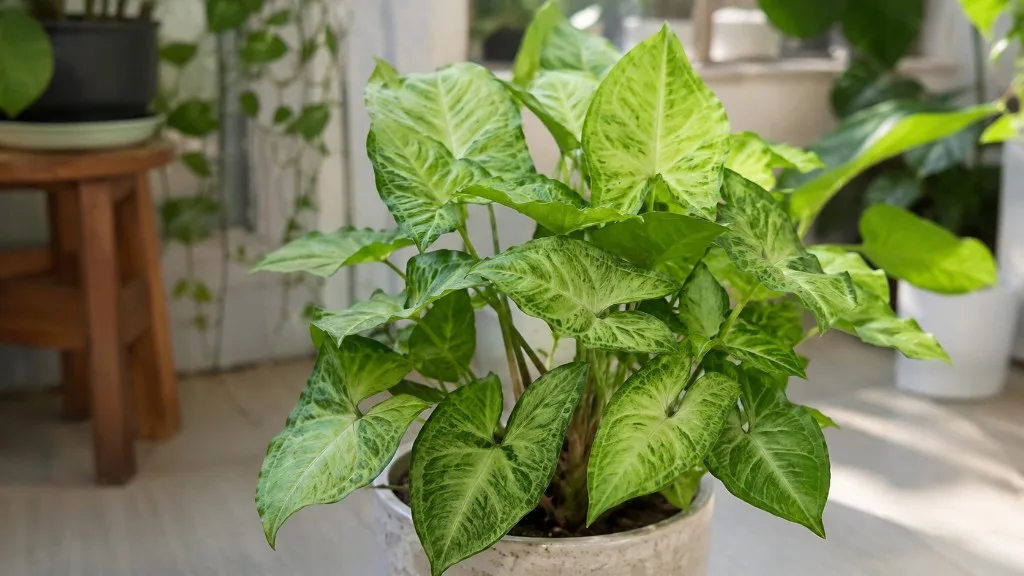
Syngonium Light Requirements: Best Window, Sun, and Warning Signs
Syngonium Light Requirements: Best Window, Sun, and Warning Signs
Syngonium is sold as an easy houseplant, and that reputation is mostly fair. Syngonium podophyllum - the arrowhead vine, goosefoot plant, or nephthytis most people bring home - will tolerate a wider light range than a sun-hungry herb or a finicky fiddle-leaf fig. Tolerance is not the same as thriving. A Syngonium parked in a dim hallway may stay alive for months while slowly stretching, shrinking new leaves, and - if you bought it for color - quietly reverting to plain green.
The practical goal is straightforward: give Syngonium bright, indirect light for enough hours each day that new growth stays compact, leaves stay firm, and variegation (if your cultivar has it) holds steady. That usually means an east window, a filtered south or west exposure, or a full-spectrum grow light when the room cannot deliver real brightness. The Missouri Botanical Garden describes Syngonium podophyllum as a tropical American aroid commonly grown as a houseplant in bright indirect light, which aligns with how the plant behaves in most homes.
This guide focuses on placement decisions you can make today: how much light Syngonium actually uses, which window works best, whether direct sun is ever safe, when to add a grow light, and how to read the plant’s own warning signs before growth habit and leaf color fall apart.
How Much Light Syngonium Actually Needs
Syngonium is a shade-tolerant foliage aroid, not a shade-loving moss. In its native range across Central and South America, it grows in the filtered light of rainforest understories and forest edges - bright enough for steady photosynthesis, broken up by moving canopy shade so leaves rarely bake in midday sun. Indoors, the closest match is bright indirect light: the plant should clearly receive strong ambient illumination without sunbeams hitting the leaves for long stretches, especially in afternoon.
Horticultural guides often translate “bright indirect” into numbers, though extension sources describe placement more than lux targets. NC State Extension lists partial shade and dappled sunlight as suitable cultural conditions - bright enough for steady photosynthesis without harsh direct exposure. Aroid-focused indoor lighting references commonly suggest target PPFD (photosynthetic photon flux density - the intensity of light usable for photosynthesis) around 60 to 90 µmol/m²/s for standard green Syngonium, and roughly 70 to 100 µmol/m²/s for variegated forms, over a 10 to 12 hour photoperiod. At 80 µmol/m²/s for 12 hours, daily light integral lands near 3.5 mol/m²/day, a solid indoor baseline for foliage aroids. You do not need a meter to grow Syngonium well, but the takeaway is clear: the plant wants real brightness across most of the day, not a briefly sunny spot for two hours.
For most home growers, the usable shorthand is this: 10 to 14 hours of bright indirect light daily, with the plant close enough to the window or grow light that new leaves emerge at a normal size and spacing. If the room is genuinely dim, Syngonium may persist, but you should expect slower growth, weaker color, and a looser, leggier shape.
The Short Answer for Busy Growers
If you only remember three rules, use these. Best natural light: place Syngonium where it receives bright indirect light most of the day - typically within 1 to 3 feet (30–90 cm) of an east window, or 3 to 5 feet (90–150 cm) back from a south or west window with sheer curtains or filtered exposure. Low-light fallback: solid-green cultivars tolerate dimmer corners better than pink, white, or albo types, but all Syngonium grow better with more light than less. When the window fails: add a full-spectrum LED grow light 12 to 18 inches (30–45 cm) above the canopy and run it 10 to 14 hours daily on a timer.
Judge success by new growth, not old leaves. Within two to three weeks of better light, new leaves should be larger relative to the stem, internodes should shorten, and variegated plants should stop fading toward solid green.
Why Syngonium Is Flexible - But Not Shade-Proof
Syngonium’s adaptability confuses people because it does not collapse quickly in low light the way a basil plant might. Aroids store resources in stems and roots and can coast on modest energy input for a surprisingly long time. That resilience hides the problem. The plant is surviving, not expressing the compact bush or climbing vine you bought.
Light intensity directly controls three visible traits. Internode length - the gap between leaves along the stem - shortens in brighter indirect light and lengthens in shade, producing the leggy “stringy” arrowhead look. Leaf size and lobing - juvenile arrow-shaped leaves and mature divided foliage both respond to light; dim conditions often yield smaller, simpler new leaves. Pigmentation - chlorophyll increases in low light at the expense of cream, pink, or white variegation, because the plant prioritizes photosynthetic area over decorative color.
Light also sets the pace for water use. A Syngonium in a bright spot photosynthesizes actively and dries its pot faster. A dim Syngonium grows slowly, holds moisture longer, and is more vulnerable to root stress if you keep watering on a bright-window schedule. Light is not separate from the rest of Syngonium care; it is the throttle that tells you how fast the plant is running.
Syngonium’s Rainforest Roots and Indoor Light
Understanding where Syngonium evolved clarifies why it hates two opposite mistakes: dark interior rooms and unfiltered afternoon sunbeams. Rainforest floor and understory plants receive dappled, shifting light - high total daily brightness filtered through leaves, with short sun flecks and long periods of softer illumination. The light is directional from above but rarely concentrated enough to heat a single leaf surface for hours.
Your home windows do not replicate that perfectly. Glass concentrates and shifts spectrum. A south window delivers intense, directional beams. A north window delivers even but weaker illumination. Deep interior placement may look “fine” to human eyes adapted to dim rooms while delivering too few photons at the leaf surface for compact Syngonium growth.
Dappled Canopy Light vs What Your Window Delivers
Human vision is a poor light meter. A living room that feels adequately bright may still fall below what Syngonium needs for compact growth. Conversely, a south-facing sill that looks inviting at noon can exceed what thin Syngonium leaves tolerate, especially for variegated sections with less chlorophyll protection.
A practical field test costs nothing: on a sunny day, hold your hand 12 inches (30 cm) above the pot. Soft, faint shadow - light is in a workable indirect range. No shadow - the spot is too dim for quality growth; add light or move closer to a window. Sharp, dark shadow - intensity is high; watch for scorch, diffuse with a sheer curtain, or pull the plant back. This test is imprecise but surprisingly honest, and it beats guessing from window compass labels alone.
Season matters as much as direction. Winter lowers both intensity and day length. A Syngonium that grew beautifully June through September beside a south window may stretch and pale November through February at the same address. The plant is not being dramatic; the sun angle and photoperiod changed. Plan on moving the pot closer to glass or adding supplemental light when short days arrive, especially for variegated cultivars.
Best Window Placement for Syngonium
Indoor Syngonium fails most often because the pot sits where the room looks bright rather than where the plant receives useful light for enough hours. Window direction is a starting point, not the finish line. Distance, outdoor obstructions, sheer curtains, and season all change the real exposure at the leaf surface.
Place Syngonium on the brightest exposure that does not scorch leaves. In many homes, that means east for gentle morning sun plus bright indirect day, north for consistent soft light with slower growth, or filtered south or west when distance and curtains tame afternoon intensity. Keep the pot close enough that light actually reaches the canopy, not across the room where intensity drops sharply.
East, West, South, and North Windows Compared
An east-facing window is the default sweet spot for Syngonium in most climates. Morning sun tends to be bright but cooler than late-day sun. Many east-window Syngoniums produce compact growth, good color, and manageable watering rhythms from spring through autumn without scorch. If growth leans toward the glass, rotate the pot every week; if it still stretches, supplement with a small LED rather than jumping to harsh west exposure.
A north-facing window delivers even, indirect light all day. North is underrated for Syngonium and often excellent for solid-green varieties that tolerate moderate light. Growth may be slightly slower than on east or filtered south exposures, but the plant typically stays bushy if the window is unobstructed and the pot sits near the pane. Variegated pink or white cultivars on north windows should be watched closely for color fade; a grow light in winter often helps.
A west-facing window can work when the plant sits several feet back or behind a sheer curtain. Late-afternoon sun carries heat. West is a strong choice in spring and fall and riskier in midsummer. Watch sun-facing leaves for bleached patches after heat waves. If scorch appears, pull the pot back or diffuse - do not assume the plant will “get used to it” without acclimation.
A south-facing window is the brightest option and the easiest to misuse. Unfiltered south glass can scorch Syngonium leaves, especially variegated ones, within days. South works when filtered by curtains, when the plant sits 3 to 5 feet (90–150 cm) back, or when only early-morning sunbeams reach the pot before intensity peaks. South-facing winter sun at northern latitudes is often excellent for Syngonium because angle and heat are moderate; summer south exposure needs more caution.
Distance From the Glass and When to Rotate
Compass labels are shortcuts. A south window blocked by a neighboring building may lose to an unobstructed east window. A west window under a deep overhang behaves differently from open balcony glass.
Distance follows the inverse-square rule in practice: moving a Syngonium two feet farther from the window can turn a good spot into a merely survivable one. For quality growth, aim to keep the canopy in the bright indirect zone described earlier - usually within arm’s reach of the glass on east or north, and not in the harshest sun patch on south or west.
Rotate the pot a quarter turn weekly if growth leans hard toward the light source. Syngonium exhibits phototropism like most houseplants; consistent leaning is feedback that light is directional and possibly marginal. Rotation improves symmetry but does not fix insufficient total light - if internodes keep lengthening, add brightness rather than only spinning the pot.
Can Syngonium Handle Direct Sun?
Syngonium is not a full-sun plant. Direct midday sun through clear glass or on a summer patio can bleach, crisp, or brown leaves faster than many beginners expect, especially on variegated tissue with less chlorophyll buffering. That said, Syngonium is not a vampire either. Some direct sun - particularly cool morning exposure - can be acceptable when introduced gradually and monitored on new growth.
The distinction that saves plants is duration and intensity, not the binary question “sun or no sun.” A brief, gentle morning beam on an east sill is categorically different from three hours of western afternoon bake or south glass with no curtain in July.
Morning Sun Tolerance and Afternoon Scorch Risk
Morning sun on an east window is the safest direct exposure for Syngonium. Leaves formed under indirect light may still need acclimation if you suddenly increase sun, but east morning rays rarely produce the white papery scorch patches common on west and south exposures. Watch the newest leaves for yellowing or crisp edges during the first two weeks after any move toward stronger light.
Afternoon sun is where Syngonium most often fails. West and unfiltered south windows can heat leaf tissue beyond what thin aroid foliage tolerates, even when soil moisture is adequate. Variegated cultivars - ‘Albo Variegata’, ‘Strawberry Ice’, pink-splashed types - show damage first on white or cream sections. If you see sudden bleaching on sun-facing surfaces, move the plant back the same day and reintroduce light more slowly.
Acclimation protocol when increasing light: shift the pot closer to the window over 7 to 14 days, or add one hour of slightly stronger exposure at a time, then pause to read new growth. Do not simultaneously repot, fertilize heavily, or change Syngonium watering guide - stacked stress makes every symptom ambiguous. If old leaves are damaged, they will not fully recover; judge the move by the next one or two leaves only.
Outdoor shade patios in USDA Zones 10–12 can grow Syngonium year-round when protected from direct midday sun and cold drafts. Treat outdoor placement like a bright understory: open shade, dappled tree cover, or an east-facing porch with roof overhang.
Low-Light Limits: Survival Versus Good Growth
Syngonium’s reputation for low-light tolerance is real but frequently misunderstood. The plant can survive in dim offices, north hallways, and rooms far from windows - sometimes for extended periods - because it slows metabolism rather than dying outright. Survival is not thriving. In low light, Syngonium almost always shows longer stems, smaller leaves, slower new growth, and faded variegation.
Solid-green cultivars like ‘Neon Robusta’ or standard green arrowhead types handle low light better than pink, cream, or white variegated selections. If you only have a dim room, choose green - and still expect a looser habit than the same plant under brighter indirect light. There is no magic cultivar that stays compact and colorful in a dark corner indefinitely.
Low light also changes care timing. A dim Syngonium uses less water. If you maintain the same watering frequency you used when the plant sat in a bright window, soil may stay wet too long and roots may struggle even though the top inch feels “right” by habit. When you move Syngonium to lower light, extend the dry interval and read the pot weight, not the calendar. When you move it brighter, check moisture more often.
If new leaves are smaller than older leaves, pale, slow to unfurl, or separated by long empty stem, light is limiting growth. Relocate closer to a window, remove objects blocking the glass, or add a grow light. Pruning leggy stems without fixing light produces another leggy stem.
Variegated Cultivars Need Brighter, Steadier Light
Variegation is decorative, not free. Cream, pink, and white sections on Syngonium leaves contain less chlorophyll than green tissue. The plant must compensate by capturing more total light or by converting variegated sections back to green. In low or inconsistent light, reversion - solid green new leaves on a plant you bought for color - is normal physiology, not a mysterious disease.
Variegated Syngonium therefore sits at the upper end of the species’ light comfort zone: still bright indirect, never harsh direct, but brighter and more stable than what a solid-green plant needs to merely survive. Aim for the higher PPFD band (70 to 100 µmol/m²/s in supplemental setups) with gradual increases, not sudden jumps.
Pink, White, and Albo Syngonium Light Demands
Pink-allusion and pink-splashed types lose their blush fastest in dim rooms. New leaves may emerge mostly green with only faint pink along veins. Moving the plant one step brighter - closer east window, filtered south at shorter distance, or a grow light - often restores color on subsequent leaves within a few weeks.
White Butterfly and other white-variegated forms need steady brightness to keep crisp contrast. Low light produces smaller green-dominant leaves. Too much direct sun bleaches white sections to tan. The workable band is narrower than for green Syngonium, which is why these cultivars reward careful window placement.
Albo and high-variegation Syngonium - including sought-after ‘Albo Variegata’ types - are the least forgiving. White sectors scorch first under direct sun and shrink in shade. Treat them like a bright-indirect specialty plant: strong ambient light, no midday beams, consistent photoperiod, and supplemental LED in winter. Increase light in small steps; variegated aroids often crisp at the margins when intensity jumps faster than the plant can adjust.
If your variegated Syngonium is turning green, light is the first suspect, not fertilizer. Feeding a shaded plant does not restore lost pigment; it can worsen imbalance when growth is already weak.
Grow Lights When Natural Light Falls Short
When a window cannot deliver enough daily brightness - common in winter, north rooms, offices with frosted glass, or apartments with deep floor plans - a full-spectrum LED grow light is the most reliable fix. Modern LEDs run cooler than older horticultural bulbs and fit shelves, cabinets, and ceilings above a trailing Syngonium.
Syngonium does not need exotic spectra for basic indoor culture. A full-spectrum white LED rated for seedlings, herbs, or houseplants is sufficient. The goal is even canopy coverage at appropriate intensity, not purple grow-room glow unless you prefer it.
Choosing a Fixture, Height, and Timer Schedule
Pick a fixture designed for plant growth, not a standard room bulb optimized for human vision. Practical options include clip-on grow bulbs, bar lights, and small panel LEDs sized to cover the pot’s footprint. Coverage matters: Syngonium in hanging baskets or on moss poles need light reaching upper and lateral foliage, not just the top inch.
A workable starting setup: place a full-spectrum LED 12 to 18 inches (30–45 cm) above the top leaves, run it 12 to 14 hours per day, and keep 10 hours as a practical minimum in dim rooms. Use a timer so photoperiod stays consistent. Plants also benefit from a dark period; running lights 24 hours does not help Syngonium and can stress metabolism over time.
Target the 60 to 90 µmol/m²/s band for green Syngonium and 70 to 100 µmol/m²/s for variegated types, adjusting in small increments every couple of weeks if new leaves look healthy. If leaves cup, bronze, or crisp at edges under the light alone, raise the fixture 2 to 3 inches (5–8 cm) or reduce hours slightly. If the plant stretches toward the bulb, lower it incrementally or extend the timer - change one variable at a time.
Combine overhead LED with a bright window when possible. Hybrid setups often produce the best color stability and the fastest recovery after pruning because the plant receives both intensity and natural spectrum shifts across the day.
Warning Signs Your Syngonium Has the Wrong Light
Syngonium communicates light problems on new tissue first. Old scorched leaves will not green up again, and old stretched stems will not shorten in place. Watch the newest leaf and the next node after a cut or break.
Make one placement change, then wait 10 to 14 days before stacking additional changes to watering, fertilizer, or pot size. Light stress and water stress symptoms overlap; changing everything at once makes diagnosis guesswork.
Symptoms of Too Little Light
Leggy stems with long gaps between leaves are the classic under-lighting signal. The plant invests in height to reach brighter zones. Small new leaves compared with older foliage confirm chronic deficit even if the plant still looks “okay” from across the room. Pale or yellow-green new growth suggests insufficient energy for normal chlorophyll development in green types, or imminent variegation loss in colored cultivars. Leaning hard toward the window or bulb shows directional starvation. Slow unfurling - a new leaf stuck half-open for weeks - often pairs with low energy availability. Solid green new leaves on a variegated plant mean the plant is maximizing photosynthetic tissue; fix light before worrying about feed.
Fixes: move closer to glass, remove obstructions, add or lower a grow light, extend photoperiod on the timer, and prune leggy tips after light improves so branching emerges compact.
Symptoms of Too Much Light or Heat Stress
Bleached white or tan patches on sun-facing leaf surfaces indicate photodamage, especially on variegated sectors. Crisp, dry leaf margins that appear suddenly after a move toward stronger sun suggest scorch or heat load. Curling or folding during brightest hours can be a protective response to excess light or hot glass. Wilting on moist soil at midday near a south window may mean leaf or root-zone heat, not drought - especially in dark pots on hot sills. Brown dry spots distinct from soft brown rot often follow intense afternoon exposure without acclimation.
Fixes: pull the plant back from the pane, add a sheer curtain, avoid unfiltered west or south summer sun, acclimate gradually over 7 to 14 days, and never place variegated Syngonium in a sunbeam “to bring back color.” More sun on a fading variegated plant sometimes helps only when the fade was caused by marginal indirect light - not when the plant is already in a dark corner. When in doubt, move to brighter indirect light before trying direct sun.
Conclusion
Syngonium rewards honest bright indirect light with compact growth, larger leaves, and - on colored cultivars - stable variegation. It is more forgiving than many houseplants, but it is not a set-and-forget shade dweller. East windows and filtered bright exposures are the default starting points; north works for green types with realistic expectations; south and west demand distance, curtains, or both.
Treat 10 to 14 hours of useful daily brightness as the real target, whether that comes from a window, a grow light, or a combination. Read new leaves after every move: shorter internodes, firm texture, and consistent color mean the placement works. Stretching, fading, bleaching, and slow unfurling mean light - not fertilizer - needs attention first. Fix placement, wait two weeks, then adjust watering to match the brighter or dimmer reality. That sequence is how an arrowhead plant stays bushy, colorful, and worth the shelf space instead of slowly becoming a pale vine you tolerate out of habit.
When to use this page vs other Syngonium guides
- Syngonium overview - Start here for whole-plant context before deep-diving this topic.
- Syngonium problems hub - Jump to symptom-specific fix guides when this care topic does not resolve the issue.
- Not Enough Light on Syngonium - Escalate here when light adjustments are not enough.
- Leggy Growth on Syngonium - Escalate here when light adjustments are not enough.
Related Syngonium guides
- Syngonium overview
- Syngonium watering
- Syngonium soil
- Syngonium propagation
- Syngonium fertilizer
- Syngonium repotting
- Not Enough Light on Syngonium
- Leggy Growth on Syngonium
- Syngonium problems
Related tool
Try the Plant Problem Diagnosis Tool with syngonium pre-selected to estimate needs for your setup.