Not Enough Light on Syngonium: Causes, Checks & Fixes
Quick answer
Syngonium in too little light stretches, loses colour on pink or variegated types, and uses water slowly. First step: move the pot to your brightest safe indirect spot-filtered east or south light-before changing water, fertilizer, or pot size.
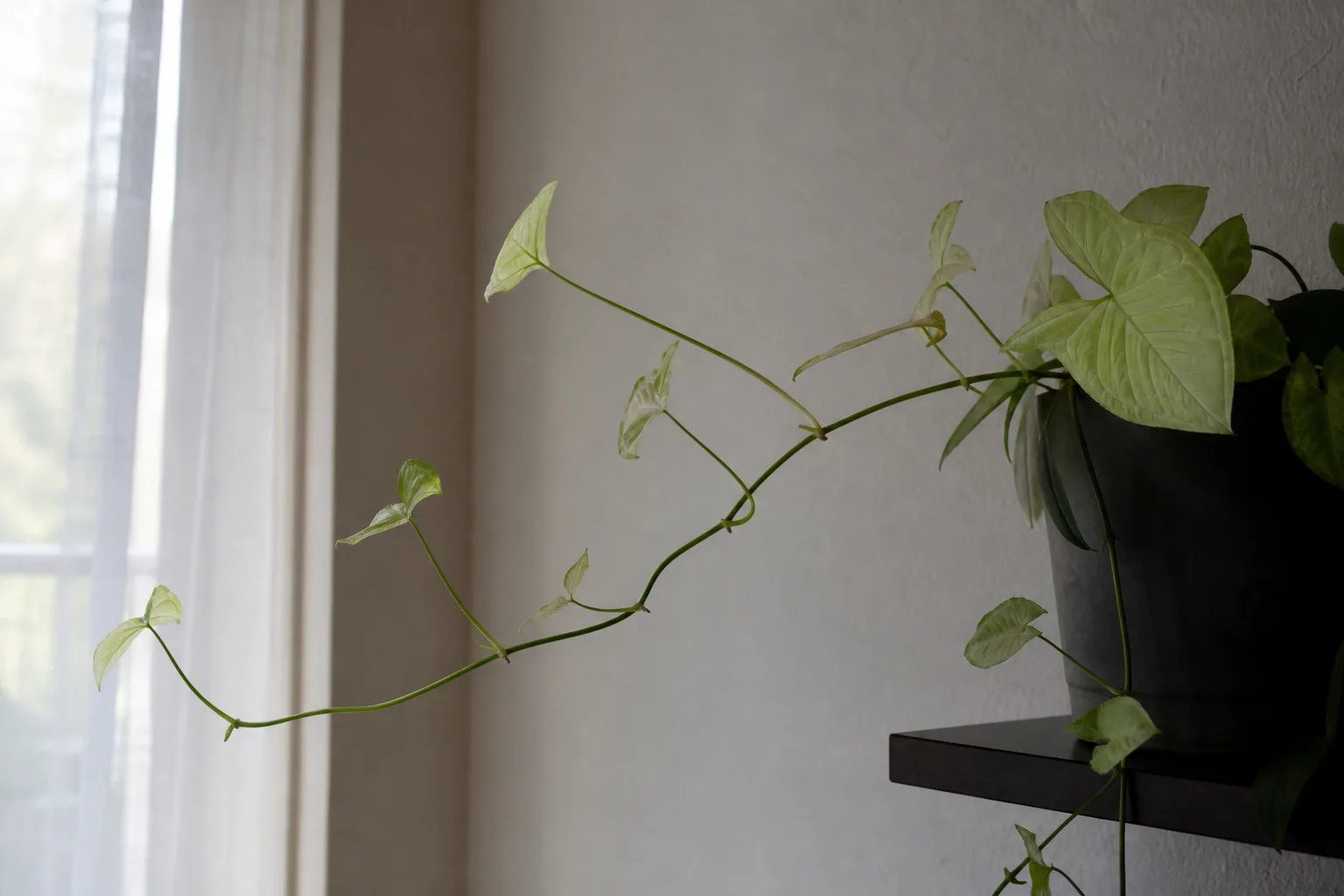
Not Enough Light on Syngonium: Causes, Checks & Fixes
This guide covers not enough light on Syngonium. See also the general Not Enough Light guide, watering, and light pages for this plant.
Not Enough Light on Syngonium: Causes, Checks & Fixes
Quick answer
Syngonium (Syngonium podophyllum, arrowhead vine) is a tropical climbing aroid grown for its changing arrow-shaped foliage-not a true low-light survivor despite marketing labels. Missouri Botanical Garden recommends bright indirect light and protection from direct sun for Syngonium overview indoors. When photons are too weak, growth stalls, internodes stretch, pink and variegated leaves wash out, and the plant leans toward glass.
First step: move the pot to the brightest safe indirect location you have today-typically within a few feet of an east window or behind a sheer curtain on south or west glass. Do not repot, fertilize, or increase watering until you have tried that move for two weeks and watched the newest leaves.
What not enough light looks like on Syngonium
Low light shows up on new growth first, especially on coloured cultivars. Healthy syngonium in adequate light produces compact arrowhead leaves with strong green, blush, or variegated contrast. In dim conditions you will usually see:
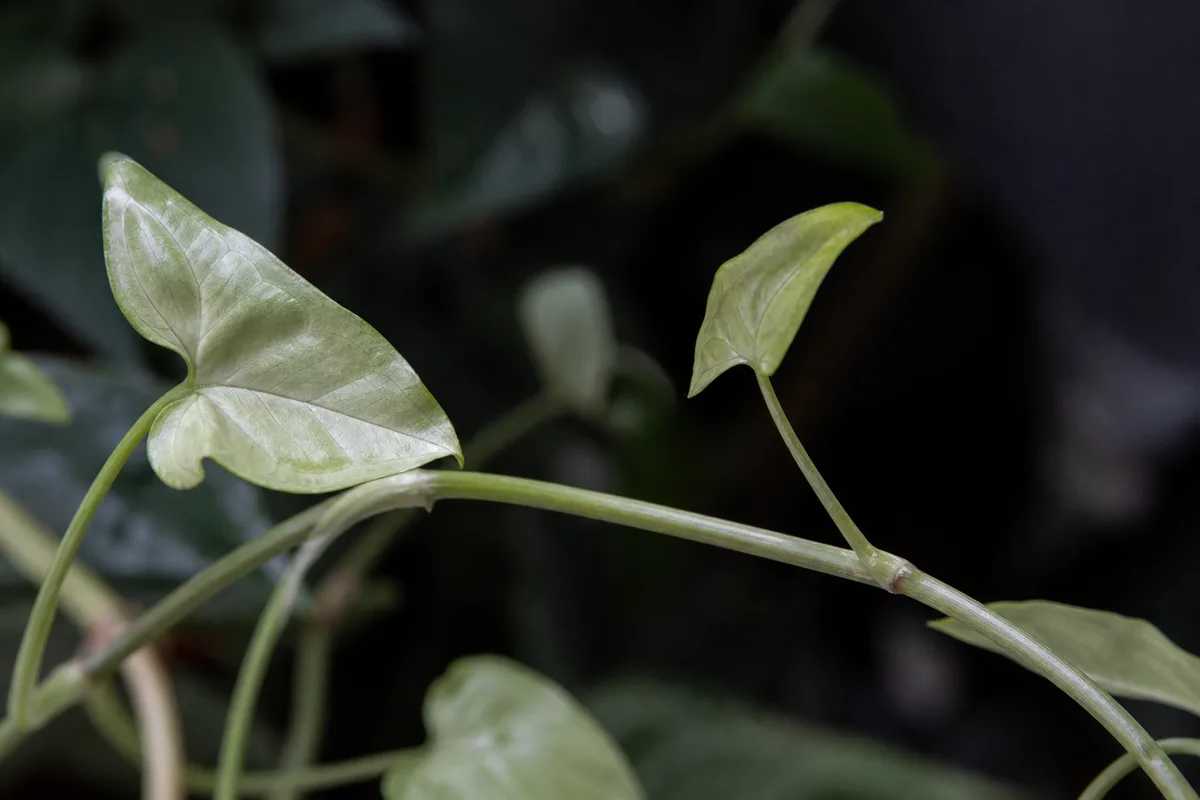
Not Enough Light symptoms on Syngonium - compare with healthy tissue on the same plant.
- Long gaps between leaves on vining stems-etiolation, not normal juvenile shape
- Small, pale new arrowhead leaves that open washed out or plain green on Pink, Neon Robusta, or white-variegated types
- One-sided lean toward the brightest window as stems phototropically reach for light
- Slow or absent new tips, especially from autumn through winter when daylight drops
- Soil that stays wet for days because transpiration slows even though you have not changed your Syngonium watering guide
The pattern builds gradually. A single yellow lower leaf may be normal senescence; repeated pale tips plus stretching on several stems across weeks fits insufficient light better.
Syngonium can linger in lower light longer than a fiddle leaf fig or croton, which is why owners miss the problem until the plant looks stringy. Survival is not thriving-the vine is spending stored energy to reach photons it cannot collect efficiently.
Juvenile versus mature leaves in low light
Young syngonium often shows heart- or arrow-shaped juvenile leaves; mature climbing stems may develop lobed, pedate foliage with support. That natural shape change is not low-light stress. The diagnostic clue is internode length: if new segments keep adding inches between small pale leaves, light is the issue-not normal maturation.
Why Syngonium gets too little light
Owners often place syngonium on a bookshelf, bathroom sill, or north wall because it is sold as “easy” and “tolerant.” It will tolerate dim corners longer than many houseplants, but coloured types need more light energy to maintain pigment in their leaves. North Carolina Extension notes syngonium performs best in bright but shady interior locations-avoid full sun, but also avoid deep interior shade if you want compact, colourful growth.
Common triggers in real homes:
- Placement for décor, not photons-pots more than six feet from glass, or hanging baskets centered in a room
- Winter daylight drop in the same summer spot that once felt adequate
- Dirty, tinted, or obstructed windows that cut intensity more than you notice
- Overcorrecting from sunburn fear-pulling the plant too far back after one scorch event on pale cultivars
- Competing plants blocking one side of a windowsill basket
There is a dangerous overlap: low light slows water use. Many syngonium problems start when someone keeps a summer watering schedule while the plant sits in a dim winter corner. [Wet mix that never dries invites root rot](https://www.missouribotanicalgarden.org/gardens-gardening/your-garden/help-for-the-home-gardener/advice-tips-resources/insects-pests-and-problems/environmental/[overwatering on Syngonium](/plants/syngonium/overwatering/)) even though the visible complaint is “leggy” growth or pale leaves.
Pink and variegated syngonium are more light-hungry than plain green types. A Neon Robusta that looked fine near a window in June may wash out by February in the same spot as the sun angle drops.
How to confirm the cause
Work through these checks before changing fertilizer or pot size:
- Window direction and distance - Can you see sky from the leaf surface, or only a wall? Within about two feet of an unobstructed east window counts as bright indirect for most foliage plants. Deep interior rooms usually read as low light.
- Stem direction - Do new tips grow toward one window? That phototropic lean strongly supports too little light on the current spot.
- Internode spacing - Compare the newest stem section to growth from when you bought the plant. Increasing gap length between arrowhead leaves on fresh growth confirms stretching.
- Colour on newest leaves - On variegated or pink types, fading on fresh tips while older leaves still show colour points to current light, not past care.
- Soil dry-down speed - Push a finger into the top inch. If the pot stays damp for ten days or more without obvious underwatering on Syngonium wilt, low light may be slowing evaporation-check roots if stems feel soft.
- Two-week trial move - Shift the plant to your brightest indirect location without changing water or feed. Larger, tighter new leaves within two to three weeks confirm light was the limiter.
Suspected, not confirmed: slow growth alone in winter can include normal seasonal rest. Confirmed: lean plus thin pale new segments that improve after the trial move.
Lookalike symptoms
- Overwatering in dim light - Soft, yellowing lower leaves with sour soil smell; may wilt despite wet mix. Stop water and inspect roots-do not only add light.
- Nitrogen deficiency - Uniform pale green on all leaves including old ones, often with a plant that receives adequate light. Low-light syngonium usually fades newest growth first in a dim room.
- Normal juvenile shape - Arrow-shaped young leaves on a compact plant with short internodes is healthy maturation, not etiolation.
- Sunburn on pale cultivars - Bleached, crispy patches on leaves that faced direct sun after a sudden move. Pull back and diffuse light; do not assume more shade fixes legginess elsewhere.
- Spider mites in dry winter air - Stippled, dusty leaf undersides with webbing; stretch and pale colour alone without mites point to light.
First fix for Syngonium
Move the plant to the brightest indirect location available-today.
For most homes that means:
- An east-facing window where leaves get bright morning light but not hot afternoon rays
- A south or west window with a sheer curtain or three to five feet of setback so light is filtered
- A shelf or hanging spot near the glass, not in the center of the room
Keep the same watering rhythm for the first week so you isolate the light change. If the new spot is substantially brighter, check soil moisture every few days-plants in stronger appropriate light dry faster, and you may need to water slightly sooner once growth picks up.
If no window gives enough intensity, add a full-spectrum LED grow light six to twelve inches above the canopy for twelve to fourteen hours daily on a timer. That setup supports compact growth through winter without sunburn risk.
Do not jump straight to direct midday sun to fix legginess. Syngonium bleaches and scorches quickly when acclimation is skipped, especially on white- or pink-leaved cultivars. Increase intensity over one to two weeks if you want more light than indirect glass provides.
Step-by-step recovery
After the first move:
- Rotate the pot weekly so all sides receive similar light and the plant stops leaning.
- Watch the newest arrowhead leaves, not old stretched stems. Success looks like shorter internodes and stronger pink, blush, or variegation on fresh growth.
- Adjust watering only after dry-down changes-when the top inch dries faster in the brighter spot, resume your normal rhythm; do not preemptively soak a plant that is still in wet mix.
- Optional pinch or prune - Once new compact growth is obvious, pinch leggy tips above a node to encourage branching if you want a bushy tabletop plant instead of a long thin vine.
- Resume mild fertilizer only after two weeks of stable new growth in spring or summer-never feed a stressed plant in dim wet soil hoping to “push” colour.
If you rely on grow lights, keep the timer consistent and dust leaves lightly so foliage intercepts light evenly.
Recovery timeline
Expect visible improvement in new leaf size and colour within two to three weeks after a meaningful light increase. A compact bushy shape may take several months if you pinch and let side shoots fill in after long stretch phases.
Old stretched stem sections and faded leaves do not revert-that is normal for most houseplants responding to better light. Judge success by the next one or two sets of arrowhead leaves, not the full vine length.
Worsening signs during the trial: new tips stay small and pale, stems soften and yellow while soil stays wet, or lower leaves drop with a sour smell-shift focus to drainage and roots, not more light alone.
What not to do
Do not fertilize heavily to force pink or variegation-salts can brown tips on stressed plants. Do not repot into a larger container hoping volume fixes stretch; extra wet soil in low light makes rot more likely.
Avoid moving instantly into harsh direct sun after months in shade. Scorch shows as bleached or crispy patches on thin leaves and can set recovery back further.
Do not water on a fixed calendar without checking the pot. Low-light syngonium uses less water; the same weekly soak that worked in summer by a bright window can waterlog the same plant in a dim winter corner.
Do not remove all leggy stems at once before new growth proves the light fix-leave some photosynthetic tissue while the plant adjusts.
How to prevent low-light stress
Place syngonium-especially coloured cultivars-where bright indirect light is realistic year-round, not only in June. Before winter, either move the pot closer to glass or start supplemental lighting early so short days do not trigger another stretch phase.
Clean windows seasonally, open sheers during daylight, and rotate plants weekly. When you increase light, recheck watering the same week-evaporation and growth rate change together.
If you want a compact tabletop arrowhead rather than a climbing vine, regular pinching in bright light keeps juvenile foliage dense. Dim corners produce long soft stems whether or not you prune.
When to worry
Pure low light is rarely an emergency; it is a chronic stress. Escalate if stems go soft and yellow with persistently wet soil, lower leaves drop rapidly in a dark bathroom, or pests explode on weak stretched growth-those combinations need root inspection, pest control, or both, not just a window move.
If two weeks in your brightest indirect spot produce no change in new leaf size or colour, verify that the location truly receives usable daylight (not just “bright to human eyes”) and consider a stronger grow light before assuming another problem.
Conclusion
Not enough light on Syngonium is a placement problem disguised as pale leaves or slow growth. Confirm it with leaning stems, long internodes, washed-out new tips, and compact colourful leaves after a brighter trial spot. Move once to strong indirect light-or add a timed grow light-before Syngonium repotting guide or feeding. Old stretched sections will stay long; healthy new arrowhead foliage tells you the fix worked.
When to use this page vs other Syngonium guides
- Syngonium watering guide - Use for routine moisture checks before assuming not enough light is the main issue.
- Syngonium problems hub - Browse all 17 common issues on this species.
- Leggy Growth on Syngonium - Different entry point when symptoms overlap with not enough light.
- Slow Growth on Syngonium - Different entry point when symptoms overlap with not enough light.
- Yellow Leaves on Syngonium - Different entry point when symptoms overlap with not enough light.