Underwatering on Syngonium: Causes, Checks & Fixes
Quick answer
Push your finger into the top inch of mix and lift the pot. If soil is dusty dry, the container feels light, and arrow-shaped leaves droop or curl, water thoroughly once until excess drains-then wait until the top inch dries again before the next drink.
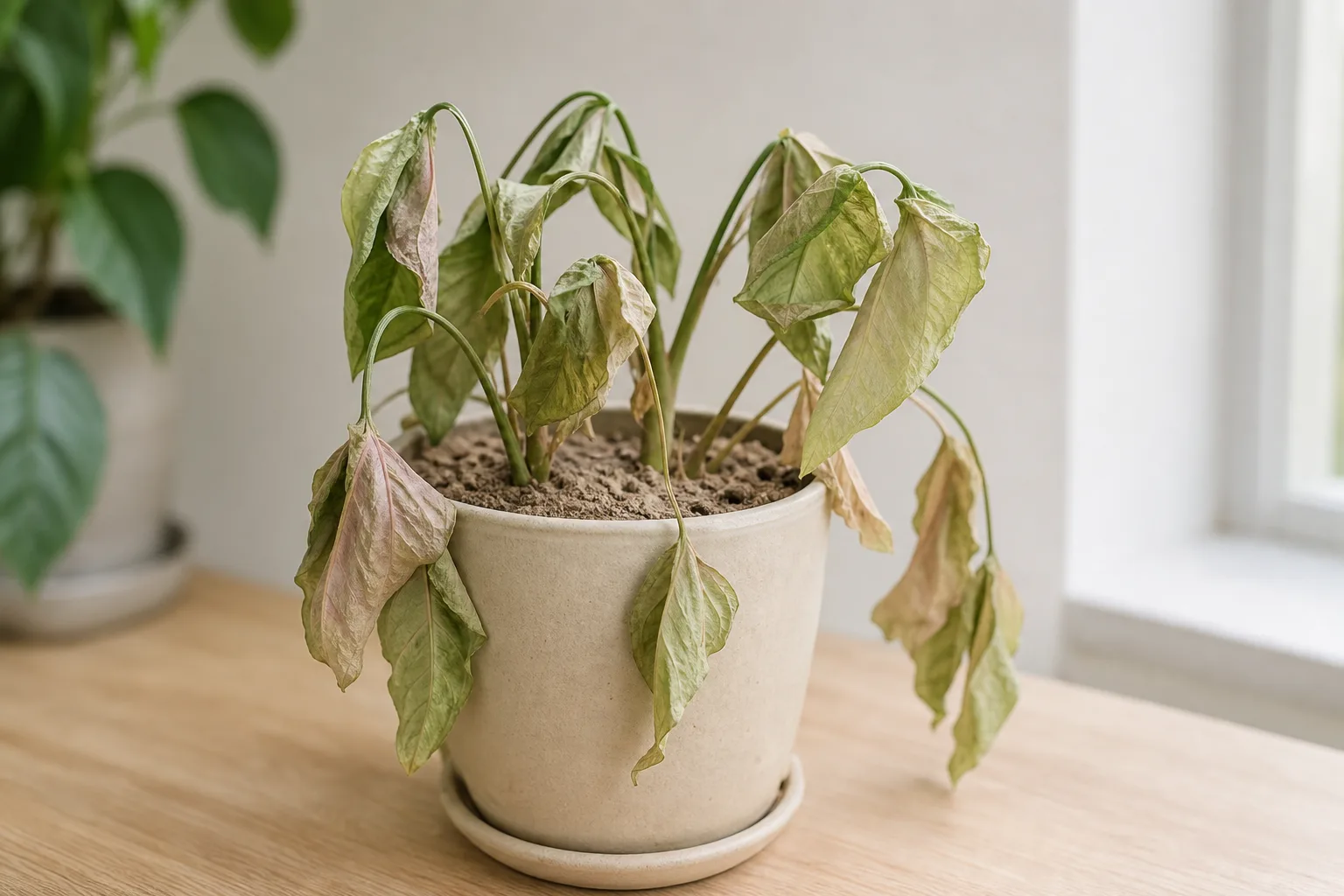
Underwatering on Syngonium: Causes, Checks & Fixes
This guide covers underwatering on Syngonium. See also the general Underwatering guide, watering, and light pages for this plant.
Underwatering on Syngonium: Causes, Checks & Fixes
Quick answer
If your arrowhead vine looks dramatically wilted but the pot feels light and the top inch of mix is dusty dry, underwatering is the likely problem-not a signal to keep withholding water out of fear of rot. Syngonium tolerates brief drought better than many ferns, yet it still needs steady root-zone moisture during active growth. Chronic dryness shows up as limp arrow-shaped leaves, curled or crispy edges on older foliage, and soil that has shrunk away from the pot wall.
First step: confirm dryness at the top inch, then water once thoroughly. Push your finger into the upper layer of mix. If that inch is dry and crumbly and the pot lifts easily, soak evenly until water runs from the drainage holes and discard saucer runoff within 30 minutes. Do not mist leaves, fertilize, or repot on the same day-that comes only if rehydration fails.
Dry vs wet at a glance
| Signal | Underwatering (this page) | Overwatering / root stress |
|---|---|---|
| Pot weight | Light when lifted | Heavy for days after watering |
| Top inch of mix | Dry, warm, crumbly | Cool, damp, or soggy |
| Leaf texture | Thin, curled, or crisp brown edges on older leaves | Yellow lower leaves; may stay green on top at first |
| Stem at soil line | Firm | Soft, collapsing, or mushy |
| Smell | Neutral or dusty dry soil | Sour or musty wet mix |
| After one thorough soak | Leaves perk within hours to a day | Stays limp; may worsen if roots are rotting |
| Next action | Soak once, then reset check-first rhythm | Stop watering; see overwatering or root rot |
How this page differs from drooping-leaves and wilting
| Your main question | Start here | Use the sibling guide |
|---|---|---|
| I know the mix is dry and the pot is light | This page - drought signs, soak protocol, prevention rhythm | - |
| Leaves droop but I am not sure why | Drooping leaves - broad turgor-loss fork | This page once dryness is confirmed |
| Whole vine collapsed; wet vs dry unclear | Wilting - opposite-problems diagnostic hub | This page when thirst is confirmed |
| General watering schedule and seasonal rhythm | Link only | Syngonium watering |
This page owns dry-soil confirmation, hydrophobic rewetting, soak-and-wait recovery, and drought-prevention rhythm. The drooping leaves and wilting guides own the fork when you cannot yet tell thirst from root failure.
What underwatering looks like on Syngonium
Underwatering on Syngonium usually combines limp foliage with a dry root zone. Arrow-shaped juvenile leaves may droop dramatically along the vine-Syngonium is one of the houseplants that visibly collapses when thirsty. Leaves can curl inward or feel thinner than usual. Margins and tips on the oldest leaves often turn brown and papery, a pattern owners often blame on low humidity alone. On pink or variegated cultivars, colour may look dull or slightly shrunken before crisping spreads.
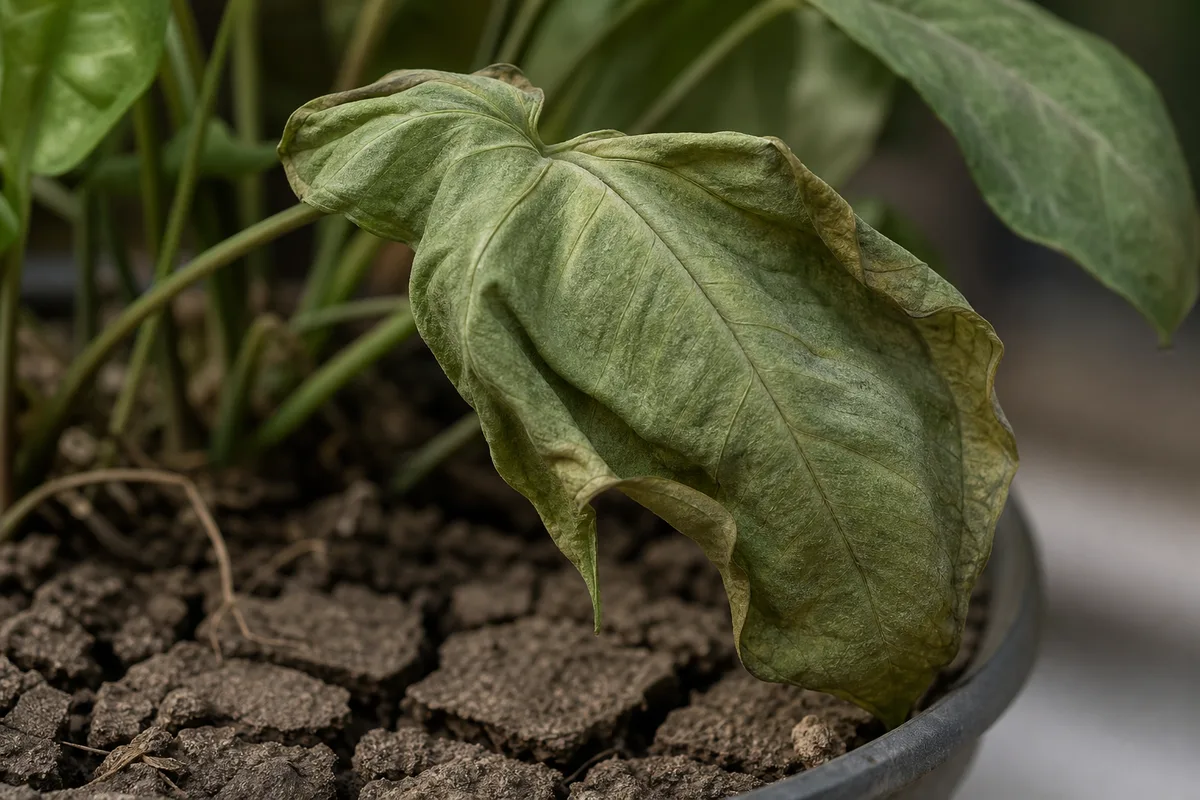
Underwatering symptoms on Syngonium - compare with healthy tissue on the same plant.
Above-soil signs
- Drooping or curling arrowhead leaves on otherwise firm stems
- Brown, dry edges on older leaves first
- New leaves slow to unfurl or stay folded when drought is severe
- Soil pulled away from the pot rim, with a gap between mix and container
- A pot that feels noticeably lighter than right after watering
- Slowed or stalled new growth during warm months
Below-soil signs
Healthy roots stay firm and pale. Underwatering does not produce mushy roots or a sour smell-that pattern points to overwatering or rot. Each node on Syngonium can produce adventitious roots along its stems; if you unpot during a dry spell, roots may look slightly shriveled but should still be white or tan and resilient, not brown jelly.
The confusing overlap is wilting. Both too dry and too wet can make leaves limp. On Syngonium, texture and weight separate the two: underwatered plants wilt with dry, warm mix and often crisp edges; overwatered plants wilt with cool, damp mix, yellowing from the base up, and sometimes soft lower stems.
Why Syngonium gets underwatered
Syngonium podophyllum evolved in the moist forests of Central and northern South America. It tolerates some missed waterings, but it is not a succulent. Several habits leave arrowhead vines chronically thirsty indoors:
Calendar under-watering after overwatering scares
Many owners cut water sharply after a yellow-leaf episode. Syngonium needs the top inch to dry between drinks-not bone-dry mix for weeks. Holding water too long in bright, warm rooms dries the root ball while the owner waits for a safer schedule. Our Syngonium watering guide explains the check-first rhythm that avoids both extremes.
Heat, light, and airflow speeding dry-down
A plant moved closer to a window, near a heating vent, or into a small terracotta pot uses water faster. Root-bound containers with crowded vines dry in a few days. The same two-week winter interval that worked in shade may leave an actively growing Syngonium drought-stressed in summer-especially after a move to brighter indirect light.
Hydrophobic, peat-heavy mix
When potting soil dries completely, it can repel water. Surface watering runs down the sides while the center stays dry. The plant looks watered; the roots stay thirsty. Old, broken-down peat is especially prone to this. Refreshing with perlite or bark per our soil guide helps long term.
Misreading winter slow-down
Reduce watering from fall to late winter when growth slows-that is correct seasonal care. But skipping checks entirely because the plant “does not drink much” in cool months allows extended drought. UF/IFAS notes that even in winter you should reduce frequency without letting the plant dry out.
Travel and neglect during growth season
Syngonium pushes new arrowhead leaves in warm spring and summer. Extended dry spells during active growth shed older leaves as the plant conserves moisture. Commercial growers link old leaves turning yellow to nitrogen deficiency or media running dry-both can follow chronic underwatering.
Vining habit drying unevenly
Long trailing stems expose more leaf surface to dry air. A hanging basket in bright light can lose moisture from the top of the mix while lower leaves still look slightly firm-until the whole vine collapses.
How to confirm the cause
Work through these checks before repotting, moving, or feeding:
- Soil moisture at depth - Surface color misleads. Stick your finger into the top inch. Dry, warm, crumbly mix at that depth means water. Cold, damp soil means wait-even if leaves droop.
- Pot weight - Lift the container. A very light pot with limp leaves fits underwatering. A heavy, cool pot days after watering points to overwatering or root decline, not simple thirst.
- Leaf pattern - Crisp brown margins on firm leaves with dry soil fit drought. Yellow lower leaves on wet mix fit overwatering. Random tip browning with moist soil may be low humidity, fluoride, or fertilizer salts.
- Gap at the pot wall - Shrunken mix pulled from the sides confirms prolonged dryness.
- Water behavior - Pour a small amount. If it races through instantly and the surface barely darkens, the mix may be hydrophobic.
- Recovery test - If you are unsure, one thorough soak is a valid diagnostic step. Leaves that perk within 24 hours confirm underwatering. Limper stems with still-wet mix mean look elsewhere.
If soil is wet throughout, the pot is heavy, and lower leaves are yellow, treat as overwatering instead. Do not soak until you know which direction the problem runs.
Lookalike symptoms
Overwatering also causes drooping. The difference is weight and smell: damp mix, heavy pot, yellowing from the bottom, possible sour odor, and soft lower stems. Wilting with wet soil means roots may not be absorbing water-not that the plant needs more.
Low humidity causes brown tips and margins on Syngonium without necessarily drying the whole root ball. If the top inch is moist and only edges crisp, raise humidity toward the 40–60% range or switch from harsh tap water-but still verify soil moisture.
Spider mites, a common Syngonium pest, can cause stippling and webbing in dry winter air-not whole-vine collapse with a light pot. Check undersides before assuming thirst.
Root loss from past overwatering produces wilt that does not resolve after one good soak. If stems stay limp despite evenly moist mix, unpot and inspect roots rather than watering again.
Cold damage below about 55°F (13°C) can yellow or wilt leaves with soil that dries at a normal pace. Drafty winter windows and AC blasts stress tropical foliage. Warm the placement before assuming the plant needs more water.
Natural senescence drops an occasional old leaf on a healthy vine. Worry when several lower leaves yellow or crisp in a short span while the mix stays dry.
The first fix to try
Water thoroughly once dryness is confirmed at the top inch.
Set the pot in a sink or over a saucer. Water slowly and evenly across the surface until it drains freely from the bottom. Let the pot finish dripping, then empty the saucer. One complete soak rewets the root zone better than repeated small sips that never reach the center.
If water runs through immediately and the surface stays pale, the mix is likely hydrophobic. Soak once, wait thirty minutes, then water again until the surface stays dark and moist. Alternatively, bottom-water in a tray until the top inch feels damp, then drain fully.
Move the plant out of direct hot sun while it recovers from severe wilt, but do not stash it in a darker corner-that slows dry-down tracking and future growth. One correction today; reassess in twenty-four hours.
Step-by-step recovery when drought has been severe
If the vine has been dry for weeks, leaves are widely crisp, or the first soak did not perk foliage:
- Bottom-water to saturation - Place the pot in a basin of room-temperature water deep enough to reach the drainage holes. Let the mix absorb until the surface moistens-often twenty to forty-five minutes depending on pot size and mix. Remove, drain completely, and never leave the pot sitting submerged for days.
- Trim only fully dead leaves - Brown, papery blades will not recover. Removing them redirects energy but is optional unless they harbor pests. Keep green tissue even if limp.
- Hold fertilizer - Rehydrate roots first. Feeding drought-stressed Syngonium can burn fine roots recovering from dry damage.
- Check root-bound status - If the root ball is solid and dries every two to three days, schedule a spring repot into a slightly larger container with perlite or bark-not an emergency repot on the same day as the first soak unless roots are circling severely.
- Establish a check-first rhythm - When the top inch dries again, water thoroughly. Count how many days that takes in your room; that personal interval beats any generic schedule.
If the crown collapses, stems soften at the soil line, or the mix smells sour despite your dry-soil diagnosis, stop soaking and inspect for rot. Soft tissue with wet soil is a different emergency.
Recovery case: White Butterfly hanging basket (May 2026)
A 6-inch terracotta hanging basket of Syngonium ‘White Butterfly’ sat in a west-facing room at about 72°F (22°C) with bright filtered light. Owner watered on a fixed Tuesday/Friday calendar. By day 5 after the last drink, the outer vine collapsed; pot weight dropped noticeably; top inch of mix was dusty dry with a 3 mm gap between mix and pot rim.
Day 0 (afternoon): Bottom-watered in a basin for 35 minutes until the surface darkened. Drained fully.
Day 0 (evening, ~6 hours later): Outer arrowhead leaves stood erect again; inner leaves still slightly soft.
Day 9: First new firm arrowhead unfurled on the longest stem. Crisped lower margins on three older leaves did not green up-expected.
Old brown edges never recovered; success was judged on perk speed and new unfurling, not on reversing dead tissue.
Recovery timeline and what to watch
Mild underwatering caught while stems are still firm often shows improvement within twenty-four hours after one thorough soak. Syngonium is known for dramatic wilt-and-recovery cycles-leaves may stand erect again the same day if roots are healthy.
Moderate drought with multiple crisp edges takes one to three weeks to stabilize. Expect some older leaves to yellow and drop while the plant rebuilds turgor. Judge success by new arrowhead leaves unfurling firm and coloured, not by old blades greening again.
Severe or repeated dry cycles can slow vining growth for a full season. Worsening signs-continued leaf loss after proper watering, persistent limp stems with evenly moist mix, or new crisping spreading upward-mean reassess for root damage, pests, or incorrect diagnosis.
Mistakes to avoid
Do not assume drooping always means overwatering. On Syngonium, dry soil plus a light pot is the classic underwatering pattern.
Do not mist leaves instead of soaking roots. Misting raises humidity briefly; it does not rehydrate a dry root ball.
Avoid watering on a rigid calendar without checking. Summer bright light and winter dim rooms change dry-down speed on the same plant.
Do not give tiny daily splashes. Frequent shallow watering leaves the core dry and encourages salt buildup at the surface.
Do not fertilize a wilted, dry plant hoping to push growth. Feed only after watering rhythm is stable and new growth looks normal.
Do not repot into a much larger pot to “hold moisture.” Extra soil stays wet unevenly and invites rot once you start watering again.
After rehydrating, resist drowning the plant daily out of guilt. One thorough soak, then wait until the top inch dries.
How to prevent underwatering next time
Match watering to how fast your pot dries. In warm, bright conditions during active growth, check when the top inch feels dry-often every 5–7 days in summer as a room-dependent benchmark, not a rule. In cool, low-light winter rooms, the same Syngonium may need water only every 10–14 days. Always verify with your finger before pouring.
Learn your pot’s weight at “just watered” versus “ready to water.” That feedback is faster than remembering a weekday schedule.
Use a well-drained mix with perlite or bark so water penetrates evenly, and refresh peat-heavy soil that has gone hydrophobic. Keep drainage holes open and empty saucers after every watering.
Place Syngonium where bright indirect light is realistic. If you move it to a brighter spot for colour, expect faster dry-down and check more often.
During the first month after purchase, track how many days pass before the top inch dries. Adjust travel plans accordingly-a thorough soak before a long weekend in stable light is safer than hoping the plant tolerates three weeks of drought during active growth.
Inspect leaf edges and soil gap at the rim weekly. Firm new growth and mix that cycles between moist and slightly dry at the surface mean your rhythm is working. Repeated crisping with shrinking soil is an early alarm-soak once, then shorten the interval between checks.
Do not confuse correct winter watering reduction with neglect. Less frequent drinks in cool months are right-but the mix should still cycle between moist and slightly dry at the surface, not stay bone dry for weeks.
When to worry
Treat underwatering as urgent if the whole vine is limp, soil is dry several inches down, and leaves are curling or crisping during active warm-season growth. Prolonged drought can shed many leaves before roots fail.
A single droopy leaf on firm stems with mix that is only slightly dry at the surface can wait for a scheduled check-do not panic-soak.
If the plant stays limp after two thorough soaks separated by proper dry-down, unpot and look at roots. Persistent wilt with moist mix means root rot or root loss, not more drought treatment.
When in doubt, weigh the pot and feel the top inch. Five minutes of inspection prevents weeks of guessing.
Conclusion - your next-check checklist
Before you close this tab, run through:
- Top inch dry and pot light → one thorough soak, saucer emptied
- Mix hydrophobic (water races through) → double-soak or bottom-water
- Pot heavy or mix damp → stop; open overwatering instead
- Perked within 24 hours → reset check-first rhythm; log your personal dry-down days
- Still limp after two proper soaks → inspect roots; do not keep soaking
- Crispy edges on old leaves → dead tissue; judge recovery on new arrowheads only