Drooping Leaves on Syngonium: Causes, Checks & Fixes
Quick answer
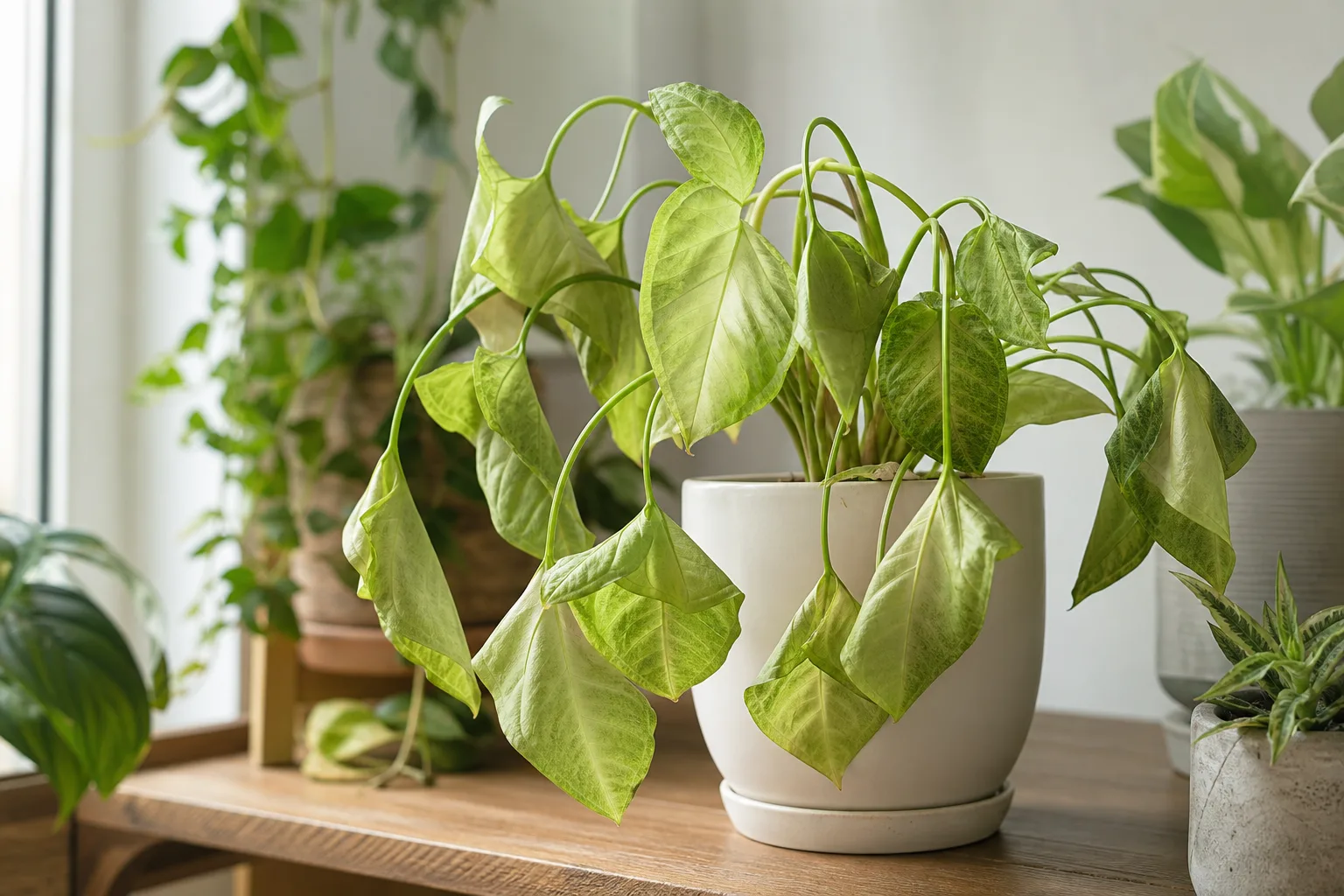
Drooping leaves on Syngonium mean the plant cannot hold leaf turgor-usually because the mix is too dry or too wet and roots are failing. Lift the pot and check moisture in the top inch before you water or repot.
Drooping Leaves on Syngonium: Causes, Checks & Fixes
This guide covers drooping leaves on Syngonium. See also the general Drooping Leaves guide, watering, and light pages for this plant.
Drooping Leaves on Syngonium: Causes, Checks & Fixes
Quick answer
Drooping leaves on Syngonium (Syngonium podophyllum) look dramatic, but they are a water-balance signal-not a diagnosis on their own. Arrowhead leaves hang when cells lose turgor because roots are not delivering enough water, or because damaged roots cannot absorb water even when the mix is wet. Wilted or drooping leaves with wet soil often mean rotting roots cannot take up water.
First step: lift the pot and check whether the top inch of mix is dry or wet before you change anything. A light, dry pot needs a deep watering. A heavy, wet pot needs watering paused and roots inspected-not another drink.
What drooping leaves look like on Syngonium
On a healthy syngonium, juvenile arrowhead leaves stand at a slight angle on long green petioles. When turgor drops, those petioles soften and the leaf blades hang downward. The change can hit the whole plant or start on one side exposed to a heat vent or bright window.
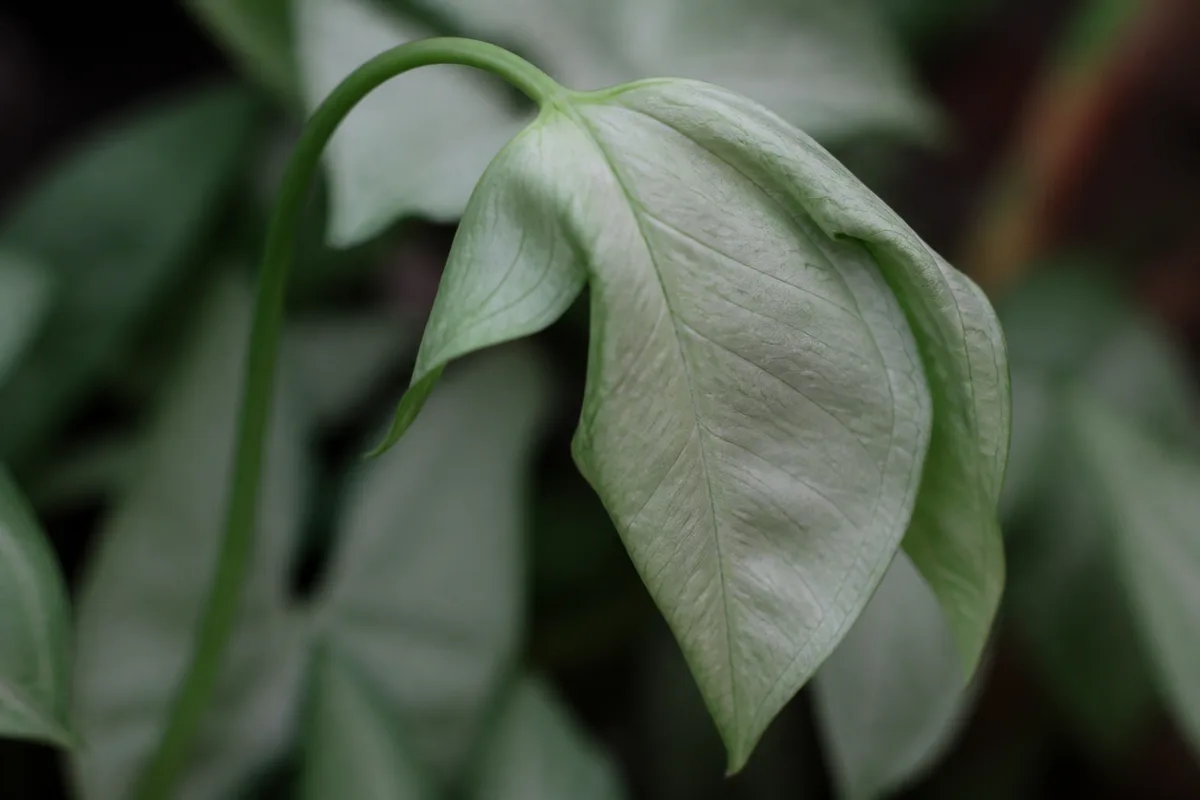
Drooping Leaves symptoms on Syngonium - compare with healthy tissue on the same plant.
Typical droop patterns:
- Thirst droop - Leaves feel thin and papery but stay green. Mix is dry well below the surface. Pot feels noticeably light. Stems stay firm where they meet the soil.
- Root-stress droop - Leaves hang despite moist or soggy mix. Lower leaves may yellow. Petioles at the crown feel soft or collapse inward. Soil may smell sour.
- Stress droop - Firm stems, normal-looking moisture, but leaves sag after a recent repot, cold draft, or sudden move to stronger light. Often temporary if conditions stabilize.
Do not confuse normal juvenile leaf shape with droop. Young syngonium leaves are naturally arrow-shaped and slightly flexible. Problem droop means the petiole cannot support the leaf weight and the whole shoot hangs lower than it did a day ago.
Why Syngonium leaves droop
Syngonium is a tropical climbing aroid with soft foliage and long petioles that lose rigidity quickly when water supply fails. Unlike thick-leaved succulents, arrowhead plants do not store much moisture in their leaves-roots and mix carry most of the plant’s water budget.
Underwatering
During active growth in bright indirect light, syngonium uses water steadily. The plant tolerates some drought but grows best with consistent moisture. When the top inch dries and you wait too long-especially in a small pot on a warm windowsill-petioles soften before leaf edges crisp. Hanging baskets and trailing stems droop on the outer growth first because those shoots dry out fastest.
Overwatering and root failure
This is the trap that catches many growers. Saturated mix suffocates fibrous aroid roots. Once roots decay, the plant cannot move water to leaves even though soil is wet. Drooping with wet soil is the same failure mode as full wilt, just sometimes slower to appear. Dense potting mix, oversized pots, and dim corners where soil never dries are common syngonium setups for this problem.
Environmental shock
Recent repotting disturbs fine roots and can cause temporary droop until the plant re-establishes. Cold air from AC vents or winter windows slows root function. A sudden jump to direct sun increases transpiration faster than roots can replace water-direct sun can burn or bleach syngonium foliage, and heat stress often shows as sagging leaves before brown patches appear.
Root-bound or hydrophobic mix
A crowded root ball can leave dry pockets inside a pot that feels moist on top. Old peat-heavy mix that has dried out completely may repel water, so surface watering never reaches roots-leaves droop while you think you have been watering regularly.
How to confirm the cause
Work through these checks in order. Each step narrows the cause before you act.
- Pot weight - Lift the container. Light means dry; heavy means wet or waterlogged.
- Moisture at one inch - Stick your finger into the top inch. Dry confirms thirst. Wet or cool confirms saturation.
- Stem firmness at the crown - Gently pinch petioles where they meet the soil. Firm stems with dry mix = underwatering. Soft stems with wet mix = root stress.
- Drainage test - Water should exit drainage holes within seconds during a normal watering. Standing water in the saucer or blocked holes point to poor drainage.
- Recent changes - Note repotting, relocation, heat wave, or a skipped watering week. Timing often reveals the trigger.
- New growth check - Healthy new arrowhead leaves opening firm means roots are still working. Stalled or shriveled new tips with wet soil suggest root damage.
If dry mix and firm stems align, underwatering is confirmed. If wet mix, soft crown, yellowing lower leaves, or sour odor align, treat root failure as confirmed and inspect roots before watering again.
First fix for Syngonium
Lift the pot, check the top inch of mix, then act on what you find-do not water on autopilot.
- If the pot is light and the top inch is dry: Water thoroughly until excess drains from the bottom. Wait 30 minutes and confirm the mix is evenly moist, not just wet on the surface. Severely dry plants may need a 20-minute bottom soak in a basin of water.
- If the pot is heavy and mix stays wet: Stop all watering. Move the plant to brighter indirect light and better airflow. Plan to unpot within 24–48 hours if droop persists or stems soften.
This single diagnostic step prevents the two most common mistakes: drowning a plant that already has rotting roots, or letting a thirsty syngonium wilt further while you assume wet soil means overwatering.
Step-by-step recovery
For underwatering
- Water deeply once, ensuring drainage holes flow freely.
- Remove any standing water from the saucer after 30 minutes.
- Wait 6–24 hours and check whether petioles stiffen.
- Resume the normal rhythm: water when the top inch of soil dries during growth.
- If mix repels water, bottom-soak until the root ball softens, then let excess drain.
For overwatering or root stress
- Stop watering immediately.
- Gently knock the plant out of its pot and rinse roots to see firm white tissue versus brown mushy sections.
- Trim soft roots with clean scissors; let cut surfaces air-dry 24 hours.
- Repot into fresh soil-based potting mix amended with perlite or bark for drainage.
- Wait one week before the first light watering. Judge recovery by new firm growth, not old drooped leaves.
For temporary stress droop
- Move the plant away from cold drafts, heat blasts, and direct sun.
- Keep moisture steady-do not compensate with extra water or fertilizer.
- Allow 3–7 days for roots to settle after repotting before changing pots again.
Wear gloves when handling damaged tissue. Syngonium contains calcium oxalate crystals that irritate skin and are toxic to pets.
Recovery timeline
Mild thirst droop often improves within hours after proper watering. You should see petioles lift and leaves feel thicker by the next morning. Stress droop after repotting or a location change usually resolves within 3–7 days if moisture and light stay stable.
Root-related droop takes longer. Expect one to three weeks after trimming bad roots and repotting before new growth looks normal. Old leaves that stayed collapsed for more than a week may not fully straighten-judge success by firm new arrowhead leaves and stable watering rhythm, not by every older blade returning to perfect posture.
Lookalike symptoms to rule out
Full wilting looks more severe-entire shoots collapse and stems may fold completely. The diagnostic path is the same (check pot weight and moisture), but wilting with wet soil needs faster root intervention.
Yellow leaves often accompany overwatering droop but can also signal natural ageing of lower leaves on an otherwise healthy plant. Yellow plus wet mix plus droop points to roots, not age alone.
Leggy stretched growth from low light produces long thin stems that may lean, but petioles stay firm and leaves do not hang limp unless water is also wrong. Fix light separately from droop diagnosis.
Brown crispy tips suggest low humidity or inconsistent watering over time-not acute droop. Crispy edges with firm upright leaves mean a different care adjustment than sagging petioles.
Mistakes to avoid
Do not water every drooping syngonium without checking soil first. Wet-root droop gets worse with more water.
Do not assume droop always means the plant is thirsty. Overwatered syngoniums droop in soggy mix more often than beginners expect.
Do not repot and fertilize on the same day you notice droop. Stressed roots need stable conditions, not stacked interventions.
Do not mist leaves hoping droop will fix itself. Surface moisture does not correct root-zone water balance.
Do not keep a syngonium in a dim corner with heavy wet soil through winter. Reduce watering from fall to late winter when indoor growth slows and the plant uses less water.
Syngonium care cross-check
Drooping often traces back to a mismatch between how fast your home dries the pot and how often you water. Syngonium wants bright indirect light, airy well-draining mix, and watering keyed to the top inch drying-not a fixed calendar. Plants in stronger appropriate light dry faster and droop less predictably from chronic overwatering. Plants in weak light stay wet longer and droop from root stress even when you water modestly.
If droop keeps returning, reassess pot size (avoid oversized containers), drainage holes, and whether the mix has compacted. A syngonium that dries in three days in summer may need ten days between drinks in winter-adjust with the season, not the clock.
How to prevent drooping next time
- Water when the top inch dries during active growth; cut back in fall and winter.
- Use chunky aroid-friendly mix that drains quickly but holds some moisture.
- Keep the plant in bright filtered light so it uses water at a steady rate.
- Empty saucers after watering so roots never sit in standing water.
- Quarantine and observe watering pace for two weeks after repotting or moving.
- Scout for aphids, mealybugs, and spider mites if droop appears with sticky residue or stippling-heavy pest feeding can stress water uptake, though moisture imbalance is still the first check.
When to worry
Escalate quickly when drooping pairs with wet soil, sour-smelling mix, or soft stems collapsing at the crown. That pattern means roots are failing and the plant can die within days if watering continues.
Also act promptly if droop persists more than 48 hours after you corrected a confirmed dry spell with thorough watering-roots may be damaged even though the surface felt dry.
Salvage is still possible when some firm roots remain. If the crown is mushy throughout, take firm stem cuttings with nodes above healthy tissue and root them separately while you dry out and repot what is left of the parent plant.
Related Syngonium guides
- Syngonium overview
- Syngonium watering
- Syngonium light
- Wilting on Syngonium
- Underwatering on Syngonium
- Overwatering on Syngonium
- Root Rot on Syngonium
- All Syngonium problems
Conclusion
Use this page to confirm drooping leaves on Syngonium by pattern and pot checks-not by treating every houseplant the same. When symptoms overlap with sibling pages, follow the linked guide for the matching cause before stacking fertilizer, repotting, or pesticide.