Wilting on Syngonium: Causes, Checks & Fixes
Quick answer
Wilting on Syngonium often means opposite problems look identical. Lift the pot first: light and dry means underwatering; heavy and wet with soft stems at the soil line means stop watering and inspect roots.
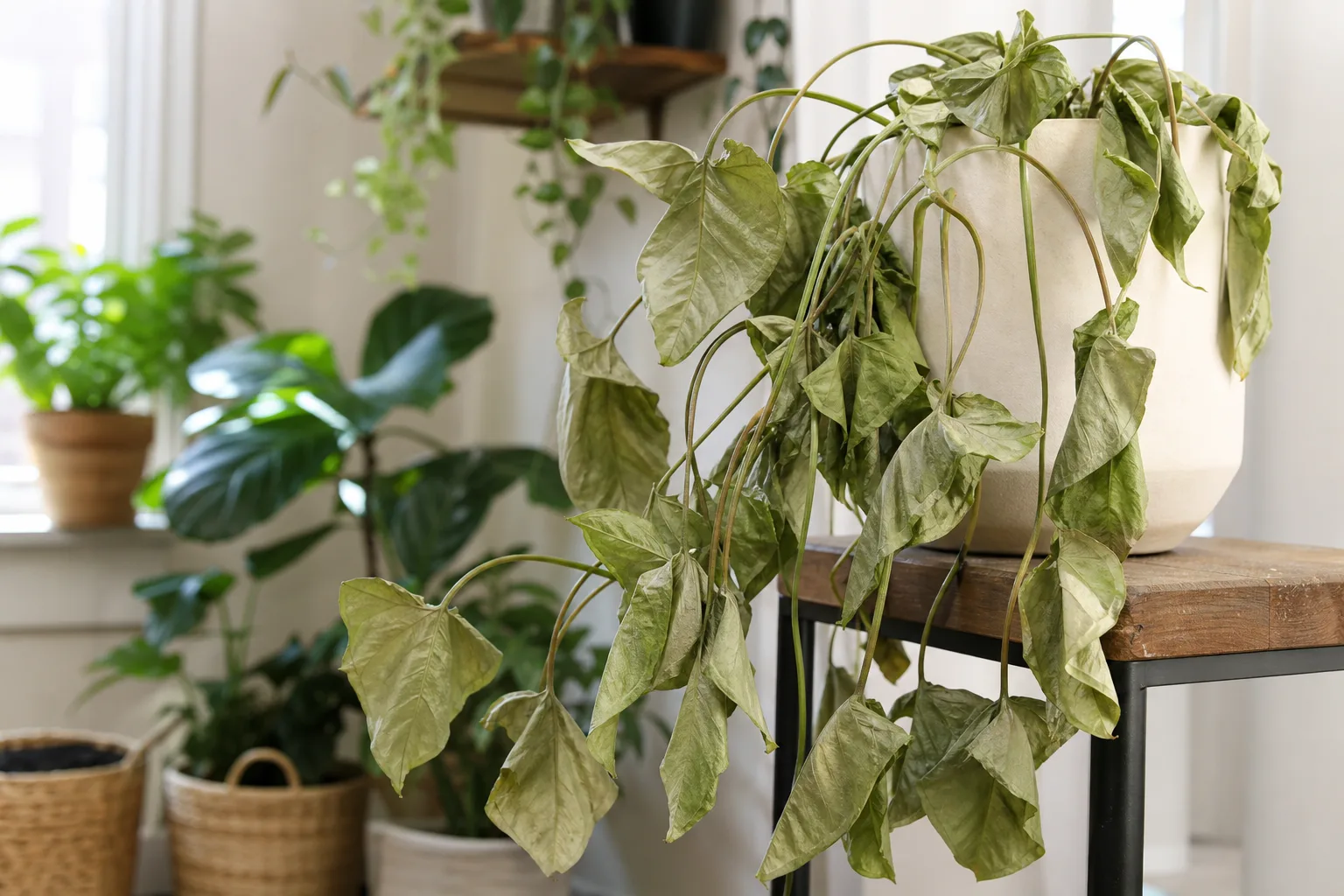
Wilting on Syngonium: Causes, Checks & Fixes
This guide covers wilting on Syngonium. See also the general Wilting guide, watering, and light pages for this plant.
Wilting on Syngonium: Causes, Checks & Fixes
Quick answer
Wilting on Syngonium is one of the most confusing houseplant symptoms because thirsty plants and rotting plants look the same from across the room-limp arrowhead leaves hanging from long petioles. The fix depends entirely on what is happening at the roots, not on how sad the foliage looks.
First step: lift the pot and check soil moisture before you touch the watering can. A light container with dry mix and firm stems at the soil line means the plant needs a deep drink. A heavy pot with wet mix and softening stems at the crown means roots are failing to move water, and adding more will make recovery harder.
Why Syngonium wilts
Syngonium podophyllum is a tropical aroid with thin juvenile arrowhead leaves on long petioles and succulent climbing stems. That anatomy makes wilting visible fast. When roots cannot supply enough water, turgor pressure drops and the petioles fold over before thicker-leaved houseplants would show obvious stress.
underwatering on Syngonium is the most common reversible cause during active growth. Syngonium tolerates brief drought but grows best with steady moisture. In Syngonium light guide during spring and summer, a small pot can go from evenly moist to bone dry in a few days. The top inch of mix dries first; if you wait until every leaf looks limp, fine roots may already be damaged.
overwatering on Syngonium produces the same limp leaves through a different mechanism. Aroids need oxygen at the roots. When dense, waterlogged mix stays saturated-especially in dim corners where the plant uses little moisture-roots suffocate and rot. Rotting roots cannot take up water, so the plant wilts even though the soil feels wet. That wilt paradox catches many growers who assume limp leaves always mean thirst.
Low light compounds overwatering risk. Syngonium is often sold as a low-light plant, but in very dim rooms the mix stays wet far longer between waterings. Wet soil plus weak transpiration is a common setup for root decline and persistent wilt.
Heat and root-zone stress add less common causes. A plant moved suddenly to a hot, sunny window may wilt temporarily on warm afternoons when transpiration outpaces a healthy but limited root system. Recent Syngonium repotting guide, cold drafts, or a pot bound root mass can also interrupt uptake and produce short-term collapse.
Spider mites and fungus gnats rarely cause overnight wilt on their own, but heavy mite feeding during dry winter heat and chronic soggy soil from gnat-prone overwatering both weaken the plant enough that wilt appears alongside other signs.
What wilting looks like on Syngonium
Typical thirst wilt:
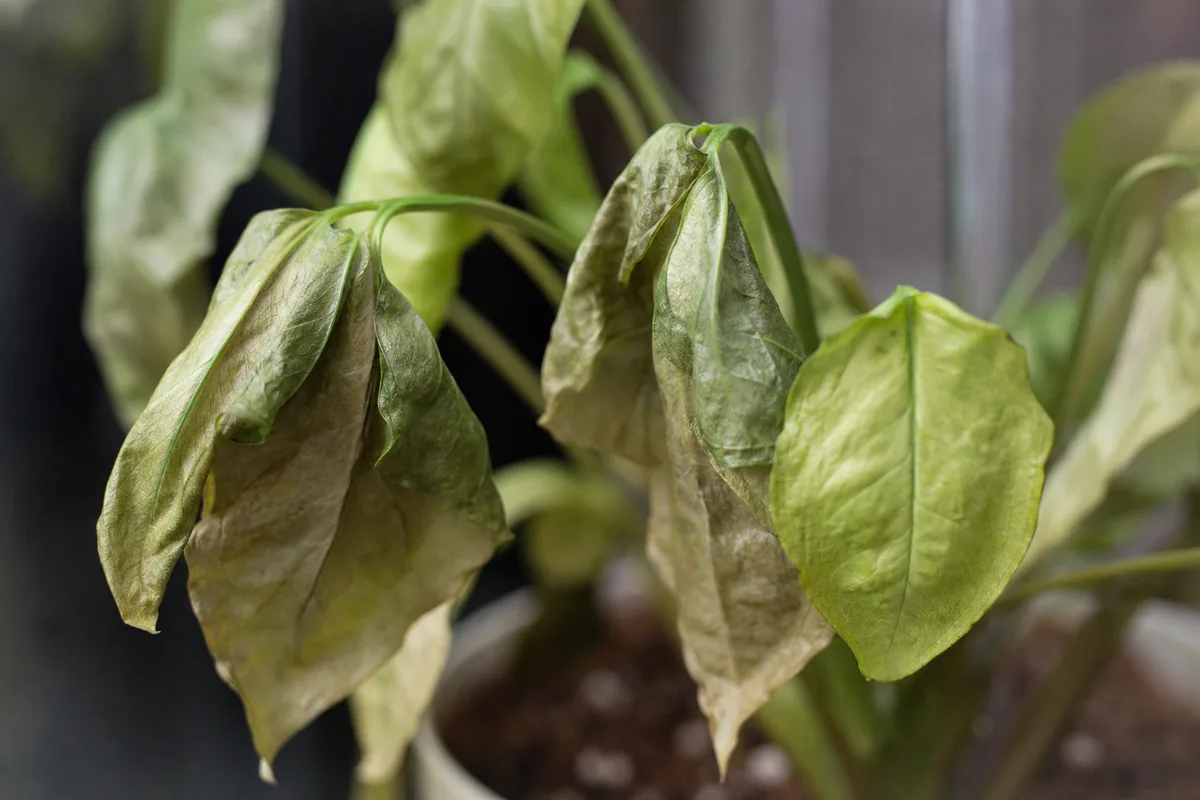
Wilting symptoms on Syngonium - compare with healthy tissue on the same plant.
- Arrowhead-shaped leaves hang limply on long petioles, often starting with the outer or lowest leaves
- Pot feels noticeably light when lifted
- Top inch of mix is dry; deeper soil may be dry or only slightly cool
- Petioles and stems stay firm where they enter the soil
- Leaves may feel thin or slightly curled at the edges; color is usually still green
- Recovery begins within hours after a proper soak
Typical overwatering or root-rot wilt:
- Limp leaves despite wet or heavy-feeling mix
- Lower leaves yellow before or alongside wilting
- Stems feel soft or mushy at the soil line; sometimes a sour odor from the pot
- Mix stays wet for many days after the last watering
- New growth may stall, stay small, or blacken at the tips
- White root tips are absent when you tip the plant out-roots look brown, slimy, or hollow
Temporary environmental wilt:
- Occurs after a sudden move to stronger light, a heat spike, or right after repotting
- Stems remain firm and soil moisture reads normal
- Plant perks up overnight or within a day once conditions stabilize
Juvenile syngonium leaves are more flexible than mature lobed foliage, so young plants can look dramatically droopy from a single missed watering. Do not panic at the sight alone-confirm with pot weight and stem firmness.
How to confirm the cause
Work through these checks in order:
- Pot weight - Lift the container. Light means dry; heavy and saturated means pause before watering.
- Surface moisture - Stick a finger into the top inch. Dry confirms thirst is possible. Wet or cool and clinging mix points away from underwatering.
- Stem base - Gently squeeze petioles at the soil line. Firm tissue supports a thirst diagnosis; soft, collapsing tissue suggests rot or stem involvement.
- Yellowing pattern - Lower yellow leaves with wet soil strongly suggest root failure, not drought.
- Recent care history - Did you water on schedule through a slow winter without checking dryness? Did the plant sit in a saucer of runoff? Was it repotted or moved to a hotter window in the last week?
- Root spot-check - If wet wilt persists, slide the root ball partly out of the pot. Healthy aroid roots are pale and firm; rotted roots are dark, mushy, and may smell.
- Pest scan - Look for fine webbing, stippled leaves, or tiny moving specks on leaf undersides during dry indoor heat-mites stress plants already struggling with water issues.
If dry soil and firm stems align, you have thirst wilt. If wet soil, yellowing, and soft stems align, treat it as a root-zone emergency, not a watering day.
First fix for Syngonium
Lift the pot, confirm moisture, then act on what you find-never water by habit when leaves droop.
For dry wilt: Water thoroughly until excess drains from the bottom, empty the saucer, and place the plant back in bright indirect light. If the mix has gone hydrophobic and water runs straight through dry channels, bottom-soak the pot in a basin for twenty to thirty minutes, then drain fully.
For wet wilt: Do not water. Move the plant to brighter indirect light to help the mix dry, tilt it out of the pot, trim mushy roots with clean shears, and let the root ball air for several hours before repotting into fresh, airy mix. Discard heavily saturated old mix rather than reusing it.
This single diagnostic step prevents the most damaging mistake on syngonium: drowning an already failing root system because the leaves look thirsty.
Step-by-step recovery
After underwatering
- Soak until the entire root ball is evenly moist, then drain completely.
- Wait twelve to twenty-four hours before judging recovery-petioles should begin stiffening from the base upward.
- Resume watering when the top inch dries, not on a fixed calendar.
- Trim only leaves that stay brown and papery after turgor returns; most mildly wilted foliage green up again.
After overwatering or root rot on Syngonium
- Stop watering immediately and remove standing water from saucers or decorative outer pots.
- Unpot, rinse away old mix, and cut all brown, soft, or hollow roots back to firm white tissue.
- Optionally rinse remaining roots with clean water; allow the plant to dry briefly before repotting.
- Repot into well-draining mix with perlite or bark chunks; use a pot only slightly larger than the trimmed root mass, with drainage holes.
- Water lightly once after repotting, then let the top inch dry before the next drink.
- Remove leaves that stay collapsed and yellow after root work-they will not rehydrate and can harbor rot.
- Hold fertilizer until new growth shows the root system is functioning again.
After repotting or environmental shock
- Keep soil evenly moist but not soggy and avoid direct sun.
- Do not repot again or prune heavily for several weeks.
- Expect partial leaf drop or lingering droop while roots re-establish.
If fungus gnats swarm wet soil, allow the top inch to dry longer between waterings and reduce organic debris on the surface while roots recover.
Recovery timeline
Mild thirst wilt on syngonium often improves within a few hours to one day after proper rehydration. Severe underwatering that left mix pulled away from the pot sides may need two soak cycles across forty-eight hours before petioles fully firm.
Overwatering recovery is measured in weeks, not hours. After root trimming and repotting, expect one to three weeks before new unfurling leaves appear. Old wilted leaves may never fully recover even when the plant survives-judge progress by firm new growth and white root tips, not by older collapsed foliage.
Environmental wilt from heat or recent repotting usually resolves within one to three days once light and moisture stay stable.
Lookalike symptoms to rule out
Drooping from low light alone produces stretched petioles and pale, smaller leaves over weeks, not sudden afternoon collapse. Soil moisture is usually normal and stems stay firm.
Leggy growth is a chronic light issue with long internodes-not acute wilt. Correct placement gradually rather than treating it as a watering problem.
Brown tips from low humidity affect leaf margins while the blade stays reasonably firm. Humidity stress rarely collapses whole petioles unless combined with drought.
Bacterial soft rot can soften stems and cause localized collapse with wet, dark patches on leaves. It differs from uniform thirst wilt by odor, dark lesions, and spread along stems rather than whole-plant limpness from dry mix.
Normal leaf aging yellows and drops the oldest lower leaves one at a time on an otherwise upright plant- not a sudden canopy wilt.
Mistakes to avoid
Do not water every wilted syngonium without checking soil first. Wet-soil wilt worsens with more water.
Do not move a wilted plant into direct sun hoping to dry it faster. Arrowhead foliage burns easily; use bright indirect light only.
Do not repot on day one for simple thirst wilt-a dry plant needs water, not disturbance.
Do not fertilize a wilted, stressed plant to ” perk it up.” Feed only after Syngonium watering guide and roots are stable during active growth.
Do not keep syngonium in a pot without drainage or let it sit in runoff. Standing water is a direct route to root failure.
Do not assume winter wilt means thirst. Reduce watering from fall through late winter when indoor growth slows and mix stays wet longer.
Syngonium care cross-check
Wilting often exposes a mismatch between Syngonium overview’s needs and the spot it occupies:
- Light: Medium to bright indirect light keeps transpiration and drying predictable. Deep shade plus frequent watering invites rot.
- Water: Water when the top inch of mix dries during growth season; cut back when growth slows in cooler months.
- Soil: Use light, well-draining aroid mix-not heavy garden soil or dense peat that stays soggy.
- Humidity: Target forty to sixty percent. Very dry winter air increases mite pressure on already stressed leaves.
- Temperature: Avoid cold drafts below roughly sixteen degrees Celsius; chilling can damage roots and mimic wilt.
Syngonium is toxic to pets. Wear gloves when trimming rotted tissue or handling sap if you have sensitive skin.
How to prevent wilting next time
Learn your pot’s dry-down speed in its actual location rather than following a generic weekly schedule. A syngonium in a bright kitchen may need water twice as often as one in a north-facing bedroom.
Use pots with drainage holes and empty saucers after each watering. If mix stays wet more than seven to ten days after a drink, improve light, lighten the mix, or reduce volume per watering.
Repot every one to two years before roots circle tightly and watering becomes erratic. Trim congested roots when refreshing mix so the plant stays manageable.
Scout for spider mites during dry indoor winters-stippling and webbing on leaf undersides are early warnings before heavy feeding weakens the plant.
Quarantine new syngonium purchases for two weeks and confirm their watering history. Store-bought plants are often kept wet in low light-a recipe for hidden root damage that shows up as wilt in your home.
When to worry
Act quickly when wilt persists after correct rehydration, when stems blacken at the base, or when most of the root mass is mushy with little firm tissue left to save. At that stage, propagate healthy stem cuttings above the rot line if any firm nodes remain-syngonium roots readily from cuttings when the parent plant cannot recover.
Also treat as urgent when wilt spreads rapidly across the plant within days while soil stays wet, or when soft rot odor fills the room. Those signs mean vascular and root tissue is collapsing, not temporary thirst.
Simple dry wilt on an otherwise healthy plant with firm roots is not an emergency. One thorough watering and patience usually resolve it.
Conclusion
Wilting on syngonium rewards a calm diagnostic habit: lift the pot, read the soil, feel the stems, then choose one path. Thirst gets a soak; wet failure gets drainage, root inspection, and a dry-down reset. The long petioles will always make the plant look dramatic-trust root evidence over leaf posture, and recovery becomes much more predictable.
When to use this page vs other Syngonium guides
- Syngonium watering guide - Use for routine moisture checks before assuming wilting is the main issue.
- Syngonium problems hub - Browse all 17 common issues on this species.
- Underwatering on Syngonium - Different entry point when symptoms overlap with wilting.
- Overwatering on Syngonium - Different entry point when symptoms overlap with wilting.
- Root Rot on Syngonium - Different entry point when symptoms overlap with wilting.