Syngonium Watering Guide: When, How Often, and Mistakes
Syngonium Watering Guide: When, How Often, and Mistakes
Syngonium Watering Guide: When, How Often, and Mistakes
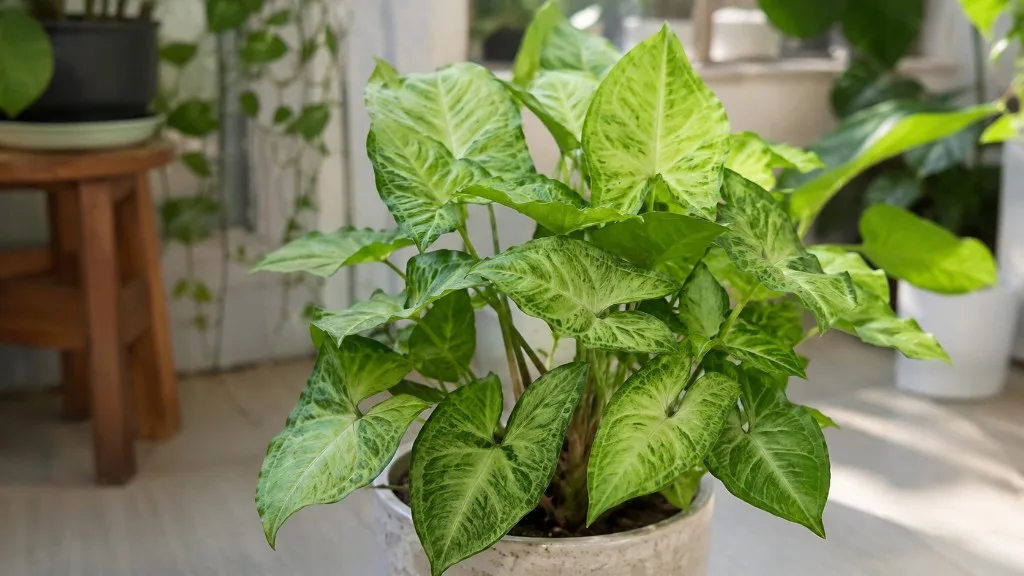
Syngonium watering is one of those houseplant topics where the internet hands you a calendar and the plant hands you yellow leaves. Syngonium podophyllum - the arrowhead plant, arrowhead vine, or goosefoot plant most people grow indoors - is a tropical aroid from the rainforest understory of Mexico through Central America into South America. In that habitat it gets frequent rain, but the roots also breathe between showers because the soil drains fast and the canopy limits how long water sits around fibrous roots. Indoors, the same plant often sits in a peat-heavy mix, a pot with no drainage, or a dim corner where soil stays wet for a week. That mismatch is why watering syngonium correctly has less to do with “every Tuesday” and more to do with reading the pot.
The practical rule most experienced growers land on is simple: water when the top 1 to 2 inches of soil feel dry, then soak thoroughly until water runs from the drainage holes and discard the saucer runoff. In bright, warm months that might mean every 5 to 10 days for a medium container. In low light and cool winter air it might stretch to 10 to 21 days or longer. Syngonium tolerates brief dry spells better than chronic wet soil, but it grows best with a consistent dry-down cycle - moist after watering, then allowed to approach dry at the root zone before the next drink.
This guide covers when to water, how to check moisture accurately, seasonal frequency adjustments, what overwatering on Syngonium and underwatering on Syngonium actually look like on Syngonium overview, and the mistakes that cause more damage than skipping a week ever would.
Why Syngonium Watering Is Different From a Calendar Schedule
A weekly reminder on your phone is fine. A weekly watering habit without checking the pot is not. Syngonium podophyllum is not a succulent, but it is also not a bog plant. Its soft, arrow-shaped juvenile leaves can look like they want constant moisture, which tricks growers into watering before the root zone has had time to breathe. Meanwhile the roots themselves are surprisingly vulnerable to rot when soil stays saturated - a pattern multiple houseplant references note as the fastest way to lose an otherwise forgiving arrowhead plant.
Calendar watering fails because the same plant in the same home can need water on completely different timelines across the year. Move it closer to a window in March and the pot may dry in four days. Park it in a cool spare room in January and the same mix can hold moisture for three weeks. Repot into a container two sizes larger and you have instantly changed the physics: more soil volume holds water longer, roots occupy a smaller fraction of the pot, and the dry-down clock slows down whether you adjusted your habits or not.
The better framework is a dry-down cycle. You water thoroughly once, let the plant use that water as it grows, then wait until the upper soil and root zone are approaching dry before watering again. The calendar becomes a reminder to check, not a command to pour. That single shift - from “water on schedule” to “check on schedule, water on dryness” - prevents most of the yellow leaves, mushy stems, and sour-smelling soil that show up in syngonium troubleshooting threads.
How Syngonium Uses Water in the Wild and Indoors
In its native range, syngonium grows as a climbing or scrambling vine under taller forest trees. Rain is frequent, humidity is high, and organic debris creates a loose, airy root environment. Water moves through quickly. Roots access moisture often, but they are rarely imprisoned in stagnant, oxygen-poor mud for days on end.
Indoors, you are approximating that rhythm with a finite pot of potting mix. The plant pulls water upward through its vascular system, releases some through leaf transpiration, and depends on air-filled pore spaces in the soil for root respiration. When those pores stay filled with water too long - especially in cool, low-light conditions where the plant metabolizes slowly - roots switch from healthy aerobic function to stressed, oxygen-starved tissue. Bacterial leaf spot and soft rot can follow when soil stays saturated, though many syngonium “root rot on Syngonium” cases are primarily a physiological drowning problem rather than a mysterious disease arriving from nowhere.
That biology explains the central paradox new syngonium owners hit: the plant can look slightly limp or soft when overwatered, not only when dry. Damaged roots cannot take up water effectively, so leaves wilt even though the soil is wet. If you respond to wilting by watering again, you accelerate the decline. Learning to distinguish wet-soil wilt from dry-soil wilt is one of the highest-value skills in arrowhead plant watering.
When to Water Syngonium: The Dry-Down Rule
When to water syngonium: as soon as the top 1 to 2 inches (2.5 to 5 cm) of potting mix feel dry to the touch and the deeper root zone is trending toward dry - not when the surface merely looks lighter in color. The Missouri Botanical Garden describes Syngonium as needing regular water during the growing season with reduced frequency from fall to late winter, which matches the top-layer dryness cue because it balances moisture availability with root oxygen.
“Approaching dry” does not mean baked and pulling away from the pot walls. If you wait until the entire root ball is desiccated and the mix has shrunken, you have gone too far for routine care. Syngonium can survive that stress once in a while, but repeated deep drought damages fine root hairs and makes the plant cranky when water finally returns - older leaves yellow, new growth stalls, and the soil can become hydrophobic and hard to re-wet evenly.
The sweet spot is a full soak followed by a real dry-down. After watering, the mix should be evenly moist. Over the next days the plant draws that moisture down. Your job is to notice when the upper profile has released enough water that the next drink will refresh the root zone without stacking on top of stale wet soil below.
Reading the Top Inch vs the Root Zone
The surface layer lies to you sometimes. Peat-based mixes can look dry on top while still holding significant moisture an inch down, especially in cool rooms where evaporation from the top is slow. Conversely, a very loose, chunky aroid mix with bark and perlite can feel dry at the surface quickly while the core still holds usable moisture.
That is why the top-inch rule is a starting checkpoint, not the entire diagnosis. Pair it with at least one secondary test: a wooden skewer inserted to the bottom third of the pot, a moisture meter reading at depth, or a pot-weight comparison against your memory of “just watered” heaviness. For a 6-inch syngonium in standard indoor mix, I want the skewer to come out mostly dry - not damp and cool - before I water again. For a young plant in a 4-inch pot of airy mix, the top inch and the skewer often agree within a day.
If the top is dry but the skewer is still wet, wait. If the top is dry, the skewer is dry, and the pot lifts easily, water. This two-layer check prevents the classic winter mistake: watering because the surface looked pale while the root ball was still saturated from ten days ago.
How Often to Water Syngonium by Season
How often to water syngonium depends on season, light, temperature, humidity, pot size, and soil texture. There is no honest single number for every home. What follows are realistic ranges for healthy plants in well-draining mix with drainage holes - always subordinate to the dry-down checks above.
Spring and Summer Active Growth
From mid-spring through summer, syngonium usually grows steadily: new arrow-shaped leaves unfurl, vines extend, and water use rises with longer days and warmer temperatures. In Syngonium light guide, a medium pot (6 to 8 inches) in peat-perlite-bark mix often needs water every 7 to 14 days. A small pot (4 to 6 inches) in the same light may need it every 5 to 10 days because less soil volume stores less water. A large floor specimen in a 10-inch pot might go 10 to 14 days even in summer because the greater soil mass buffers moisture longer - but an oversized pot relative to the root system can swing the opposite direction and stay wet too long, which is a risk rather than a benefit.
Plants on sunny patios or east-facing windows dry faster than identical plants in interior rooms. Air conditioning lowers humidity and can slow visible wilting even as roots work steadily - do not assume AC means less frequent checks. If anything, the temperature contrast between a cold vent and warm window ledge makes consistent moisture harder to guess, which pushes you back toward skewer and weight tests.
During active growth, syngonium rewards consistency. Not constant wetness - consistency in the cycle. Water thoroughly, let dry-down happen, water again. Irregular drought followed by flood stresses roots more than a stable rhythm with slightly drier or slightly moister bias.
Fall and Winter Slowdown
In fall and winter, day length drops, growth slows, and water requirements fall sharply. The same plant that needed water every week in July may need it only every 14 to 28 days in January, sometimes longer in a cool north room. This is the season when syngonium overwatering peaks, because owners keep summer habits while the plant keeps winter metabolism.
Reduce frequency by checking more carefully, not by abandoning checks. Lower leaves yellowing while soil stays wet is the hallmark winter warning sign. If you see it, slide the pot out of any decorative cachepot, confirm drainage holes are open, and pause watering until the mix genuinely dries deeper than the surface. Resume only when new growth in spring tells you the plant is waking up - or when at least the top two inches and skewer test agree on dryness during mild winter spells in heated homes.
| Season / conditions | Typical check interval | Water when |
|---|---|---|
| Spring–summer, bright indirect, medium pot | Every 3–5 days | Top 1–2 in dry; skewer mostly dry |
| Spring–summer, low light, medium pot | Every 5–7 days | Same dry-down rule |
| Fall, moderate light | Every 7–10 days | Same; expect longer dry-down |
| Winter, cool room / low light | Every 10–21+ days | Same; resist calendar watering |
| Winter, bright grow lights, active growth | Every 7–14 days | Plant still growing; still check depth |
The table is a framework, not a law. Your syngonium in a steamy bathroom may diverge from one on a dry office desk. Let the plant and pot teach you the interval; write it down once you know it, and still verify before every pour.
How to Check Soil Moisture Before You Water
Reliable syngonium soil moisture assessment uses more than one signal. Leaves can look fine slightly before or after the ideal watering moment. Soil tells the truth if you read it at depth.
Finger, Skewer, and Pot-Weight Methods
Finger test: Insert your index finger to the second knuckle - roughly 1 to 2 inches. If the mix feels cool and clings to your skin, wait. If it feels dry and crumbly with no coolness, investigate deeper with a skewer before committing on large pots.
Skewer or chopstick test: Push a dry wooden skewer to the bottom third of the pot. Leave it 30 seconds, pull it out. Moisture darkens the wood and feels cool. Dry wood looks unchanged and feels room temperature. This is the best low-tech method for pots deeper than 6 inches where your finger cannot reach the zone that matters.
Pot-weight test: Lift the pot right after a thorough watering and notice the heft. Lift it daily until it feels noticeably lighter - often 40 to 60 percent of the saturated weight depending on mix. Experienced growers do this unconsciously in passing. Beginners should pair weight with a skewer until they trust the feel.
Moisture meters can help but mislead in chunky mix if the probe bridges air gaps and reads dry while pockets below hold water. Treat meters as one vote, not a dictator. If the meter says dry but the skewer says wet, believe the skewer.
Pre-water checklist for syngonium:
- Top 1–2 inches dry to touch
- Skewer or weight agrees dryness at depth
- Plant not sitting in leftover saucer water
- No decorative outer pot trapping runoff
- You are watering because the plant needs a drink, not because the schedule said so
Step-by-Step: How to Water Syngonium the Right Way
Once checks say “dry enough,” how to water syngonium follows a soak-and-drain pattern:
-
Use room-temperature or tepid water. Cold water shocks warm roots; very hot water damages them. Let tap water sit overnight if your municipality chlorinates heavily, though syngonium is more sensitive to fluoride than chlorine in many homes.
-
Water slowly and evenly around the soil surface, not in one harsh stream that tunnels through the mix. Rotate the pot and make several passes until water exits the drainage holes. That ensures the root ball wets through, not just the top.
-
Stop when runoff flows freely. A few cups draining out is normal for a thorough soak. If water runs straight through in seconds and the pot feels light immediately, the mix may have gone hydrophobic from prior drought - see the underwatering section for rehydration tactics.
-
Empty the saucer within 15 to 30 minutes. Never let syngonium sit in a puddle. Roots at the bottom suffocate in stagnant water even if the top looks fine tomorrow.
-
Remove cachepots during watering or immediately after, so you can see and discard excess. A plant permanently nested in a sealed decorative pot is a plant waiting for root rot.
-
Avoid wetting foliage unnecessarily. Syngonium leaves are not disease magnets like some finicky gesneriads, but repeated night watering that soaks leaves in cool rooms can encourage fungal spotting. Morning watering with soil-focused pouring is a safe default.
-
Log the date casually if you are learning the plant’s rhythm - not to water on that date next time, but to compare how many days elapsed between necessary drinks.
This method matches how the Missouri Botanical Garden describes watering tropical foliage plants: drench, drain, allow partial drying. Syngonium is not an exception because its leaves are soft; it is an aroid that needs that oxygen interval.
Signs You Are Overwatering Syngonium
Syngonium overwatering shows up in leaves, stems, soil, and roots - often in that order if you catch it early.
Yellowing lower leaves while the soil is still wet are the classic early sign. The yellow may start as pale patches and progress to full chlorosis on older foliage while new leaves try to push out on a weakened root system. Multiple yellow leaves appearing within a week on a plant you water frequently should trigger an immediate moisture audit, not a fertilizer fix.
Soft, mushy stems at the soil line indicate advanced trouble. Healthy syngonium stems are firm and upright even when leaves droop slightly from thirst. A stem that folds like wet celery is compromised tissue, often from bacterial or fungal invasion after prolonged saturation.
Wilting with wet soil confuses beginners precisely because it looks like underwatering. Remember: damaged roots cannot transport water. If leaves droop and the skewer is wet, do not water. Move the plant to brighter indirect light if it was in deep shade - light speeds gentle dry-down and supports recovery - and withhold water until the mix dries properly.
Sour or musty soil smell means anaerobic breakdown in the root zone. Healthy potting mix smells neutral or faintly earthy. If you sniff ammonia, vinegar, or swamp when lifting the plant, unpot and inspect roots.
Edema or translucent leaf spots can appear when roots take up water faster than leaves can transpire it, sometimes linked to overwatering combined with low light. Small water-soaked blisters on leaf margins are a stress flag to tighten your watering and improve airflow.
Persistent fungus gnats are not proof of overwatering alone, but larvae thrive in constantly moist surface soil. If gnats coincide with soil that never dries in the top inch, your watering frequency is part of the problem.
If several signs align, stop watering, check drainage, and consider a root inspection before the plant declines past easy recovery.
Signs Syngonium Needs Water Soon
Syngonium underwatering is usually less immediately deadly than overwatering, but repeated drought stresses the plant and deforms new growth.
Leaf droop or slight curl on otherwise healthy stems, combined with a light pot and dry skewer, means water soon. Syngonium leaves often fold downward along the central vein when thirsty. They perk back within hours after a thorough soak if roots are intact.
Dry, crispy leaf edges or brown tips can indicate underwatering, but they also point to low humidity, fluoride in tap water, or fertilizer salt buildup. Context matters: if edges crisp while the soil has been dry for days, water is the primary fix. If edges crisp while soil stays wet, look elsewhere.
Slowed new growth during the active season may mean chronic under-watering or inconsistent drought cycles. A syngonium that should push leaves weekly but stalls for a month while the mix goes bone dry between rare floods is not thriving.
Hydrophobic soil pulling away from pot sides happens after extreme dry spells. Water runs down the gap and out the drainage hole without wetting the root ball. Fix by bottom-watering: set the pot in a basin of water for 20 to 30 minutes, let it absorb upward, then drain fully. Follow with top watering on the next cycle to reset even moisture.
Can syngonium tolerate drought? Yes, briefly. Mature plants can survive a missed week or two better than a week of soggy soil. That tolerance is not permission to neglect checks. Chronic underwatering shrinks the root system, reduces leaf size, and makes the plant more susceptible to pests like spider mites in dry air.
Water Type, Temperature, and Tap-Water Issues
Syngonium is moderately sensitive to fluoride and chlorine in municipal tap water, especially over months of consistent use. Brown tips and margins on otherwise healthy leaves - without obvious overwatering or underwatering patterns - often trace to soluble salt and mineral buildup rather than schedule alone.
Tap water is fine for many growers, particularly if your city uses low fluoride and you let water sit 12 to 24 hours so chlorine off-gasses. If tips persistently brown despite good watering rhythm, switch to filtered, distilled, or rainwater for a month and compare new growth.
Water temperature should feel neutral to the wrist - roughly 65 to 75°F (18 to 24°C). Ice-cold tap in winter can stall root activity briefly.
Softened water is usually a poor choice long term because sodium exchanged for hardness minerals can accumulate in soil and burn roots. If your home runs a water softener, route unsoftened cold tap or filtered water to plants.
Fish tank water or leftover drinking water is acceptable if it is freshwater without medications or salt. Do not overthink exotic water sources if tap works and leaves look clean.
Pot Size, Soil Mix, and Drainage
Watering and potting are the same conversation split in two. Syngonium wants a well-draining, light potting mix - typically peat or coco coir with perlite and optionally bark chunks for aroid-style porosity. Heavy garden soil, straight peat without amendment, or moisture-retentive “moisture control” blends that stay wet for days will force you into a watering schedule that fights the mix instead of the plant.
Drainage holes are non-negotiable for routine syngonium care. A beautiful ceramic pot without holes belongs as a cachepot only. Plant directly in a plastic or terracotta inner pot that drains, then lift it out to water.
Terracotta breathes through porous walls and speeds dry-down - helpful for heavy-handed waterers. Glazed ceramic and plastic retain moisture longer - helpful in dry, bright rooms, risky in dim winter corners.
Pot size relative to roots determines how fast the ball dries. Freshly repotted plants in pots more than one size up stay wet dangerously long. A root-bound plant in a too-small pot may need water every few days in summer but is still healthier to water correctly than to leave it drowning in an oversized new home. Match pot upsizing to actual root mass, not aspirational future size.
If water pools on the surface or runs straight through, the mix structure has failed - compacted, decomposed, or wrong for an aroid. Refresh mix before blaming yourself for bad watering habits.
Light, Humidity, and Temperature Effects on Water Use
Light is the throttle on syngonium water use. Medium to bright indirect light - an east window, near a north window, or back from a south exposure - supports steady photosynthesis and predictable dry-down. Low light slows both growth and water uptake, which means soil stays wet longer and overwatering risk rises even if you pour less volume each time. A syngonium in a dim hallway needs fewer drinks than the same cultivar under a grow light, not the same Tuesday schedule.
Humidity changes how fast leaves release moisture but does not replace soil checks. At 40 to 60 percent relative humidity, typical indoor levels, syngonium is comfortable. Very dry winter air below 30 percent can increase transpiration slightly and encourage spider mites, which may nudge watering frequency up a day or two in small pots - but misting leaves is a poor substitute for correct soil moisture and can invite foliar issues if leaves stay wet overnight.
Temperature between roughly 65 and 80°F (18 to 27°C) suits syngonium best. Cold drafts below 55°F (13°C) slow root function and extend wet soil duration. Heat above 85°F (29°C) near windows can dry small pots rapidly in summer. Do not park syngonium directly over radiators or under blasting AC vents; localized extremes desynchronize leaf appearance from root-zone moisture.
Treat light, humidity, and temperature as modifiers on the dry-down rule, not replacements for it.
Watering After Syngonium repotting guide, Propagation, and Stress
After repotting, syngonium roots are disturbed and the mix is often uniformly moist from the repotting process itself. Water once thoroughly at repotting if the new mix was dry going in. Then wait until the top inch dries before watering again - even if that takes longer than your old routine. Roots need time to contact new mix and heal micro-tears. Fertilizer and frequent watering during this pause do more harm than good.
Fresh cuttings in water or perlite follow propagation rules, not mature pot rules. Water-rooted cuttings transitioning to soil need consistently moist - not flooded - mix for the first two to three weeks while soil roots form. That is the one phase where “keep evenly moist” beats “let dry down deeply.” Once the cutting resists a gentle tug and pushes new leaves, graduate it to the standard dry-down cycle.
After shipping or a cold delivery, do not water immediately as a kindness gesture. Check soil first; nursery plants often arrive moist. Let the plant acclimate one week in bright indirect light with checks only.
After pest treatment or leaf loss, reduce watering proportionally to the reduced leaf surface doing transpiration work. A syngonium stripped back hard still needs moisture, but a smaller root-to-leaf ratio means slower uptake.
Recovering From Overwatering and Root Rot
If you caught syngonium root rot early - yellow leaves, wet mix, but stems still firm - recovery may not require surgery:
- Stop watering immediately.
- Move to brighter indirect light and ensure airflow around the pot.
- Slip the plant out of its pot and inspect roots if smell or yellowing is advanced. Healthy roots are white or tan and firm. Rotten roots are black, mushy, and smell sour.
- If rot is localized, trim mushy roots with sterilized scissors, rinse away old mix, and repot into fresh, chunky, well-draining aroid mix in a pot sized to the remaining root mass - not the original oversized container.
- Water lightly once to settle new mix, then let a real dry-down begin before the next soak.
- Remove severely damaged leaves so the reduced root system is not asked to support hopeless foliage.
NC State Extension lists bacterial leaf spot and soft rot among common Syngonium problems when soil stays wet; removing rotted tissue, sterilizing tools, and repotting into fresh medium are standard recovery steps. Not every plant survives advanced rot. Honest assessment early beats heroic watering later.
If stems are mushy at the crown, salvage healthy nodes as cuttings and restart rather than nursing a collapsing base.
Pet note: The ASPCA lists syngonium (Syngonium podophyllum) as toxic to cats and dogs due to calcium oxalate crystals, causing oral irritation, vomiting, and drooling if chewed (ASPCA - Arrowhead Vine). Water runoff in saucers and soil on the floor should be kept away from pets that mouth plants or standing water.
Common Syngonium Watering Mistakes
Watering on a fixed weekly schedule without checking soil tops the list. Tuesday water kills more syngoniums than forgotten Sundays.
Watering because leaves drooped without checking whether soil is wet or dry sends many plants deeper into rot. Always verify moisture at depth before responding to wilt.
Leaving runoff in saucers or cachepots creates a bottom swamp. Empty saucers every time.
Using pots without drainage because the decorative container is prettier guarantees long-term trouble.
Misting as a watering substitute bumps humidity briefly but does not hydrate roots. Misting does not replace soak-and-drain watering.
Watering with ice cubes for “slow release” produces cold, uneven moisture and tells you nothing about whether the root zone needed water. It is a gimmick, not a strategy.
Repotting into huge containers “so you water less often” backfires because less root mass relative to soil volume means slower drying and more rot risk.
Ignoring seasonal slowdown and continuing summer frequency through winter yellows lower leaves on otherwise healthy plants.
Chasing brown tips with more water when the real issue is fluoride, salt buildup, or low humidity worsens the problem if soil was already moist.
Each mistake is fixable the moment you switch from calendar thinking to pot thinking.
Conclusion
Syngonium watering succeeds when you treat it as a dry-down rhythm, not a recurring appointment. Water when the top 1 to 2 inches of mix are dry and deeper checks agree; soak until water drains freely; discard runoff; then let the plant use that moisture before the next cycle. In warm, bright months that might mean every 5 to 14 days depending on pot size. In cool, dim months it might mean every 14 to 28 days or longer - and that is normal, not neglect.
Watch for the signals that matter: yellow lower leaves on wet soil mean pause, not pour. Wilting with a light, dry pot means drink thoroughly. Soft stems and sour mix mean inspect roots. Match watering to how your specific pot dries in your specific room, and syngonium - one of the more forgiving indoor aroids when roots can breathe - will reward you with steady arrow-shaped foliage without the drama of calendar-induced root rot.
When to use this page vs other Syngonium guides
- Syngonium overview - Start here for whole-plant context before deep-diving this topic.
- Syngonium problems hub - Jump to symptom-specific fix guides when this care topic does not resolve the issue.
- Overwatering on Syngonium - Escalate here when watering adjustments are not enough.
- Underwatering on Syngonium - Escalate here when watering adjustments are not enough.
- Root Rot on Syngonium - Escalate here when watering adjustments are not enough.
Related Syngonium guides
- Syngonium overview
- Syngonium light
- Syngonium soil
- Syngonium propagation
- Syngonium fertilizer
- Syngonium repotting
- Overwatering on Syngonium
- Underwatering on Syngonium
- Root Rot on Syngonium
- Wilting on Syngonium
- Drooping Leaves on Syngonium
- Mold on Soil on Syngonium
Related tool
Try the Plant Watering Calculator with syngonium pre-selected to estimate needs for your setup.