Mold on Soil on Syngonium: Causes, Checks & Fixes
Quick answer
Surface mold on Syngonium soil is a warning that the top layer stays damp-risky for an aroid that needs partial dry-down between drinks. First step: let the top inch dry, scrape off the fuzzy layer, and adjust your watering rhythm.
Mold on Soil on Syngonium: Causes, Checks & Fixes
This guide covers mold on soil on Syngonium. See also the general Mold on Soil guide, watering, and light pages for this plant.
Mold on Soil on Syngonium: Causes, Checks & Fixes
Quick answer
White or gray fuzz on the soil surface of your arrowhead vine almost always means the top layer has stayed damp too long. Syngonium podophyllum is a tropical aroid that wants consistent moisture with a partial dry-down cycle-water when the top inch dries, not on a fixed calendar. The mold itself is usually harmless saprophytic fungus breaking down organic particles in peaty mix, but it is an early flag that you are keeping the surface wetter than this plant can tolerate without root stress.
First fix: stop watering until the top inch of mix feels dry to the touch, then scrape off the fuzzy top centimeter with a spoon and discard it. Do not repot or spray fungicide on day one.
What mold on soil looks like on Syngonium
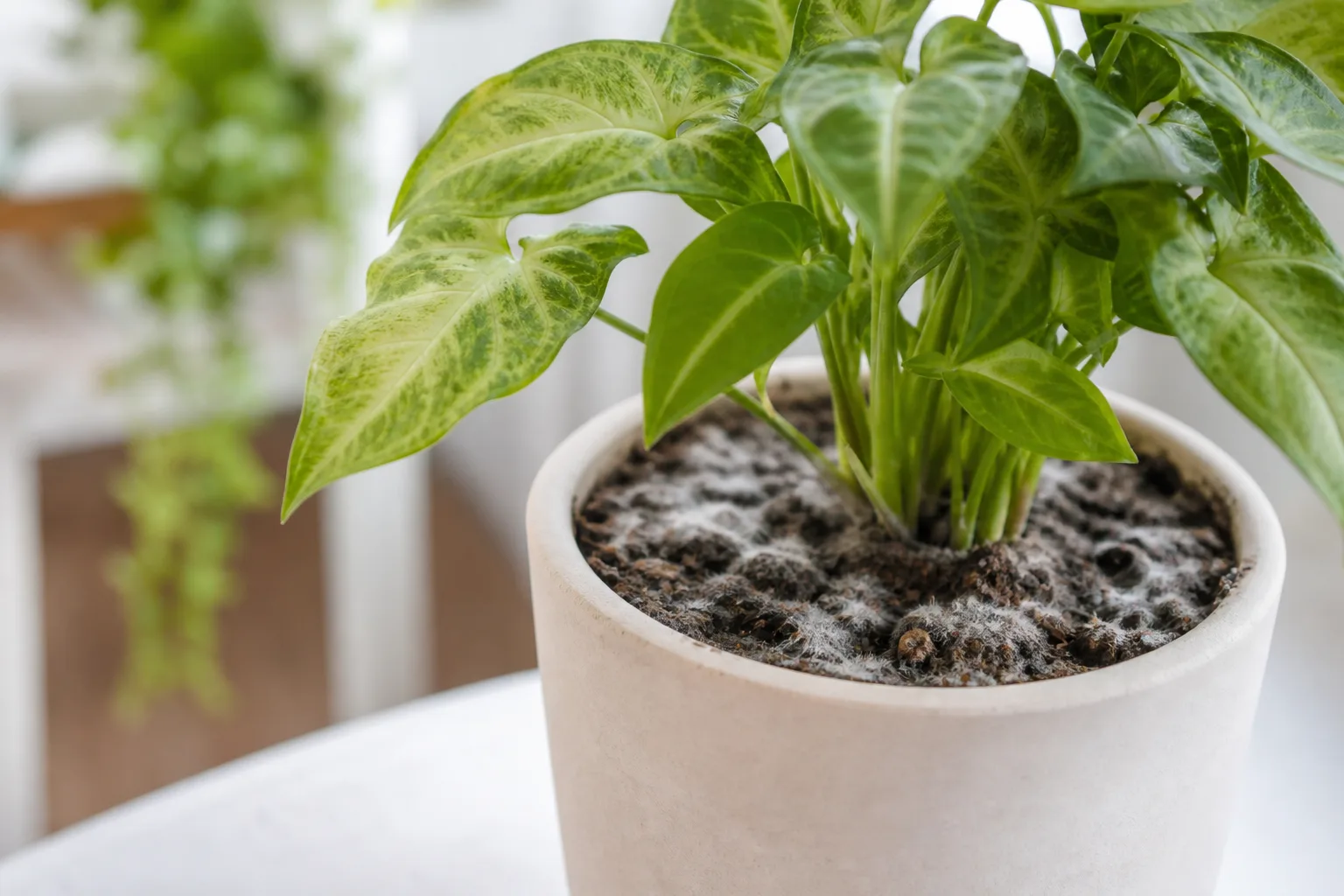
On arrowhead pots, mold most often appears as a thin white, gray, or occasionally yellowish fuzzy film across the top of the mix. It may show up in patches near the base of stems or cover the entire surface. Sometimes you notice it alongside a musty smell, dark wet-looking soil, or small flies hovering when you water.
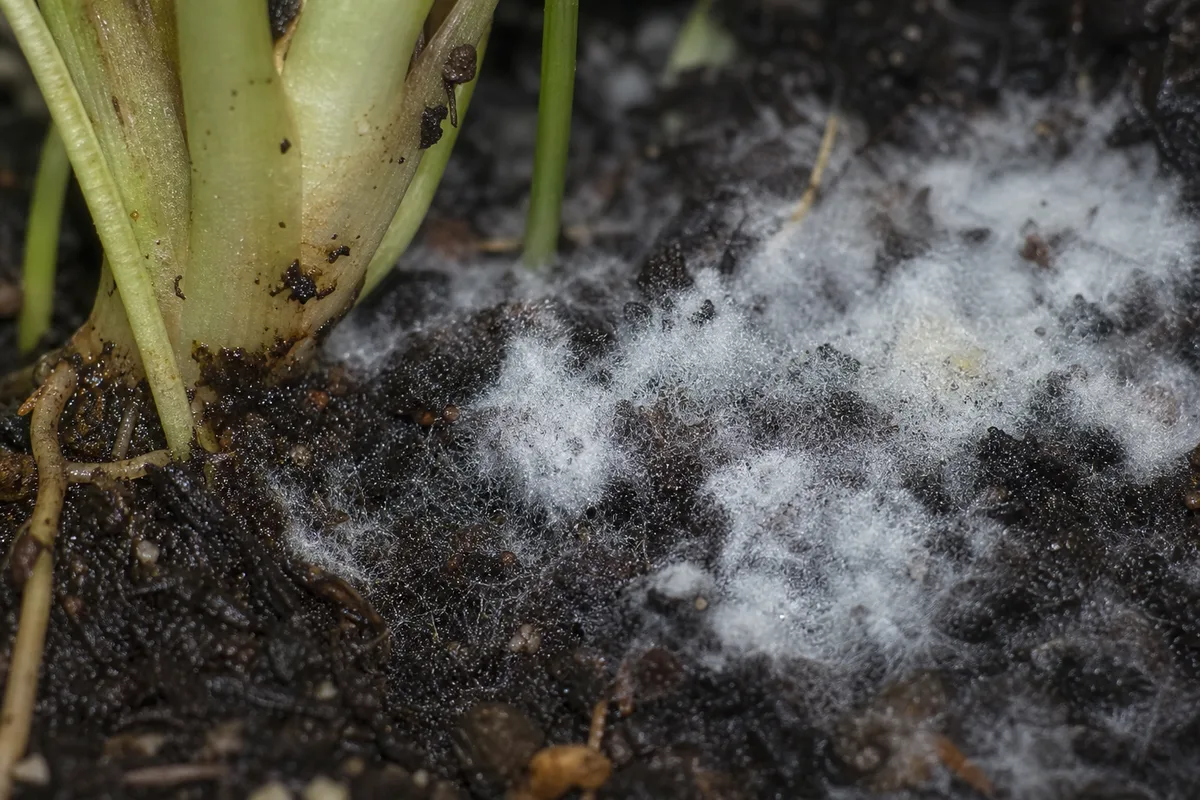
Mold on Soil symptoms on Syngonium - compare with healthy tissue on the same plant.
Healthy Syngonium in active growth should have a soil surface that dries within a few days of watering. If the top stays cool, dark, and soft to the touch for a week or more-especially in a dim corner-mold is a predictable follow-up. Leaves may still look fine at this stage, which is why surface mold catches growers off guard. The risk is not the fuzz itself but the wet conditions feeding it.
Variegated and pink cultivars in low light use water slowly, so the surface can stay damp even when you think you are watering conservatively. Juvenile arrow-shaped leaves on a compact tabletop plant and long climbing vines in a hanging basket both show the same surface pattern when the mix does not dry at the top.
Why Syngonium gets mold on soil
Syngonium evolved as an understory climber in humid tropical forests. Indoors it tolerates medium to bright indirect light and moderate humidity, but its roots still need oxygen between waterings. When the mix holds moisture at the surface for days, saprophytic fungi colonize decaying peat, bark fines, and old leaf debris. Spores are everywhere; they germinate when humidity and moisture stay high.
Several care patterns trigger this on arrowhead plants more predictably than on drought-tolerant succulents:
Watering before the top inch dries. Syngonium needs regular moisture, but the surface should not stay wet continuously. Watering on a schedule without checking the top inch keeps the fungus-friendly layer damp.
Peaty or dense mix. Standard bagged potting soil retains water at the surface long after roots have had enough. Without perlite, bark chunks, or similar amendments, the top inch stays soggy-especially in oversized pots.
Low light and poor airflow. Syngonium survives in low indirect light, but evaporation slows dramatically. Crowded shelves, closed terrarium lids, and winter windows with short days extend surface dampness. The plant grows slowly while the mix stays wet.
Fall and winter overwatering. Water use drops in cooler, dimmer months. A summer watering rhythm left unchanged through winter is one of the most common mold triggers on indoor aroids.
Full saucers and decorative pot covers. Water pooling below re-wets the mix from the bottom and traps humidity around the root zone.
How to confirm the cause
Work through these checks before repotting or reaching for fungicide:
- Stem firmness at soil line. Pinch the base of the lowest stems. Firm and upright is reassuring. Soft, limp, or collapsing tissue suggests rot-not just surface mold.
- Top-inch moisture. Push your finger to the first knuckle. If it comes away cool and clinging, the surface has been wet too long. Syngonium should be watered when this layer dries, not while it is still damp.
- Deep soil and pot weight. Lift the pot. Heavy days after a light drink means water is not exiting. Confirm drainage holes are open and the saucer is empty.
- Leaf pattern. Yellowing lower leaves while the mix is still wet points to overwatering and root stress, not a separate leaf disease.
- Companion signs. Fungus gnats flying when you water, green algae on the pot rim, or springtails on the surface all share the same wet-soil habitat.
If stems are firm, new growth looks normal, and only the top centimeter is fuzzy after one overwatering episode, you likely caught it early. Soft stems plus sour-smelling mix mean escalate toward root-rot protocol, not just scraping.
The first fix to try
Let the top inch dry, then scrape off the moldy surface layer.
Do not repot on day one. Pausing surface moisture gives you a clear read on whether the problem was a single overwatering event. In warm active growth with decent light, the top inch often dries within three to seven days depending on pot size and mix.
Once that layer is dry:
- Scrape off the top 1–2 cm of fuzzy soil with a spoon and discard it in the trash-not an indoor compost bin where spores can spread.
- Move the pot to a brighter filtered spot with space around it for airflow, if it has been sitting in deep shade.
- Resume watering only when the top inch is dry again-then water thoroughly until it runs from drainage holes, and empty the saucer within an hour.
That single correction resolves most first-time mold cases on Syngonium. Wear gloves when handling moldy soil if sap irritates your skin, and keep the pot out of reach of pets-Syngonium is toxic if chewed.
If mold comes back within a week
Recurring fuzz means the environment still favors fungus. After the dry-down cycle:
- Top-dress with a thin layer of dry airy mix (perlite-heavy blend or fresh potting mix with extra bark) to replace the removed surface.
- Bottom-water once if you tend to soak the surface every time-roots absorb from below while the top stays drier, which also discourages fungus gnat egg-laying.
- Repot in spring if the mix is peat-heavy, smells sour, or takes more than ten days for the top inch to dry in normal room conditions. Use a light well-draining aroid blend and a pot only one size up.
Repotting is a second-step fix, not an emergency response to a single mold patch on an otherwise healthy vine.
Lookalike symptoms
Green algae on the pot rim or soil surface also signals constant surface moisture and low light-not a different disease.
Fungus gnats share the same wet-soil habitat. Adults are mostly a nuisance; larvae feed on fungi and decaying organic matter in damp peat. Drying the surface soil treats both mold and gnats.
Powdery mildew on leaves is a separate issue tied to humid stagnant air on foliage. Mold confined to soil with dry, clean leaves points to watering and mix, not leaf fungus.
Mineral or salt crust can look white but feels hard and gritty, not fuzzy. Flush and watering adjustments address crust; scraping and dry-down address organic mold.
Mistakes to avoid
Do not drench with fungicide or cinnamon as a substitute for drying the soil-Syngonium roots need oxygen, not another wet treatment layered on top.
Do not increase watering because a leaf droops while the mix is still damp. Wilting with wet soil means root stress, not thirst.
Do not keep the same summer watering frequency through a dim winter without checking the top inch first.
Do not assume mold is harmless and ignore softening stems at the crown. Surface saprophytes and root rot share the same cause: too much moisture for too long in a mix that does not dry at the surface.
Do not mist the soil surface to raise humidity-that adds moisture exactly where mold thrives. Humidity for Syngonium comes from room air or a pebble tray, not wet topsoil.
Recovery timeline and warning signs
With firm stems and corrected watering, new arrowhead leaves unfurling cleanly are the best sign you are clear. Surface mold should not return once the top inch dries between drinks.
Improvement usually shows within one dry-down cycle-roughly one to two weeks depending on pot size, light, and season. Watch for:
- Good: Firm stems, dry top inch before each watering, no new fuzz, healthy new growth at vine tips.
- Bad: Stem softening at the base, repeated yellow lower leaves with wet mix, sour smell from drainage holes, mold returning within days of scraping.
Damaged roots do not regenerate quickly. Prevention at the mold stage is far easier than rescuing a syngonium with advanced rot.
How to prevent mold next time
Match watering to Syngonium’s rhythm: thorough drinks when the top inch dries, with less frequency in low light and cool months. Pair that with a loose well-draining mix, empty saucers after every watering, debris cleared from the pot surface, and enough space between plants for air movement.
Treat the first patch of white fuzz as a moisture alarm-not a cosmetic annoyance. On arrowhead vine, fixing wet surface soil early is what keeps roots breathing, leaves colourful, and root rot out of the picture.
Related Syngonium guides
- Syngonium overview
- Syngonium watering
- Syngonium light
- Fungus Gnats on Syngonium
- Overwatering on Syngonium
- Root Rot on Syngonium
- All Syngonium problems
Conclusion
Use this page to confirm mold on soil on Syngonium by pattern and pot checks-not by treating every houseplant the same. When symptoms overlap with sibling pages, follow the linked guide for the matching cause before stacking fertilizer, repotting, or pesticide.