Fungus Gnats on Syngonium: Causes, Checks & Fixes
Quick answer
Fungus gnats on Syngonium mean the soil surface has stayed moist too long-often from watering before the top inch dries, especially in low light. First step: let the top 1–2 inches of mix dry completely, then set yellow sticky traps near the pot while you fix your watering rhythm.
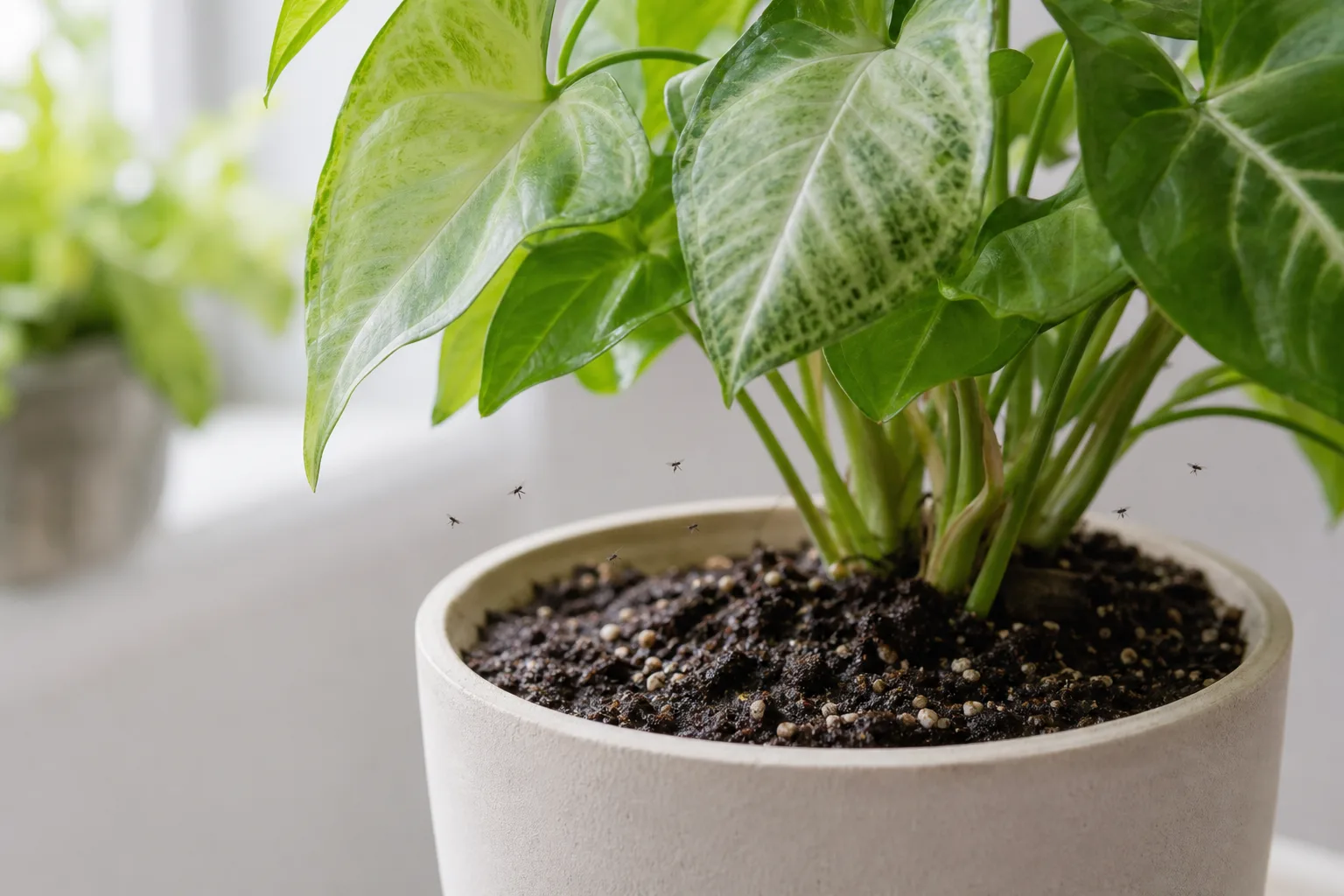
Fungus Gnats on Syngonium: Causes, Checks & Fixes
This guide covers fungus gnats on Syngonium. See also the general Fungus Gnats guide, watering, and light pages for this plant.
Fungus Gnats on Syngonium: Causes, Checks & Fixes
Quick answer
Fungus gnats on Syngonium (Syngonium podophyllum, arrowhead plant) are almost always a moisture signal, not a random pest invasion. The tiny flies breed in moist potting soil when the top layer stays damp for days-exactly the condition that also puts this moisture-loving aroid at risk for root stress.
First step: let the top 1–2 inches of soil dry completely before you water again. While the surface dries, place a yellow sticky trap just above the pot to catch flying adults and confirm which plant is the source. Do not reach for sprays, Syngonium repotting guide, or neem oil until you have corrected how long the mix stays wet.
What fungus gnats look like on Syngonium
The plant itself often looks mostly healthy at first. Gnats announce themselves through behavior around the pot, not dramatic leaf damage:
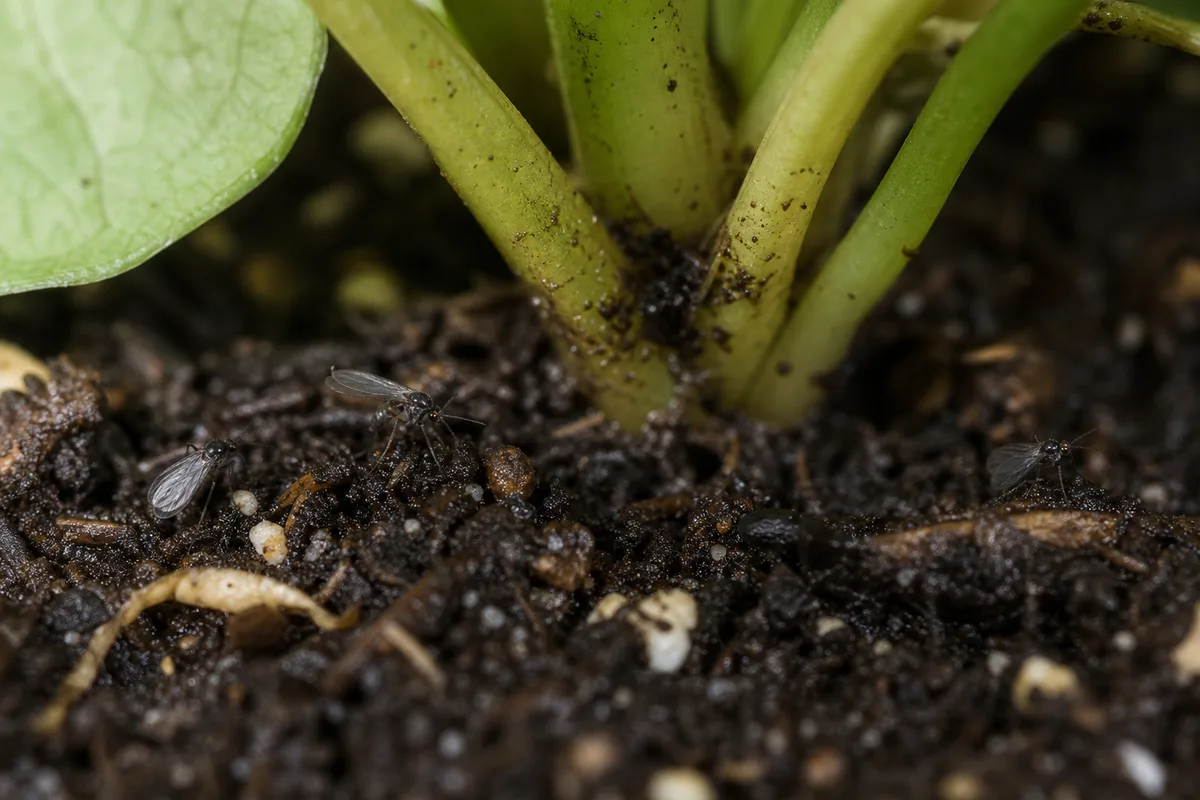
Fungus Gnats symptoms on Syngonium - compare with healthy tissue on the same plant.
- Small dark or gray flies (about 1/8 inch long) that hover near the soil when you water or brush past the leaves
- Flies resting on the mix surface, pot rim, or nearby windows and lamps
- More activity on the wettest pots in a collection, especially after a heavy watering
- Fine, thread-like translucent larvae in the top inch of mix if you scrape gently with a spoon (use a hand lens if needed)
- Yellow sticky traps catching dozens of tiny gnat-like adults within a few days
On Syngonium specifically, you may also notice the soil surface never lightens in color between waterings, saucers holding water for days, or lower leaves yellowing while stems stay limp-signs that the wet habitat gnats need may already be stressing roots.
What Syngonium leaves usually do not show: chewing damage, webbing, sticky honeydew, or whitefly clouds. If you see those patterns, look for a different pest before treating for gnats.
Why Syngonium gets fungus gnats
Arrowhead plants sit in an awkward middle ground for soil moisture. They are tropical aroids in the Araceae family that grow best with consistent moisture and a well-draining, light mix-but they are also susceptible to root problems when soil stays soggy. That same peaty, organic potting media Syngonium prefers is exactly what fungus gnat larvae feed on: fungi, decaying organic matter, and tender root hairs in the upper layer.
Several Syngonium care habits make gnat outbreaks more likely:
Watering before the top inch dries. The standard Syngonium checkpoint is watering when the top inch feels dry. Watering on a calendar-every Sunday regardless of pot weight-keeps the surface moist and gives females a steady egg-laying site.
Low light slowing dry-down. Syngonium tolerates low indirect light, but a plant in a dim corner uses less water. The mix stays wet longer, extending the window for larvae and overlapping gnat generations indoors.
Heavy or water-retentive mix. Dense peat-heavy soil without enough perlite, bark, or pumice holds moisture at the surface. Adventitious roots near the crown make Syngonium especially sensitive when that damp layer persists.
Oversized pots. A pot much larger than the root ball holds excess wet mix that the plant cannot dry quickly-common after repotting a compact tabletop Syngonium into a tall cache pot for aesthetics.
Fresh cuttings in moist propagation mix. Stem cuttings rooting in water or constantly damp soil are prime larval targets. A propagation tray beside a mature arrowhead can seed the whole collection.
Gnats do not mean your Syngonium is doomed, but they do mean the root environment is wetter than Syngonium overview can safely handle long term.
How to confirm the cause
Work through these checks before adding treatments:
- Water test - Water the pot normally. If small flies run across the soil surface or rise in a cloud, that pot is almost certainly the breeding source.
- Dry-down timing - After watering, note how many days until the top inch feels dry. More than four to five days in an average home suggests overwatering on Syngonium, poor drainage, or too little light for the pot size.
- Larva check - Slide a potato slice onto the soil surface for three to four days, or scrape the top quarter-inch into a white dish with water. Tiny worm-like larvae confirm active breeding in the mix.
- Pot weight - Lift the pot. A mature Syngonium in appropriate light should feel noticeably lighter when the top inch is dry. Constant heaviness means chronic moisture.
- Root and stem check - Gently unpot only if stems are soft, leaves yellow despite wet soil, or the mix smells sour. Firm white roots and a hard stem base mean gnats are still primarily a moisture-habitat problem, not advanced rot.
- Collection scan - Compare nearby pots. Gnats often concentrate on one overwatered Syngonium while drier plants nearby have only occasional stragglers.
If flies appear but the top inch dries within two to three days and no larvae show up, you may be seeing a short-lived influx from a new plant or open window-not a chronic infestation. Monitor for a week before escalating.
First fix for Syngonium
Let the top 1–2 inches of potting mix dry completely, then place a yellow sticky trap just above the soil surface.
This single step attacks the problem at its source. Fungus gnat eggs and larvae in the upper soil layer need moisture to survive; when the soil dries, the larvae die. A dry surface breaks the life cycle and makes the pot less attractive for new egg laying. While adults are short-lived, overlapping generations indoors mean drying must continue for several weeks-not just a few days.
For Syngonium, drying the surface is usually safe on established plants. The roots still access moisture deeper in the pot. Hold off on misting, pebble-tray top-ups, and saucer soaking until gnat numbers drop. If the plant is in very low light, move it slightly brighter so the mix dries more predictably-without jumping to direct sun, which can scorch arrowhead leaves.
Hang or stake one yellow sticky trap per affected pot. Traps catch adults, reduce annoyance, and show whether your moisture fix is working. Replace traps when they are coated or every one to two weeks.
Do not start with repotting, hydrogen peroxide drenches, or houseplant sprays. Cultural control-drying the surface and adjusting watering-resolves most Syngonium gnat problems without stressing roots or exposing a toxic plant to unnecessary products.
Step-by-step recovery
Once the surface is drying between waterings, layer these steps by severity:
Mild infestation (a few flies, firm stems, no sour smell)
- Continue the dry-top-inch rule for every watering.
- Empty saucers within 30 minutes of watering.
- Remove dead leaves and debris from the soil surface so larvae have less organic food.
- Monitor traps weekly. Adult counts should fall within two to three weeks.
Moderate infestation (daily flies, surface always damp, no stem rot yet)
- Keep all mild steps above.
- Bottom-water selectively for two to three cycles: water from the bottom so roots drink from below while the top inch stays drier.
- Apply Bacillus thuringiensis subsp. israelensis (Bti)-the active ingredient in products such as Gnatrol or Mosquito Bits labeled for fungus gnat larvae. Sprinkle on the surface or mix into the first watering per label directions, then repeat every five to seven days for three to four applications to catch newly hatched larvae.
- Scrape or loosen the top quarter-inch of soil gently to expose larvae to air, then let it dry.
Heavy infestation (swarms, yellowing in wet soil, soft lower stem, sour smell)
- Stop top watering entirely until you inspect roots.
- Unpot the Syngonium and shake off wet mix. Trim any brown, mushy roots back to firm tissue with clean scissors.
- Repot into fresh, chunkier aroid mix with added perlite or bark in a pot only slightly larger than the root ball, with a drainage hole.
- Water once lightly from the bottom, then return to the dry-top-inch rhythm.
- Continue Bti applications and sticky traps for four to six weeks. Heavy infestations overlap life stages; one treatment rarely clears them instantly.
Throughout recovery, judge progress by fewer trap catches and faster surface dry-down, not by whether you still see an occasional stray fly.
Recovery timeline
Expect two to six weeks for full suppression on Syngonium. Gnat life cycles run three to four weeks under warm indoor conditions, with eggs, larvae, pupae, and adults often present at the same time.
Week 1: Surface drying should reduce new egg laying. Traps may still fill as existing adults emerge.
Weeks 2–3: Fly counts on traps should drop noticeably if the top inch dries within three to four days after each watering.
Weeks 4–6: Occasional stragglers are normal. A chronic swarm means one pot in the room is still too wet-or a propagation tray is reinfecting the collection.
New Syngonium growth-unfurling arrow-shaped leaves and firm stems-signals the root zone is stable even if a few gnats remain. Yellowing that spreads while soil stays wet means moisture is still too high; do not assume the pests alone are the whole problem.
Lookalike symptoms
Fruit flies hover around kitchen waste, not consistently at a single houseplant when watered. They are larger and more tan-brown than fungus gnats.
Drain flies breed in sink or shower drains, not potting mix. If flies appear in the bathroom but not when you water your Syngonium, check plumbing biofilm instead of soil.
Shore flies look similar but are more common in greenhouses and on algae-covered surfaces. Rare on a single indoor arrowhead unless you bottom-water trays that stay green with algae.
Mold on soil surface often shares the same cause-wet organic mix-but white or fuzzy growth is fungal, not insect. Dry the surface and both problems usually improve together.
Mistakes to avoid
- Spraying leaves with neem or soap to kill gnats. Adults do not live on foliage; larvae are in soil. Sprays add moisture and stress without targeting the breeding site.
- Watering more because leaves droop. Drooping with wet soil points to root damage from overwatering, not thirst. Check roots before adding water.
- Repotting every plant on day one. Fresh mix helps when the old blend is waterlogged and sour, but repotting a healthy Syngonium unnecessarily adds stress and can spread larvae if tools and benches are not cleaned.
- Stopping treatment when adults disappear for a few days. Larvae continue developing below the surface. Keep the dry-top rule and complete any Bti series.
- Leaving saucers full. Syngonium roots pull water up from saturated saucers and keep the bottom mix wet even when the top looks dry.
- Ignoring a propagation tray. Cuttings rooting in moist mix beside a treated Syngonium will reinfest the area within weeks.
Syngonium care cross-check
Use this table to align gnat control with normal arrowhead care:
| Checkpoint | Healthy Syngonium rhythm | Gnat-friendly mistake |
|---|---|---|
| Watering | Top inch dry before watering | Calendar watering while surface stays damp |
| Light | Medium to bright indirect | Dim corner with slow dry-down |
| Mix | Light, well-draining aroid blend | Dense peat holding surface moisture |
| Pot | Drainage hole; size matched to roots | Oversized decorative pot, no drainage |
| Season | Less water when growth slows in winter | Same volume year-round |
| Saucer | Emptied after watering | Standing water for days |
Syngonium is toxic to cats and dogs. Keep sticky traps, soil amendments, and any treatment products out of reach of pets that chew plants or dig in pots.
How to prevent fungus gnats next time
Prevention on Syngonium is mostly moisture discipline:
- Feel the top inch before every watering-skip the schedule.
- Use airy mix with perlite, bark, or pumice so the surface dries within three to four days in your home.
- Match pot size to the root ball; repot when crowded, not preemptively into a much larger container.
- Quarantine new plants for two to three weeks with a sticky trap in the soil before placing them beside your arrowhead collection.
- Reduce watering frequency in fall and winter when Syngonium growth slows.
- Keep the soil surface clean of fallen leaves and spent spathes.
A dry surface layer is the most reliable long-term gnat barrier for this plant. Biological controls and traps support that habit-they do not replace it.
When to worry
Escalate beyond basic drying when:
- Stems soften at the soil line while mix stays wet-possible crown or root rot on Syngonium overlapping the gnat habitat issue.
- Yellow leaves spread on multiple stems despite correcting watering for two weeks.
- Sour or swampy smell from the pot, with dark mushy roots on inspection.
- Swarms increase weekly even after four weeks of dry-top watering and Bti on every infested pot in the room.
- Fresh cuttings collapse in propagation mix with visible larvae-move survivors to drier media or water propagation temporarily.
A mature Syngonium with firm stems, new leaf unfurling, and declining trap counts is on track even if an occasional fly appears. The urgent case is wet soil damaging roots-not the flies themselves.
Conclusion
Fungus gnats on Syngonium tell you the soil surface has been too wet for too long. The arrowhead plant wants consistent moisture deeper in the pot, not a constantly damp top layer where larvae breed. Let that upper inch dry, trap adults to monitor progress, and adjust watering to how fast your pot actually dries in its current light. Fix the habitat first; the gnats usually leave on their own within a few weeks.
When to use this page vs other Syngonium guides
- Syngonium watering guide - Use for routine moisture checks before assuming fungus gnats is the main issue.
- Syngonium problems hub - Browse all 17 common issues on this species.
- Overwatering on Syngonium - Different entry point when symptoms overlap with fungus gnats.
- Mold on Soil on Syngonium - Different entry point when symptoms overlap with fungus gnats.
- Root Rot on Syngonium - Different entry point when symptoms overlap with fungus gnats.