Slow Growth on Syngonium: Causes, Checks & Fixes
Quick answer
Slow growth on Syngonium is usually insufficient light, a root-bound pot, or normal winter quiet-not disease. Compare new arrowhead tip frequency to last active season; no tips through a full spring or summer while light is weak or roots circle the pot is a problem, not winter rest. Move to brighter filtered light first.
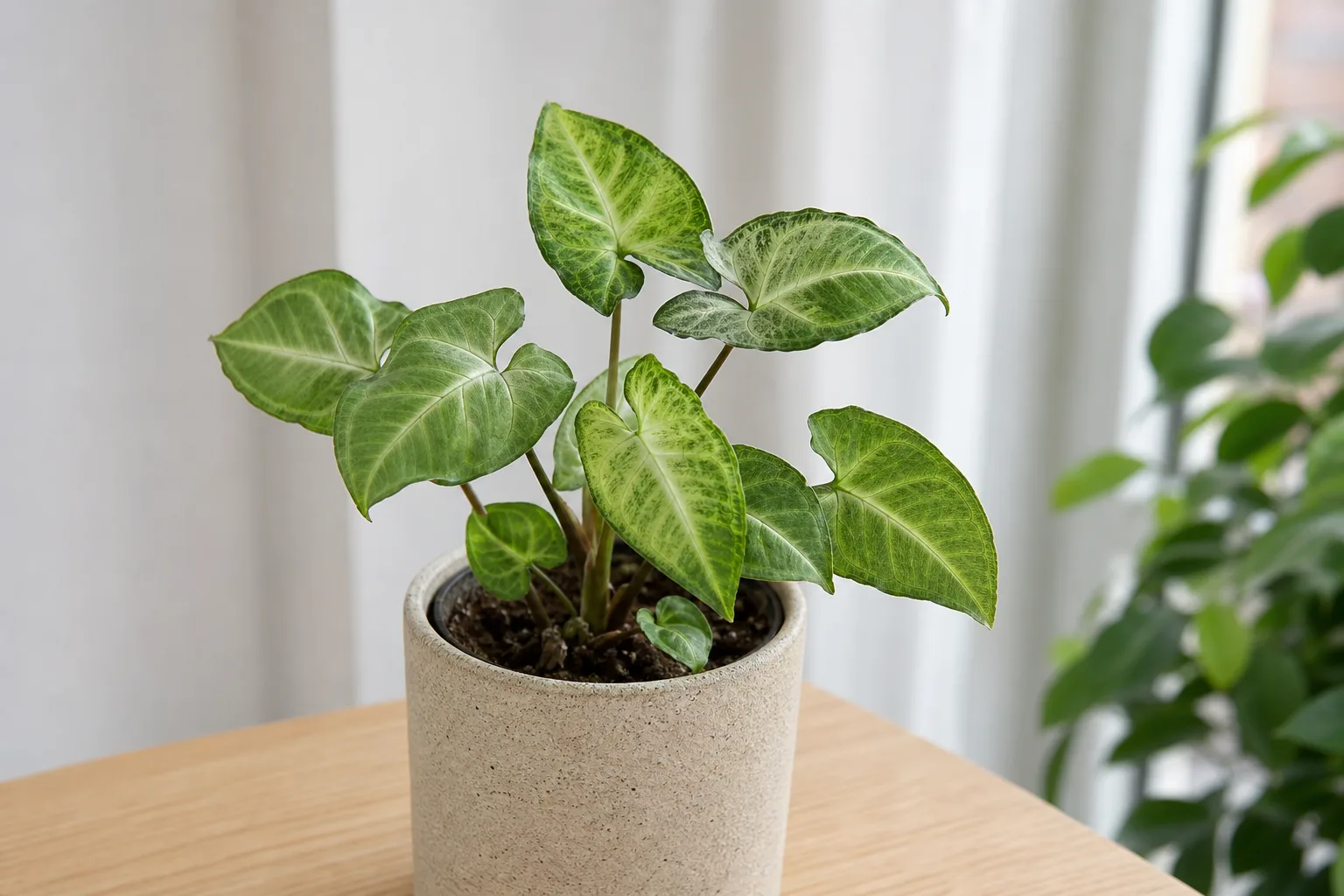
Slow Growth on Syngonium: Causes, Checks & Fixes
This guide covers slow growth on Syngonium. See also the general Slow Growth guide, watering, and light pages for this plant.
Slow Growth on Syngonium: Causes, Checks & Fixes
Quick answer
Start with one fork: Is your arrowhead vine resting for the season (winter quiet), or stalled when conditions should favor growth (spring/summer stall)? Winter rest shows firm stems and slower watering with no sour soil. A spring stall with no new tips, pale small leaves, or a pot that dries in one to two days points to light or root limits-not patience.
Slow growth on Syngonium is usually a care-limit signal, not a disease. The real bottlenecks are light energy, root space, seasonal pause, or hidden root stress-not hunger. This climbing tropical aroid puts out new leaves at nodes along the vine; indoors, insufficient light is the top limiter, followed by root-bound pots and oversized containers that stay wet too long.
First step: improve light before changing anything else. Move the pot to the brightest filtered spot you can offer, or add a grow light per our Syngonium light guide. If light is already strong and it is spring or summer, check whether roots circle the pot. Do not double fertilizer on a stalled plant-pale, sparse new growth in dim corners is far more common than true nutrient deficiency.
How this page differs from leggy growth and not-enough-light
| Your main symptom | Start here | Use the sibling guide |
|---|---|---|
| Few new tips, plant idles without strong window lean | This page - stall vs. rest diagnostics | - |
| Long bare stems, window-ward lean, stretched internodes | Link only | Leggy growth |
| Dim room placement audit, grow-light setup, pigment fade | Link only | Not enough light |
| Pink wash fading on Neon Robusta with slow tips | Cultivar note below | Neon Robusta slow growth |
This page owns stall rhythm, winter-rest vs. spring-stall separation, root-bound dry-down cues, and recovery timeline. The leggy growth guide owns stretch vocabulary and internode measurement when the vine is reaching, not idling.
Is this slow growth or normal for Syngonium?
Syngonium is a steady grower, not a racehorse, but it should not sit completely idle through favorable months.
Normal slow pace:
- Winter rest - From late fall through early spring, many indoor syngoniums slow or stop leaf production while days shorten and you reduce watering. Firm stems and predictable dry-down are healthy signs.
- Post-repot pause - Fresh repotting can stall visible growth for a few weeks while roots settle in new mix.
- Cool root zone - Nights below about 60°F near the pot suppress metabolism even when leaves look fine.
Problem stall:
- No new arrowhead tips through spring or summer while room temperatures are warm
- Smaller new leaves than older ones, with long gaps between nodes
- Pot dries in one to two days after every watering-often root-bound
- Soil stays wet for two weeks or more in a dim spot-oversized pot or overwatering stress
- Static size for a year or more despite unchanged care
If you are unsure whether light is adequate, compare your plant to the symptom lists in our not enough light guide. Slow growth and low light often overlap; leggy growth is the stretching response, while slow growth can mean the plant simply idles in shade.
Stall vs. rest vs. rot - decision table
| Pattern | Firm stems? | New tips? | Soil rhythm | Urgency | First action |
|---|---|---|---|---|---|
| Winter quiet (Nov–Feb) | Yes | Rare or none | Slower dry-down | Wait - normal seasonal rest | Reduce watering; do not force feed |
| Post-repot pause | Yes | None 2–4 weeks | Normal | Wait - transplant adjustment | Hold light steady; skip fertilizer |
| Spring light stall | Yes | None or tiny pale tips | Often wet in dim spots | Act now - fix light | Move to brighter filtered light |
| Root-bound stall | Yes | Small tips; pot dries fast | Top inch dry in 1–2 days | Act this week - repot one size up | Improve light first, then spring repot |
| Rot or pest stall | Soft base possible | Zero tips | Wet, sour, or sticky | Act today - inspect roots/pests | Unpot, treat rot or pests before feeding |
What slow growth looks like on Syngonium
Healthy Syngonium in active growth pushes new leaves on a steady rhythm through warm months. Problem slow growth shows the opposite pattern:
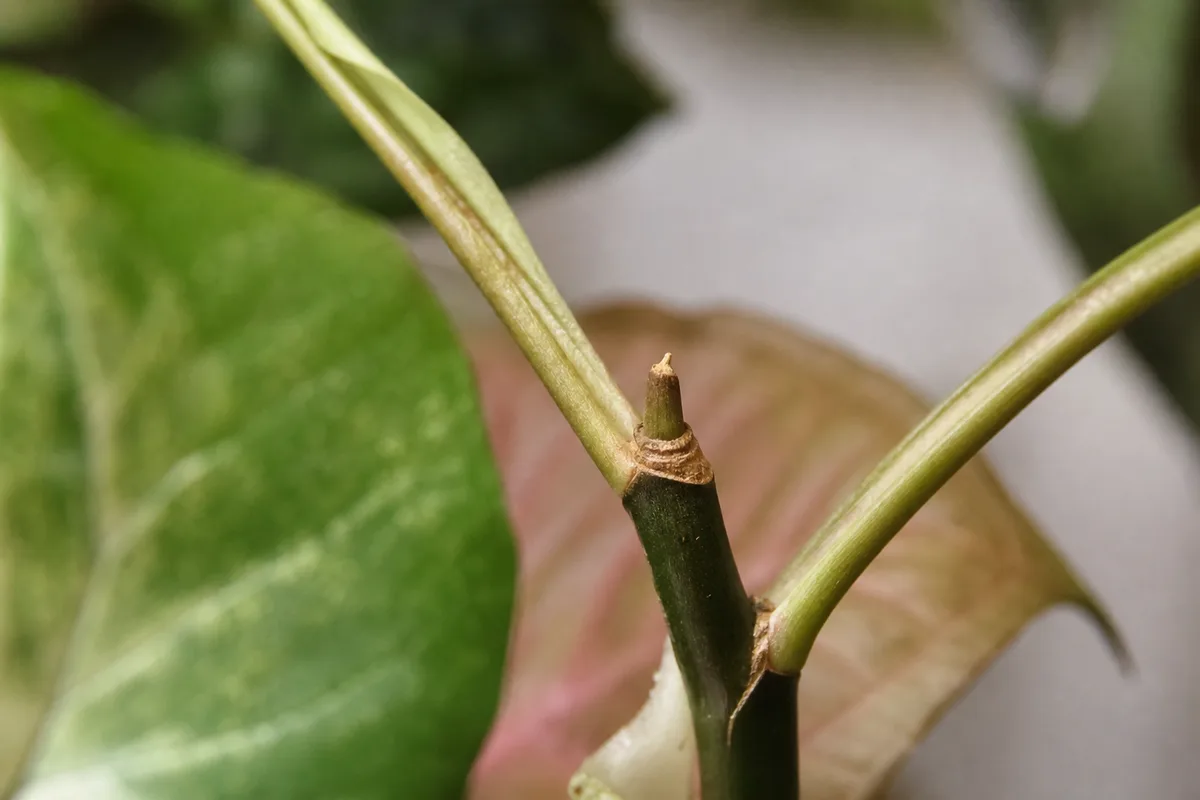
Slow Growth symptoms on Syngonium - compare with healthy tissue on the same plant.
- No new arrowhead tips for months during spring or summer while older leaves stay green and firm
- Smaller new leaves than mature ones, with shorter petioles and thin stems
- Long gaps between leaves (wide internodes) even without obvious leaning toward a window
- Faded variegation or washed-out pink on colored cultivars-the earliest light-stress signal on types like White Butterfly or Neon Robusta
- Pot dries very fast after watering, or water channels straight through-common when roots fill the container
- Single long bare stem in a dim corner while a pinched juvenile plant in brighter light stays bushy
Juvenile syngoniums start compact with arrow-shaped leaves. Without pinching in adequate light, the plant shifts toward a climbing vine with lobed adult foliage-a natural habit, not automatically a stall. The diagnostic clue is leaf frequency and size on new tips, not vine length alone.
Recovery case: dim shelf to grow light (February 2026)
A 4-inch White Butterfly Syngonium on a living-room bookshelf 10 feet from a north window produced no new tips from October through January-expected winter quiet with firm stems. By mid-March, room warmth returned but still zero buds while a sibling plant in an east window pushed two new arrowheads.
Week 0: Added a full-spectrum LED 12 inches above the canopy for 12 hours daily (per UF/IFAS interior light guidance of 250–1,000 foot-candles for good performance).
Week 3: First tiny bud visible at a stem tip.
Week 5: One new arrowhead unfurled-smaller than spring leaves on the east-window plant but clearly larger than the last leaf from the prior summer.
Week 8: Second leaf opened; internode spacing shortened on fresh tissue. Owner held off repotting until tip rhythm steadied.
Old leaves did not regain lost cream variegation-recovery was judged on new tip frequency and leaf size, not on fading older foliage.
Why Syngonium grows slowly
Insufficient light is the usual bottleneck
Light drives photosynthesis and new tissue. Syngonium evolved as a tropical understory climber; indoors it wants bright filtered exposure, not a distant shelf. UF/IFAS recommends 250 to 1,000 foot-candles for good interior performance-below that range, growth slows and variegated cultivars lose definition. The same publication lists reduced growth among physiological problems when light or nutrition limits carbon gain.
Syngonium is sold as low-light tolerant, which is partly true for survival-but tolerance is not regular leaf production. Maryland Extension notes that too little light causes leggy growth, fading leaf color, and poor overall development. In a dim office or north-facing room far from glass, the plant may stay alive while barely adding leaves.
Winter rest and cool temperatures
Growth slows when room temperatures drift toward the low end of the plant’s comfort range or when daylight hours shrink. UF/IFAS advises keeping interior syngonium between 65°F and 80°F to maintain leaf colorings. Cold windowsills, drafty doors, and air-conditioning vents can suppress metabolism. Soil that stays cold while leaves are warm can also delay new shoots at the nodes.
Root-bound pots and tired mix
Syngonium is a naturally vigorous aroid that outgrows containers. NC State Extension notes that repotting every few years and trimming circling roots helps keep the plant manageable. When roots coil densely, there is little fresh mix to hold water and nutrients, uptake efficiency drops, and the plant stalls even though you water on schedule. See our repotting guide for the one-size-up workflow.
Oversized pots and slow dry-down
A pot much larger than the root ball stays wet too long, especially in low light where the plant uses little water. Wet, airless soil suffocates roots silently and can stall growth for months without obvious rot symptoms at first.
Water stress-both too wet and too dry
Chronic overwatering in dim light damages roots and stalls growth while leaves may yellow. Missouri Botanical Garden recommends allowing the potting surface to dry slightly before irrigating-roots need oxygen as well as moisture. Chronic underwatering keeps the plant alive but growth deliberately slows. Match rhythm to our watering guide once light is corrected.
Recent repotting or care stacking
Syngonium adjusts slowly when light, pot size, and watering all change at once. Stacking fertilizer, pruning, and relocation on the same week adds stress that looks like chronic slow growth.
Hidden pests and root rot
Low-level spider mites, mealybugs, or scale drain vigor before obvious leaf damage appears. Root rot from wet soil stops growth entirely-slow growth with multiple yellow leaves, soft stems, and sour soil is a red flag, not simple stagnation. Escalate to our root rot guide if wet soil and zero tips persist together.
Cultivar notes
Growth pace and light sensitivity vary by cultivar, but the diagnostic order stays the same: light first, then roots, then feeding.
- White Butterfly - Cream-and-green variegation fades toward plain green in shade before growth stops entirely. Variegated types generally need brighter placement than solid-green syngoniums.
- Neon Robusta - Pink juvenile wash disappears in dim rooms; see the dedicated Neon Robusta slow growth guide for cultivar-specific pink cues and scope vs. this genus hub page.
- Albo and heavily variegated types - Lower chlorophyll means less energy per leaf; they stall sooner in marginal light and recover more slowly after correction.
Pinching redirects energy to branching but does not replace photons. A pinched plant in deep shade may stay compact yet still produce few new leaves.
How to confirm the cause
Work through these checks in order:
- Season and temperature - Is it late fall or winter? Are nights below about 60°F near the plant? If yes, expect slower pace before treating it as a problem.
- Light at the leaf surface - At midday, hold your hand above the newest leaves. A soft, diffuse shadow suggests usable light; almost no shadow means growth will stall. Use the hand-shadow test and PPFD targets in our light guide if you want measurable confirmation.
- New leaf size and color - Compare the last unfurling leaf to one from six months ago. Smaller size, faded variegation, or long gaps between nodes confirm light stress.
- Pot weight and dry-down - After watering, note how many days until the top inch of mix feels dry. A plant in a small pot that dries in two days may be root-bound; a pot that stays wet for two weeks suggests overwatering, poor drainage, or a container that is too large.
- Root inspection - Slide the plant partly out of the pot. Dense white roots circling the outside, little visible mix, or roots escaping drainage holes confirm binding. Mushy brown roots with wet soil point to rot, not simple slow growth.
- Pest scan - Check leaf undersides and stem joints for mites, scale bumps, cottony mealybugs, or sticky residue. Fine webbing on undersides is a common early mite cue on syngonium before leaves cup or bronze.
If the plant is firm, pest-free, in bright indirect light, and still barely growing in midsummer, root space or depleted mix is the next suspect-not fertilizer.
First fix for Syngonium
Improve light first.
Move the pot to the brightest indirect spot available-within a few feet of a sunny window filtered by a sheer curtain is a common sweet spot. If natural light is weak, add a full-spectrum grow light positioned above the canopy for roughly 10–12 hours daily. Acclimate gradually over seven to fourteen days if moving from deep shade-sudden harsh direct sun can bleach arrowhead foliage.
Give the plant two to three weeks in the new light before repotting or feeding. Do not jump to a larger pot or heavy fertilizer on day one. Light is the cheapest, safest lever, and it rules out the most common cause on syngonium.
Step-by-step recovery
After light improves, address remaining limits in this order:
- Stabilize watering - Water thoroughly when the top inch of soil dries, then empty the saucer. Reduce frequency in winter. Avoid keeping the plant constantly moist unless you have confirmed it dries fast because of root fill, not because of overwatering.
- Pinch or support for shape - Once growth resumes, pinch leggy tips above a node for a compact tabletop plant, or offer a moss pole if you want a climbing vine with regular new leaves.
- Repot if root-bound - In spring or early summer, move up one pot size only (about 2–5 cm wider). Use well-draining aroid mix with perlite. Tease circling roots gently. Skip fertilizer for four to six weeks after repotting.
- Feed lightly during active growth - Once new leaves appear steadily and roots are healthy, apply a balanced liquid fertilizer at half strength once monthly from spring through fall per our fertilizer guide. Stop if leaf tips burn or growth was already good before feeding.
- Treat pests if found - Isolate, rinse leaf undersides, and treat confirmed infestations before expecting a growth spurt.
- Warm the root zone - Move the pot off cold windowsills at night. Keeping roots in the 65°F–80°F range supports steady metabolism through the growing season.
Recovery timeline
Expect gradual improvement, not an overnight surge:
- 2–3 weeks after a light upgrade: new buds may appear at stem tips if temperature and watering are stable
- 4–6 weeks: first new arrowhead leaf unfurls; judge success by leaf size and spacing on fresh tissue, not by old leaves changing
- 2–3 months in active season: leaf production becomes more regular and internodes shorten
- Winter months: slow or zero growth is normal; do not force growth with heavy feeding in dim conditions
Old leaves will not regain lost variegation or size-they stay as they are. Recovery is measured by new growth frequency, internode length, and color on the newest leaves.
Lookalike symptoms
| Pattern | Likely cause | Key differentiator |
|---|---|---|
| Long stems, small leaves, lean toward window | Leggy growth from low light | Plant is reaching, not idle; internodes lengthen on new growth |
| No tips for weeks after repot | Transplant pause | Firm stems, no sour soil; wait four to six weeks |
| Yellow older leaves + wet soil + zero tips | Root rot | Soft stems, sour smell, mushy roots-not simple stall |
| Pale new leaves, long gaps, dim room | Not enough light | Hand-shadow test fails; overlaps with slow growth |
| Uniform yellow on older leaves only | Nitrogen deficiency or chronic overwatering | UF/IFAS lists nitrogen deficiency as a cause of old leaves turning yellow; check roots and moisture before assuming light alone |
| Quiet winter, firm stems, slower watering | Normal seasonal rest | Growth resumes when light and warmth return |
| Faded variegation on one side only | Uneven light | Rotate the pot monthly for even exposure |
Slow growth vs. leggy growth on syngonium: Both often share low light as the root cause. Leggy plants stretch toward brightness with long internodes; slow plants may simply idle with occasional small leaves and no directional lean. Fixing light addresses both-see the leggy growth guide if stretching is your main symptom.
Pale new foliage without a full stall may fit our pale leaves guide-light stress crossover is common on variegated cultivars.
What not to do
Do not over-fertilize to force growth-especially in dim winter conditions. Salt buildup and burned tips add stress without fixing the energy bottleneck.
Do not upsize to a huge pot hoping to force growth. Extra wet soil stalls aroids; go one size up only when roots are crowded.
Do not water heavily during winter rest when the plant is not producing new leaves.
Do not repot, feed, and move all at once. Stack changes only after the plant shows new growth.
Do not judge health by vine length alone. Short stems with regular arrowhead leaves in bright light are success; a long bare runner in shade is not vigor.
Wear gloves when handling cut stems; Syngonium is toxic to pets if chewed.
How to prevent chronic slow growth
Place Syngonium where bright indirect light reaches the leaves for most of the day-not merely where the pot looks decorative on a shelf. East windows and filtered south or west exposures suit most homes; use grow lights when winter daylight drops.
Match watering to how fast the pot dries: top inch dry, then soak and drain per our watering guide. Repot every one to two years in spring before roots coil tightly. Feed lightly only during active growth per our fertilizer guide. Pinch tips during warm months if you want a compact bush. Rotate the pot every few weeks for even growth on variegated types.
Hanging baskets dry faster than tabletop pots in the same light-check dry-down speed before assuming underwatering. Keep toxic plants out of pet reach when moving them to brighter shelves.
When to worry
Escalate beyond light and repotting fixes if you see:
- Multiple yellow leaves dropping while growth is zero and soil stays wet
- Soft, collapsing stems at the base
- Sour or fungal smell from the pot
- Sticky leaves with visible pests or ant trails
- No growth through an entire warm season after light, roots, and watering were already corrected
Those patterns need root inspection, possible pruning of rotten tissue, and pest treatment-not more patience. Contact your local extension office for persistent unexplained stall, or your veterinarian if a pet chews syngonium foliage.
Frequently asked questions
How can I confirm slow growth is a problem on Syngonium?
Compare new leaf frequency to last spring and summer. A healthy Syngonium in bright indirect light keeps pushing fresh arrowhead tips through warm months-there is no extension-published leaf-count schedule, so judge against your plant’s own prior active-season rhythm. No tips through an entire favorable season while light is weak or roots circle the pot is a problem-not winter rest.
What should I check first for slow Syngonium growth?
Note the calendar, measure light at the leaf surface using the hand-shadow test, and check whether stems stay firm. Winter quiet with reduced watering is normal. A spring stall with pale new leaves, long gaps between nodes, or roots escaping drainage holes points to light or root limits before fertilizer.
Will a slow Syngonium speed up on its own?
Growth usually resumes when daylight and room warmth increase in spring. Without enough bright indirect light, the vine may stay sluggish all season even as temperatures rise. Recovery shows up as faster new leaf emergence and shorter internodes over several weeks-not by old leaves growing larger.
When is slow growth urgent on Syngonium?
Treat it as urgent if stalled growth pairs with sour-smelling wet soil, yellowing on multiple leaves, soft stems at the base, or sticky residue suggesting pests. Those patterns suggest root rot or infestation-not simple light stress-and need inspection before you wait for spring.
Is syngonium slow growth the same as leggy growth?
Both often trace to low light, but the main symptom differs. Leggy syngonium stretches toward windows with long internodes and a strong lean; slow growth means the plant idles with few or tiny new tips and may not lean dramatically. Fix light for both-use the leggy growth guide when stretch is the leading complaint.
Related Syngonium guides
- Syngonium overview
- Syngonium light
- Leggy growth on Syngonium
- Not enough light on Syngonium
- Pale leaves on Syngonium
- Syngonium repotting
- Syngonium watering
- Syngonium fertilizer
- Root rot on Syngonium
- All Syngonium problems
Conclusion
Escalation summary: Wait through winter quiet or a short post-repot pause when stems are firm and soil smells normal. Move light now if spring or summer arrives with zero tips and pale small leaves. Repot one size up when the pot dries in one to two days and roots circle the mix-after light is corrected. Unpot same-day when wet sour soil, soft stems, or pest stickiness pair with zero growth-that is rot or infestation, not a patience problem.