Leggy Growth on Syngonium: Causes, Checks & Fixes
Quick answer
Leggy Syngonium shows long gaps between small arrow-shaped leaves as the vine stretches toward light. First step: confirm etiolation (not normal mature climbing), then move to brighter filtered indirect light and pinch stretched tips above a node once new growth tightens.
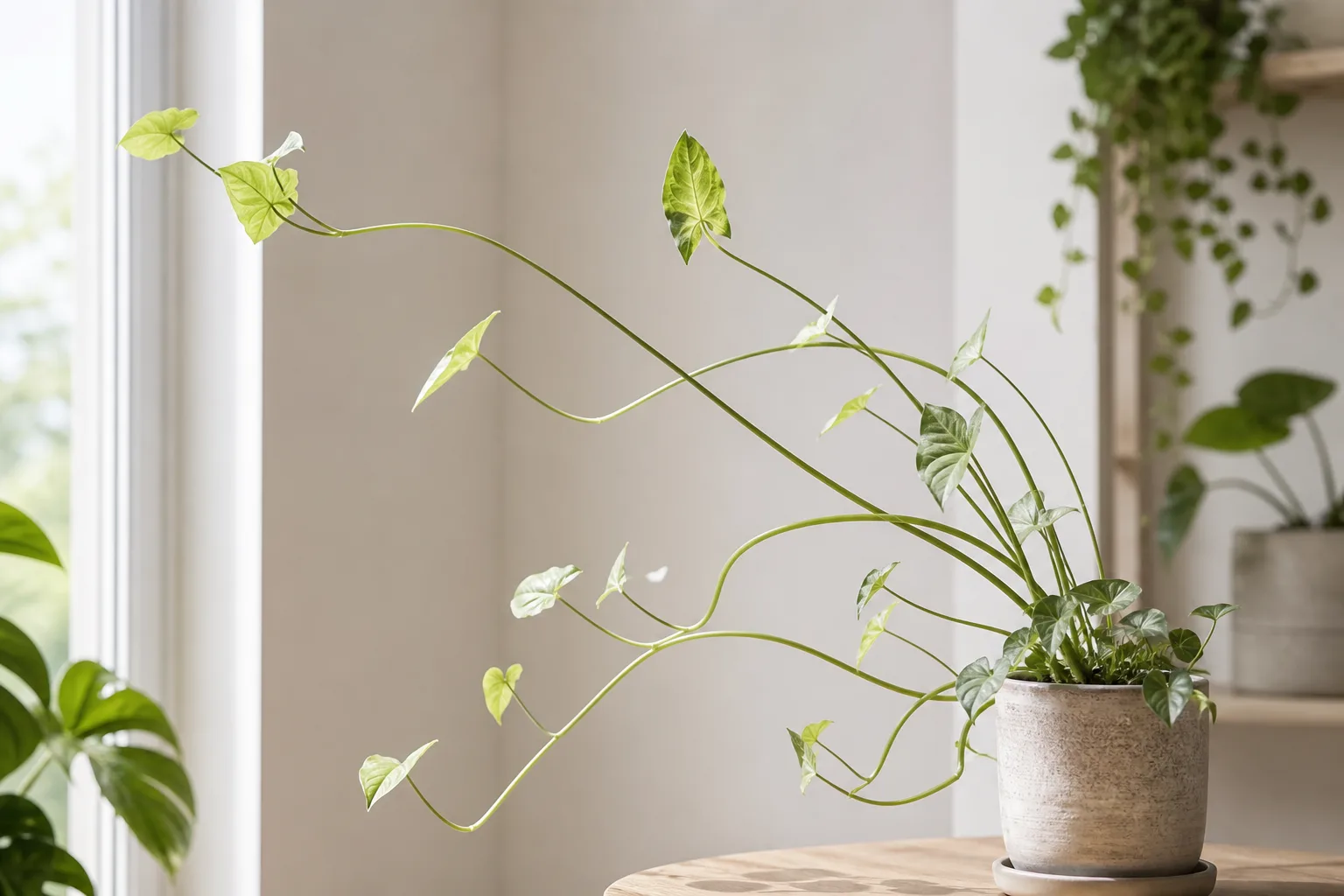
Leggy Growth on Syngonium: Causes, Checks & Fixes
This guide covers leggy growth on Syngonium. See also the general Leggy Growth guide, watering, and light pages for this plant.
Leggy Growth on Syngonium: Causes, Checks & Fixes
Quick answer
Start with one fork: Is your arrowhead vine reaching for light (etiolation), or maturing into a climber on a support? Etiolation shows long thin internodes, small pale new arrowhead leaves, and a strong lean toward glass. Healthy mature vining on a moss pole keeps normal leaf size and colour while stems climb-see the decision table below.
Leggy Syngonium from etiolation is almost always a light problem, not a fertilizer shortage. Syngonium podophyllum is a tropical climbing aroid that tolerates dim corners longer than many houseplants, but in shade it stretches toward the brightest spot-producing long thin stems, wide gaps between leaves, and small pale arrowhead foliage. That response is etiolation: the plant is reaching for usable light, not growing vigorously.
First step: move the plant to brighter filtered indirect light and acclimate over one to two weeks. Do not repot, fertilize, or hard-prune on day one. Once new leaves emerge closer together and look fuller, pinch the most stretched tips above a node to encourage branching. Leggy sections already formed will not shrink back, but tighter new growth can restore a bushy look.
How this page differs from not-enough-light
| Your main symptom | Start here | Use the sibling guide |
|---|---|---|
| Long internodes, bare stems, window lean | This page - stretch and etiolation diagnostics | - |
| Pale pink or variegated leaves without extreme stretch | Pale leaves | Not enough light for placement audit |
| Dim room, grow-light setup, wet soil in shade | Link only | Not enough light |
| Plant idles with few new tips, no strong lean | Slow growth | Overlaps with light-fix brightness first |
This page owns stretch vocabulary, internode measurement, pinch timing, and etiolation-vs-vining differentiation. The not enough light guide owns broader placement trials, pigment fade on coloured cultivars, and grow-light workflows.
Etiolation vs. mature vining vs. root stall
| Signal | Etiolation (leggy) | Normal mature vining | Root stress stall |
|---|---|---|---|
| Internode length | Lengthening on new growth | Moderate; stems climb with support | Not the main pattern |
| New leaf size | Smaller than earlier leaves | Normal to larger lobed adult leaves | Small or absent tips |
| Colour | Pale or washed-out on newest leaves | Healthy green or variegation | Yellowing lower leaves common |
| Stem direction | Strong lean toward window | Upward on pole or trellis | No phototropic reach |
| Soil rhythm | Often stays wet in dim spots | Normal dry-down | Wet, sour, or compacted mix |
What leggy growth looks like on Syngonium
Healthy young Syngonium often starts compact with arrow-shaped juvenile leaves on short stems. Leggy growth breaks that pattern:
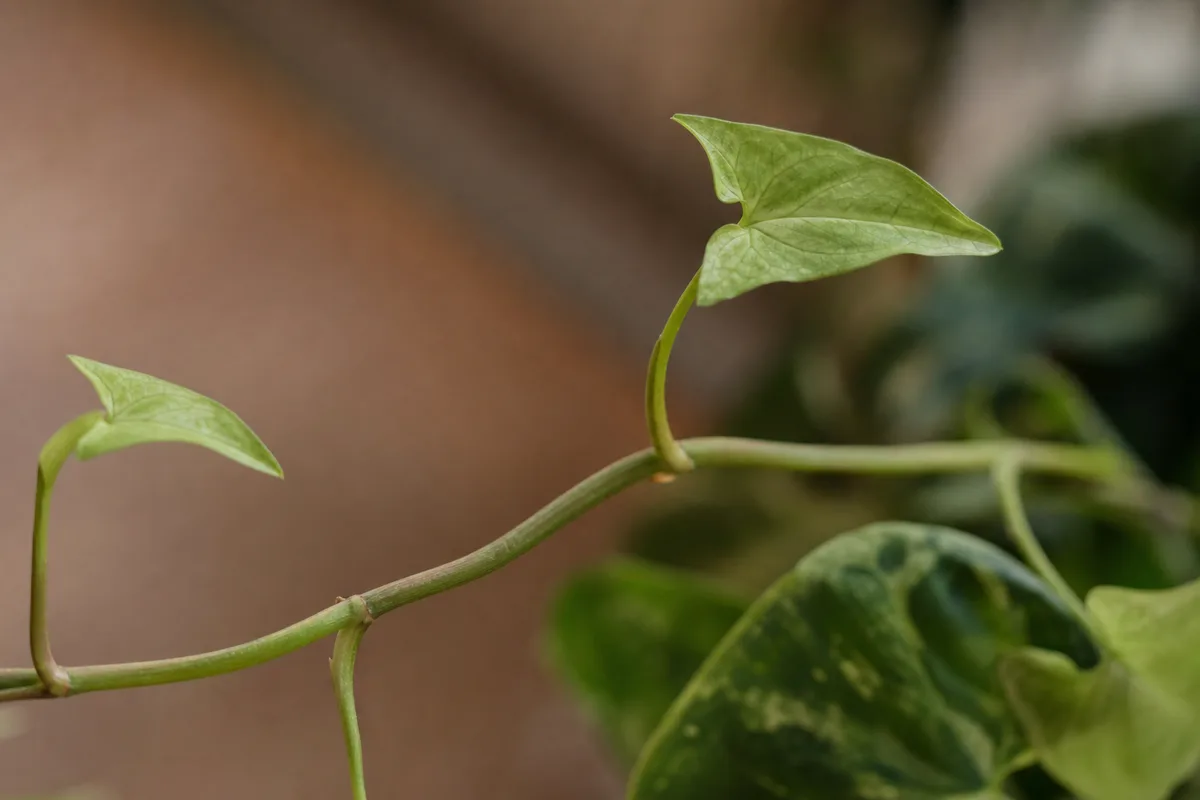
Leggy Growth symptoms on Syngonium - compare with healthy tissue on the same plant.
- Long internodes - the space between leaf nodes is noticeably longer on new growth than on earlier stems (often over 2 inches / 5 cm in a dim bathroom or interior shelf).
- Smaller leaves - newest arrowhead leaves are reduced in size compared with leaves produced in brighter light.
- Pale or washed-out colour - pink, cream, or variegated cultivars fade toward plain green on the newest foliage first; see pale leaves when colour loss is the main complaint.
- Directional lean - stems bend strongly toward a window, grow light, or the brightest corner of the room.
- Bare lower stems - older leaves may drop or stay small while the vine extends upward or outward with foliage clustered at tips.
- Soft, floppy stems - stretched tissue is structurally weaker than compact growth and may flop without support.
Syngonium naturally shifts from a bushy juvenile habit to a climbing or trailing vine as it ages. Mature stems climbing a moss pole with larger lobed leaves are not automatically a problem. Legginess is the combination of stretching plus weak, sparse foliage-especially when light at the canopy is clearly low.
Recovery case: bathroom shelf to east window (March 2026)
A 6-inch nursery Syngonium Neon Robusta sat on a bathroom shelf 8 feet from a frosted north window. Newest internodes measured about 5 cm (2 in) between small ivory-green arrowheads; older compact growth from the grower showed roughly 1.5 cm (⅝ in) gaps. Stems leaned toward the hallway light.
Week 0: Moved to a filtered east window sill (within about 2 feet of glass per Clemson HGIC bright-indirect guidance), acclimated over 10 days.
Week 3: First new leaf opened with a 2 cm internode and visible blush returning on the arrowhead.
Week 6: Two more leaves at 1.5–2 cm spacing; owner pinched the worst stretched tip above the third node. Lower bare stem did not shorten-expected.
Old stretched segments never reverted; success was judged on new tip spacing and leaf size, not on bare lower stems filling in.
Why Syngonium gets leggy
Insufficient light is the main trigger
Light intensity controls internode length, leaf size, and branching. When photosynthetic light at the leaf surface is too low, Syngonium elongates stems to reach a brighter zone. Indoor plants become spindly or leggy as they stretch toward more light, often leaning when illumination comes from one direction.
Syngonium is sold as low-light tolerant, which is partly true for survival-but tolerance is not compact growth. In a dim office, bathroom, or north-facing room far from glass, the plant may stay alive while slowly producing a thin ladder of small leaves. Our Syngonium light guide covers window placement and warning signs if you want measurable targets before moving the pot.
Seasonal light drop indoors
Winter shortens daylight and pushes pots deeper into shade as the sun angle drops. A Syngonium that looked fine in summer can become noticeably leggier by late winter even if you never moved it. Growth may slow at the same time, which can mask the problem until stems have already stretched.
Uneven light and one-sided stretch
Plants placed against a wall or in a corner receive light from one side. Phototropism pulls new growth toward the window, producing a lopsided vine with one bare side. Rotating the pot helps, but rotation alone cannot fix a location that is too dim overall.
Natural vining habit mistaken for poor care
NC State Extension describes Syngonium as shrubby when young and vine-like as it ages, with juvenile arrow-shaped leaves giving way to lobed adult foliage on climbing stems. Without periodic pinching, even a well-lit Syngonium can develop long stems. The diagnostic clue is leaf quality: in adequate light, new leaves stay normal size and colour; in low light, they shrink and pale while internodes lengthen. For node placement and regular tip pruning, see our pruning guide.
Secondary factors that make legginess worse
Overfertilizing in low light can push weak elongated tissue because the plant cannot convert extra nutrients into dense foliage without adequate light. Chronic overwatering does not cause legginess directly, but leggy plants in dim spots use water slowly-so the same watering rhythm can leave soil wet longer, compounding stress. If soil stays soggy for weeks, cross-check overwatering and root rot before assuming light alone.
How to confirm the cause
Work through these checks before you change anything else:
- Light at the canopy - Hold your hand above the foliage at midday. A sharp, dark shadow suggests usable brightness; a faint or absent shadow means the spot is too dim for compact Syngonium growth.
- Internode comparison - Measure the gap between two consecutive new leaves and compare it to gaps on older stems from when the plant looked fuller. Lengthening gaps over about 2 inches (5 cm) on fresh growth confirm etiolation.
- Leaf size and colour - Check whether newest arrowhead leaves are smaller or less variegated than leaves two or three nodes back. Light stress shows on new growth first.
- Direction of lean - Stems pointing toward glass or a lamp strongly suggest light seeking rather than root rot or drought.
- Soil moisture rhythm - Leggy plants in low light often stay wet longer. Confirm the top inch of mix is drying within a reasonable window; adjust watering after you fix light, not before.
- Pest scan - Spider mites and mealybugs can weaken growth, but they do not typically produce long bare internodes with a strong window lean. Rule out sticky residue, webbing, or clustered insects on undersides.
If light is clearly inadequate and the pattern matches stretched nodes plus small new leaves, you have confirmed leggy growth from etiolation-not a mystery nutrient deficiency.
First fix for Syngonium
Move the plant to the brightest filtered indirect location you can provide, and acclimate gradually over seven to fourteen days.
Choose an east-facing window or a spot a few feet back from filtered south or west glass-close enough that the canopy receives bright indirect light without direct midday sunbeams hitting leaves. Increase exposure in steps: a few hours closer each day, or partial shade cloth removed over a week. Jumping from deep shade to harsh direct sun can bleach or scorch leaves adapted to dim conditions-especially on pink and white-variegated cultivars.
Do not fertilize a stretched plant hoping to “push bushiness.” Nutrients cannot replace photons. Do not repot unless roots are clearly failing; legginess is not a root-volume problem. Wait to hard-prune until you see the first round of tighter new leaves after the light upgrade-that tells you the plant is responding before you remove stretched tissue.
Step-by-step recovery
After the plant is in brighter indirect light:
- Rotate the pot weekly so all sides receive similar exposure and new stems grow more evenly.
- Adjust watering - brighter light increases water use. Check when the top inch of soil dries rather than following the old dim-corner schedule; see Syngonium watering for seasonal rhythm.
- Pinch stretched tips - once new leaves look larger and closer together, cut or pinch leggy stems just above a node. Syngonium often branches from nodes below the cut.
- Choose your goal shape - for a compact tabletop plant, pinch regularly during spring and summer active growth. For a climbing vine, offer a moss pole or trellis and let well-lit stems climb instead of flop.
- Add supplemental light if needed - in winter or dark rooms, a full-spectrum grow light run for ten to twelve hours daily can hold compact growth when windows fail.
- Propagate optional reset - extremely bare vines can be cut into stem sections with nodes, rooted in water or moist mix, and replanted alongside the parent for a fuller pot.
If you prefer a bushy juvenile arrowhead look on a plant starting to vine, cutting off climbing stems as they develop helps the plant retain a more shrub-like habit-provided light is adequate for the remaining growth.
Recovery timeline
Expect visible improvement on new growth within two to four weeks after a meaningful light increase during active growth. Internodes on fresh stems should shorten and leaves should look larger relative to the gap between nodes.
Old stretched sections do not revert-those internodes stay long permanently. Judge success by new tips, not by old bare stems filling in magically. Pinching after the first good flush of compact leaves accelerates bushiness over the next one to two months.
Winter recovery may take longer if the plant is semi-dormant and daylight remains short. A grow light often speeds the turnaround compared with waiting for spring window light alone.
Lookalike symptoms to rule out
Normal mature vining - A well-lit Syngonium on a support developing lobed adult leaves is maturing, not etiolating. Leaves stay firm and reasonably sized; internodes are not wildly longer than earlier growth.
Slow growth from root stress - Root rot or chronic overwatering stalls the whole plant, often with yellowing, soft stems at the base, or sour soil. Stretching toward a window with otherwise green tissue points to light, not roots alone. Follow root rot if mushy roots or sour mix appear.
Nutrient deficiency - True deficiency usually affects older leaves first with uniform yellowing or mottling, not directional stretch with tiny new arrowheads. Increase light before assuming fertilizer will fix sparse stems.
Natural juvenile leaf shape - Young Syngonium leaves are arrow-shaped by design. Legginess is about spacing and size, not the arrow form itself.
Pale colour without extreme stretch - Washed-out pink or variegation on new tips may fit pale leaves first; stretching often follows on the same plant if light stays low.
Mistakes to avoid
Do not assume fast stem length equals healthy vigor-stretching is an adaptation to low light, not strength.
Do not prune heavily before improving light; the plant will often stretch again from remaining nodes.
Do not move abruptly from deep shade to unfiltered south-window sun; acclimate to prevent bleached or scorched foliage on variegated types.
Do not ignore one-sided growth until stems collapse; weak etiolated tissue breaks easily.
Do not increase fertilizer in a dim spot hoping to force fullness-that can produce soft, weak growth.
Do not keep pink or variegated cultivars in deep shade and expect colour to hold; they need more light than solid-green types to stay compact and pigmented. Growers of Pink Allusion, Neon Robusta, or white-variegated types may also consult cultivar-specific leggy pages when variegation loss is the leading symptom.
How to prevent leggy growth next time
Place Syngonium where it receives bright filtered indirect light most of the day-not merely where the pot looks decorative. East windows and filtered south or west exposures suit most homes.
Rotate pots weekly for even growth. Pinch tips during active growth if you want a compact shape rather than a long trailer.
Use a grow light when winter daylight drops or room brightness is borderline. Match watering to the faster dry-down that comes with better light.
Keep toxic plants out of pet reach when moving them to brighter shelves; Syngonium contains calcium oxalate crystals that irritate mouths if chewed. Contact your veterinarian if a pet ingests plant tissue.
When to worry
Leggy growth is rarely life-threatening, but act before stems become too weak to support themselves or before slow growth plus wet soil invites root problems.
Treat recovery as urgent when:
- Stretched stems snap repeatedly and the plant cannot hold its form even with support
- New leaves stay tiny and pale for more than one month after a clear light upgrade
- Soil stays soggy for weeks on a dim, slow-growing vine-correct light and watering together; see overwatering
- Variegated cultivars revert entirely to plain green and continue stretching despite a modest move closer to glass (the spot may still be too dim)
You do not need to discard a leggy Syngonium. Even very stretched plants can be rejuvenated with better light, pinching, and optional propagation-unless base stems are mushy from rot, which is a different problem entirely.
Frequently asked questions
Is my Syngonium leggy or just growing as a vine?
Normal mature vining on a moss pole produces firm stems with normal-sized lobed leaves in adequate light. Etiolation adds long thin internodes, small pale arrowhead leaves, and a strong lean toward the brightest window. If leaf size and colour stay healthy while stems climb, you are seeing maturation-not a light emergency.
How can I confirm leggy growth on Syngonium?
Compare new stems to older compact growth. Leggy Syngonium shows noticeably longer spaces between leaves, smaller pale arrowhead foliage, and a lean toward the brightest window. Measure internodes: gaps over about 2 inches (5 cm) on new growth in a dim room strongly suggest etiolation.
What should I check first for leggy Syngonium?
Measure light at the leaf canopy, not room brightness. Syngonium needs bright indirect light; dim shelves and far-from-window corners produce stretched stems with tiny juvenile leaves. Check whether one side is leggier from uneven exposure before assuming a watering or feeding problem.
Will leggy Syngonium stems fill in after more light?
Existing elongated internodes stay long, but new growth can become compact with tighter spacing and larger leaves once light improves. Pinch or prune above a node after you see better new leaves to trigger branching and reduce bare stem sections.
Should I read the not-enough-light page or this page?
Use this page when stretching, long internodes, and window-ward lean are your main symptoms. Use the not enough light guide for broader dim-room placement audits, grow-light setup, pigment fade on pink cultivars, and wet-soil-in-shade overlap with root stress.
Related Syngonium guides
- Syngonium overview
- Syngonium light
- Not enough light on Syngonium
- Slow growth on Syngonium
- Pale leaves on Syngonium
- Syngonium pruning
- Overwatering on Syngonium
- Root rot on Syngonium
- All Syngonium problems
Conclusion
Use this page to confirm leggy growth on Syngonium by internode spacing and lean-not by treating every long stem as poor care. When symptoms overlap with sibling pages, follow the linked guide for the matching cause before stacking fertilizer, repotting, or hard pruning.