Syngonium Pruning: When, How, and Mistakes to Avoid
Syngonium Pruning: When, How, and Mistakes to Avoid
Syngonium Pruning: When, How, and Mistakes to Avoid
First, remove only dead, yellow, or clearly damaged leaves and stems with clean sharp scissors - snip at the petiole base or cut back into firm green tissue just above a healthy node. Syngonium (Syngonium podophyllum) recovers quickly from clean cuts, but a sanitation pass shows you what is actually alive before you pinch tips or shorten vines for shape.
Quick Answer
Prune Syngonium for shape and density in late spring through early summer, when the plant is actively growing. For a compact tabletop plant, pinch soft growing tips every two to four weeks during warm months - remove the terminal bud and top leaf pair to keep arrow-shaped juvenile leaves. For leggy vines, cut 6–10 mm (about ¼ inch) above a visible node on each long runner. Limit routine shaping to no more than one-third of total foliage per session. Emergency removal of mushy, pest-damaged, or fully dead stems can happen any time. Syngonium changes leaf shape as it matures - without regular pinching, it naturally shifts from bushy arrow leaves to climbing vines with lobed adult foliage.
What Pruning Does for Syngonium
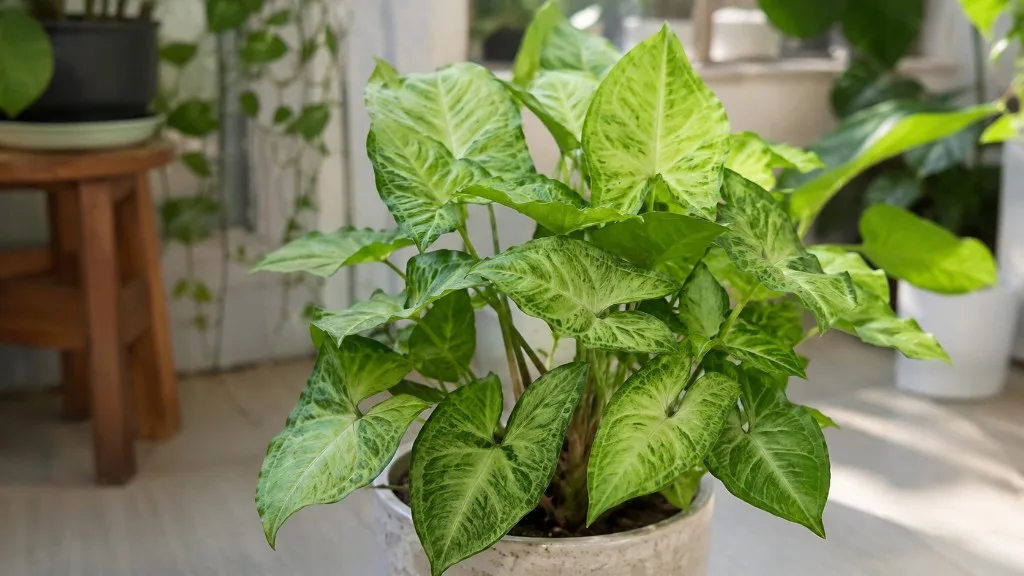
Syngonium is a fast-growing tropical aroid widely grown indoors as the arrowhead plant. NC State Extension describes young plants with a shrubby habit and arrow-shaped juvenile leaves that become lobed and vining as the plant ages. Clemson HGIC recommends pinching to maintain a bushy form indoors. Missouri Botanical Garden notes variable leaf morphology by plant age - a trait called heteroblastic development.
Without intervention, each stem follows apical dominance: the terminal bud at the growing tip suppresses side shoots lower on the vine. The tip keeps extending, internodes stretch, and the plant shifts toward mature lobed leaves - fine on a moss pole, awkward on a coffee table. Indoors, low light accelerates legginess because the plant reaches toward the brightest available source.
Pruning serves four practical jobs on Syngonium:
- Delays maturation by removing terminal buds before vines develop lobed adult leaves
- Activates lateral nodes below each cut, producing bushier side shoots
- Removes failing tissue before pests or rot spread along soft stems
- Supplies propagation material - node-bearing cuttings root easily in water or moist mix
Pruning does not fix chronic under-lighting or overwatering on Syngonium. If new growth after a trim still produces long bare internodes, improve placement to bright filtered light and confirm the pot dries predictably before expecting compact regrowth.
What to Check Before You Cut
Walk the plant once before touching shears. Note three things:
- Display goal - compact tabletop with arrow leaves, or climbing vine with lobed foliage on a pole?
- Stem condition - which runners are firm and green versus soft, yellowing, or bare?
- Growing environment - is the pot staying wet too long, or is the plant in a dim corner?
Syngonium yellowing from wet soil often looks like a pruning problem but returns after cuts if roots stay saturated. If several leaves yellow at once and the mix smells sour, inspect roots and correct watering before structural pruning. Leggy stretched stems in low light need brighter placement - shears alone will not keep new growth compact.
The First Cut to Make
Start with sanitation only. Remove fully brown dry leaves at the petiole base. Cut soft yellow or mushy stems back into firm green tissue, always just above a healthy node - never through the middle of a bare internode. Sterilize blades between cuts on diseased material.
This pass reveals the live framework. Only after failing tissue is gone should you pinch tips for bushiness or shorten the longest bare runners above nodes where you want new branching.
When to Prune Syngonium
Syngonium tolerates light pinching year-round, but timing changes speed, not survival. Structural cuts during active growth produce faster branching and retain juvenile leaf form longer. The same cuts in late autumn or winter may sit visually unchanged for weeks while light and temperatures are low.
Best season for shaping and pinching
Late spring through early summer is the ideal window for reshaping in most homes. By then daylight is increasing, the pot dries on a predictable rhythm, and new shoots are already unfurling. Clemson HGIC recommends pinching during active growth to maintain bushy form. Early autumn works as a second option if your space stays warm and bright.
For tabletop displays, plan tip pinching every two to four weeks through the warm season - this is the primary maintenance most growers need, not hard cutbacks.
Cuts that cannot wait
Some trimming should not wait for spring:
- Blackened, mushy, or rotting stems - cut back into firm green tissue above a healthy node
- Stems with heavy active pest infestation - remove the worst sections once you have a treatment plan
- Fully brown, dry leaves - snip at the petiole base any time; they no longer photosynthesize
When to delay pruning
Hold major reshaping when:
- The plant is recently repotted or root-disturbed - wait two to three weeks for stability
- Soil stays wet and yellowing suggests root stress - fix drainage and watering first
- The plant is in deep winter dormancy with no new growth - cosmetic cuts will not branch quickly
Light tip pinching during the off-season is fine; hard rejuvenation is not.
How to Prune Syngonium Step by Step
Match technique to your display goal. The same plant can become a bushy tabletop specimen or a climbing vine depending on how you cut - or do not cut - over time.
Pinching for a compact tabletop plant
Pinch soft growing tips by removing the terminal bud and top leaf pair with fingers or snips. Work every two to four weeks during late spring through summer. Each pinch breaks apical dominance and wakes buds at the node directly below, producing side shoots with compact arrow-shaped juvenile leaves.
This is lighter maintenance than hard cutbacks. Most tabletop growers need regular pinching, not annual wholesale reduction. Stop pinching if the plant fills its space - then switch to occasional thinning of the longest inner stems.
Node cutbacks for leggy vines
When stems elongate with bare internodes and small leaves clustered at the tips, shorten each long runner. Identify a node - the slightly swollen point where a leaf attaches to the stem - and cut 6–10 mm above it with bypass snips at a slight angle.
Multiple cuts on different runners activate multiple branches. Combine cutbacks with medium to Syngonium light guide - low light produces weak stretched regrowth even after correct node placement. Expect temporary sparseness; Syngonium fills in within two to four weeks during active growth.
Pruning a climbing Syngonium on support
On a trellis or moss pole, allow mature lobed leaves if that is your goal. Trim only damaged leaves, excessive length beyond the support, or harvest node cuttings for propagation. Hard topping a mature climber resets some juvenile growth near cut points - acceptable if you prefer smaller arrow leaves temporarily.
Do not pinch a climber you want to look mature - pinching is specifically for delaying the shift to lobed adult foliage.
Where to Cut - Nodes, Internodes, and Petioles
Every shaping cut on Syngonium belongs just above a node, never through bare internode tissue. The node is where dormant buds and roots emerge; cuts placed here activate new growth reliably.
- Tip pinching: remove the soft terminal bud and one leaf pair at the stem end
- Shortening a long vine: cut 6–10 mm above a lower node on the bare section
- Dead or yellow leaves: snip at the petiole base where the leaf stalk meets the stem - no node required
- Never: cut mid-internode on bare stem - the stub above the next node often dies back and looks unsightly
If you are unsure where the node is, look for the slight swelling and the point where a leaf petiole attaches. Aerial roots may appear at nodes on mature vines.
How Much Syngonium You Can Safely Remove
Cap routine shaping at one-third of healthy foliage per session. Syngonium grows quickly in warm humid conditions and tolerates moderate cutbacks, but removing more leaves than the plant can replace leaves the pot looking sparse for weeks.
For severely leggy specimens, spread major rejuvenation across two or three sessions spaced several weeks apart during spring or summer. A vigorous plant in bright indirect light at 40–60% humidity recovers faster than one in a dim winter corner.
Hard topping - cutting a long vine back to a low node - is acceptable when the upper section is mostly bare internode. The plant will look thin briefly, then branch from the cut node and nodes below.
Tools, Sanitation, and Handling Safety
Use bypass snips or sharp scissors for stems; fingers work for soft tip pinching. Wipe blades with 70% isopropyl alcohol before and between cuts, especially on diseased tissue - Iowa State Extension recommends alcohol sanitization for pruning tools.
Wear gloves if sap irritates your skin. ASPCA lists arrowhead plant as toxic to cats and dogs - Syngonium contains calcium oxalate crystals that cause oral irritation if chewed. Bag and discard trimmings where pets cannot reach them; do not compost accessible piles on the floor.
Using Pruning Cuttings for Fuller Pots
Node-bearing sections from pruning root easily - the same material you remove can fill empty space. Take cuttings with at least one node and one leaf; remove lower leaves, then root in water or moist well-draining mix for two to four weeks until roots are 2–5 cm long. NC State Extension notes stem cuttings as a standard propagation method.
Plant rooted cuttings around the parent base for immediate bushiness, or start a second pot. This works best during active growth when cuttings callus and root fastest.
Aftercare and Recovery Timeline
After pruning, return the plant to bright indirect light - not direct sun, which can bleach variegated or pink varieties. Water when the top inch of soil dries, the same rhythm as before; a smaller canopy may need water less often. Hold fertilizer for two to three weeks after major cutbacks until new shoots appear.
During active growth, new side shoots usually emerge within two to four weeks of a clean cut above a node. Visible tabletop fullness develops over six to ten weeks as secondary branches fill in. Pruning in autumn or winter can double that timeline because lower light slows the response.
Maintain 40–60% humidity if your home runs dry - Syngonium pushes new leaves faster with adequate humidity in the air. Rotate the pot weekly for even branching on tabletop displays.
Signs Pruning Worked - or Went Too Far
Pruning worked when:
- New shoots emerge from nodes below cut points within two to four weeks in warm season
- Side branches carry compact arrow-shaped juvenile leaves on a pinched plant
- Stems stay firm with no spreading discoloration at cut sites
- The silhouette looks fuller, not thinner, after six to ten weeks
Pruning went too far or was badly timed when:
- Cut sites turn soft, brown, or smell - possible rot from cuts on already stressed tissue
- No new growth appears after six weeks during active season - check light and root health
- The plant looks thinner months later because too much foliage was removed at once
- Leggy stretched regrowth returns within weeks - light, not shears, is the limiting factor
Common Syngonium Pruning Mistakes
Never pinching a tabletop plant - Syngonium inevitably becomes a long lean climber with lobed adult leaves. Mid-internode cuts - dead stubs that fail to branch. Pruning yellow leaves without fixing wet soil - yellow returns because roots remain stressed. Expecting juvenile arrow leaves forever on an unpinched mature vine - heteroblastic development wins without maintenance. Hard cutbacks in winter - slow or absent branching for months. Leaving toxic trimmings accessible to pets risks ingestion. Pruning and Syngonium repotting guide the same day - stacks stress on an already adjusting plant.
Another common error is pinching a climber you want to look mature, or failing to pinch a tabletop plant you want compact. Decide your display goal first, then match technique - they are opposite maintenance paths on the same species.
Conclusion
Syngonium pruning is really a choice between two futures: a compact tabletop plant with arrow-shaped juvenile leaves, or a climbing vine with lobed adult foliage. Start by removing dead and damaged tissue, then pinch tips regularly for bushiness or cut above nodes to reclaim leggy vines. Prune during active growth, cap removals at one-third per session, root useful cuttings for fullness, and keep trimmings away from pets. Correct light and watering matter as much as blade placement - shears shape the plant, but growing conditions decide whether it stays that way.
When to use this page vs other Syngonium guides
- Syngonium overview - Start here for whole-plant context before deep-diving this topic.
- Syngonium problems hub - Jump to symptom-specific fix guides when this care topic does not resolve the issue.
- Leggy Growth on Syngonium - Escalate here when pruning adjustments are not enough.
- Slow Growth on Syngonium - Escalate here when pruning adjustments are not enough.
- Brown Tips on Syngonium - Escalate here when pruning adjustments are not enough.