Brown Tips on Syngonium: Causes, Checks & Fixes
Quick answer
Brown tips on Syngonium often trace to low humidity, fluoride or salts in tap water, or inconsistent watering. First, switch to filtered or rested water for four weeks and confirm humidity stays near 40–60% before trimming or repotting.
Brown Tips on Syngonium: Causes, Checks & Fixes
This guide covers brown tips on Syngonium. See also the general Brown Tips guide, watering, and light pages for this plant.
Brown Tips on Syngonium: Causes, Checks & Fixes
Quick answer
Brown tips on Syngonium are a localized stress signal, not a disease. On this tropical aroid, the leaf tip is the farthest point from the roots and the first place tissue dries when humidity drops, tap water minerals build up, or roots cannot deliver water evenly.
First step: switch to filtered, rested, or rainwater for all watering for the next four weeks. Syngonium is sensitive to fluoride or chlorine in tap water, and mineral buildup concentrates at leaf margins over time. If you already use soft or filtered water and tips keep browning in dry winter air, raise humidity toward 40–60% near the foliage before you trim, repot, or fertilize.
What brown tips look like on Syngonium
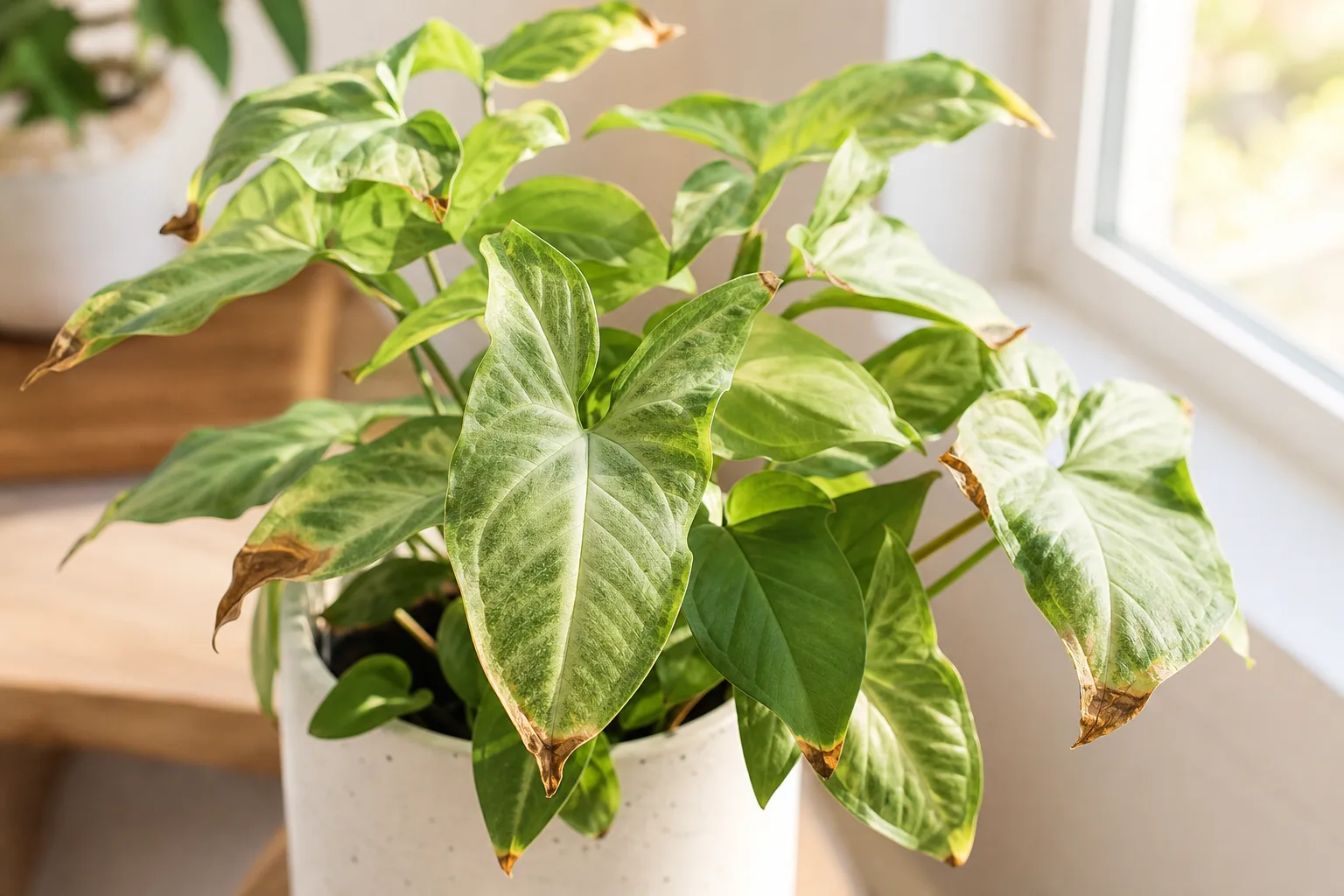
On a healthy arrowhead plant, tip burn usually appears as dry, tan-to-brown crispy tissue at leaf points or along thin margins while the center of the blade stays green and soft. Damage often shows on older leaves first because they have been transpiring longest in your home conditions.
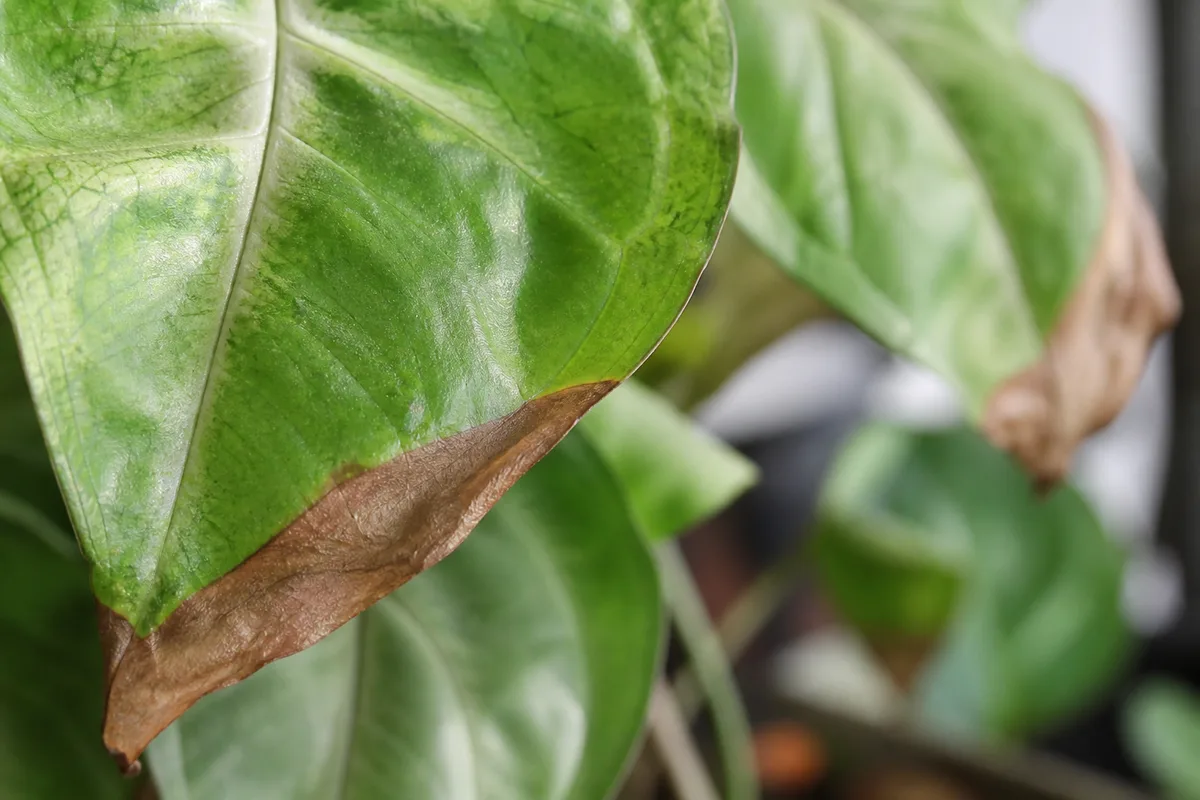
Brown Tips symptoms on Syngonium - compare with healthy tissue on the same plant.
Typical patterns:
- Brown only at the tip or along the outer edge; interior tissue remains green
- Paper-dry texture that crumbles when pinched lightly
- Slow creep inward over weeks, not overnight spread
- Newest juvenile arrow leaves may show minor edge browning if stress is ongoing
Syngonium podophyllum changes leaf shape as it matures-juvenile arrow-shaped leaves and older lobed leaves can both tip-burn under the same stress. Shape change alone is normal; repeated crispy margins on new growth is not.
Not tip burn: Soft brown patches with yellow halos (often fungal leaf spot), uniform scorch on the window-facing side only (direct-light burn), or stippling with fine webbing on undersides (spider mites in dry winter air). Tip burn from humidity or water stress is usually dry and symmetrical along margins, not wet, sticky, or dotted.
Why Syngonium gets brown tips
Syngonium evolved as a tropical understory aroid that wants warm air, Syngonium light guide, and steady moisture at both roots and leaf surfaces. Indoors it tolerates average humidity better than many ferns, but thin leaf edges still desiccate when air and water quality drift out of balance.
Low humidity - especially in heated winter rooms
Heated and air-conditioned homes often sit at 25–40% relative humidity. Syngonium performs best around 40–60% in most homes. When air stays dry for weeks-especially near heat registers or AC vents-leaf edges lose water faster than the vascular system replaces it.
Missouri Botanical Garden notes that Syngonium likes high humidity and recommends a humidified room or pebble tray in dry interiors. Winter furnace air is the classic trigger for crispy arrowhead margins even when watering looks fine on paper.
Fluoride and salts in tap water
As you water over months, minerals from tap water and fertilizer concentrate in potting mix. At high levels, leaf tips and edges turn yellow or brown and die back slowly. Some houseplants are sensitive to fluoride or chlorine in tap water; letting water stand overnight reduces chlorine but does not remove fluoride.
White crust on the soil surface signals salt buildup. Hard tap water adds to the load. Syngonium’s thin juvenile leaves show mineral injury at the tips before the rest of the plant looks stressed.
Inconsistent watering
Syngonium should be watered thoroughly, then allowed to dry down before the next drink. For most indoor pots, that means the top inch of mix goes dry between waterings. Long droughts followed by heavy soaking stress feeder roots; damaged roots cannot hydrate distant leaf tips reliably.
The opposite pattern also causes margin symptoms: chronic overwatering on Syngonium rots roots so leaves cannot pull water despite wet soil. On syngonium, yellowing lower leaves plus wet mix point to overwatering more than classic crispy tips-but impaired roots can still show edge burn on upper foliage.
Drafts, vents, and placement stress
A syngonium beside a radiator, heat register, or frequently opened winter door sits in a microclimate far drier than the rest of the room. Hanging baskets and high shelves near ceiling heat also expose soft foliage to dry air layers.
Bright indirect light supports even growth; direct sun scorches thin leaves and can brown margins on the exposed side only-a different pattern from humidity tip burn.
Less common but worth ruling out
- underwatering on Syngonium on a very light, dusty pot-edges crisp while soil is dry throughout
- Recent heavy fertilizer on dry soil-margin burn appearing days after feeding
- Root congestion in an undersized pot that dries in hours and never fully rehydrates
How to confirm the cause
Work through these checks in order. The goal is one primary cause, not five simultaneous fixes.
- Water source - Do you use untreated hard tap water? Have tips worsened slowly over months on an otherwise stable plant? That pattern favors mineral or fluoride sensitivity.
- Humidity at leaf level - Place a hygrometer beside the foliage for 24 hours. Below 40% strongly favors dry-air tip burn. Above 50% with ongoing browning shifts suspicion to roots or salts.
- Soil moisture rhythm - Stick your finger about 2.5 cm (1 inch) deep. Does the pot go bone-dry for days, then get soaked? Does it stay wet for a week in normal light?
- Pot weight and drainage - Lift the pot after watering and again when dry. No change in weight over a week suggests overwatering or poor drainage. Very light pots with crispy tips suggest underwatering.
- Salt signs - White crust on soil, or browning that worsened after regular fertilizing without flushing.
- Placement - Note heaters, vents, and direct afternoon sun on the affected side.
- New growth - Inspect the newest unfurling leaf. Clean margins on new growth mean an old environmental spell; browning on fresh leaves means stress is still active.
- Roots (if soil smells sour or stays wet) - Slide the plant partly out of the pot. Firm white roots support a humidity or salt diagnosis; brown mushy roots mean rot and a different first fix.
If hard tap water and dry winter air both apply, change water source first-it is the fastest controlled test-then address humidity if new leaves still crisp.
First fix for Syngonium
Use filtered, rested, or rainwater for every watering for the next four weeks.
Fill a watering can and let tap water stand overnight if that is your only option-it helps dissipate chlorine, though fluoride remains in many municipal supplies. Run all irrigation through this source and watch the next one or two new leaves for cleaner tips.
If you already use soft or filtered water and tips keep browning while humidity reads below 40%, your first fix shifts to raising local humidity toward 40–60% with a humidifier, pebble tray, or grouped plants away from heat vents.
Do not trim heavily, repot, or fertilize during this test window. Existing brown tissue will not turn green again; success is clean margins on new arrowhead or lobed leaves.
Step-by-step recovery
After the first fix is in place:
- Raise humidity if needed - A small humidifier running several hours daily is more reliable than misting, which wets leaves briefly without changing room air. Move the pot off radiator tops while you test.
- Stabilize watering - Water thoroughly until a little runs from drainage holes, then wait until the top inch is dry before repeating. Empty the saucer so the bottom never sits in standing water.
- Trim cosmetic damage - Snip brown tips following the natural leaf curve with clean scissors. Leave a thin brown margin (about 1 mm) to avoid cutting into healthy tissue. Wear gloves if sap irritates your skin-Syngonium contains calcium oxalate crystals.
- Flush salts if crust is visible - Place the pot in a sink and run lukewarm water through the mix at roughly three times the pot volume. Let it drain fully. Resume normal watering after the top layer dries.
- Adjust fertilizer - Skip feeding until new growth looks stable. When you resume, use half-strength balanced liquid fertilizer monthly during active growth, not on dry soil.
- Monitor new leaves - The next one or two unfurling leaves tell you whether the environment is right. Clean edges mean continue; repeat browning means re-run the confirmation checks.
Do not repot solely for brown tips. Repot only if roots are circling tightly, water runs straight through in seconds, or rot is confirmed.
Recovery timeline
Existing brown tissue does not heal. Plan on two to four weeks to judge success by new growth, not old leaves.
| Timeframe | What to expect |
|---|---|
| 1–2 weeks | Browning on older leaves should stop spreading once water quality or humidity stabilizes |
| 2–4 weeks | Next unfurling leaf should show cleaner margins if the fix matched the cause |
| 4–8 weeks | Several new leaves with clean edges confirm the routine is sustainable |
If every new leaf still emerges with burned tips after a month of corrected water and humidity, inspect roots and flush salts even if no white crust is visible.
Lookalike symptoms
| What you see | Likely cause | Quick check |
|---|---|---|
| Crispy dry tips only; center green | Low humidity, hard water, or uneven watering | Hygrometer below 40%; hard tap; irregular dry-down |
| Brown on sun-facing side only | Direct-light scorch | Window with afternoon sun on that face |
| Yellow halos around brown spots | Fungal leaf spot | Soft or spreading patches, not dry margins |
| Lower yellow leaves + wet soil | Overwatering / root stress | Sour smell; mushy roots on inspection |
| Stippling + fine webbing | Spider mites | Magnify undersides; common in dry winter air |
| Tips brown after heavy feed | Fertilizer burn / salts | White soil crust; recent full-strength dose |
Mistakes to avoid
- Misting as your only humidity plan - Brief leaf wetting does not raise room humidity meaningfully and can encourage fungal issues on crowded foliage.
- Watering more because tips are brown - Without checking soil first, extra water worsens root rot on Syngonium risk on syngonium.
- Cutting deep into green tissue - Aggressive trimming wounds healthy cells and can brown further along the margin.
- Feeding a stressed plant - Fertilizer on dry or damaged roots adds salt stress.
- Ignoring winter dryness - The same Syngonium watering guide that worked in summer may leave roots too dry or too wet when growth slows and furnace air drops humidity.
- Stacking repot, fertilizer, and pruning on day one - Fix water quality and humidity first; syngonium settles faster when care changes stay boring.
How to prevent brown tips next time
- Use filtered or rainwater if your tap is hard or high in fluoride.
- Keep humidity near 40–60% during heating season with a humidifier or pebble tray; siting the plant in a humidified room helps as Missouri Botanical Garden recommends for Syngonium overview.
- Water when the top inch dries, not on a fixed calendar. Reduce frequency in low-light winter months when the pot stays wet longer.
- Flush the pot every four to six weeks during active growth if you fertilize regularly or use tap water.
- Keep syngonium in bright indirect light without direct sun that scorches thin leaves.
- Repot every one to two years into fresh well-draining mix before roots pack so tightly that water never distributes evenly.
- Scout for spider mites in dry winter air-stippling is not tip burn, but mites thrive in the same dry conditions that crisp margins.
When to worry
Brown tips alone rarely kill Syngonium. Escalate your response if:
- Most new leaves emerge with burned margins within two weeks despite filtered water and humidity above 40%
- Stems soften, soil smells sour, and lower leaves yellow while the mix stays wet (possible root rot)
- Browning races inward on multiple leaves overnight after a pesticide or fertilizer application (possible chemical burn)
- The plant produces no new growth for two months in warm bright conditions after you corrected care
Cosmetic tips on a few older leaves while new growth stays clean is normal maintenance, not an emergency.
Conclusion
Brown tips on Syngonium are the plant telling you its water balance at the leaf edge is off-usually from hard tap water, dry indoor air, or uneven watering. Change your water source first, confirm humidity near the foliage, then stabilize how the top inch of mix dries before you reach for scissors, fertilizer, or fresh soil. Old damage stays brown; success is clean margins on the next arrow-shaped or lobed leaves your syngonium produces.
When to use this page vs other Syngonium guides
- Syngonium watering guide - Use for routine moisture checks before assuming brown tips is the main issue.
- Syngonium problems hub - Browse all 17 common issues on this species.
- Low Humidity on Syngonium - Different entry point when symptoms overlap with brown tips.
- Underwatering on Syngonium - Different entry point when symptoms overlap with brown tips.
- Overwatering on Syngonium - Different entry point when symptoms overlap with brown tips.